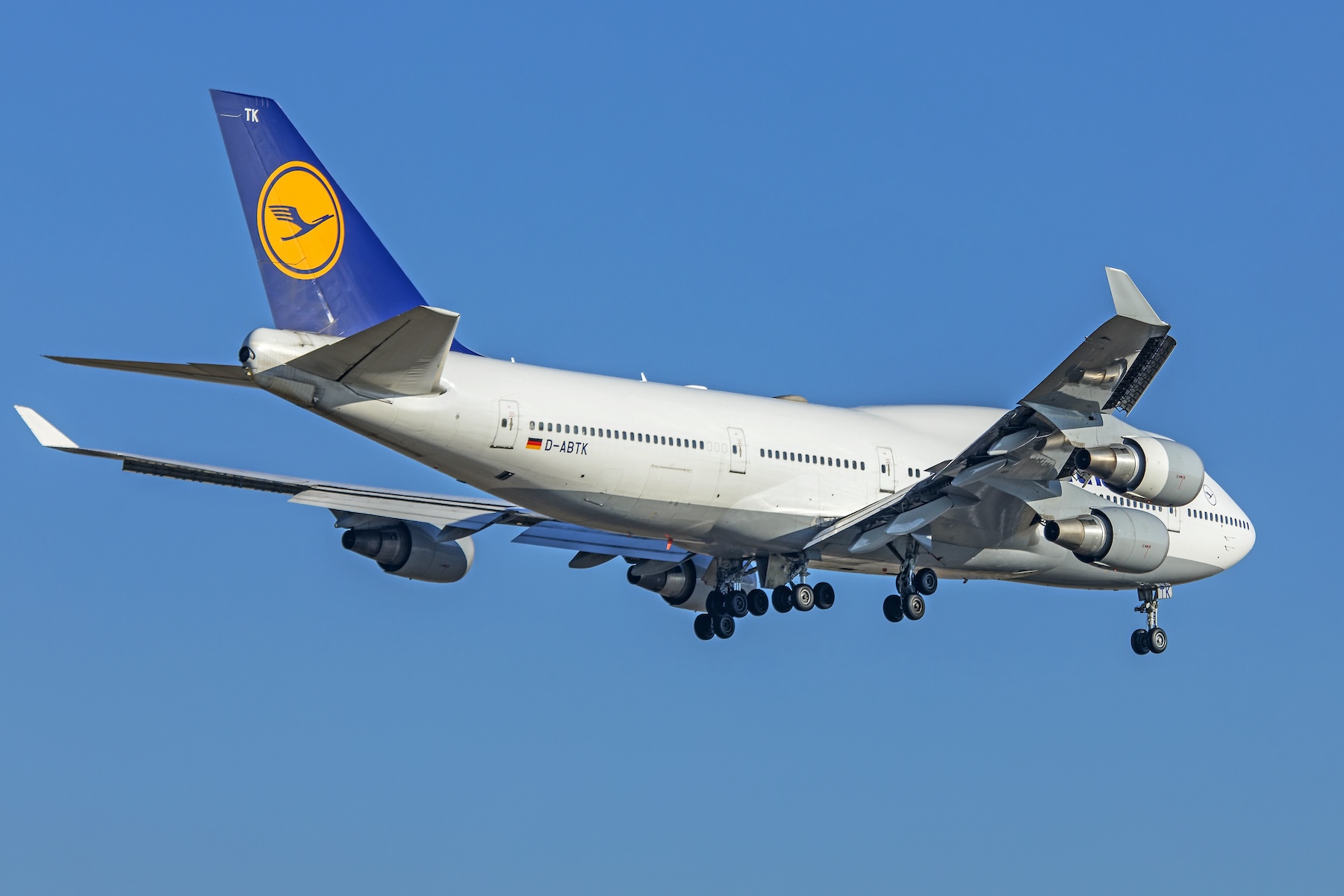

The number of Boeing 747-400s still in service is slowly dwindling. In 1988, Boeing debuted the first 747-400, which later became the so-called Queen of the Skies’ best-selling variant.
Over the jet’s lifespan, Boeing delivered nearly 700 747-400s in both passenger and freight configurations. With the 747-8 being announced in 2005, the last -400 was delivered to Kalitta Air in 2009.
Some of the largest operators of the passenger-carrying 747-400 included British Airways, United, and Japan Airlines. British Airways retired its fleet of 747-400s in 2020 due to the COVID-19 pandemic.
Few Remain
Data from Cirium Fleet Analyzer shows that only a few passenger 747-400s remain. As of August 2024, 29 747-400s are in service and 368 have been either retired or placed in storage.
Lufthansa is currently the largest operator of the type with eight aircraft still active. During a recent earnings call, the airline announced plans to phase out the 747-400 fleet by 2028. The aircraft will join the carrier’s aging A330-200s and A340s which are also set to enter retirement.
The company’s interim finance chief Dr. Michael Niggemann said these aircraft retirements will help “bring [Lufthansa’s] productivity to a new level.” This announcement follows the airline’s earnings downturn during the first half of 2024.
Even as the 747-400s exit Lufthansa’s fleet, the German airline’s 19 747-8i aircraft are expected to remain in service for some time. Lufthansa first took delivery of the newer 747-8i variant in 2011, becoming the type’s launch customer.

In addition to Lufthansa’s remaining 747-400s, Atlas Air has five of the type, which are used for charter flights. Air China, Saudia, Mahan Air, and Russia’s Russiya Airlines also have small 747-400 fleets, although it is unclear how many are still fully active.
The cargo-carrying 747-400s will remain active well beyond the passenger version. Currently, there are 150 747-400F aircraft in service with an average age of just over 25 years old, according to Cirium fleet data.