










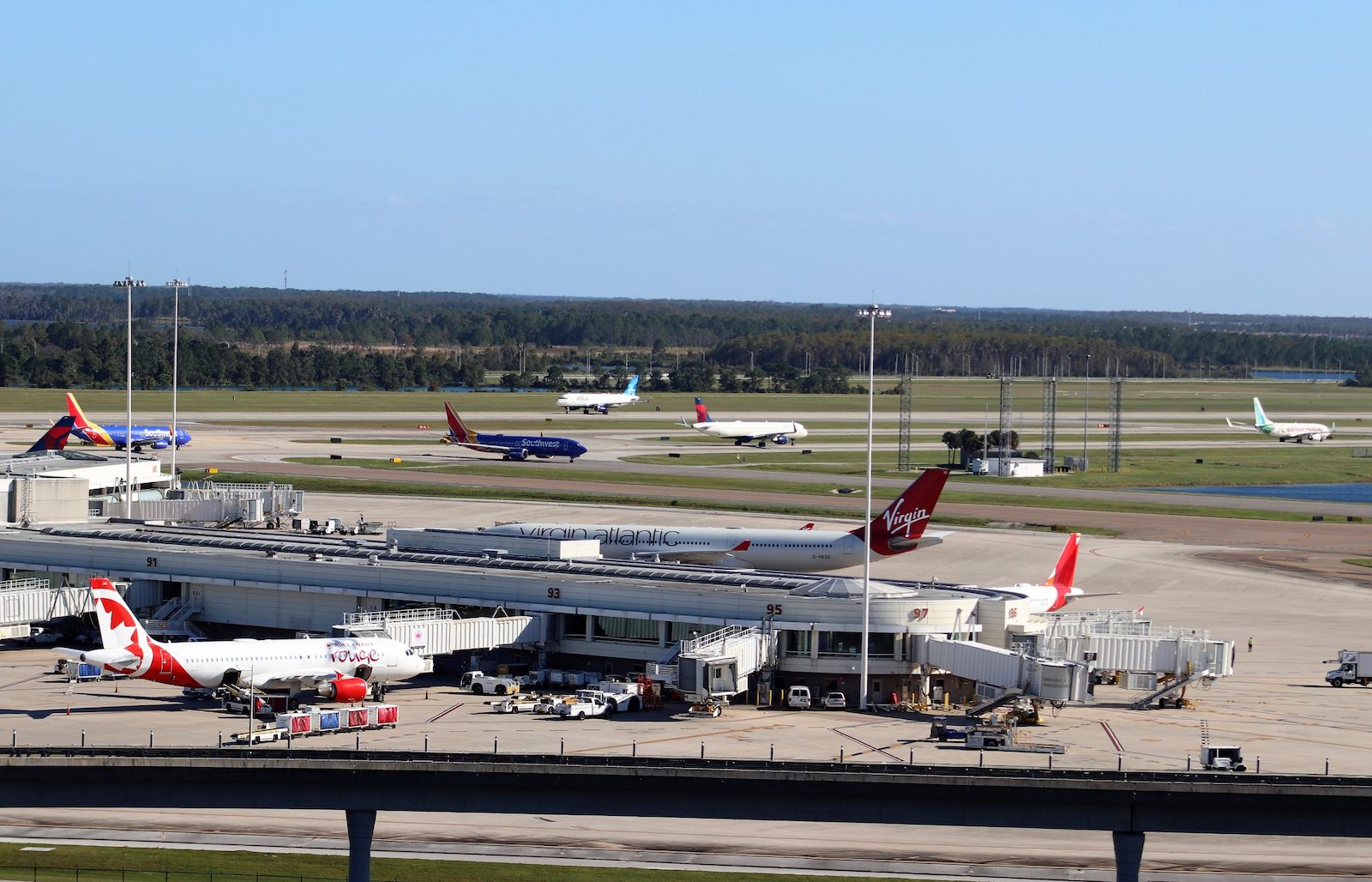

Over 700 flights have been cancelled across seven Florida airports Tuesday morning in preparation for Hurricane Milton.
The massive Category 5 storm is expected to hit Florida’s already vulnerable Tampa Bay area, which is still writhing from Hurricane Helene’s impact just two weeks prior.
Outgoing Flight Cancellations
According to flight tracking service FlightAware, 186 flights from Tampa International Airport have been cancelled. Orlando International Airport has had 371 flights from the airport cancelled.
Tampa International Airport announced in a Facebook post Monday that the airport would suspend flights at 9 a.m. Tuesday and reopen once it is safe to do so. Orlando International Airport also announced on Monday that it would cease commercial operations on Wednesday morning in coordination with its partners.
“The airport is not closed and will remain open to accept emergency/aid and relief flights as necessary,” Orlando International Airport’s news release stated. “We will resume commercial operations as soon as possible based on damage assessment.”
Additionally, Southwest Florida International Airport has had 74 of its origin flights cancelled; Sarasota/Bradenton International Airport has had 30 origin flight cancellations; and Clearwater International Airport has had 16 cancelled origin flights.
Punta Gorda Airport and Orlando Sanford International Airport have both cancelled all outgoing flights.
Incoming Flight Cancellations
For flights traveling to Florida airports, 410 inbound flights have been cancelled at Orlando International Airport and 192 at Tampa International Airport. 92% of inbound flights to Orlando and 91% of inbound flights to Tampa have been cancelled.
Southwest Florida International Airport has had 80 (98%) of its inbound flights cancelled, and Clearwater International Airport has cancelled 16. Punta Gorda Airport, Orlando Sanford International Airport, and Sarasota/Bradenton International Airport have axed all incoming flights.
Allegiant and Breeze have been the hardest hit so far, cutting 64% and 46% of their flight schedules respectively.
Editor’s Note: This is a developing story.
