










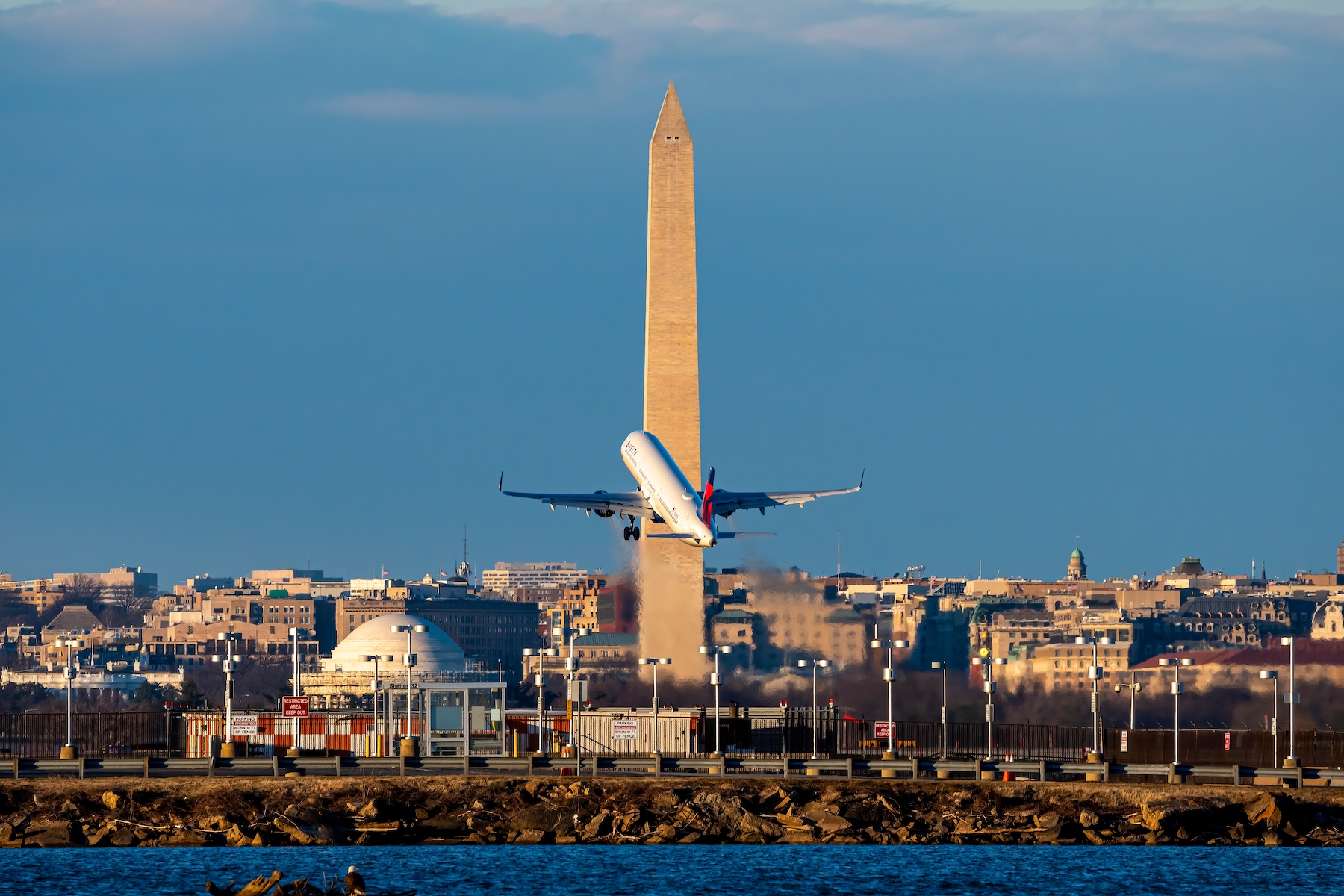

Ronald Reagan Washington National Airport completed its roughly $110 million runway rehabilitation project earlier this month, concluding 19 months of overnight work to resurface asphalt and base materials along the airport’s primary runways.
A news release from the Metropolitan Washington Airports Authority (MWAA) stated that the accomplishment was made possible by the airport’s operations and the Airports Authority engineering and leadership teams, along with the support and collaboration of air carriers and Lagan Construction.
“The project’s success also can be attributed to several other crucial elements, including the proactive approach of the Airport Operations team in crafting a comprehensive plan with a timeline accounting for every minute of the runway closures,” the release stated. “This effort was helped by the cooperation of the airlines, which adjusted flight schedules.”
The complex paving effort started in May 2023 where crews continually worked overnight from 11 p.m. to 6 a.m. when fewer aircraft operations took place. Airlines had to rearrange their schedules, and construction crews would work against the clock each night to reopen the airfield.
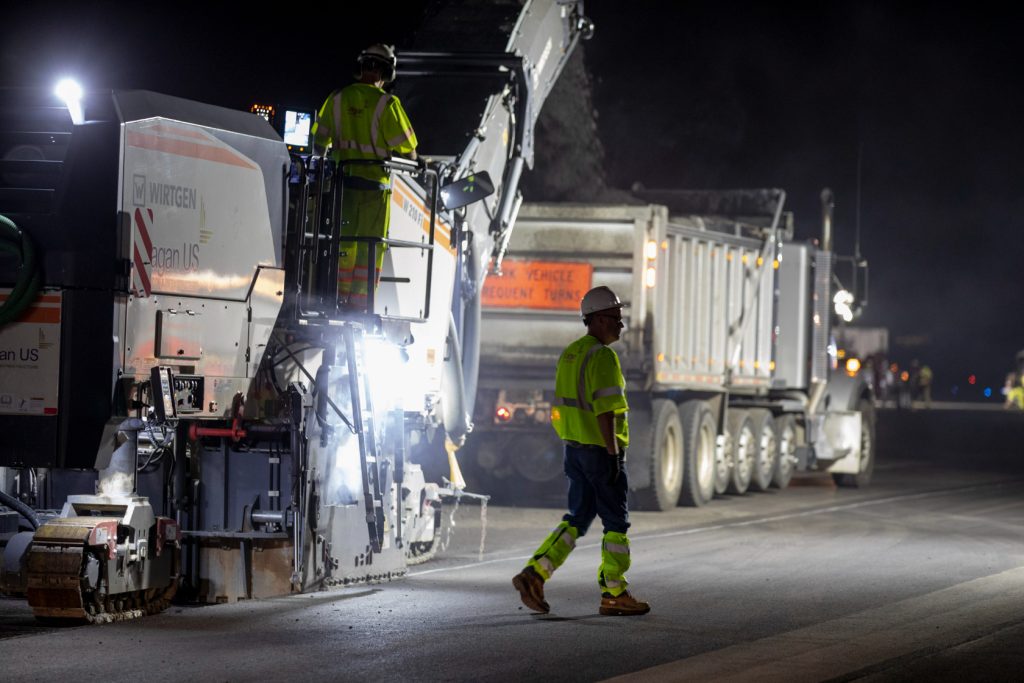
“There is a lot of coordination…because of the project,” James Keogh – the project’s manager from Lagan Aviation and Infrastructure, which specializes in runway overhauls – told AirlineGeeks during an interview in Dec. 2023. “We have a fairly definitive timeline…generally 11 p.m. to 6 a.m. and the airlines are aware of this.”
During that interview, Keogh said this runway project differs from construction on a typical roadway.
“One of the big differences is the polymer bitumens that we use in the mix to give it additional strength and performance at greater variances in temperature and things like that,” he shared. “The specific allocation and the tolerance on it is generally tighter than on a highway…[it’s] more stringent and the implications of not achieving that can be costly.”
Reagan National’s main runway – 1/19 – is the busiest in the nation with approximately 819 daily arrivals and departures. Together, the two intersecting runways being repaved required 177,000 tons of asphalt – all produced onsite. Base materials for this project were replaced between six and eight inches deep to ensure longer durability.
MWAA also replaced the lighting system on most of the airfield as part of the runway restoration project. Priyam Shah, construction project manager for MWAA, told AirlineGeeks in the same interview that this electrical work was also a big undertaking.
“You don’t see that there is so much electrical work involved in a runway project, but there is a lot,” Shah said. “When the planes hit the center of the runway, these lights do take a lot of heavy impacts, and they are [a] very important part of a [instrument] landing system.”
