










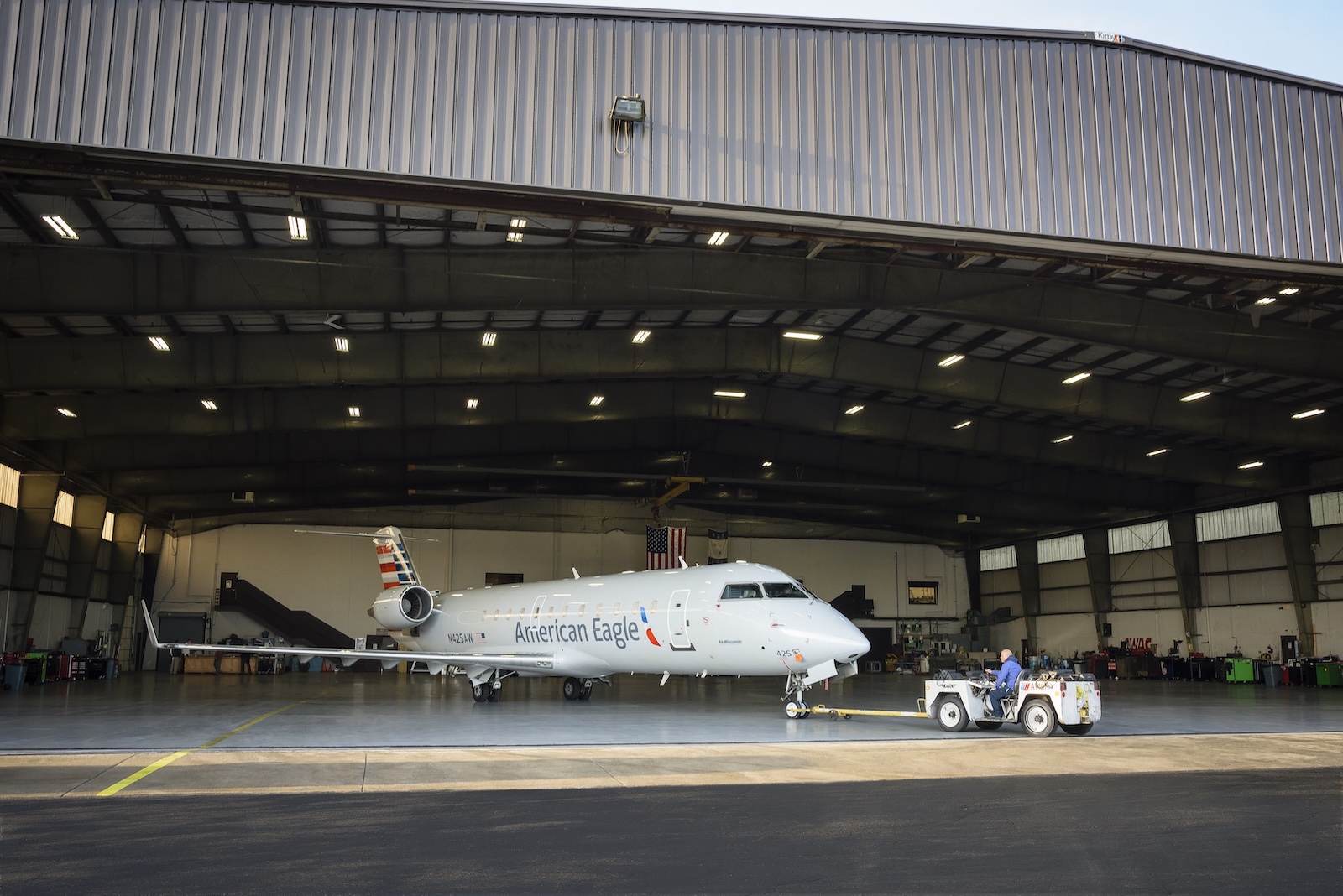

Air Wisconsin is ending its regional capacity agreement with American in what it calls a “strategic shift.” The regional carrier announced the shake-up on Friday. It includes a broader focus on government-subsidized service.
The Appleton, Wisconsin-based airline says its capacity purchase agreement with American will end by April. The regional carrier currently operates around 30 CRJ-200s under the American Eagle brand, mostly from Chicago O’Hare.
The two airlines will transition to a codeshare and interline relationship. Air Wisconsin has applied to serve a handful of Essential Air Service markets recently, including Burlington, Iowa, and Quincy, Illinois.
In addition, the company says it will focus on charter operations.

“This strategic shift underscores our adaptability and commitment to delivering reliable, customized air travel solutions where they are most needed,” said Robert Binns, president and CEO of Air Wisconsin, in a statement. “As we diversify into EAS and grow our charter operations, we remain committed to delivering safe, efficient, and quality service to every community and customer we serve.”
In 2022, the regional carrier announced a five-year agreement to fly up to 60 CRJ-200s for American Eagle, which began in March 2023. American is Air Wisconsin’s only mainline partner.
“American continually evaluates its regional network and makes strategic decisions that will benefit our airline and customers. As a result, we have begun reducing our schedule operated by Air Wisconsin starting in March, with the final Air Wisconsin-operated flights for American on April 3,” a spokesperson from American said in a statement. “We sincerely appreciate the hard work and dedication of the Air Wisconsin team over the past two years. Their contributions have been instrumental in supporting our regional operation, and we wish them continued success in the future. As we move forward, we remain committed to optimizing our network and ensuring the best possible service for our customers, and we’re working closely with our regional partners to minimize disruptions to our customers’ travel plans.”