





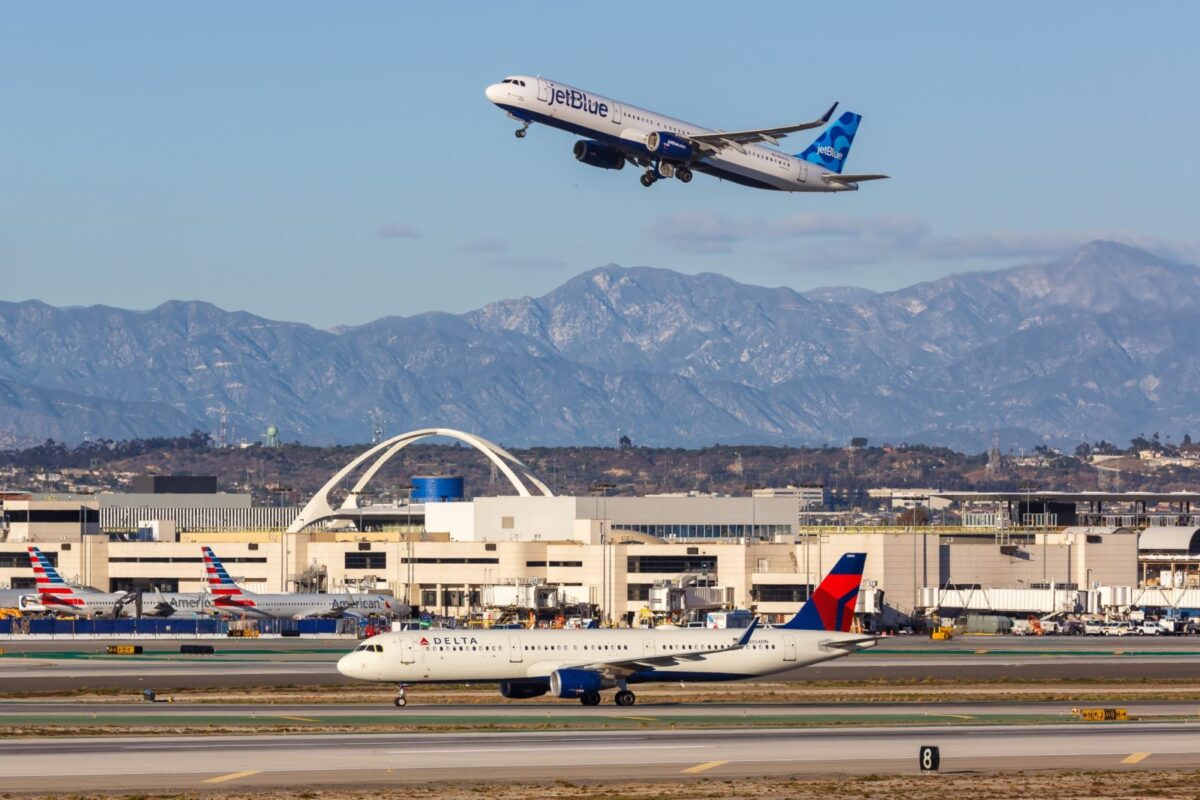

The airline industry is asking the federal government to slash numerous consumer protection rules and regulations, including proposals aimed at increasing price transparency and securing refunds for passengers after delays.
In a letter to the U.S. Department of Transportation, Airlines for America, which represents the nation’s largest carriers, pushed for what it called “re-deregulation” of the industry to usher in a new “golden age” for air transportation.
“With deregulation, airlines have lowered prices while improving services, democratizing air travel for the American public,” the letter stated, referring to the initial wave of industry deregulation in the 1970s. “However, for decades, big government with its overreaching regulatory agenda – especially under the administrations of Presidents Biden and Obama – has unabashedly defied Congress’s instruction that the DOT must regulate airlines by ‘placing maximum reliance on competitive market forces and on actual and potential competition.’”
“This activist agenda has stifled innovation, capitalism, and efficiency, raised prices for consumers, and inhibited consumers’ ability to choose an airline with their wallets – the American way,” the trade group added.
The federal government should change tack, the letter argued, and radically scale back its intervention in the industry. This would involve scrapping or reversing many existing and pending policies, narrowly limiting the DOT’s powers over the airlines, and trusting market forces to improve efficiency and lower prices.
The DOT and FAA would do well to embrace President Donald Trump’s “deregulatory agenda,” Airlines for America added, including the president’s suggestion to do away with ten regulations for every new one instituted.
Deregulation Push
Among the rules A4A would like to see struck down is a Biden-era policy requiring airlines to disclose extra fees, which the former president said would discourage dishonest pricing and “junk fees.” The trade group said the mandate is unfair and anticompetitive, and argued that customers are not harmed by ancillary fees because they largely expect them.
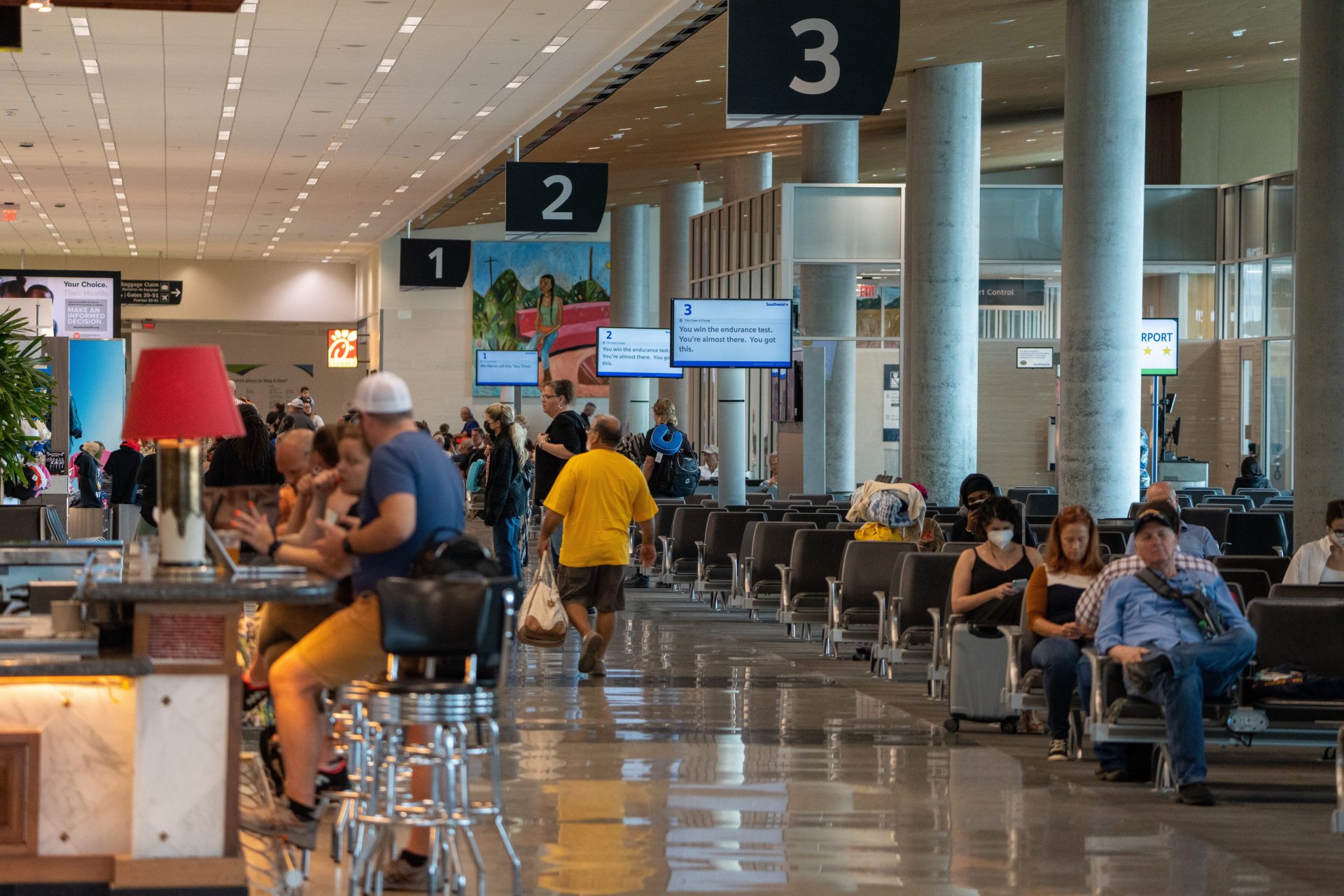
- Crowds at Hobby Airport. (Photo: Houston Airports)
Another target for the industry is the so-called “mobility aid assistance” rule, which holds airlines accountable for damage to a passenger’s mobility devices, like a wheelchair, and mandates increased training for employees on how to handle mobility equipment. A4A said that while its members are “committed to making air travel accessible to passengers with disabilities,” the policy “unlawfully exceeds” the DOT’s rulemaking authority.
Airlines for America also took aim at regulations blocking airlines from charging parents more to sit near their young children on flights and setting up a compensation regime for passengers whose flights are delayed by more than three hours. The family seating rule was a “Trojan horse” used by the “Bident/Buttigieg DOT” to reregulate airline services, the trade group complained, while the reimbursement requirement overlooks other potential causes of delays and cancellations, like air traffic control problems or noncompliant passengers.
Rather than mandate refunds or travel credits from the airlines, as a related Biden policy would have required, passengers should be encouraged to self-insure their flight or get insurance through a third party, Airlines for America said.
Most of the policies targeted by A4A have already been blocked or stalled by courts in response to lawsuits from the industry and have not yet taken effect.
The Trump administration earlier this month canceled the passenger compensation rule – which would have required airlines to pay $200 to $300 for delays of at least three hours and up to $775 for delays of nine hours or more – but has not taken a position on most of the other policies singled out by A4A.
Change in Approach
While Airlines for America is typically vocal in its defense of its members prerogatives, its letter to the DOT is unusually bold in tone and sweeping in scope, suggesting a complete reevaluation of the relationship between carriers and the regulators who oversee them.
“[The] steadfast commitment to consumers should largely be driven by competition, never regulations that exceed Congress’s mandates or the DOT’s other authorities,” the organization said. “The DOT should only regulate when there is a market failure… Airlines constantly innovate to improve their services, which the DOT has often overlooked to pursue its activist rulemaking agenda.”
Some of A4A’s proposals and recommendations – described in its letter as “deregulatory opportunities” – strike directly at the Transportation Department’s authority.
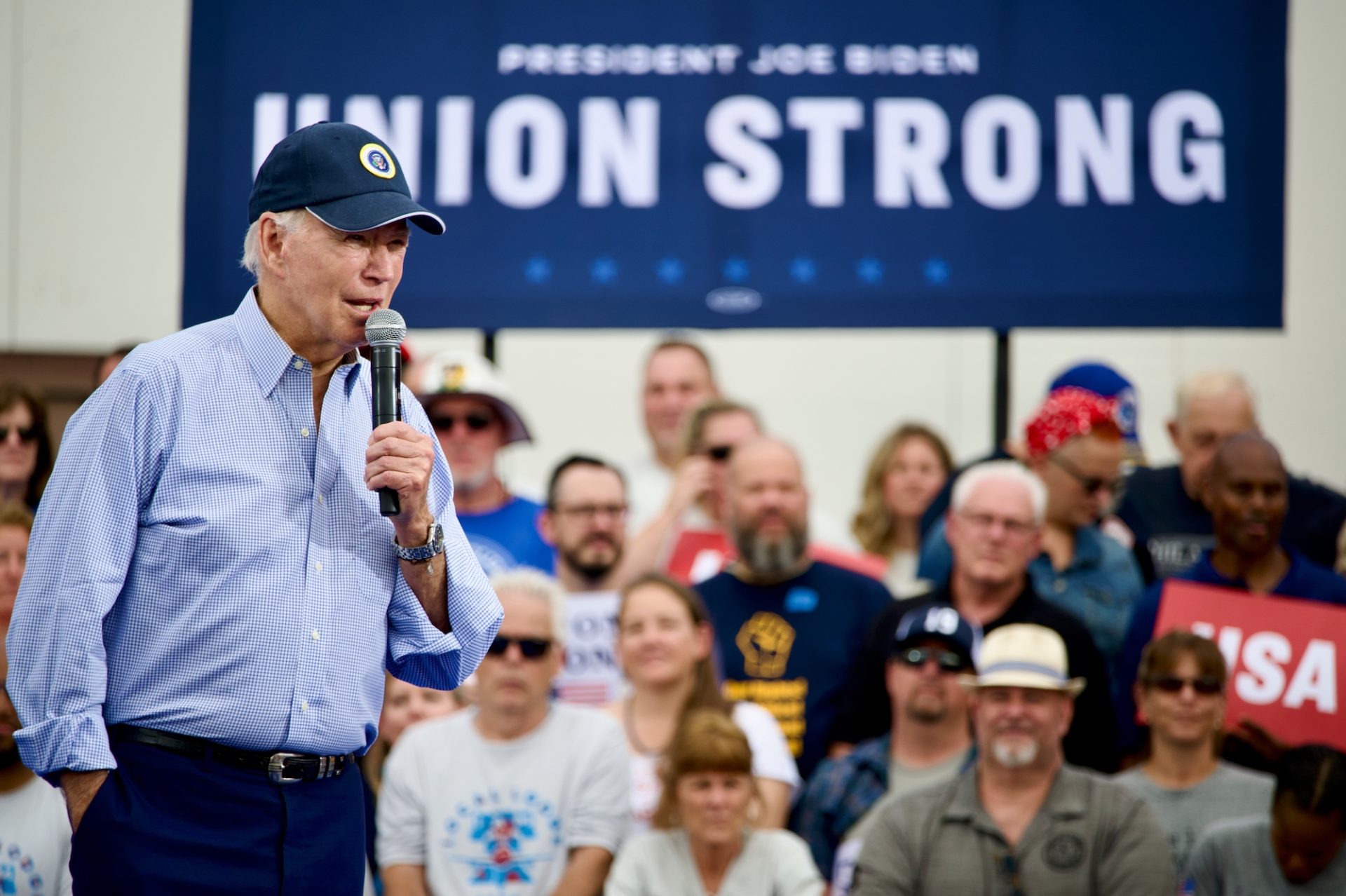
- Then-President Joe Biden speaks at the AFL-CIO’s annual Tri-State Labor Day Parade in Philadelphia. (Photo: Shutterstock | OogImages)
The trade group wants an end to a major department investigation into airlines’ policies and practices launched last year under Biden. It also suggested placing a two-year statute of limitations on all DOT’s enforcement actions.
Other industry goals include revoking the DOT’s advertising guidance, minimizing airline reporting burdens, and “eliminat[ing] the prescriptive in-airport display requirements for flight disruptions.”
Somewhat atypically, A4A also asked the Transportation Department to take the airlines’ side against state attorneys general who attempt to impose rules concerning the regulation of prices, price transparency, and required services for passengers.
“Defending against these rules, many of which blatantly violate the express preemption provision, is unnecessary, costly, and likely avoidable, particularly if the DOT weighed in on the broad scope of federal preemption in the regulation of airlines,” the organization said.
“Accordingly, we urge the DOT to adopt a policy to strongly oppose state encroachment into the exclusive authority of the Federal government to regulate airlines and affirmatively challenge states’ attempts to do so.”
The Trump administration has signaled its willingness to curtail federal enforcement actions initiated by the Biden administration against several large corporations, including in the aerospace sector. In May, for instance, the Department of Justice reached a non-prosecution agreement with Boeing that helped the manufacturer avoid criminal charges in the case of two 737 MAX crashes in 2018 and 2019.
It is not clear if any of the recommendations put forward by A4A are being actively considered by the current leadership at the Transportation Department.