










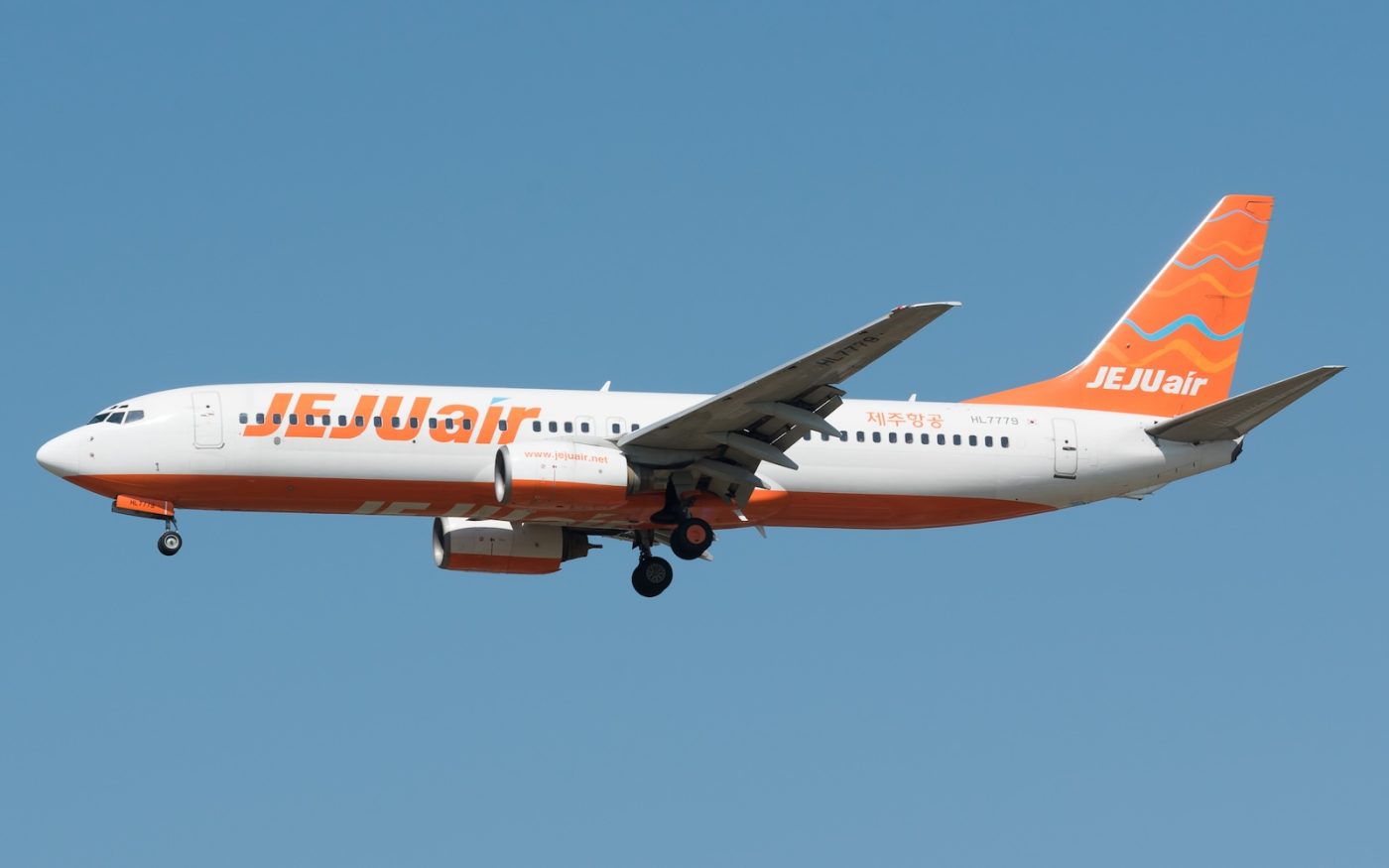


Relatives of passengers killed in the Jeju Air crash in South Korea late last year are suing Boeing, arguing that outdated flight systems contributed to the accident.
Aviation law firm Herrmann Law Group said Wednesday that it filed a complaint against Boeing in King County Superior Court in Seattle on behalf of 14 families who lost loved ones in the accident, which occurred at Muan International Airport.
The aircraft involved in the crash was a Boeing 737-800.
The lawsuit blames Boeing for failing to modernize “outdated” electrical and hydraulic systems, which ultimately compromised the accident flight’s landing gear.
“Rather than admitting its fault in this tragic accident, Boeing resorts to its old, worn out ‘blame the pilots’ tactic,” said Charles Herrmann, lead attorney for the plaintiffs, in a statement. “These pilots make easy targets; they perished in the flames with the passengers. They cannot defend themselves.”
“Bereaved families deserve the truth,” he added. “Met with evasion in Korea, these plaintiffs seek justice in U.S. courts where we can legally compel them to reveal the truth.”
The cause of the crash of Jeju Air Flight 2216 is still under investigation, but South Korean officials have suggested that a bird strike disabled one of its engines as it approached Muan International Airport on Dec. 29, 2024. The 737’s landing gear did not deploy, and the aircraft belly-landed beyond the normal touchdown zone. It overran the runway, crashed into a lighting structure, and then hit a concrete-encased berm supporting an antenna array.
All 175 passengers were killed, along with four of the six crew members. The two survivors were rescued from the rear of the aircraft.
According to the lawsuit, the 737’s backup power systems did not switch on after the bird strike, leaving a number of other systems, most critically the landing gear and reverse thrusters, disabled. Nearly every system designed to slow the aircraft, both in the air and on the ground, failed, attorneys for the plaintiffs said.