











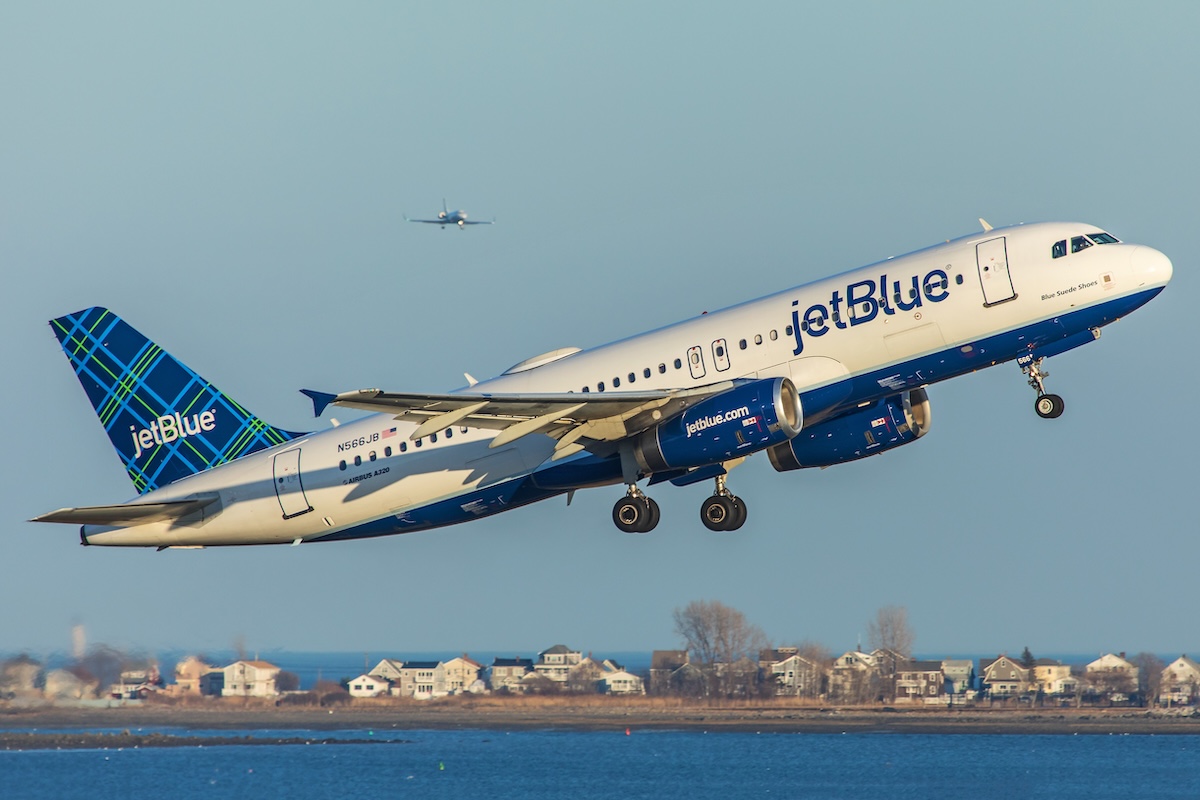


The JetBlue Airbus A320 that experienced a “flight control issue” last week was found to have suffered a computer malfunction, according to a recently filed service disruption report seen by AirlineGeeks.
The Oct. 30 incident occurred while the aircraft was in cruise from Cancun to Newark, New Jersey, when it unexpectedly pitched downward without pilot input. The flight crew operating Flight 1230 initiated a precautionary descent and diverted to Tampa, Florida, where the jet landed safely.
At the time of the incident, JetBlue confirmed the aircraft experienced a “drop in altitude.” At least 15 individuals were taken to local hospitals.
The FAA classified the event as a “warning indication” discovered during the cruise phase of flight.
According to the report, the autopilot remained engaged throughout the event. Maintenance technicians later determined that one of the aircraft’s elevator/aileron computers — known as ELAC 2 — had malfunctioned, causing the uncommanded pitch movement.
The faulty unit, manufactured by Thales, was replaced following data analysis and troubleshooting procedures outlined in the Airbus maintenance manual. Post-replacement tests were successful, and the system was cleared for continued service.
ELAC System
On Airbus fly-by-wire aircraft such as the A320 family, the Elevator Aileron Computers (ELACs) are critical to the aircraft’s primary flight control system. Each A320 is equipped with two ELACs that manage the elevators, stabilizer trim, and ailerons by interpreting pilot stick inputs and sensor data. The ELACs also monitor flight envelope parameters, applying built-in protections that prevent excessive pitch attitudes or aerodynamic loads.
The ELACs operate in conjunction with three additional computers known as SECs (Spoiler Elevator Computers) and two FACs (Flight Augmentation Computers). In normal operations, ELAC 1 is the master unit for elevator and aileron control, while ELAC 2 serves as a backup or takes over specific control channels depending on system configuration. If one computer fails, the system automatically reconfigures to maintain control authority through alternate or direct control laws.
The affected A320, registered as N605JB, had accumulated roughly 76,785 flight hours and 27,805 cycles at the time of the event. It returned to revenue service on Wednesday, nearly a week after the incident.
Both the FAA and JetBlue are investigating the incident.

