










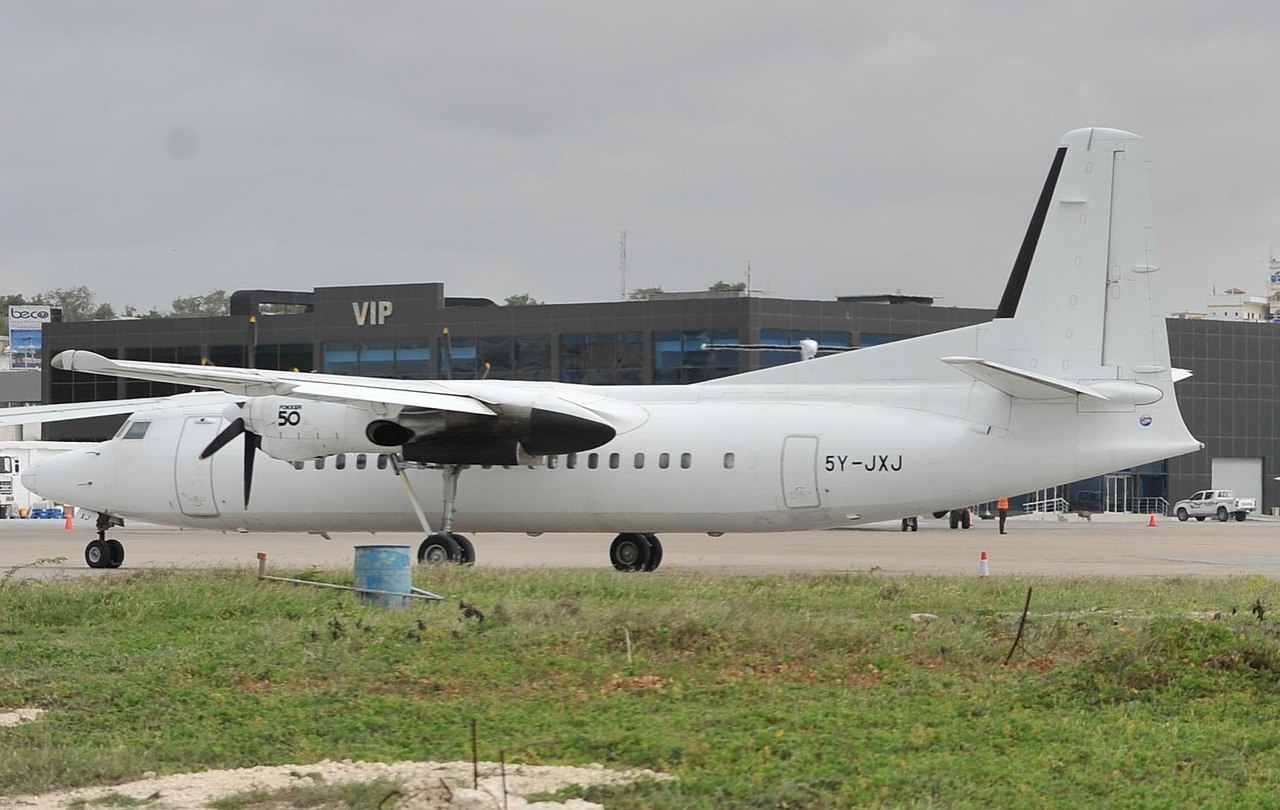


Kenya has moved to halt the entry of additional Fokker 27 and Fokker 50 aircraft into the country, marking a significant regulatory shift for operators that have relied on the rugged turboprops for decades. The Kenya Civil Aviation Authority (KCAA) announced the restriction through Aeronautical Information Circular (AIC) 15/25, published on Oct. 31.
The directive — effective immediately — prohibits any new applications for type acceptance, registration, or Certificates of Airworthiness for both aircraft families. KCAA Director General Emile N. Arao said the decision was grounded in national airworthiness regulations and aligned with ICAO Annex 8 provisions, noting that Kenya must ensure only aircraft supported by acceptable type certification and manufacturer backing enter its register.
Existing Aircraft Can Continue—For Now
Although no new imports will be allowed, the decision does not abruptly ground aircraft already operating in the country. Operators may continue flying their existing F27s and F50s until the aircraft are deregistered or reach the end of their operational life. The continuation, however, is tied to strict compliance with all relevant safety and maintenance requirements pending consultations with industry stakeholders.
The KCAA has not publicly detailed the specific safety issues prompting the ban. Industry observers point to aging airframes, rising maintenance complexity, and diminishing global support as likely drivers. Fokker Aircraft ceased operations in 1996, and while Fokker Services Group maintains responsibility for the type certificates, operators worldwide report increasing difficulty sourcing spare parts and technical data for the legacy turboprops.
A Legacy Fleet Facing a Global Sunset
The Fokker 27 and Fokker 50 — once mainstays of regional aviation in Africa, the Middle East, and parts of Asia — are approaching the end of their serviceable lifespans. Multiple regulators across the continent have already taken steps to limit or retire the types, citing sustainability and long-term safety considerations.
In Kenya, the aircraft remain active mostly in the cargo, charter, and regional passenger segments. According to ch-aviation fleet intelligence, more than 20 Fokker 50s and several F27 variants continue operating under Kenyan AOCs across eleven carriers, including Jetways Airlines, Renegade Air, Skyward Airlines, Freedom Airline Express, and others. Safari Express Cargo operates the only F27-400 in the country.
Skyward told ch-aviation earlier this year that operators had anticipated a regulatory phase-out and had already started adjusting fleet strategies. Despite this, some carriers hope to keep the type flying for several more years, depending on maintenance feasibility.
The ban does not apply to foreign-registered Fokker 27 and 50 aircraft performing overflights or technical stops in Kenya.
