









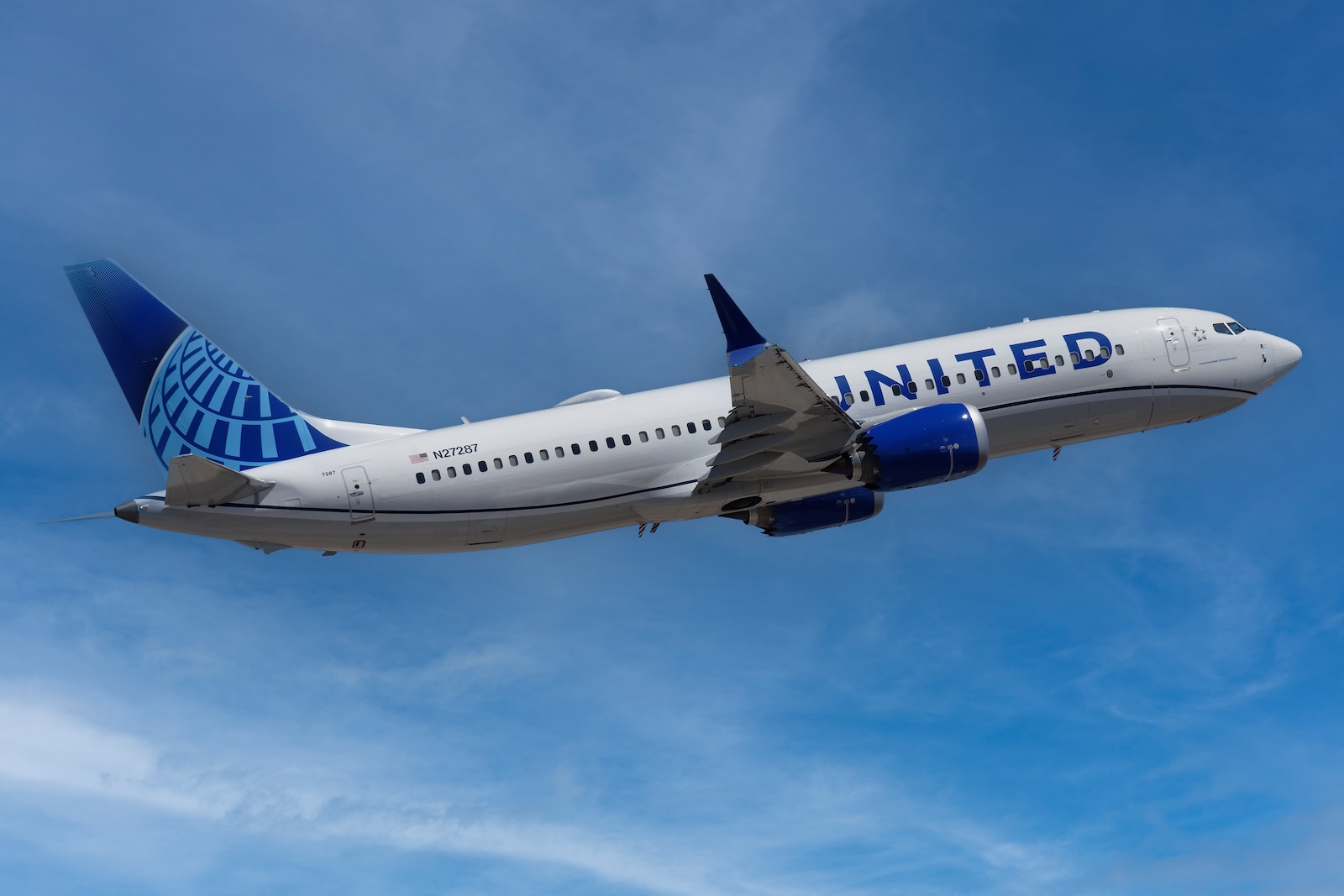


The National Transportation Safety Board has released its preliminary report on an incident involving a United Boeing 737 MAX 8 that diverted to Salt Lake City after its windshield was struck during cruise near Moab, Utah, on Oct. 16. The aircraft was operating as United 1093 from Denver to Los Angeles.
According to the report, the captain saw an object ahead shortly before a significant impact struck the first officer’s forward windshield at 36,000 feet. Glass entered the cockpit, and the captain received minor injuries to his right arm.
Pressurization remained stable, and the first officer took control while the crew completed checklists and communicated with dispatch. A window overheat alert on the first officer’s side later illuminated, and the crew addressed it using the required procedures.
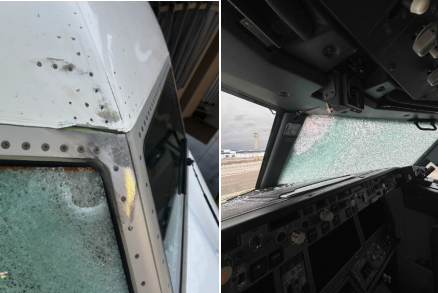
The captain briefed passengers, flight attendants prepared the cabin, and the aircraft began a descent into the airport. The landing on runway 16L was uneventful, and the airplane taxied to the gate under its own power. The captain received medical treatment at the gate. No other injuries were reported.
During the initial review, investigators contacted operators and agencies regarding nearby aircraft, reentry objects, or balloon activity. WindBorne Systems reported that it had lost communication with one of its Global Sounding Balloons in the same vicinity and timeframe. The balloon, launched the previous day from Spokane, last transmitted at approximately 35,936 feet as it passed through Utah.
WindBorne described the system as a lightweight, unmanned free balloon. It consists of a thin-film envelope, avionics, and a low-density ballast system designed to minimize potential impact forces.
“WindBorne has always strived to exceed the safety and operational standards outlined in 14 CFR Part 101, which governs high-altitude balloon systems,” the company said in a statement following the NTSB’s report. “However, the UA1093 incident has reinforced our commitment to continuous improvement, and we have acted immediately to further strengthen safeguards.”
The report also outlines the multilayer construction of the 737’s windshield, which is certified to withstand a four-pound bird strike and maintain structural integrity even with the failure of an outer pane. The damaged windshield was removed and sent to the NTSB Materials Laboratory for examination.
Preliminary flight data showed the aircraft traveling southwest at a groundspeed of about 395 knots at the time of the impact, nearly opposite the balloon’s last reported track.
Editor’s Note: This story was updated on Friday, Nov. 21, 2025, at 9:55 a.m. ET to add a statement from WindBorne.