

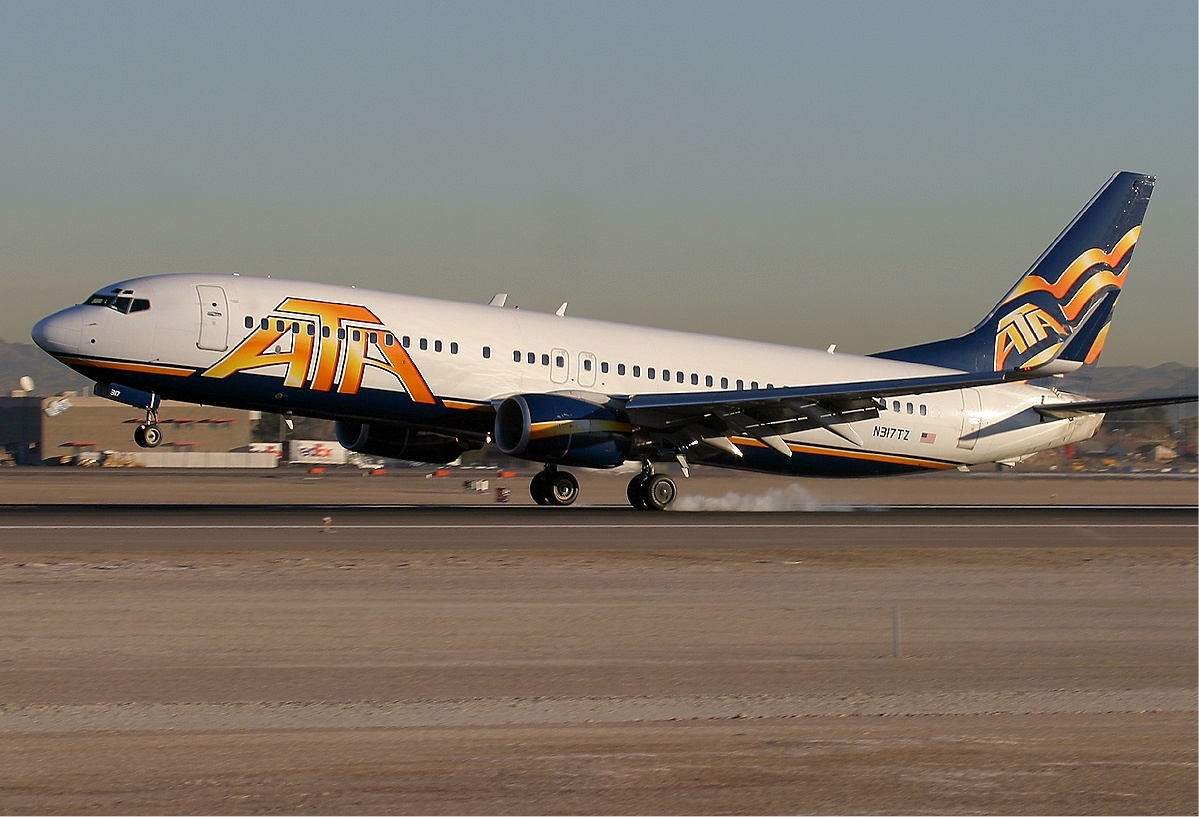


ATA Airlines entered the 21st century as a success story.
From its origins as a charter operator, it had grown into a regular scheduled airline with over 30 destinations, lucrative contracts with the U.S. military, and bustling hubs in Indianapolis and Chicago. In 2000, in a move befitting its new status as a major carrier in the eyes of the U.S. Department of Transportation, ATA ordered dozens of new aircraft from Boeing. If fully realized, the deal would have transformed the airline and made it competitive with the largest domestic carriers of its time.
Instead, ATA faced financial ruin on the heels of a national tragedy. The brief but sharp contraction in commercial flying after the 9/11 attacks sent the airline into a downward spiral from which it could not recover.
Beginnings
ATA grew out of the Ambassadair air travel club, formed by entrepreneur and pilot J. George Mikelsons in 1973. Air travel clubs were private organizations, a byproduct of the more tightly regulated pre-1978 airline sector, that ran flights for members, somewhat like a charter carrier. After deregulation, Mikelsons decided to make his business a proper charter service, and in 1981 Ambassadair became American Trans Air, later shortened to ATA.
From its base in Indianapolis, ATA operated charter flights around the world, gradually building both its clientele and fleet. Ambassadair had operated Boeing 720s, but in the 1980s these aircraft were replaced by 707s, which were in turn replaced by 727s and Lockheed L-1011 TriStars. As the company continued to grow, Mikelsons reorganized ATA under a new parent company, Amtran, which went on to launch subsidiaries like ATA Leisure, ATA Training, and ATA Cargo.
In 1986, ATA became a commercial airline and commenced regular scheduled service, with its first year-round route linking Indianapolis and Fort Meyers, Florida. From that relatively modest start, the airline expanded across the U.S. and added cities like New York, Chicago, Los Angeles, and Philadelphia to its network.
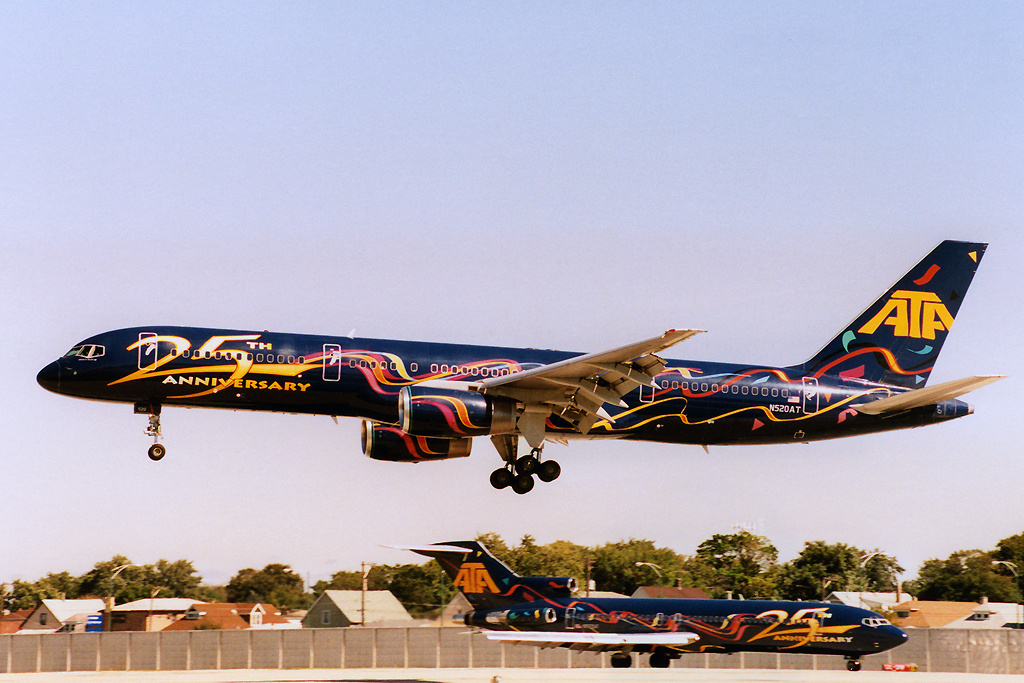
The difference-maker for ATA was the 757, which it acquired in 1989. More efficient than the carrier’s older aircraft, 757-200s helped ATA expand on the West Coast while supporting new connections between New York-JFK, Belfast, and Riga, Latvia. The type became the backbone of ATA’s fleet, and a major driver of its push into the Caribbean in the 1990s.
Military Partnership and Leisure Expansion
When the U.S. entered the Gulf War in 1991, ATA became a Pentagon contractor. It flew tens of thousands of U.S. military personnel during the conflict, and later operated charter flights for the military to bases in Italy, Turkey, and the Azores in Portugal. In 1992, the airline picked up a shuttle contract for flights between Nellis Air Force Base and the Tonopah Test Range, both in Nevada.
The working relationship between ATA and the Department of Defense would be renewed during the invasion of Iraq and the subsequent Iraq War in the 2000s.
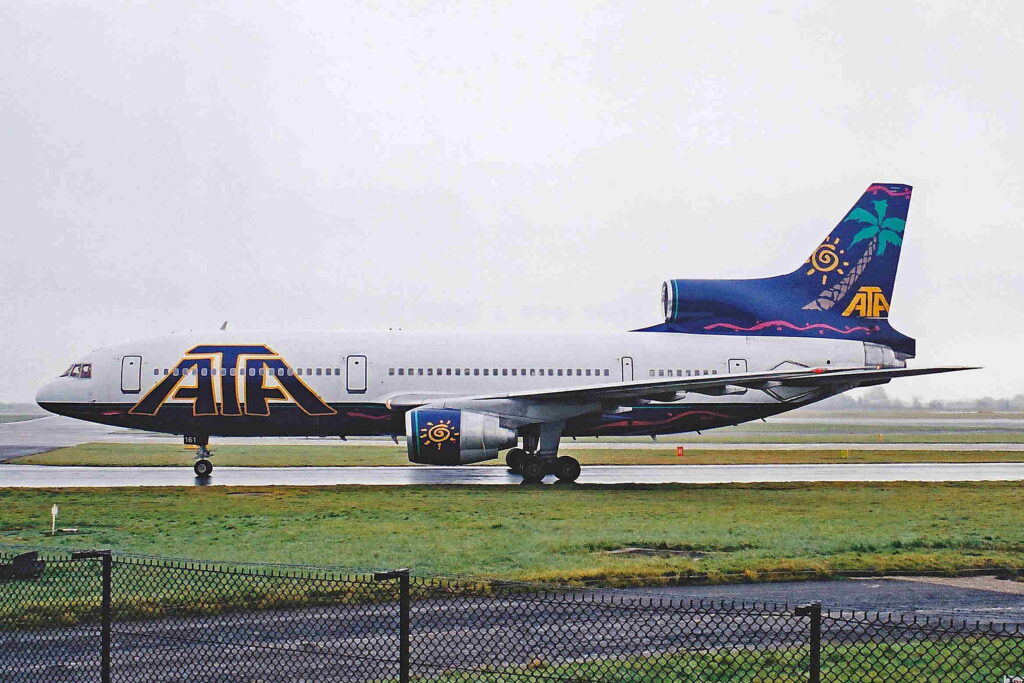
On the civilian side, ATA increasingly pivoted into leisure travel as it added destinations in Florida, Hawaii, Mexico, and the Caribbean. The airline started offering vacation packages to entice travelers and shifted resources south while exiting some less profitable northern markets. To drive the point home, executives rolled out a new slogan – “On ATA, You’re On Vacation!” – and commissioned a palm tree-themed livery in 1996.
Underpinning this shift in focus was the development of ATA’s second hub at Chicago Midway. The airport became ATA’s main conduit for south-bound leisure travel, and a commuter service called ATA Connection, operated by Chicago Express Airlines, was launched specifically to ferry passengers from around the Midwest to the Chicago hub.
By the late 1990s, ATA felt confident enough to place its largest ever order with Boeing for 39 737-800s and 12 757-300s. The aircraft were to be positioned at Midway, where they would help expand service on popular existing routes and eventually launch new ones.
Downturn
The terrorist attacks of Sept. 11, 2001, threw the U.S. airline industry into chaos, and ATA was particularly exposed due to the high cost of the Boeing deal. As Americans eschewed air travel, the carrier’s earnings plunged, and in 2004 ATA and its parent company filed for Chapter 11 bankruptcy protection.
To survive, ATA sold some of its gates at Midway to Southwest and AirTran Airways and shrunk its presence in Indianapolis. Service cuts followed, with the airline gradually ending flights to destinations like Boston, Minneapolis, Denver, and Newark, New Jersey. ATA Connection was closed, and its assets were sold off.
Amid the bankruptcy process, ATA signed a codeshare deal with Southwest and restructured its network to complement its larger partner. This included operating point-to-point flights to Southwest’s focus cities such as Las Vegas and Phoenix.
ATA emerged from bankruptcy in 2006, though in a much diminished form. It made several attempts to return to profitability, including launching new flights to Hawaii and shifting its Bay Area operations from San Francisco to Oakland, but rising costs and downward pressure on ticket prices made a full recovery difficult.
The final blow came in 2008, when FedEx canceled its military charter contract with ATA. The collapse of yet another revenue source, combined with the rising cost of jet fuel, depleted the airline’s cash on hand, and ATA again filed for bankruptcy. This time, operations came to a final halt.
Southwest purchased some of ATA’s remaining assets, including gates at LaGuardia Airport, though it took none of the defunct airline’s aircraft or workers. Today, ATA’s trademarks and logos remain the property of Southwest.