











San Francisco International Airport will see reduced arrival rates and potential delays as the Federal Aviation Administration implements a change to arrival procedures alongside a major runway construction project, officials confirmed Tuesday.
The FAA is limiting the use of certain parallel approach procedures as the airport prepares for extensive runway repaving work. The project will take two of the airport’s north-south runways out of service for roughly six months.
The construction effort centers on rehabilitating 1R/19L, which primarily handles departures and some arrivals. The work includes resurfacing the runways, upgrading lighting systems, and improving the underlying infrastructure.
During this period, all arrivals and departures will utilize Runways 28R and 28L. Runway 1L will also be used as a taxiway.
“SFO expects less than 10% of flights to be delayed as a result of the runway closure, with delays averaging less than 30 minutes and most likely to occur during peak periods at 9:00 a.m. and 8:00 p.m. – 9:00 p.m.,” the airport said as part of a December statement. Construction is expected to be completed in October.
Curbing Side-by-Side Approaches
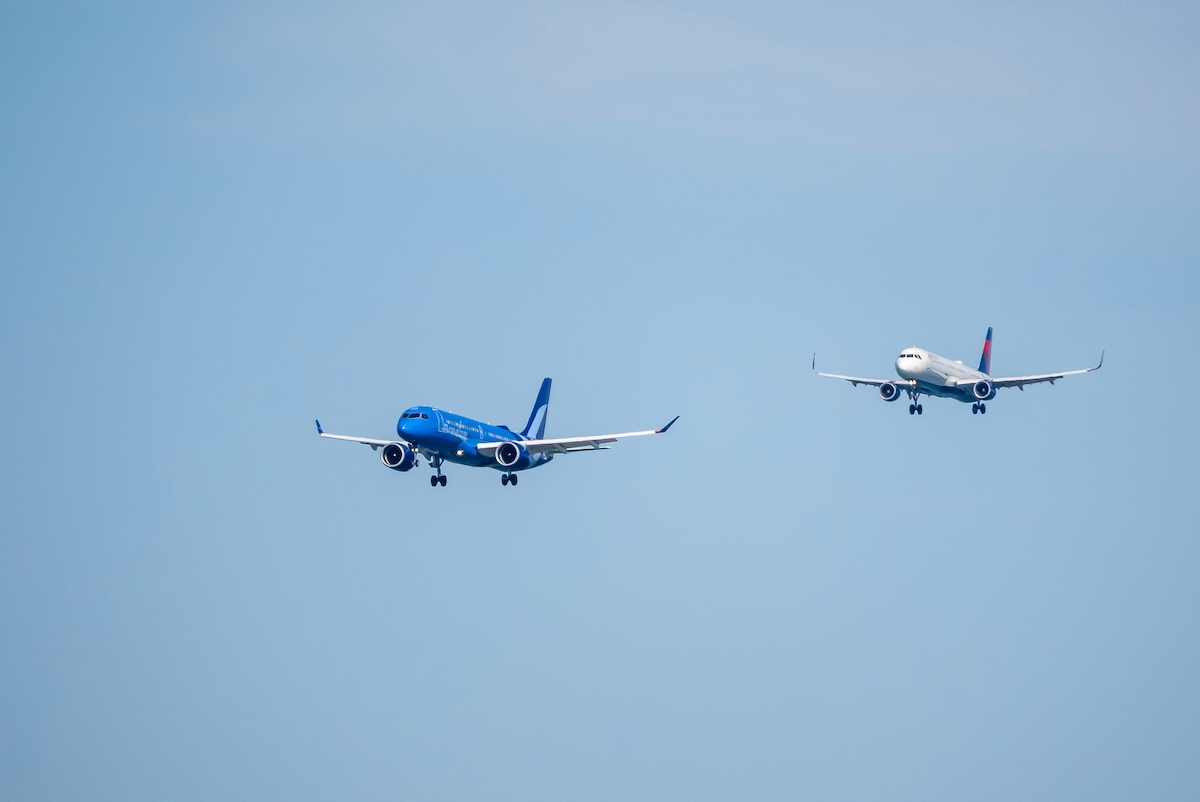
At the same time, the FAA is restricting a commonly used arrival technique known as visual parallel approaches. Under normal clear-weather conditions, pilots approaching San Francisco’s closely spaced parallel runways can conduct side-by-side approaches after confirming they have the adjacent aircraft in sight.
However, under the updated safety measure, those side-by-side approaches will no longer be permitted — even in clear weather when pilots have visual contact with other aircraft. Instead, aircraft will be required to fly staggered approaches, with one aircraft offset from the other on the parallel runway.
The FAA emphasized that simultaneous approaches were already prohibited during periods of poor visibility.
“San Francisco International Airport (SFO) will experience some flight delays due to a runway repaving project and an FAA safety measure,” an FAA spokesperson said in a statement. “The airport’s runway project will put the two north-south runways out of service for approximately six months. The FAA safety measure prohibits flights from making side-by-side approaches to SFO’s parallel east-west runways in clear weather when the pilots acknowledge having the other aircraft in sight. It requires staggered approaches, with one aircraft offset from the aircraft on the parallel runway.”
San Francisco is known for having some of the closest parallel runways among major U.S. airports, a layout that already limits simultaneous instrument approaches in low-visibility conditions. During such periods, arrival rates can drop significantly as aircraft must be spaced farther apart.
The FAA said it is continuing to evaluate options to maintain safety while improving arrival throughput at the airport.