











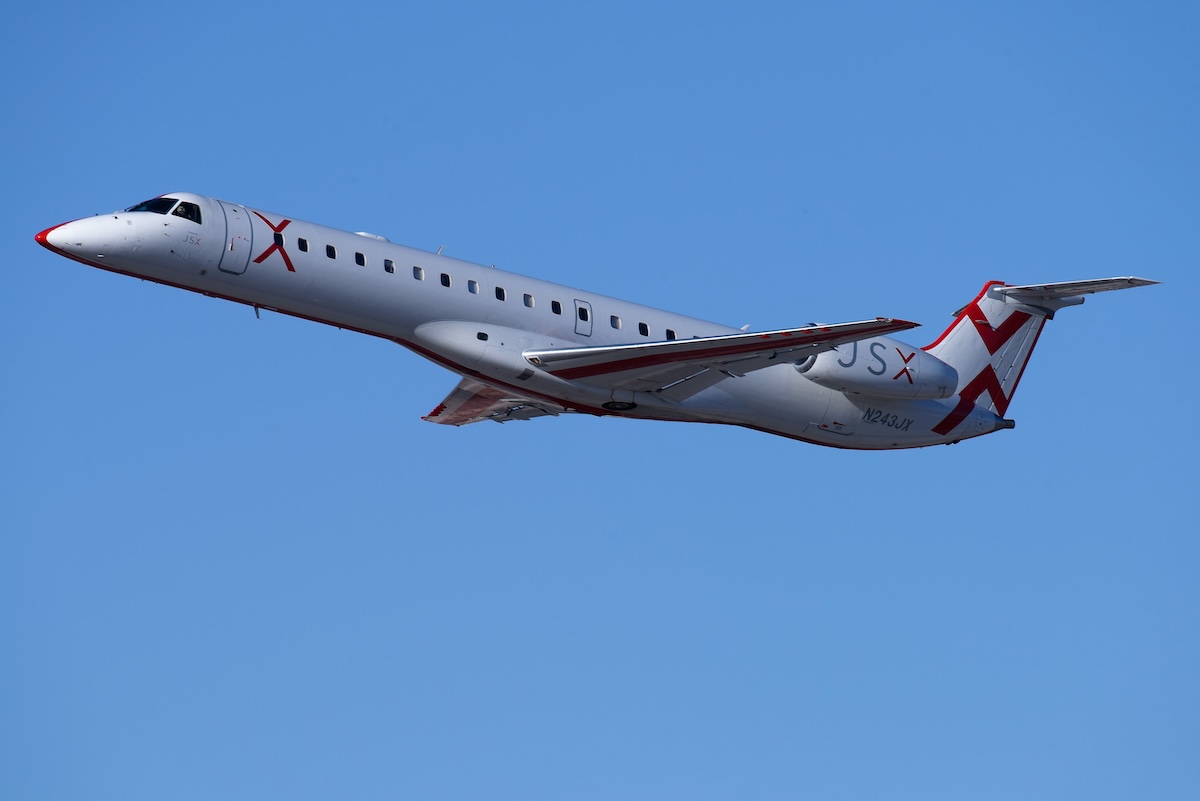


JSX plans to grow its fleet by more than 20% this year as the public charter operator prepares to enter new markets and shift more short-haul flying to ATR turboprops.
The company expects to end 2026 with 64 aircraft, up from 53 at the beginning of the year, JSX President David Drabinsky told AirlineGeeks in an interview last week. The year-end fleet will include four ATRs, with the remaining aircraft split between Embraer E135 and E145 jets.
JSX expects a similar pace of fleet growth in 2027.
“We have considerable fleet growth this year, and we’re anticipating similar growth for 2027 as well,” Drabinsky said.
The expansion represents more than an increase in aircraft count. JSX is beginning to divide its network between two distinct fleet types, using ATRs on shorter routes while shifting its Embraer jets to routes with longer stage lengths.
Drabinsky said the ATRs will ideally operate routes of approximately 350 miles or less. The E135s and E145s would then be freed up for longer point-to-point service.
The strategy could allow JSX to expand without relying exclusively on aging regional jets that were not designed for every market the company wants to serve.
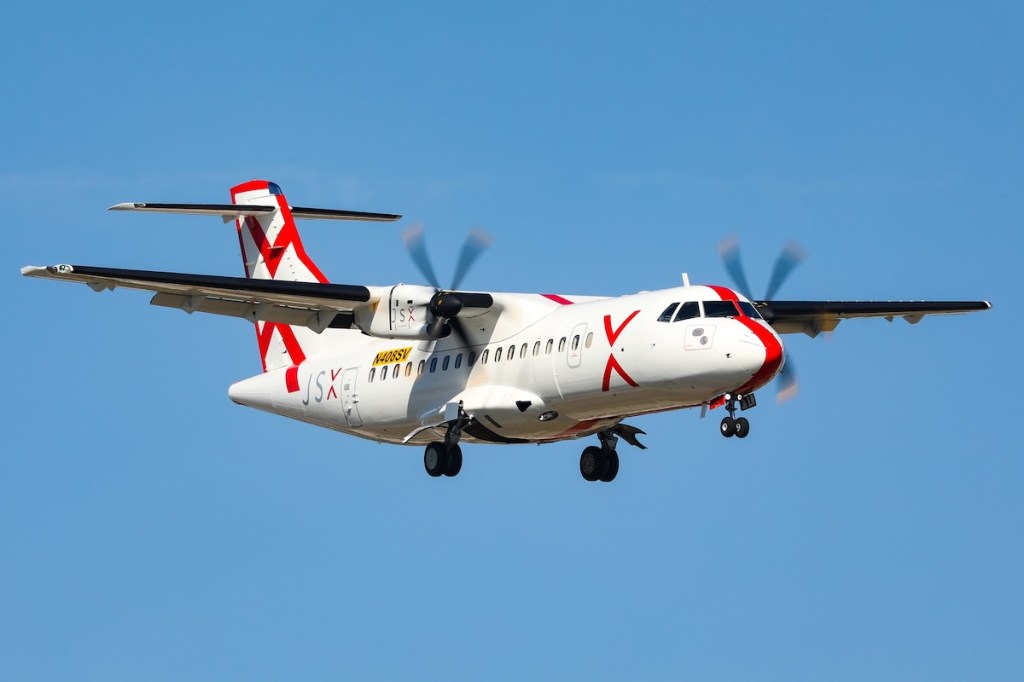
JSX currently operates its ATR from Santa Monica, California. Drabinsky said the company has been pleased with passenger reception and intends to deploy the turboprop beyond Southern California as more aircraft arrive.
The pace of that expansion will depend on deliveries.
“We definitely do” see a path for the ATR outside Southern California, Drabinsky said. “It’s just going to be dependent on the delivery schedule of how and when we get more of these airplanes.”
The carrier has an agreement in place for up to 25 ATR aircraft. Since taking delivery of its first earlier this year, the carrier now has three in its fleet.
The ATR is central to JSX’s next phase of growth because it can reach airports that the company’s Embraer jets cannot serve. Drabinsky pointed to shorter runways and high-elevation airports as two areas where the turboprop gives JSX more flexibility.
“It provides a number of opportunities for growth that we can’t do, quite frankly, with any jet that’s flying today,” he said.
Network Growth
According to Drabinsky, the aircraft could open access to scores of additional airports. Many of those facilities do not have scheduled air service, even though they may sit closer to population centers than larger commercial airports.
The turboprop also carries lower operating costs and burns less fuel than JSX’s regional jets on shorter flights. Those savings could translate into lower fares in some markets, Drabinsky said.
“Our costs will be lower, so we could, in some cases, charge less for it,” he said. “That will then allow our service — our unique service — to be available to more people.”
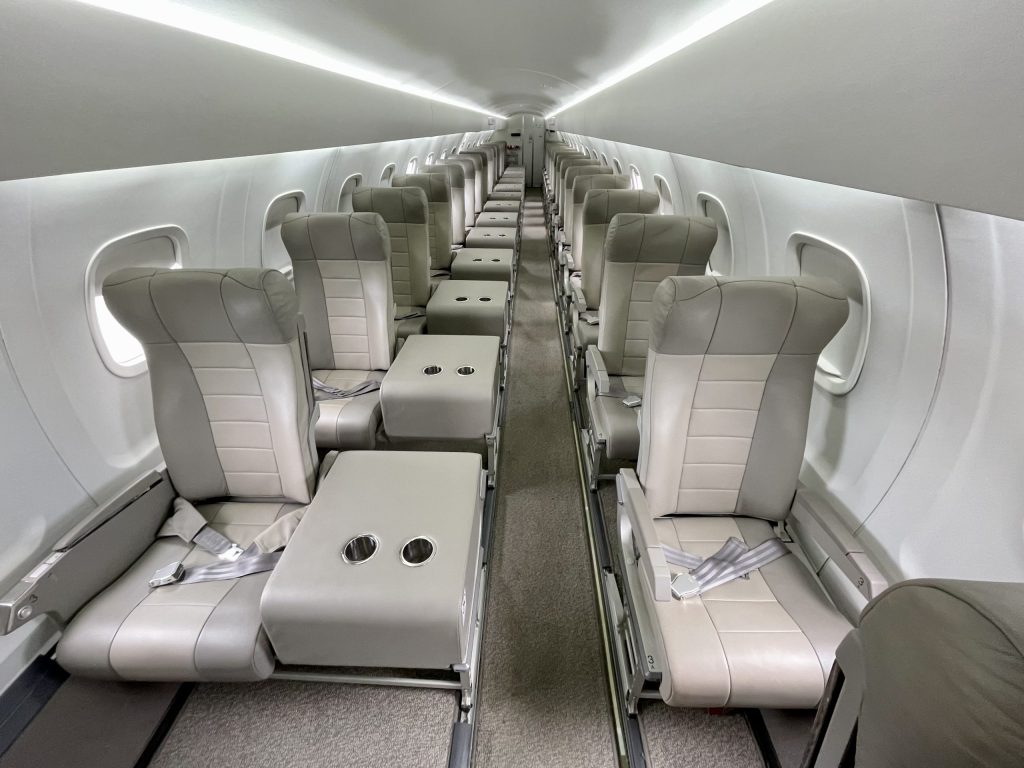
That would mark an important shift for JSX, which has traditionally positioned itself between private aviation and conventional airline service. Lower operating costs could allow the company to pursue markets that may not support its current pricing or jet operations.
Drabinsky also highlighted the ATR’s lower noise levels during arrival and departure. That could be significant at smaller airports surrounded by residential development, where noise concerns can restrict or complicate new service.
The fleet expansion will support a broader geographic push. JSX currently has only a limited East Coast presence and does not serve any cities in the Midwest.
Drabinsky said the East Coast is a primary focus for growth, while the Midwest remains a major untapped region.
“We only serve a handful of cities on the East Coast, so there’s a lot of opportunity in a number of cities on the East Coast that we’re really focusing that growth on,” he said.
The company is also studying the Midwest, though Drabinsky did not identify specific markets or provide a timeline for launching service.
“The Midwest for us is still very interesting,” he said. “We don’t serve any cities in the Midwest, and there’s a huge appetite from people living there who just want the differentiated service that we offer.”
‘Every Major City’
JSX’s longer-term goal is more ambitious. Drabinsky said the company wants to establish a presence in every major U.S. city while continuing to operate from airports that are often used primarily by private aircraft.
“We have desires to be in every major city across the U.S.,” he added.
That growth will depend on whether JSX can secure enough aircraft and identify airports that fit its operating model. For now, the company is preparing to add 11 aircraft in one year, quadruple its ATR fleet, and begin laying the groundwork for expansion into regions where it has little or no presence.
“We’re able to take these federally funded airports and put them to use for more people than ever before,” Drabinsky said.