










Editor’s Note: AirlineGeeks is proud to present our ‘Livery of the Week’ series. Every Friday, a team member will share an airline livery, which can be from the past, present, or even a special scheme. Some airline liveries are works of art. The complexity associated with painting around critical flight components and the added weight requires outside-the-box thinking from designers. The average airliner can cost upwards of $200,000 to repaint, creating a separate aircraft repainting industry as a result.
Have an idea for a livery that we should highlight? Drop us a line.
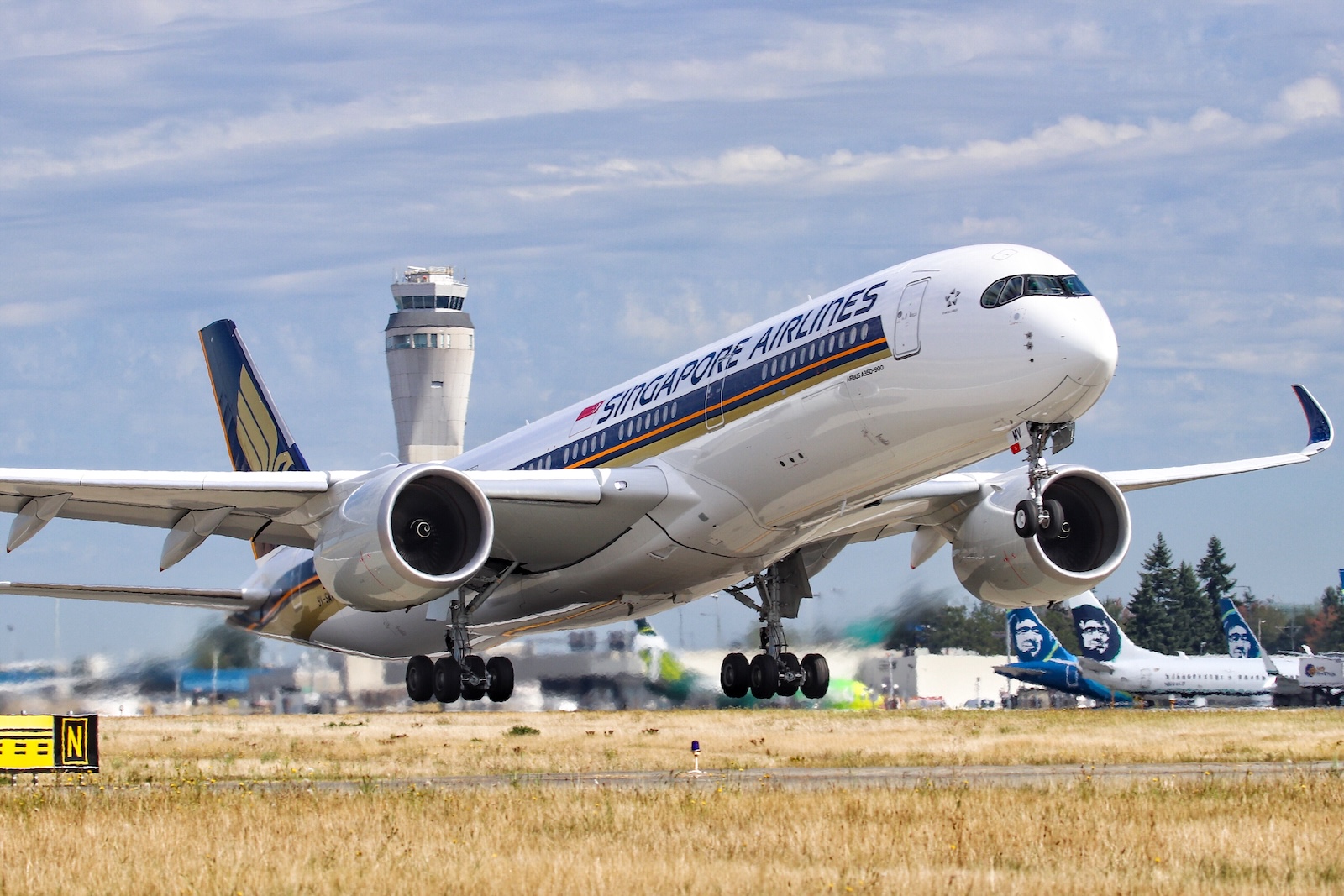
Singapore Airlines’ standard livery is one of the more enduring designs in commercial aviation. Built around a dark blue and gold color palette and the carrier’s distinctive bird logo, the basic look has remained largely recognizable since Singapore Airlines emerged as an independent carrier in 1972.
The centerpiece of the design is the airline’s yellow bird emblem, which appears against a dark blue vertical stabilizer. Often referred to as the “SilverKris,” the stylized bird has roots extending back to Singapore Airlines’ predecessor, Malaysia-Singapore Airlines, and became part of the new carrier’s identity following the breakup of MSA.
The fuselage is predominantly white, with large “SINGAPORE AIRLINES” titles displayed in dark blue along the forward section. Running the length of the aircraft is a pair of blue and gold cheatlines, a design element that has survived an era in which many other airlines have eliminated traditional fuselage stripes in favor of more minimalist liveries.
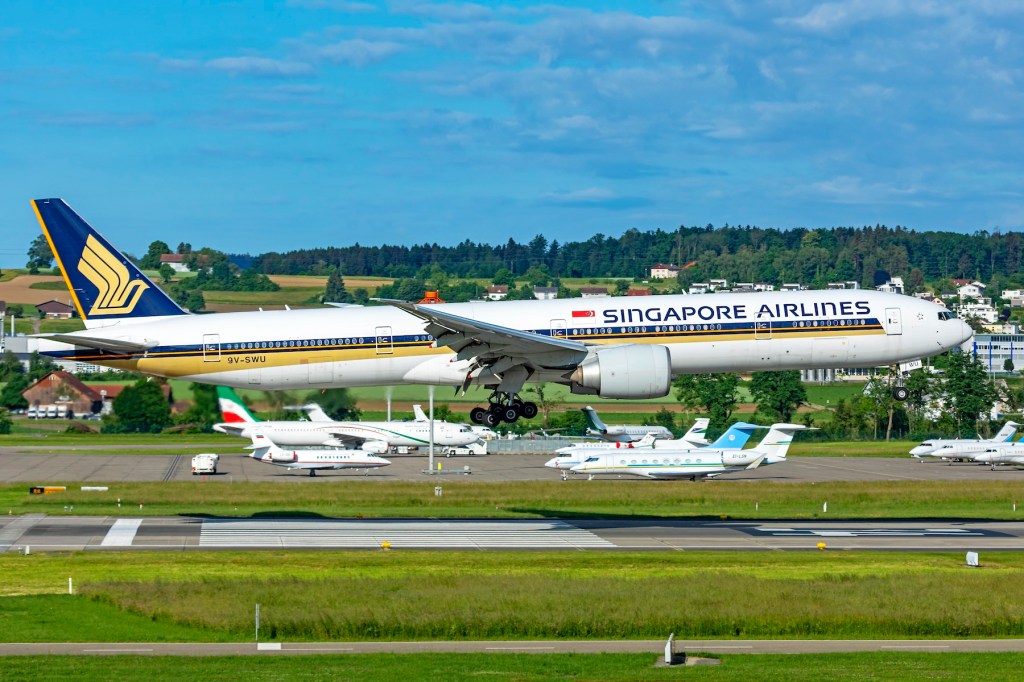
The same basic scheme has appeared on several generations of Singapore Airlines aircraft. Boeing 747s, 777s, and 787 Dreamliners have all carried variations of the design, along with Airbus A310s, A340s, A350s and A380s.
Perhaps the most significant change has been scale. The airline’s titles, tail logo, and cheatlines have been adjusted over the years to accommodate aircraft ranging from narrowbody Boeing 737s to the double-deck Airbus A380, but the core elements remain immediately recognizable.
The livery also became part of aviation history in 2007, when Singapore Airlines became the launch operator of the Airbus A380. The airline’s blue-and-gold colors adorned the first A380 to enter scheduled passenger service, which operated from Singapore to Sydney.
Looking for a new airplane model? Head over to our friends at the Midwest Model Store for a wide selection of airlines and liveries.