











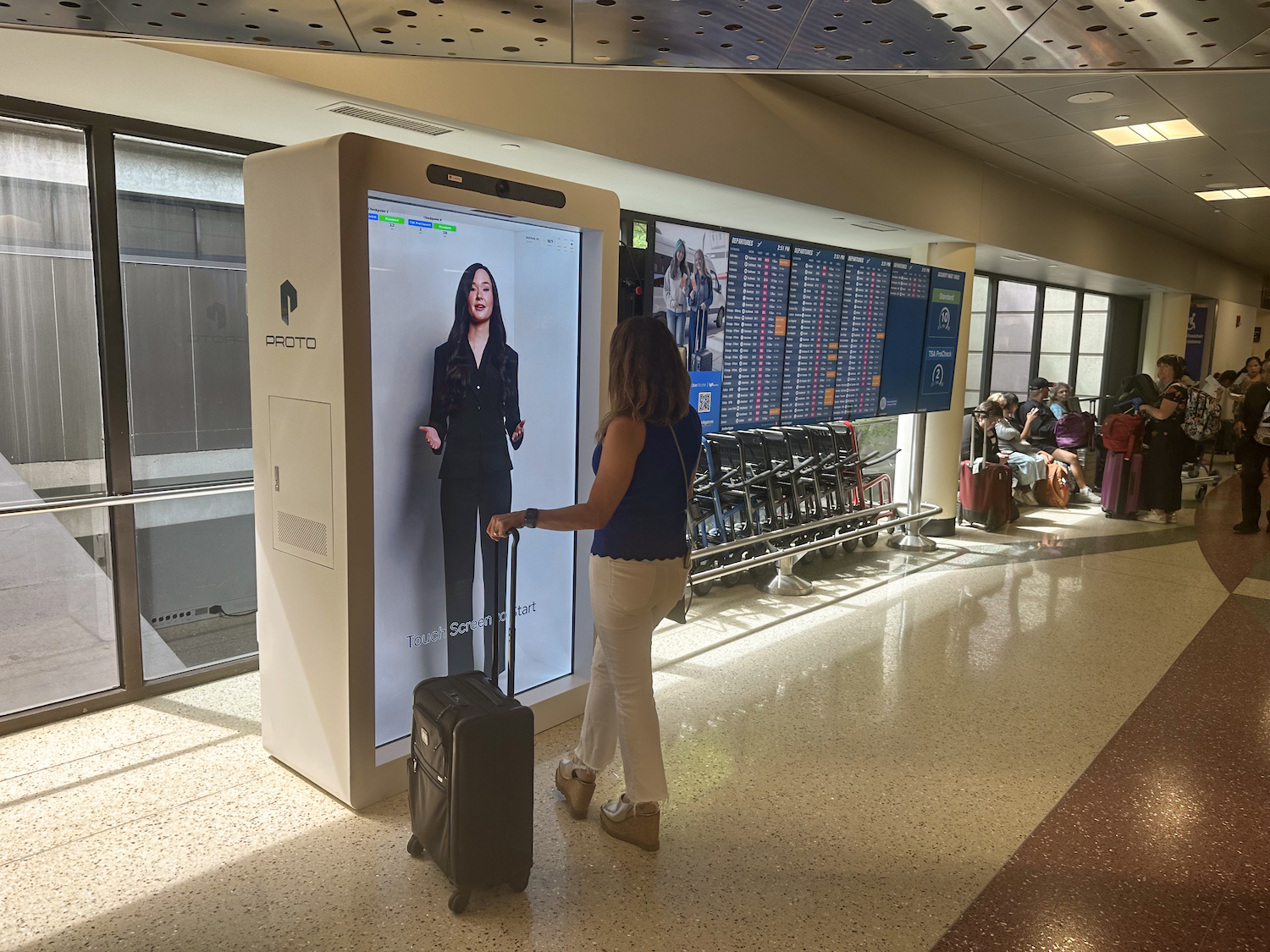


Travelers navigating unfamiliar airports are getting a futuristic new resource – artificial intelligence-powered holograms that can point them to a gate, advise them on parking, and even call up TSA wait times.
Hologram displays developed by Los Angeles company Proto Hologram have been installed at numerous U.S. airports in recent years, and just recently landed at Boston Logan. From nine separate display boxes positioned across Logan, a lifesize AI character named Amelia interacts with travelers and answers their questions. She can respond to and answer questions in several languages, and her current repertoire of airport knowledge includes 400 points of interest, set to increase to 1,000 by the end of the year.
“It’s like an all-knowing person is giving you this information, even after work hours when there aren’t humans immediately available to talk to,” Proto founder and chairman David Nussbaum told AirlineGeeks. “If you have ever been lost in a strange city, salvation is finding someone to help you.”
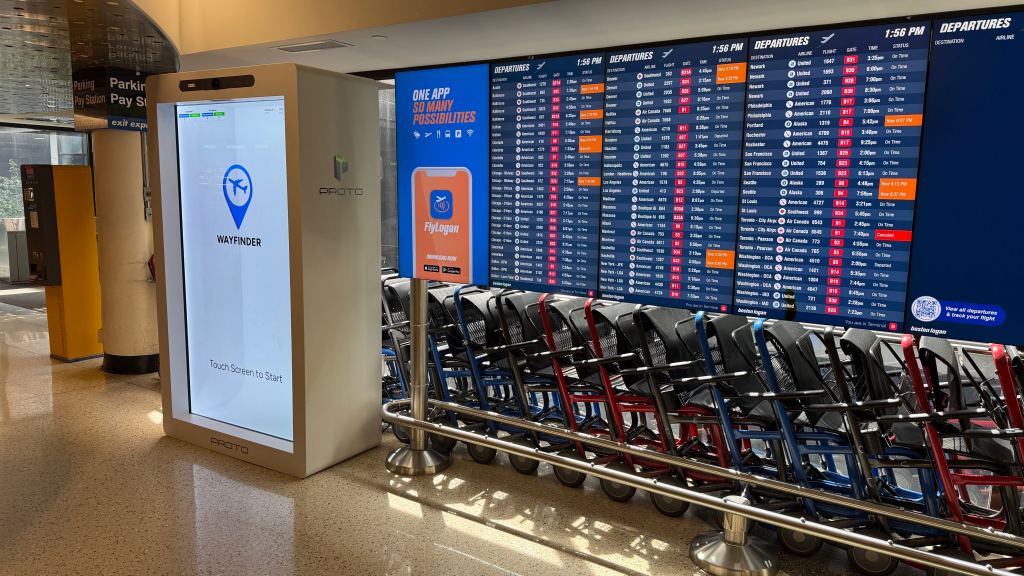
The version of Proto installed at Logan is the closest representation of the technology’s actual abilities, Nussbaum said. While other airports have used the holograms mainly for marketing, advertisements, and entertainment, Amelia is a “wayfinding avatar” designed to answer questions and act as a guide. The nine displays at Logan recognize their own location within the airport, and will give directions tailored to the traveler directly in front of them.
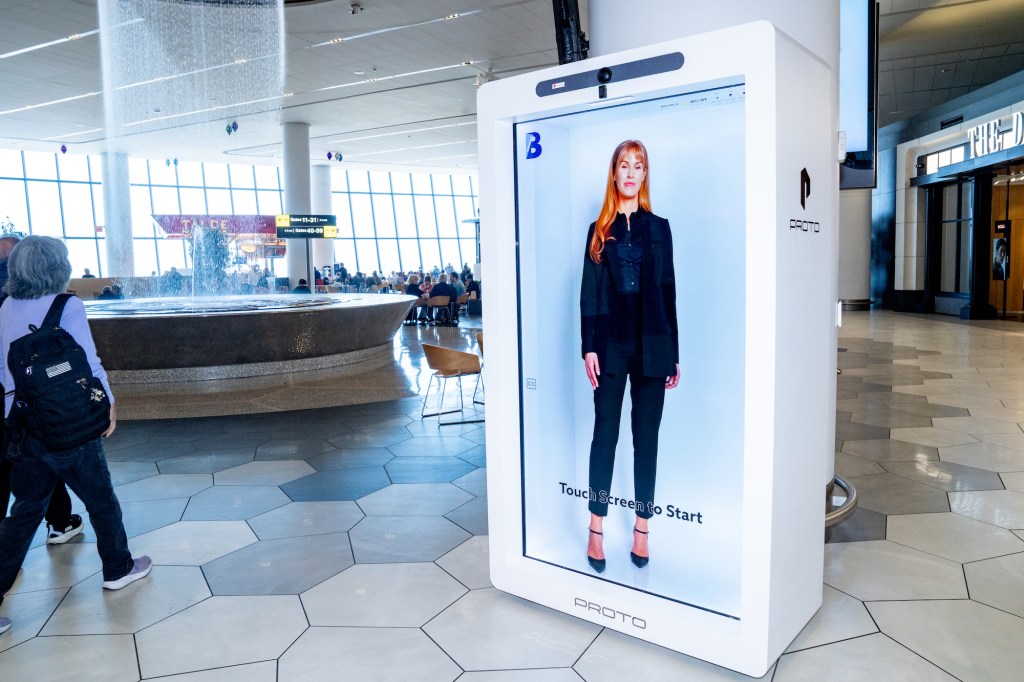
To reduce the likelihood of a wrong turn, users can scan a QR code on the display screen and get a map with directions to their destination sent to their phone. And if a conversation reaches a point where the technology cannot produce an answer, it will contact a human agent, and have the agent call the passenger on their phone.
Feedback from travelers has been positive. Nussbaum said he was concerned that usage would start strong when the displays were first introduced and then decline, but so far passenger engagement has remained robust, with members of the public interacting with Proto holograms “every hour of every day” since launch.
Amelia was developed specifically for the Massachusetts Port Authority, which operates Logan. Nussbaum said other airports opting for a wayfinding avatar would likely want their own AI ambassador, which Proto would help them plan and design.
‘Right In Our Wheelhouse’
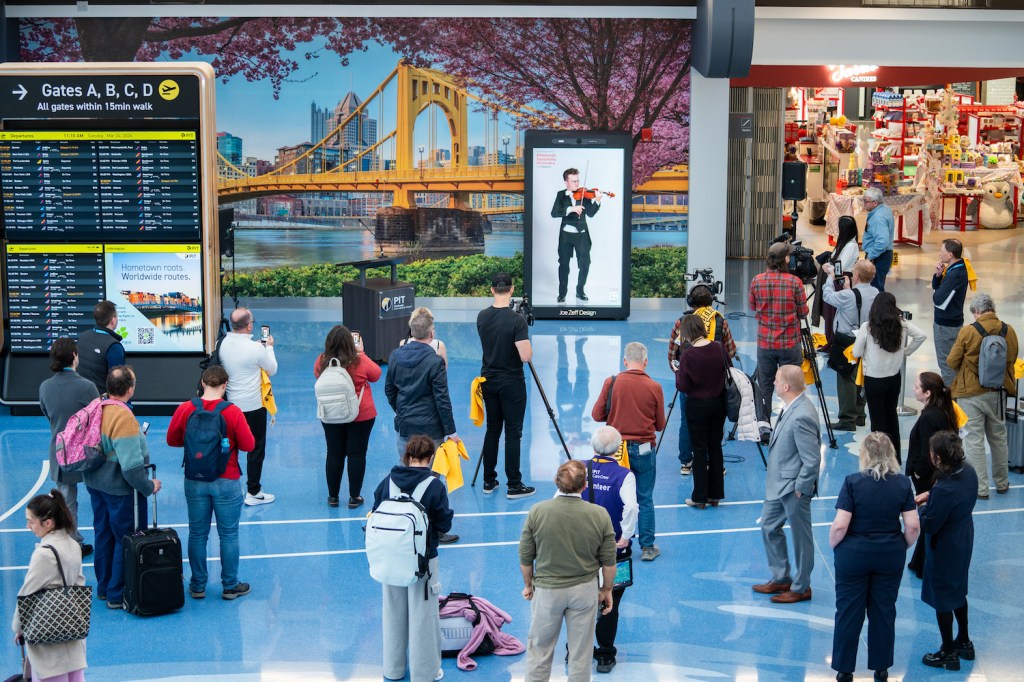
Proto’s technology has found a wide range of applications. Its displays now beam AI characters and real people, including musicians and comedians, into shopping malls, stadiums, and event venues. Celebrities and corporate executives use Proto holograms to appear before audiences they cannot reach in person. The company is also expanding into healthcare and education settings.
But Nussbaum said airports and other travel industry customers have been and will remain a critical part of Proto’s business.
“I don’t think there’s going to be a bigger area than travel and hospitality,” he said. “That’s right in our wheelhouse.”
Besides Boston Logan, Proto displays have been installed at New York-JFK, LaGuardia, San Francisco, Pittsburgh, Dayton, Ohio, Jacksonville, Florida, Louisville, Kentucky, and Nashville, Tennessee, as well as the Delta Flight Museum in Georgia. The company expects to announce partnerships with more airports “very soon.”
Nussbaum said the company’s biggest business opportunity at present is the software that powers the holograms. Proto recently decoupled the software from the hardware of the display box, meaning clients can now get Proto holograms on their existing screens, though they would lack the depth and visual texture of the 3-D versions. Nussbaum said this separation could one day allow AI helpers to appear across many screens within an airport.
Other avenues for growth include the development of AI brand ambassadors and applications that help travelers hundreds or thousands of miles apart communicate with each other face-to-face.
“I think talking to each other is a lost art,” Nussbaum said. “I love the idea that you can have real people engaging in real time regardless of where they are in the world.”