
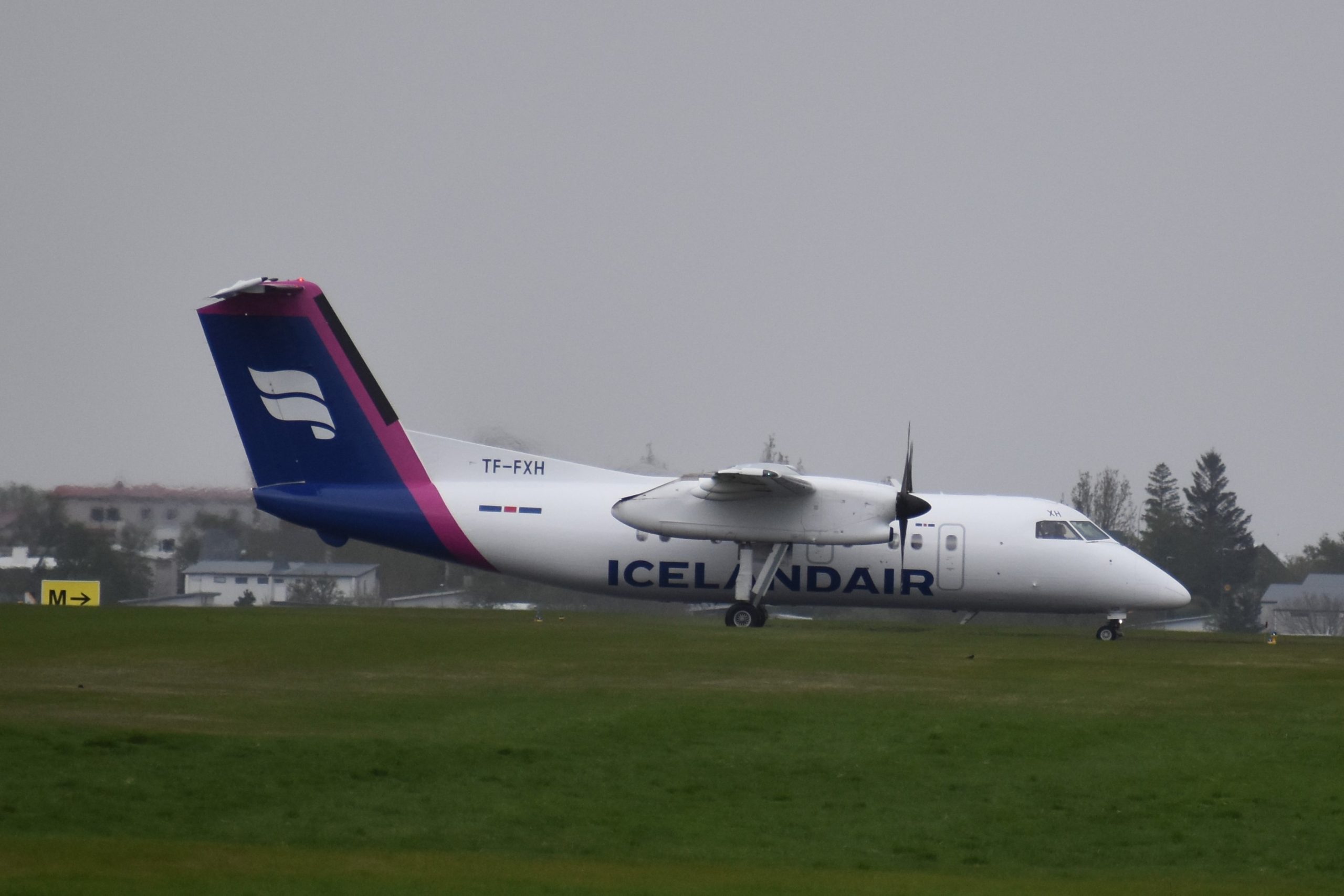


Last summer, AirlineGeeks reported that Icelandair was planning on retiring its Dash 8-200s in the summer of 2026, but it looks like this plan will be changing, and with it, the airline will also keep one of its most vital links.
With airports in Greenland opening newer, longer runways, the need for the smaller Dash 8 diminished, as the carrier could fly its slightly larger Dash 8-400s, more commonly known as the Q400, to its four destinations in Greenland. However, there was still one destination in Icelandair’s network that couldn’t handle anything larger than the small -200: Ísafjörður.
With the retirement of the Dash 8-200, Icelandair was going to end flights to Ísafjörður, as it didn’t make sense to keep a small fleet type just for one route. But the plan has changed, as the airline has been selected for an air service agreement to serve Ísafjörður for the next four years.
We had the chance to speak with Icelandair’s communications manager, Guðni Sigurðsson, about the change.
AirlineGeeks (AG): Will Ísafjörður keep its current service levels, or will it be altered in any noticeable way?
Guðni Sigurðsson (GS): Under the four-year agreement, service to Ísafjörður will remain year-round, but with lower frequency than the historical operation. Nine weekly flights in September-October and March-April, 7-weekly flights during the winter period (November-February), and 10-weekly flights during the peak summer season (May-August). This represents a reduction from the current double-daily summer schedule and from the current 11x weekly winter schedule, while still maintaining a consistent year-round service pattern with more flights in the peak summer months. The result is a more seasonally adjusted schedule that preserves key travel options for residents and visitors while aligning capacity more closely with expected demand.
AG: Icelandair had planned on ending Ísafjörður in conjunction with the last Dash 8-200 flights at the end of the 2026 summer season. Why did Icelandair bid for the contract if it was planning on retiring the aircraft type?
GS: When Icelandair announced plans to retire the Dash 8-200 fleet, the business case for continuing to operate the aircraft had largely disappeared. The aircraft had primarily been used on routes to Greenland and Ísafjörður, but new airport infrastructure in Greenland has allowed larger and more efficient aircraft to take over much of that flying. At the time, operating the Dash 8-200 fleet solely for Ísafjörður was not considered economically sustainable.
The possibility of government-supported services to both Höfn and Ísafjörður created operational synergies and a stronger revenue base than relying on Ísafjörður alone. That was one of the reasons Icelandair participated in the Höfn tender and later bid for the Ísafjörður contract as well.
AG: Icelandair was supposed to retire the Dash 8-200 as part of a fleet simplification. Does this mean the aircraft will now remain in service?
GS: Yes, since the recent awarding of public service contracts for both Höfn and Ísafjörður, the outlook for the Dash 8-200 fleet has changed and created a sufficient operating platform to continue flying the aircraft type alongside our fleet of the larger Dash 8-Q400. Therefore, the previously announced retirement plan is no longer proceeding as originally adjusted.
AG: What is the long-term plan for Ísafjörður going forward?
GS: The newly signed agreement secures service through 31 August 2030, providing a stable framework for continued operations over the next four years. Icelandair sees the route as strategically important both for residents of the Westfjords and for maintaining visibility and access to the region through Icelandair’s international sales and distribution network in Europe and North America.
A thank-you to Guðni Sigurðsson of Icelandair for answering our questions about the Dash 8-200 and the flights to Ísafjörður. Air service is vital for a community such as Ísafjörður, a community of less than 3,000 people, which sits up in Iceland’s secluded Westfjords region and has limited public bus options outside of the region, with options to the capital of Reykjavík taking around eight or nine hours and requiring multiple transfers.