












Editor’s Note: AirlineGeeks is proud to present our ‘Livery of the Week’ series. Every Friday, a team member will share an airline livery, which can be from the past, present, or even a special scheme. Some airline liveries are works of art. The complexity associated with painting around critical flight components and the added weight requires outside-the-box thinking from designers. The average airliner can cost upwards of $200,000 to repaint, creating a separate aircraft repainting industry as a result.
Have an idea for a livery that we should highlight? Drop us a line.
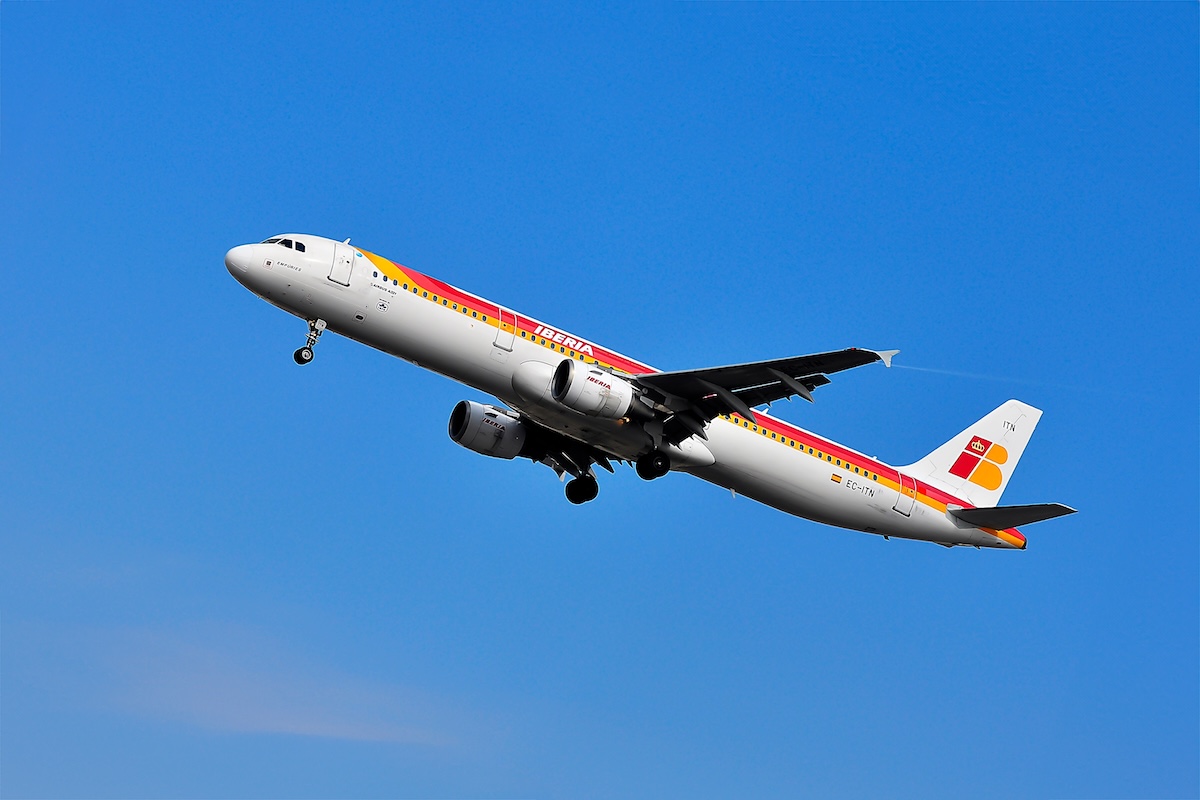
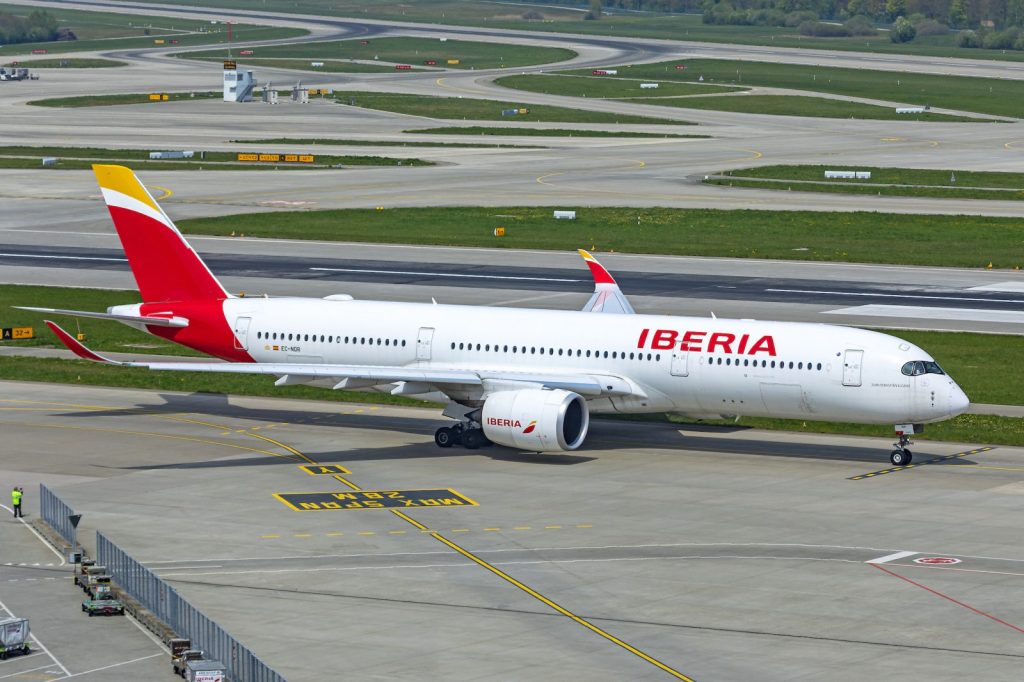
Iberia’s standard livery combines a predominantly white fuselage with a red-and-yellow tail inspired by the colors of Spain’s national flag. Introduced in 2013, the design marked the carrier’s first major rebranding in more than three decades.
The airline unveiled its new corporate identity on October 15, 2013, as part of a broader restructuring effort. The redesign replaced the familiar red, orange, and yellow stripes that had appeared on Iberia aircraft since the late 1970s.
The most prominent change came on the vertical stabilizer. Iberia introduced a sweeping red-and-yellow design that extends from the tail onto the rear fuselage. A white diagonal section separates the two colors, giving the aircraft a different appearance from the geometric logo used on the previous livery.
The fuselage also received a substantial update. Large red “IBERIA” titles replaced the smaller lettering used on earlier aircraft, while the horizontal stripes running along the windows were eliminated. The result was a predominantly white aircraft with most of its color concentrated toward the tail.
Iberia’s new branding retained the red and yellow of the Spanish flag but removed the royal crown from its main corporate logo. The crown had been part of the airline’s previous identity and remained represented separately on aircraft near their registration markings.
The redesign followed Iberia’s 2011 merger with British Airways under International Airlines Group. At the time, the Spanish carrier was undergoing a significant restructuring that included changes to its fleet, route network, and passenger experience.
The first aircraft to receive the updated livery was an Airbus A330-300 named *Juan Carlos I*, which was presented in November 2013. The new appearance was subsequently introduced across the airline’s fleet as aircraft underwent scheduled repainting.
Iberia’s earlier livery had been introduced in 1977 and featured a stylized red-and-yellow “IB” logo on the tail. Although the design received minor updates over the years, its basic appearance remained recognizable on aircraft ranging from Boeing 727s and 747s to Airbus A320s and A340s.
The current scheme has since appeared on several generations of Iberia aircraft, including Airbus A320-family jets, A330s and A350s. It also appears on the airline’s Airbus A321XLR fleet, which entered service in 2024 as Iberia became the launch operator of the long-range narrowbody.
Iberia has occasionally introduced special liveries celebrating milestones in its history, including retro designs commemorating the airline’s earlier aircraft. Its standard scheme, however, has remained largely unchanged since the 2013 rebranding.
Looking for a new airplane model? Head over to our friends at the Midwest Model Store for a wide selection of airlines and liveries.