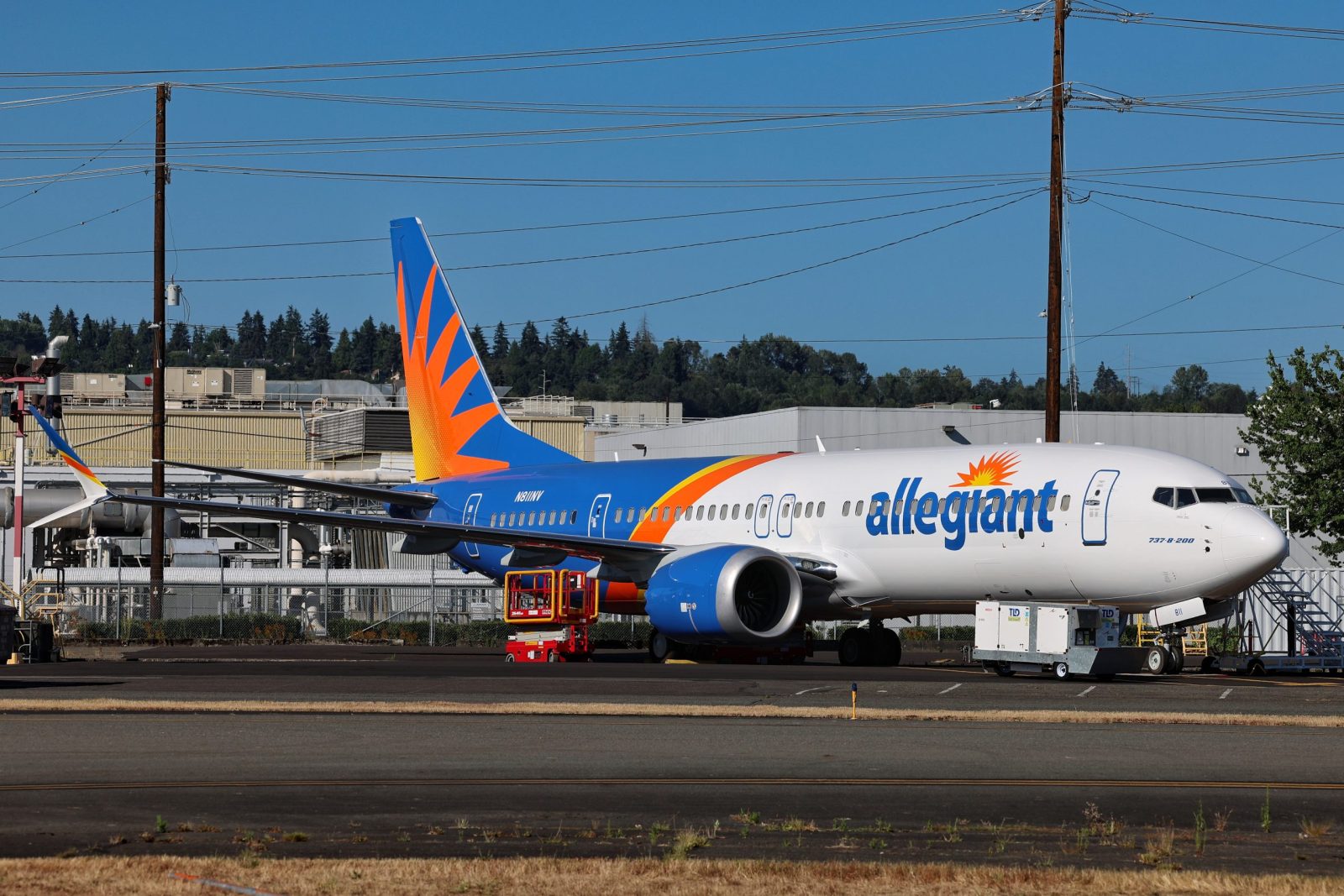

Allegiant has taken delivery of its first Boeing 737 MAX aircraft after nearly eight months of manufacturing delays. The new jet is the airline’s first Boeing aircraft since it pivoted to an all-Airbus fleet in 2018.
The ultra-low-cost carrier (ULCC) placed a firm order for 50 Boeing 737 MAX aircraft in 2022 with plans to take delivery of up to 34 frames by the end of 2024. However, ongoing manufacturing and delivery delays at Boeing hampered the airline’s initial fleet plan.
In August, Allegiant again lowered its Boeing delivery expectations for 2024 to just four aircraft, down from the initial 12.
According to Cirium Diio schedule data, the airline plans to deploy its 737 MAX into revenue service starting on Nov. 1, 2024. Initially, the new fleet type is slated to fly from Allegiant’s bases in Orlando-Sanford and St. Pete–Clearwater in Florida.
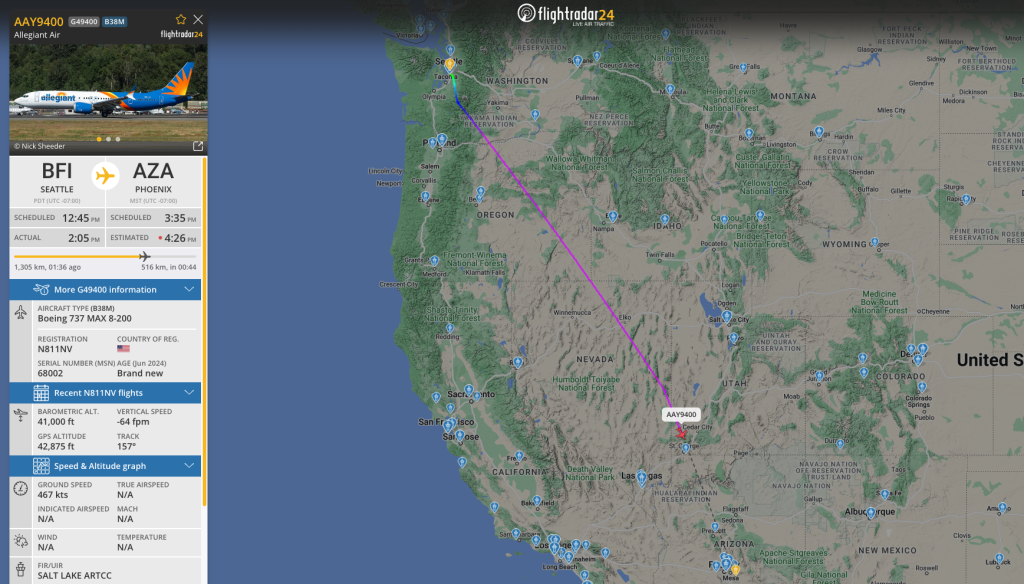
On Monday, the airline’s first 737 MAX 8-200 — registered as N811NV — ferried from Boeing Field in Seattle, Wash. to its base in Mesa, Ariz. Allegiant’s 737 MAX fleet is expected to be configured with 190 seats, including 21 “Allegiant Extra” seats with additional legroom.
Despite its now former status as an all-Airbus operator, the 737 MAX is not Allegiant’s first Boeing aircraft. The Las Vegas-based airline previously operated a handful of Boeing 757-200s until 2017.
“We are thrilled to take delivery of our first 737-8-200 aircraft,” a spokesperson from the carrier said in a statement. “The efficiency and operational reliability of this next-generation aircraft will bring numerous benefits to Allegiant and our customers. This new model is not only fuel-efficient, reducing our operational costs significantly, but it also offers an enhanced travel experience for our passengers. The modern cabin design features spacious overhead bins, allowing for a more comfortable and convenient journey. There are a few additional steps in the process of inducting it into the fleet, but we expect to have the aircraft in service, flying passengers to their destinations, in several weeks.”