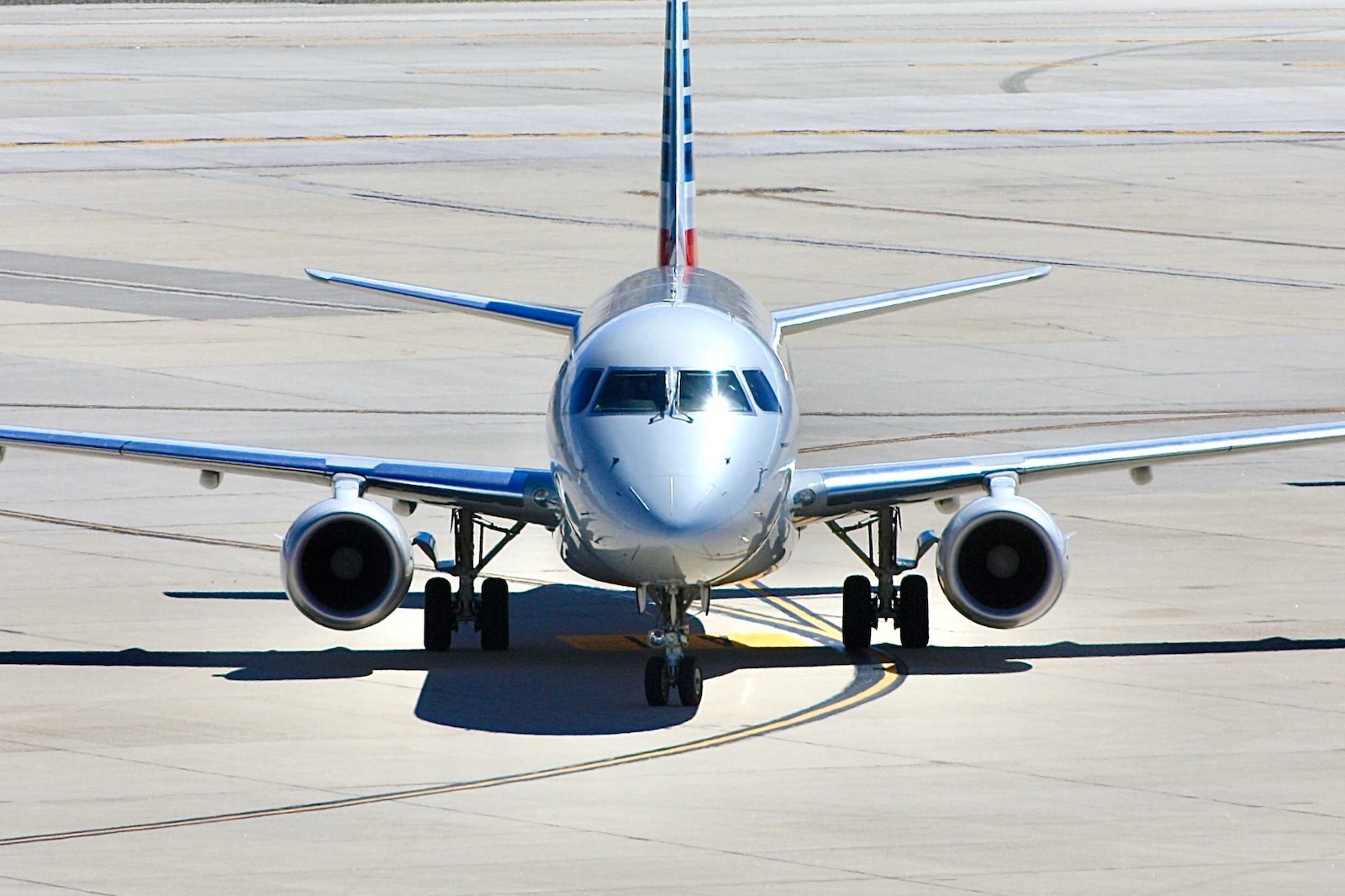
A Republic Airways E175 aircraft. (Photo: Shutterstock | Austin Deppe)
President Donald Trump has nominated Republic Airways CEO Bryan Bedford to serve as administrator for the Federal Aviation Administration.
Trump announced in a social media post on Monday that Bedford will work alongside U.S. Department of Transportation Secretary Sean Duffy to reform the agency.
“As the former President and CEO of Republic Airways, Mesaba Airlines, and Business Express Airlines, Brian brings over three decades of experience in Aviation and Executive Leadership to this critical position,” Trump said in his post on Truth Social. “Bryan will work with our GREAT Secretary of Transportation, Sean Duffy, to strongly reform the Agency, safeguard our exports, and ensure the safety of nearly one billion annual passenger movements.”
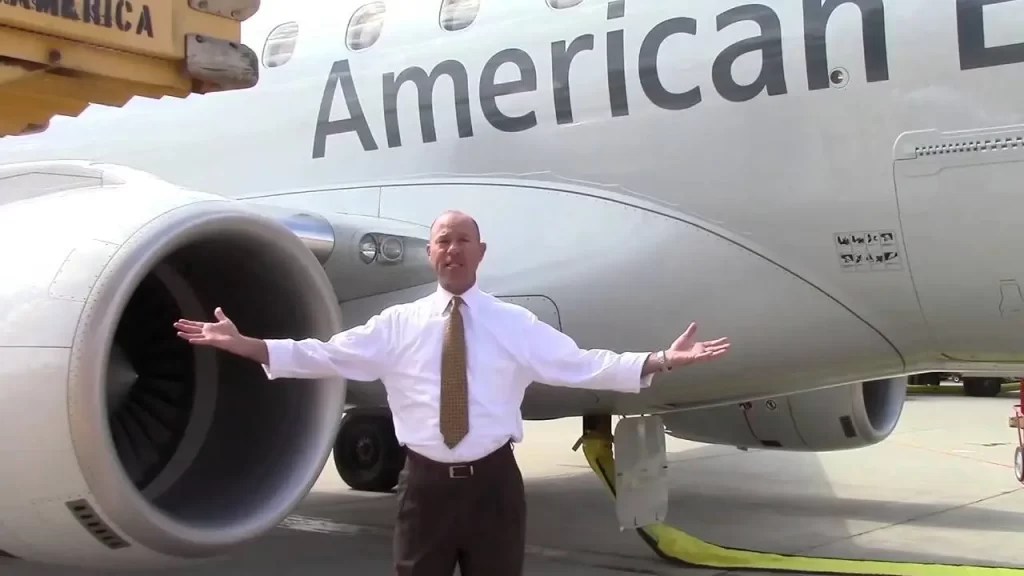
Republic CEO Bryan Bedford (Photo: Republic Airways | YouTube)
“With over three decades of experience in the aviation sector, both as a pilot and airline CEO, Bryan Bedford will bring a deep understanding of the complexities, challenges, and opportunities facing air travel today,” said Airports Council International CEO Kevin Burke in a post on X.
“The Regional Airline Association Applauds Nomination of Bryan K. Bedford as FAA Administrator,” the RAA stated. “Today, our aviation system is safe, but every aspect is straining and in need of deep repair. I can think of no better person than Bryan to take up the mantle of leadership at the FAA and set course for a stronger, safer tomorrow.”
Republic is a regional airline operating on behalf of American, Delta, and United. The carrier operates over 900 daily flights with around 200 Embraer aircraft.
It is currently unclear what will become of Bedford’s position as CEO at Republic, which he’s held since 2007. AirlineGeeks reached out to the airline for comment.
AirlineGeeks.com was founded in February 2013 as a one-person blog in Washington D.C. Since then, we’ve grown to have 25+ active team members scattered across the globe. We are all here for the same reason: we love deep-diving into the fascinating realm of the airline industry.
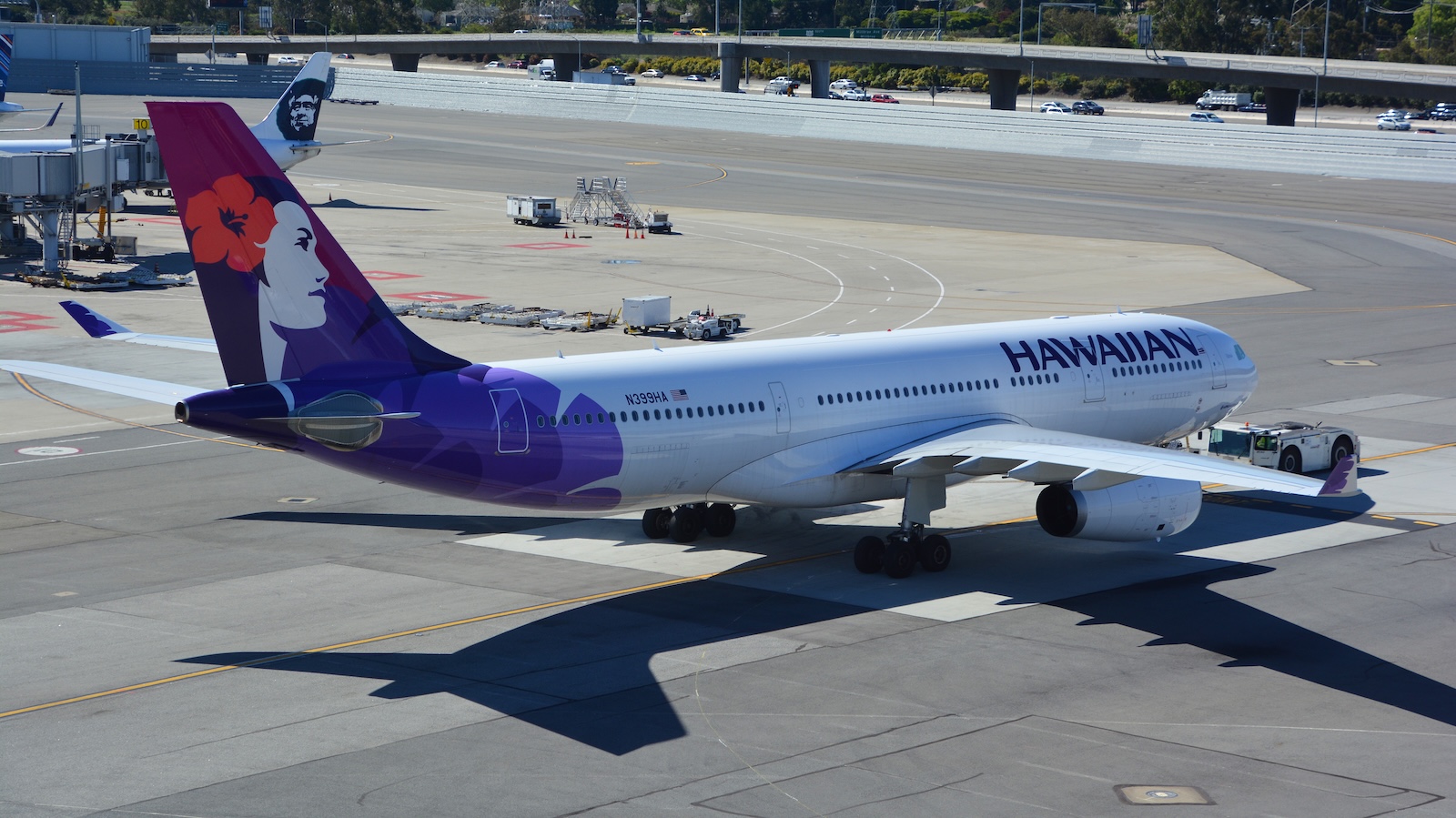
A Hawaiian Airlines A330 (Photo: Shutterstock | meunierd)
Hawaiian Airlines flight attendants have reached a tentative agreement on a contract extension. The Association of Flight Attendants-CWA (AFA) Hawaiian Master Executive Council announced on Friday that they had successfully negotiated an extension to their current contract through February 2028.
The tentative deal includes several improvements for the carrier’s around 2,200 flight attendants. Pay increases will start at 6% effective April 1, 2025, followed by additional 3% raises in 2026 and 2027.
Multiyear Pay Raises
This translates to substantial pay growth across all tiers, potentially culminating in hourly wages of up to $82.78 by April 2027 for the most senior attendants. Moreover, Hawaiian flight attendants will join the profit-sharing program of the Alaska Air Group (AAG) starting in 2025, with benefits being distributed from 2026.
Additionally, the contract introduces incentives for reserve flight attendants, granting 1.5 times the pay for hours worked beyond 85 in designated months. Enhancements in time-off policies are also part of the deal, with improvements in the ability to pick up Guaranteed Day Off assignments and an extension of the deadline for the Retiree Health Reimbursement Arrangement to April 2, 2026.
The ratification vote is set to open on March 31 at 10 a.m. HST and will close on April 17 at 10 a.m. HST.
This tentative agreement comes at a key time for Hawaiian, as it navigates its recent acquisition by Alaska Air Group. The extension, if ratified, will provide stability for flight attendants while laying the groundwork for future negotiations toward a Joint Collective Bargaining Agreement with the new parent company, the union said.
Ryan founded AirlineGeeks.com in February 2013 and has spent more than a decade covering the airline business. His work has been featured by CNN, WJLA, CNET, and Business Insider. His aviation experience spans airport operations, Part 135 regulatory compliance, and airline crew workforce planning, along with time behind the yoke of a Cessna 172 and interviews with airline executives. Ryan now serves as Group President of Firecrown Media’s Aviation Group. He holds a B.S. in Air Transportation Management and an MBA from Arizona State University and teaches Airline Management at Embry-Riddle Aeronautical University.
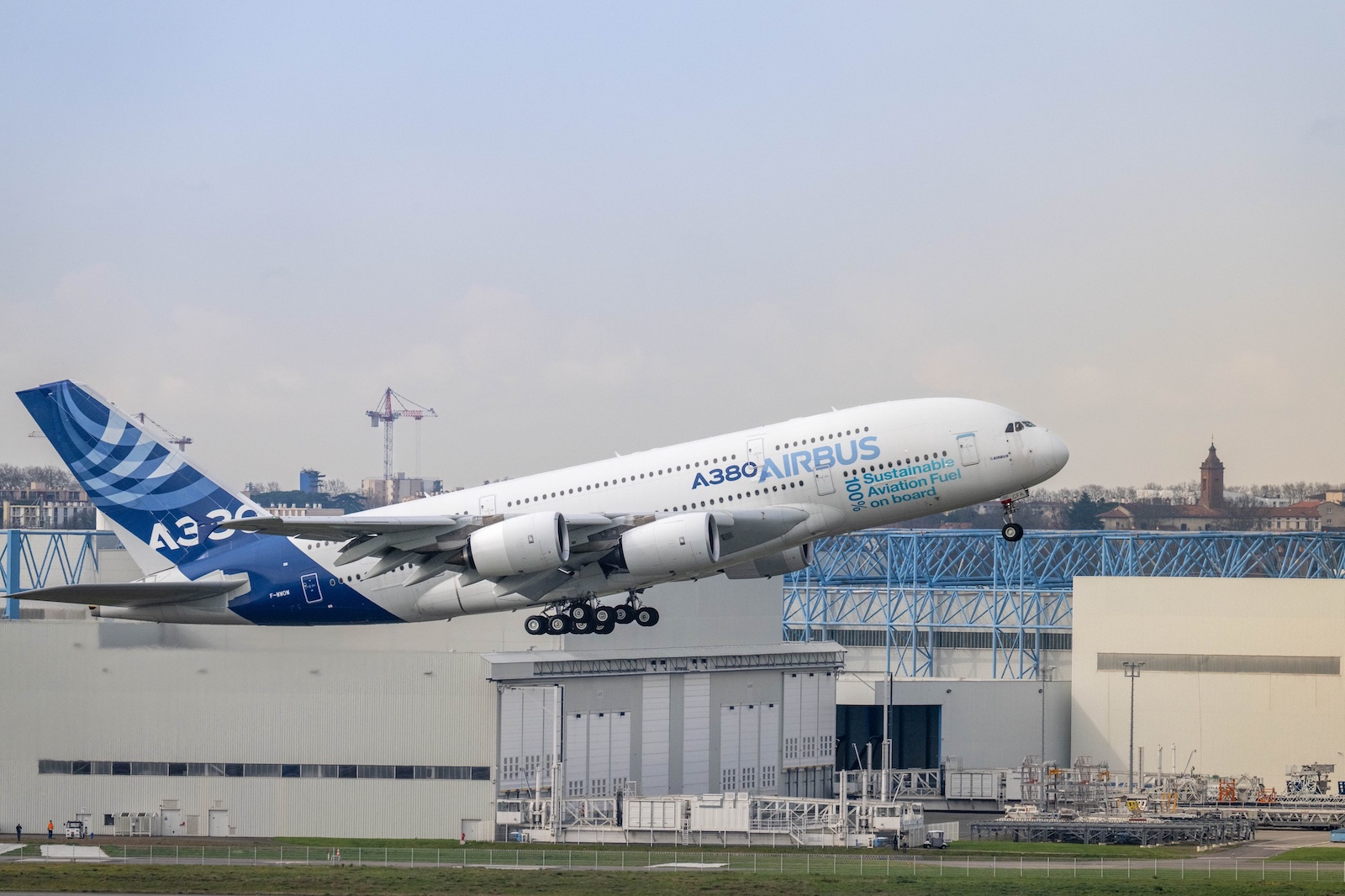
The first-ever Airbus A380 is flying again for the first time since 2022. The aircraft – registered as F-WWOW – debuted in 2005 and was the A380’s first prototype jet.
According to Flightradar24 data, the aircraft’s last test flight was in May 2022. Since then, it has been stored at Airbus’ Toulouse, France, manufacturing facility.
Its latest flight was on Friday, a three-hour test mission to and from Toulouse. This was the first in a series of test flights, Airbus said.
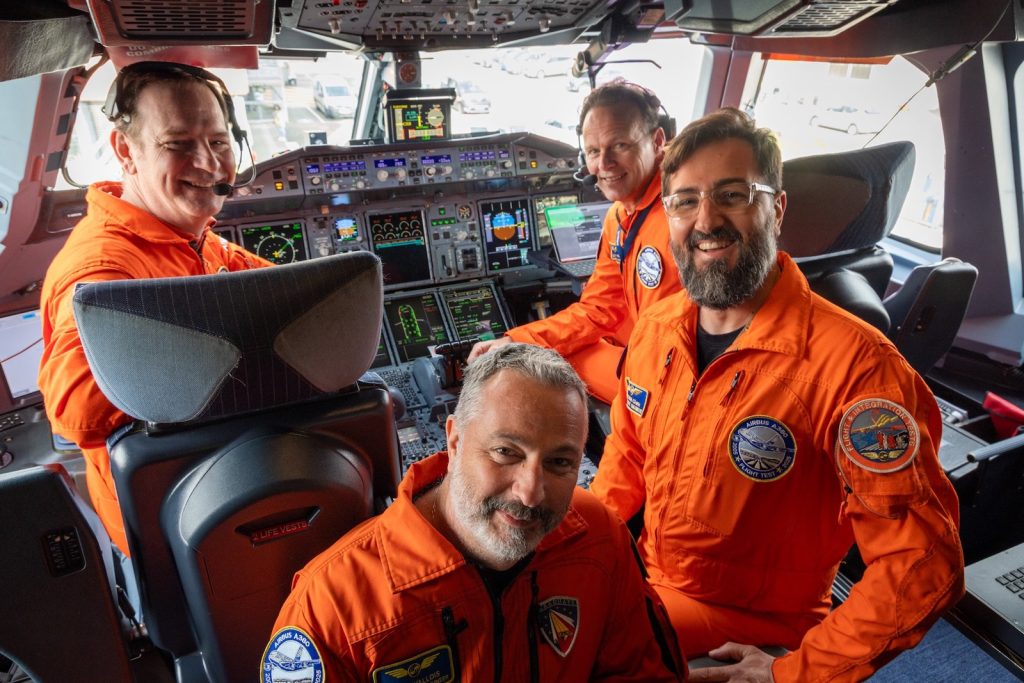
Airbus flight test team (Photo: Airbus)
“After months of preparation, system upgrades and the renewal of its test installations, our teams kicked off a series of flight test activities this week,” the manufacturer shared on social media. “These tests enable the certification of all the latest developments that keep the A380 in-service fleet flying at the highest standards of safety and reliability.”
While some of the superjumbo jets were retired during the COVID-19 pandemic, 189 A380s remain in active service worldwide. Ten airlines continue to operate the aircraft.
Ryan founded AirlineGeeks.com in February 2013 and has spent more than a decade covering the airline business. His work has been featured by CNN, WJLA, CNET, and Business Insider. His aviation experience spans airport operations, Part 135 regulatory compliance, and airline crew workforce planning, along with time behind the yoke of a Cessna 172 and interviews with airline executives. Ryan now serves as Group President of Firecrown Media’s Aviation Group. He holds a B.S. in Air Transportation Management and an MBA from Arizona State University and teaches Airline Management at Embry-Riddle Aeronautical University.
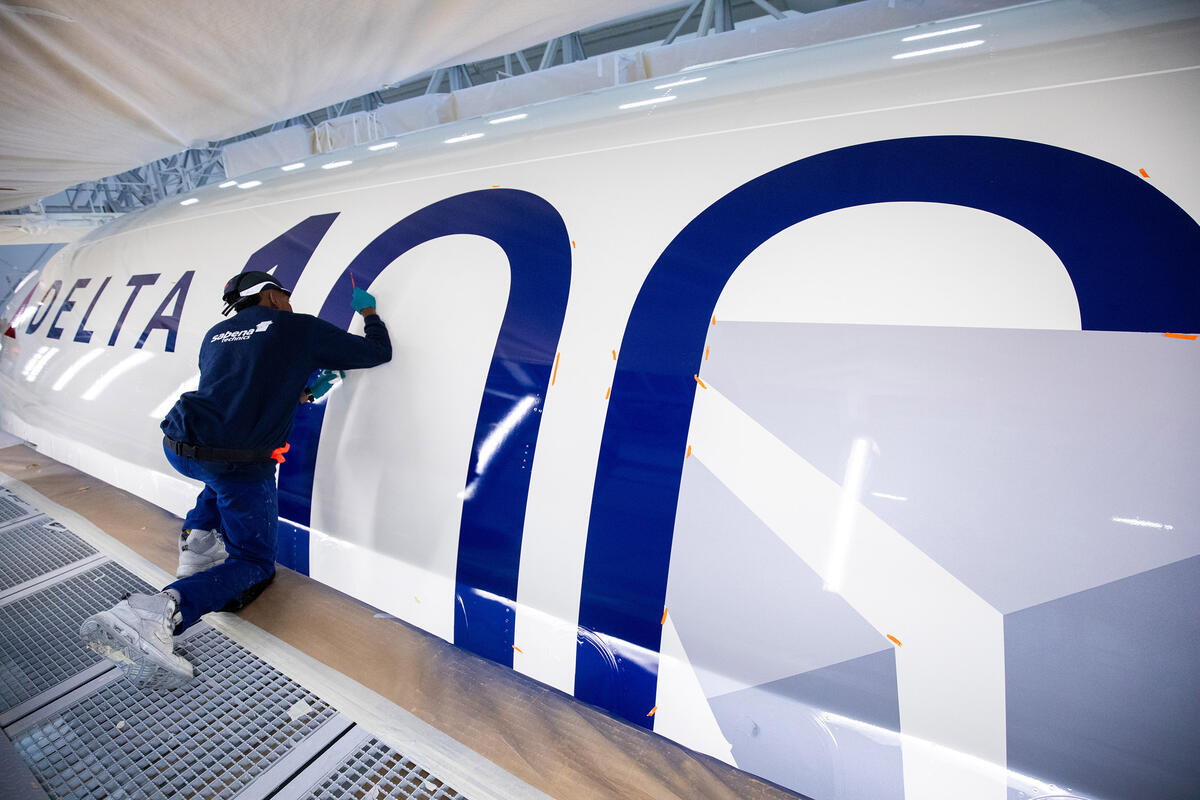
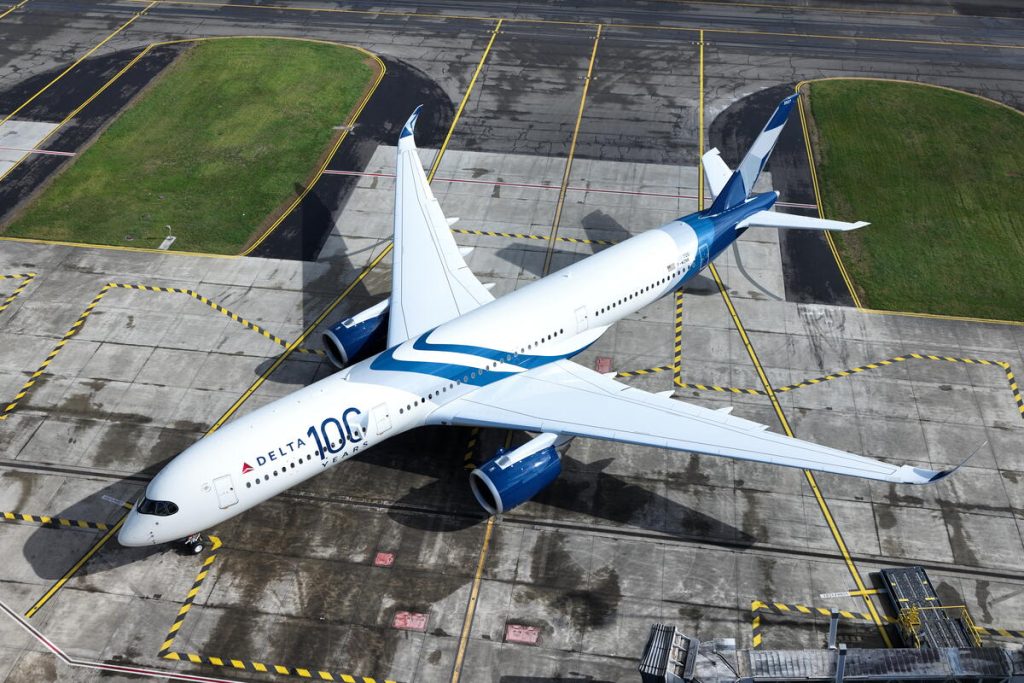
100-year emblem on a Delta aircraft (Photo: Delta)
Delta revealed its 100-year special livery at its Centennial Gala in Atlanta, held on Saturday in the newly renovated Delta Flight Museum. The design features distinctive swooping details, a “100” emblem, and the airline’s first silver supergraphic.
The unveiling coincided with the 100th anniversary of Huff Daland Dusters, the precursor to Delta. Originally an aerial crop-dusting company, it laid the groundwork for the airline’s growth.
Delta’s 100-year special livery on an Airbus A350 (Photo: Delta)
This company was incorporated on March 2, 1925. At the time, it was the world’s first aerial crop-dusting company and the largest privately owned aircraft fleet in the U.S.
Saturday’s event included remarks from Delta CEO Ed Bastian and performances by Jon Batiste and Vitamin String Quartet. Attendees included key figures like former CEOs Ron Allen, Leo Mullin, and Richard Anderson.
Delta’s new special livery adorns two brand-new aircraft: an Airbus A321neo and A350-900. The A321neo, registered as N589DT, was delivered to the carrier last month and served as the centerpiece of Saturday’s gala.
Delta’s new special livery (Photo: Delta)
The A350, with registration N527DN, is still awaiting delivery from Airbus at the time of writing.
Ryan founded AirlineGeeks.com in February 2013 and has spent more than a decade covering the airline business. His work has been featured by CNN, WJLA, CNET, and Business Insider. His aviation experience spans airport operations, Part 135 regulatory compliance, and airline crew workforce planning, along with time behind the yoke of a Cessna 172 and interviews with airline executives. Ryan now serves as Group President of Firecrown Media’s Aviation Group. He holds a B.S. in Air Transportation Management and an MBA from Arizona State University and teaches Airline Management at Embry-Riddle Aeronautical University.
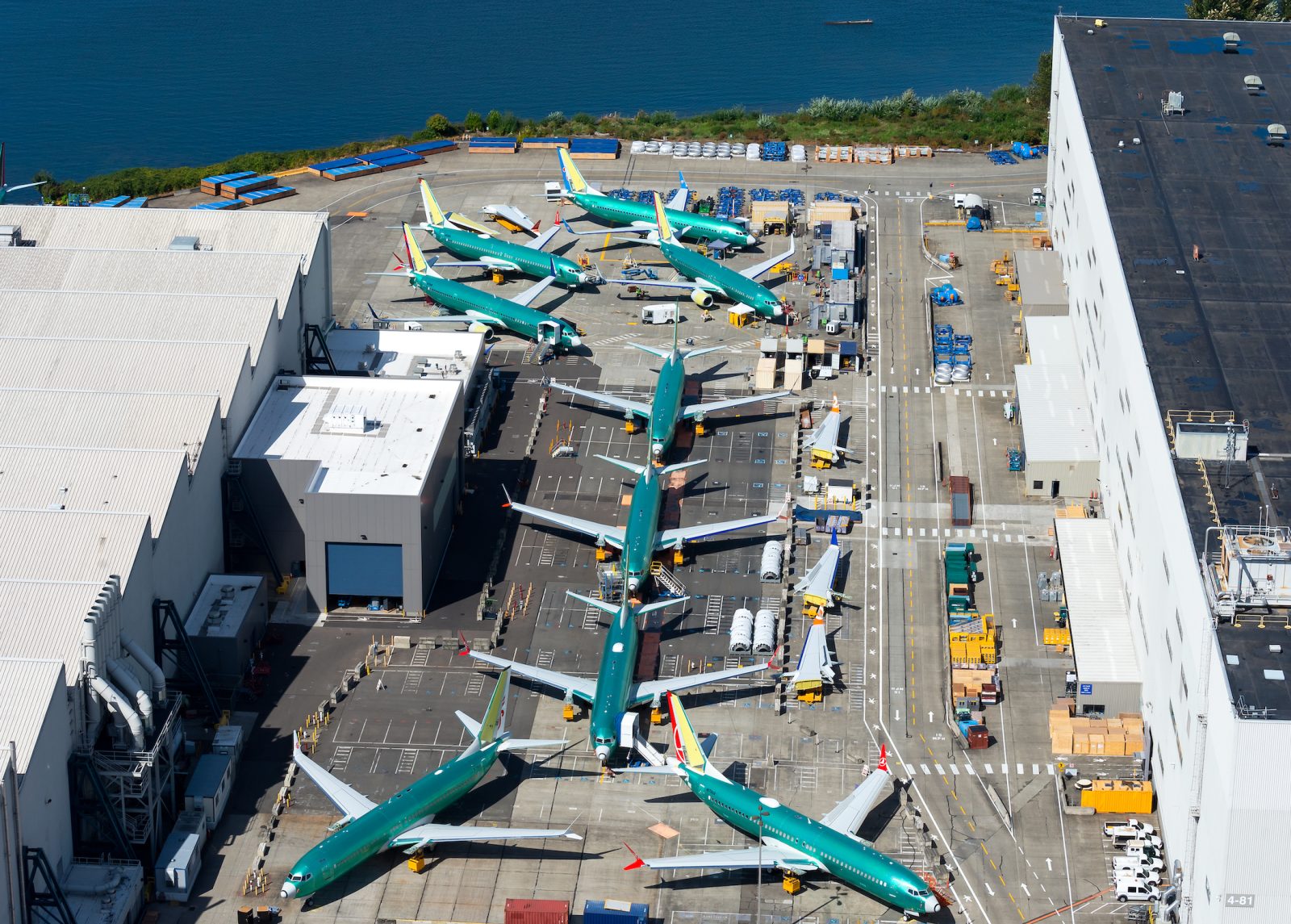
737 MAX aircraft in Renton. (Photo: Shutterstock | Thiago B Trevisan)
U.S. Transportation Secretary Sean Duffy and Acting Federal Aviation Administrator Chris Rocheleau recently toured Boeing’s production facility in Renton, Washington, on Thursday.
During an interview with Fox News, he said Boeing needed some “tough love” to earn back the American public’s trust.
“Whether it was the airplane crashes from a few years ago or the door plug issue, they’ve lost trust,” he said during the interview. “They have to take a look at how they are manufacturing. They have to look at their quality. They have to get it up to a place where the FAA, the American people and the airlines feel like they’re producing incredibly safe airplanes that you, me, our family and our friends all fly on.”
Duffy added that Boeing’s focus on its quarterly reports and shareholders has caused the business to lose sight of its quality standards. However, he said new leadership at the company is working to bring that quality back.
“I asked the CEO for access, not just to the line [at the Renton Facility] … but to the employees as well,” he said. “I was given that access and got to walk the line from one day to the next as an airplane is manufactured. I was able to talk to employees as they did their jobs. It was heartening to hear how they understand that they need to improve the quality of the work that happens here at Boeing.”
Boeing’s 737 MAX 7 out of the paint shop in Renton (Photo: AirlineGeeks | Chuyi Chuang)
The Federal Aviation Administration established a rule in January 2024 that limits Boeing to producing a maximum of 38 737 MAX aircraft per month.
Easing Restrictions?
When asked what it would take to lift the restrictions on how many aircraft Boeing can produce monthly, Duffy said the company needs to meet its safety plan and ensure the level of aircraft quality requested by the FAA.
Yesterday, @SecDuffy and I visited Boeing’s Renton, Washington, factory as part of our commitment to ensure they are executing its comprehensive safety action plan. I also met and thanked FAA safety inspectors – our boots on the ground to make sure Boeing fixes its quality… pic.twitter.com/k99YUr2eNP
“Once they do that, we’re going to have to take a risk on them and we’re going to have to increase the number of planes they produce,” he said. “But we’re not there yet at the FAA and DOT, but also Boeing’s not there either. So we’re going to continue to watch and analyze.”
AirlineGeeks.com was founded in February 2013 as a one-person blog in Washington D.C. Since then, we’ve grown to have 25+ active team members scattered across the globe. We are all here for the same reason: we love deep-diving into the fascinating realm of the airline industry.
FAA Permanently Restricts Helicopter Operations Near DCA
The Federal Aviation Administration has permanently restricted non-essential helicopter operations around the Ronald Reagan Washington National Airport.
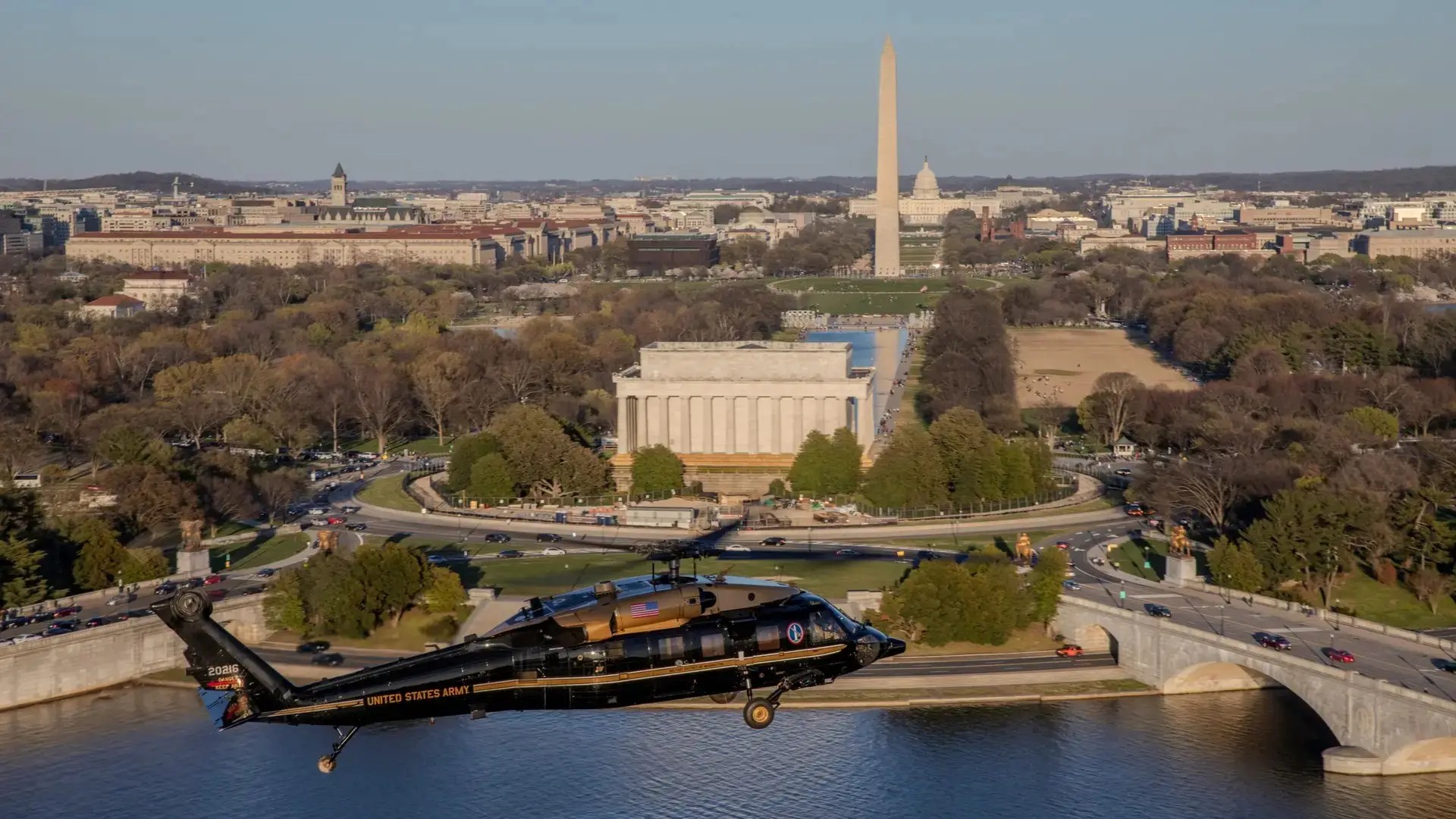
A helicopter flying over Washington, D.C. (Photo: Nicholas Priest/U.S. Air Force)
The Federal Aviation Administration has permanently restricted non-essential helicopter operations around the Ronald Reagan Washington National Airport.
Following recommendations to block helicopter traffic in the area by the National Transportation Safety Board (NTSB), the FAA announced on Friday that it would “permanently close” Route 4 between Hains Point and the Wilson Bridge.
Additionally, the FAA announcement stated that the agency would begin evaluating alternative helicopter routes as recommended by the NTSB. The FAA will also prohibit using Runways 15/33 and 4/22 at the same time when helicopters conducting urgent missions are operating near the airport.
“If a helicopter must fly through the airspace on an urgent mission, such as lifesaving medical, priority law enforcement, or Presidential transport, the FAA will keep them specific distances away from airplanes,” the FAA news release stated.
AI Assisting Air Traffic
The FAA also announced it will assess eight cities with chartered helicopter routes: Boston, New York, the Baltimore-Washington area, Detroit, Chicago, Dallas, Houston and Los Angeles.
Some of these cities have multiple airports, and the FAA stated it will also review the U.S. Gulf Coast and some offshore helicopter operations.
The agency added that it will use machine learning and language modeling “to scan incident reports and mine multiple data sources to find themes and areas of risk” for these assessments.
During this conference, Duffy said the agency will be using AI at other airports with high volumes of helicopter traffic to identify possible safety improvements.
“What the FAA has deployed is AI tools to make sure that we can sift through the data and find hotspots in our airspace at our airports,” he said. “So if there’s another DCA-esque situation out there, our AI tools will help us identify those and take corrective actions preemptively as opposed to retroactively.”
AirlineGeeks.com was founded in February 2013 as a one-person blog in Washington D.C. Since then, we’ve grown to have 25+ active team members scattered across the globe. We are all here for the same reason: we love deep-diving into the fascinating realm of the airline industry.
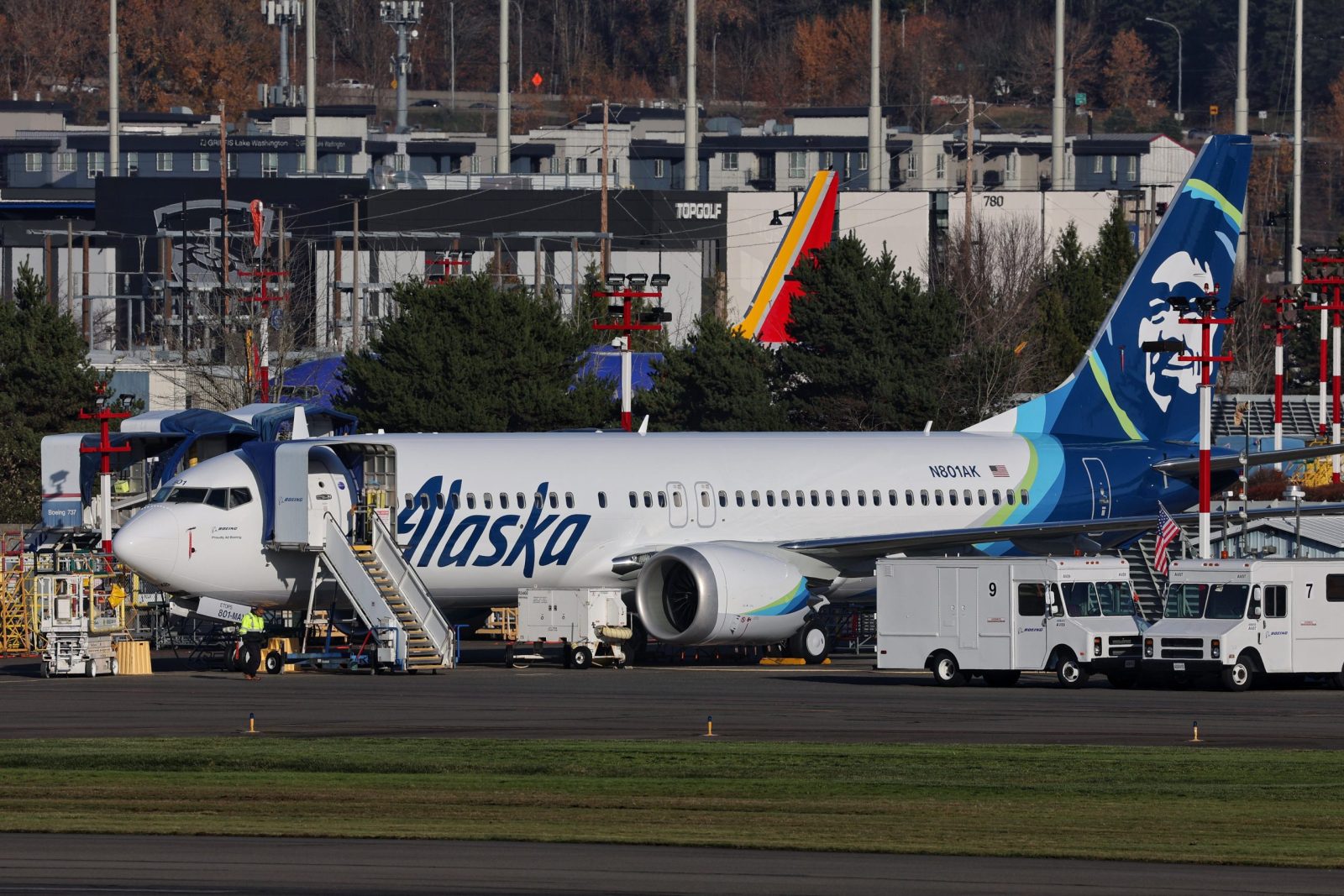
Alaska's first 737 MAX 8 spotted at Boeing's Renton factory. (Photo: AirlineGeeks | Katie Zera)
Alaska plans to bolster its network within the airline’s namesake state. In the coming months, the carrier will add the Boeing 737 MAX to one of its intra-Alaska routes.
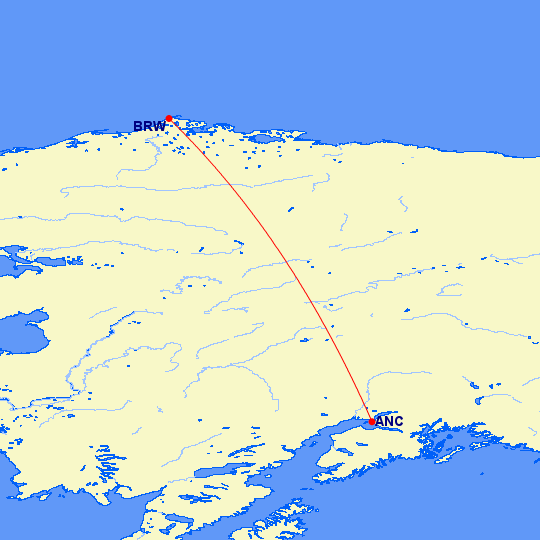
The type will begin regular service to the U.S.’s northernmost city, Utqiaġvik (Barrow), Alaska, this summer. As first flagged by Aeroroutes, the 737 MAX 8 will connect the city and Anchorage from June 12 to Aug. 19.
The aircraft will operate on the route once per day, complementing the other daily flight, which is flown by an Embraer E175.
According to Cirium Diio schedule data, Utqiaġvik is typically served with Boeing 737-800, 737-800, and E175 aircraft. The MAX 8 has flown to the city on a handful of one-off flights in 2024.
Alaska’s 737 MAX fleet also serves Prudhoe Bay/Deadhorse, Alaska, on one-off flights from Anchorage. This is the aircraft’s second northernmost market.
Ryan founded AirlineGeeks.com in February 2013 and has spent more than a decade covering the airline business. His work has been featured by CNN, WJLA, CNET, and Business Insider. His aviation experience spans airport operations, Part 135 regulatory compliance, and airline crew workforce planning, along with time behind the yoke of a Cessna 172 and interviews with airline executives. Ryan now serves as Group President of Firecrown Media’s Aviation Group. He holds a B.S. in Air Transportation Management and an MBA from Arizona State University and teaches Airline Management at Embry-Riddle Aeronautical University.
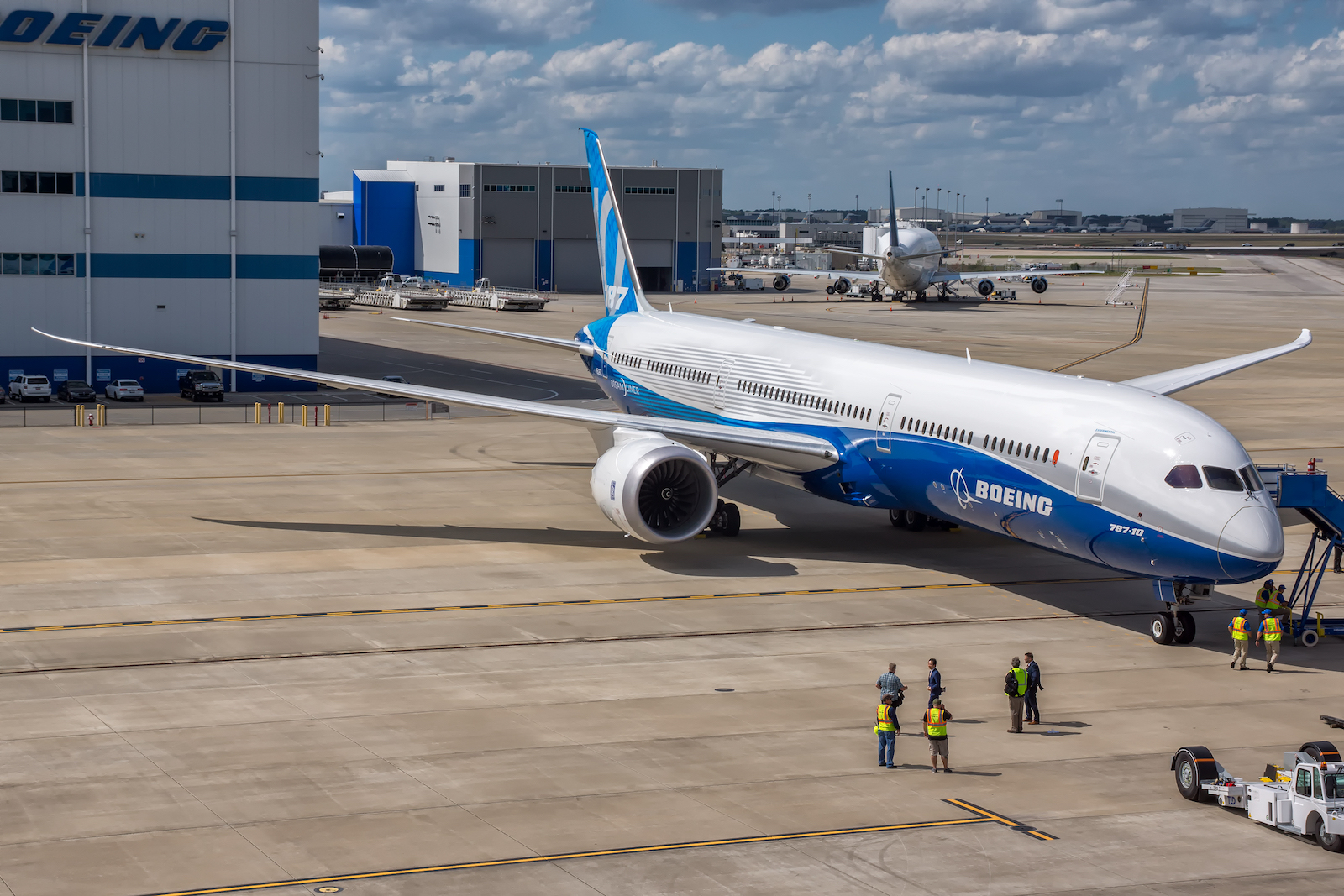
A Boeing 787-10 in North Charleston (Photo: AirlineGeeks | Chuyi Chuang)
“Tit for tat” tariffs could sharply increase prices for commercial aircraft, says AerCap CEO Aengus Kelly. In a worst-case scenario, he noted that a Boeing 787 Dreamliner could cost $40 million more than current prices.
“No one is going to pay that,” Kelly said during a CNBC interview this week. “The customer won’t take it. What will happen is that airlines who can’t afford the airplane will call Airbus.”
Over time, Boeing could lose out on market share, largely confining itself to the U.S. market, Kelly explained. The U.S. makes up around 25% of the global aviation market, and Airbus would be left with the rest of the world – about 75% to 80%.
“That is an absolute worst-case scenario. I am sure that won’t come to pass,” he added.
The Irish aircraft lessor’s CEO says Boeing needs cash right now. “At the end of last year, Boeing had $84 billion of inventory on its balance sheet. For Boeing to get cash, it needs to deliver aircraft,” Kelly continued.
He also gave credit to the manufacturer, which has improved quality and performance over the past year. So far this year, Boeing has set new delivery records.
Ryan founded AirlineGeeks.com in February 2013 and has spent more than a decade covering the airline business. His work has been featured by CNN, WJLA, CNET, and Business Insider. His aviation experience spans airport operations, Part 135 regulatory compliance, and airline crew workforce planning, along with time behind the yoke of a Cessna 172 and interviews with airline executives. Ryan now serves as Group President of Firecrown Media’s Aviation Group. He holds a B.S. in Air Transportation Management and an MBA from Arizona State University and teaches Airline Management at Embry-Riddle Aeronautical University.
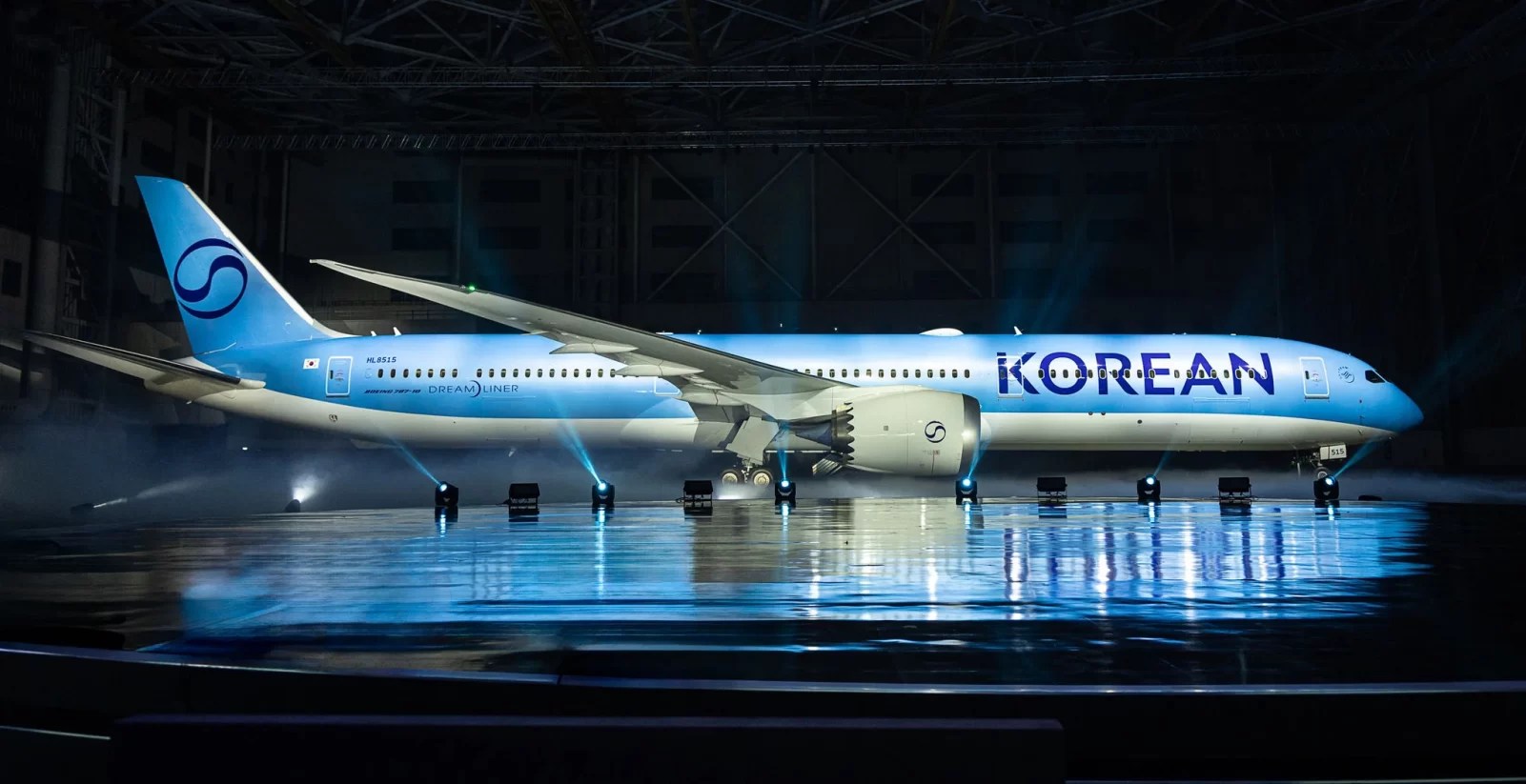
The first aircraft painted in Korean Air's new livery, a Boeing 787-10 registered as HL8515 (Photo: Korean Air)
Editor’s Note: AirlineGeeks is proud to present our ‘Livery of the Week’ series. Every Friday, a team member will share an airline livery, which can be from the past, present, or even a special scheme. Some airline liveries are works of art. The complexity associated with painting around critical flight components and the added weight requires outside-the-box thinking from designers. The average airliner can cost upwards of $200,000 to repaint, creating a separate aircraft repainting industry as a result.
Have an idea for a livery that we should highlight? Drop us a line.
Earlier this week, South Korean flag carrier Korean Air revealed a new livery and corporate identity. Although the first aircraft in the new livery had been spotted prior to the unveiling, the formal announcement occurred at the airline’s headquarters hangar in Seoul.
The livery will continue to feature a bright blue fuselage but also has some key changes. Instead of “Korean Air” being painted on the side of the aircraft, it simply now says “Korean” in a larger, more modern font. Like the previous livery, the belly of the new livery is white, but the separation between blue and white is a curved line instead of a straight one.
Perhaps most notable is the change to the iconic Taegeuk symbol. The symbol – which is featured in blue and red on the South Korean flag – represents balance and harmony in the universe. In Korean’s previous livery, the Taegeuk was featured on the tail and as the letter “O” in “Korean Air” on the fuselage and the top portion was red. However, the new livery features a more modern version of the symbol, with only blue used.
The first aircraft to receive the new livery is a Boeing 787-10 registered as HL8515. It flew its first passenger flight in the new livery on March 12, 2025, operating as Korean Air Flight 703 from Seoul Incheon (ICN) to Tokyo Narita (NRT).
Alongside the livery, Korean also introduced a new corporate identity, including a proprietary typeface and new iconography. The changes mark the first major brand update since 1984 when the carrier introduced the Taegeuk symbol.
Korean completed an acquisition of South Korea’s other major carrier – Asiana – last December. The brand identities of the two carriers are expected to remain separate until 2027.
Looking for a new airplane model? Head over to our friends at the Midwest Model Store for a wide selection of airlines and liveries.
Andrew is a lifelong lover of aviation and travel. He has flown all over the world and is fascinated by the workings of the air travel industry. As a private pilot and glider pilot who has worked with airlines, airports and other industry stakeholders, he is always excited to share his passion for aviation with others. In addition to being a writer, he also hosts Flying Smarter, an educational travel podcast that explores the complex world of air travel to help listeners become better-informed and savvier travelers.
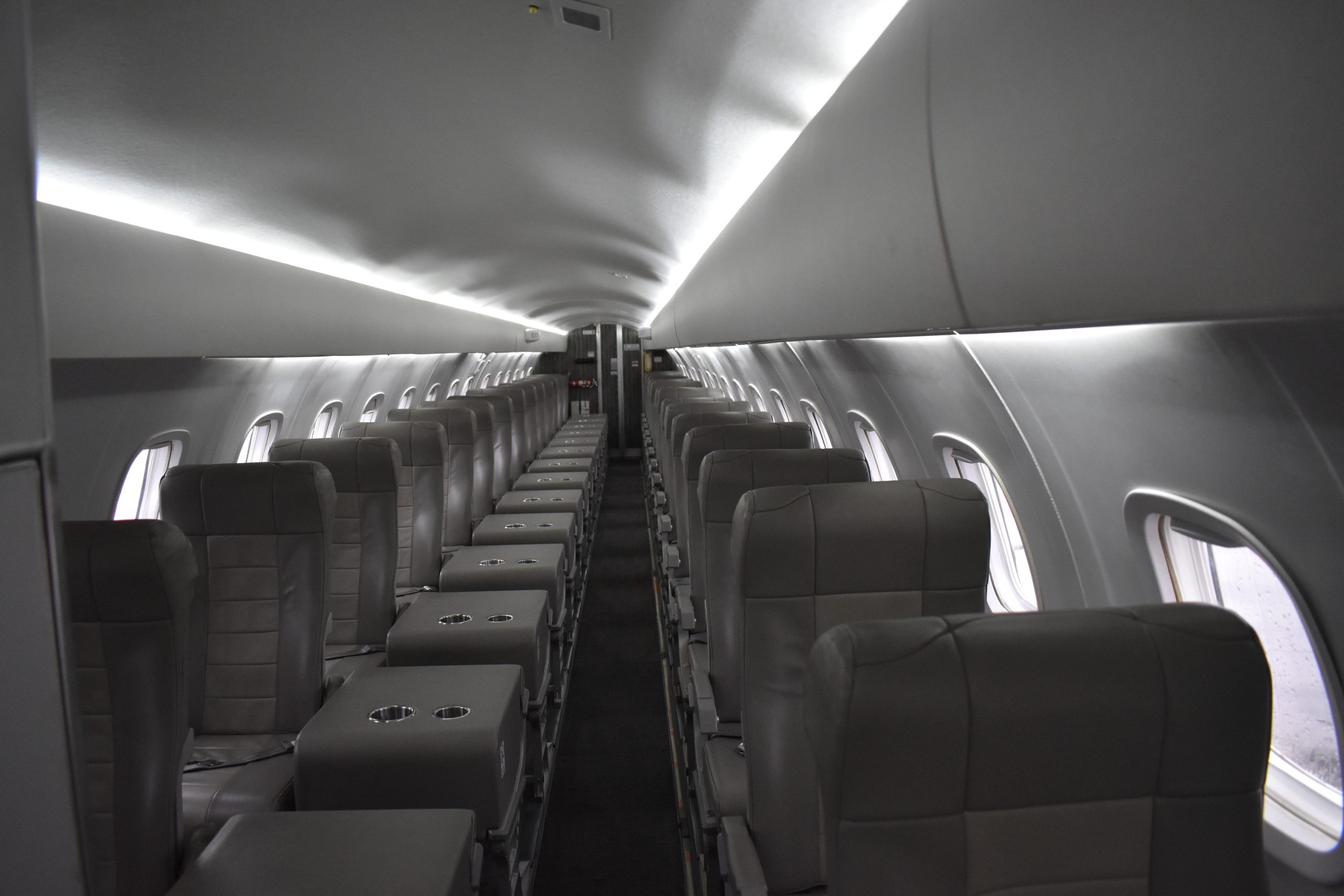
The spacious 1-1 layout of JSX's E145 aircraft (Photo: AirlineGeeks | Joey Gerardi)
JSX is a unique air carrier. It operates under Part 380, meaning the company is a “Public Charter” operator. It offers a semi-private experience while also operating scheduled flights between smaller airports surrounding larger cities, although it does operate to a few large airports, such as Las Vegas and Los Angeles.
A JetSuiteX Embraer E135 parked, before changing its branding to JSX (Photo: AirlineGeeks | Albert Kuan)
The carrier used to be called JetSuiteX, but then rebranded to JSX around 2019.
Day of the Flight
My journey started at McClellan-Palomar Airport, which is located in Carlsbad, California, about an hour drive north of downtown San Diego. A small airport that, up until the day I took this flight, didn’t receive service from a major carrier. My flight today would be to Scottsdale Airport, which is a smaller airport located north of Phoenix.
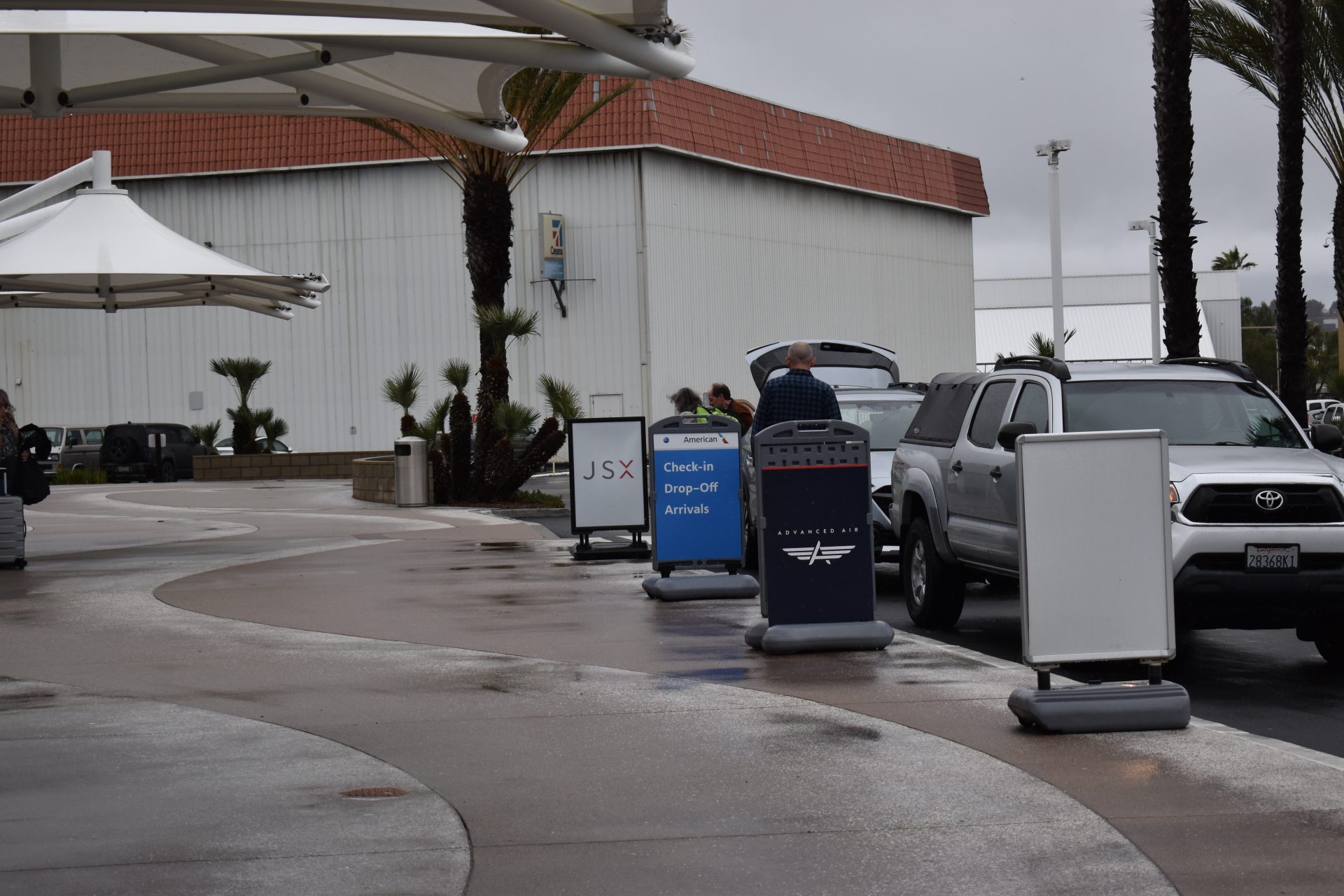
The curbside of Carlsbad airport (Photo: AirlineGeeks | Joey Gerardi)
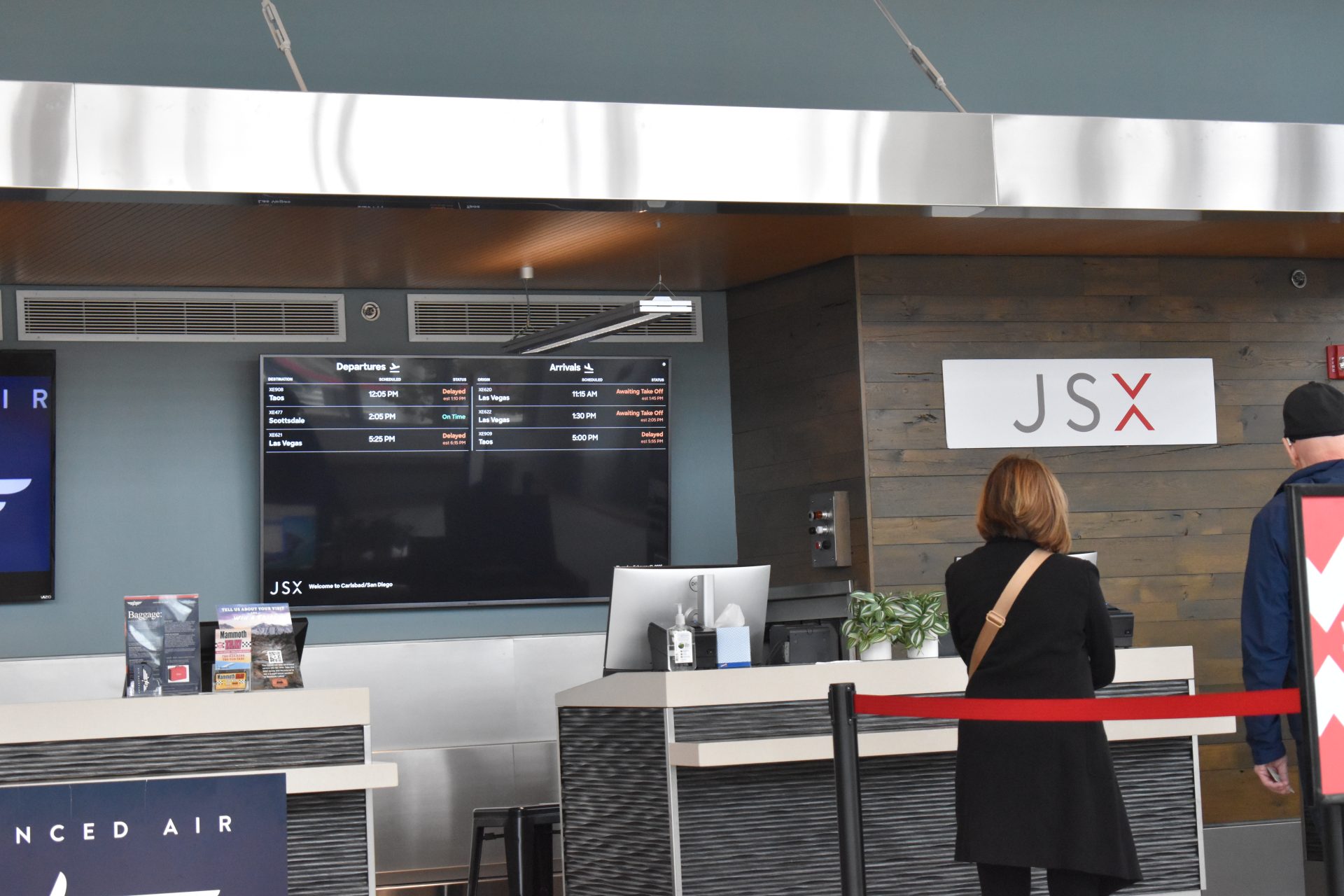
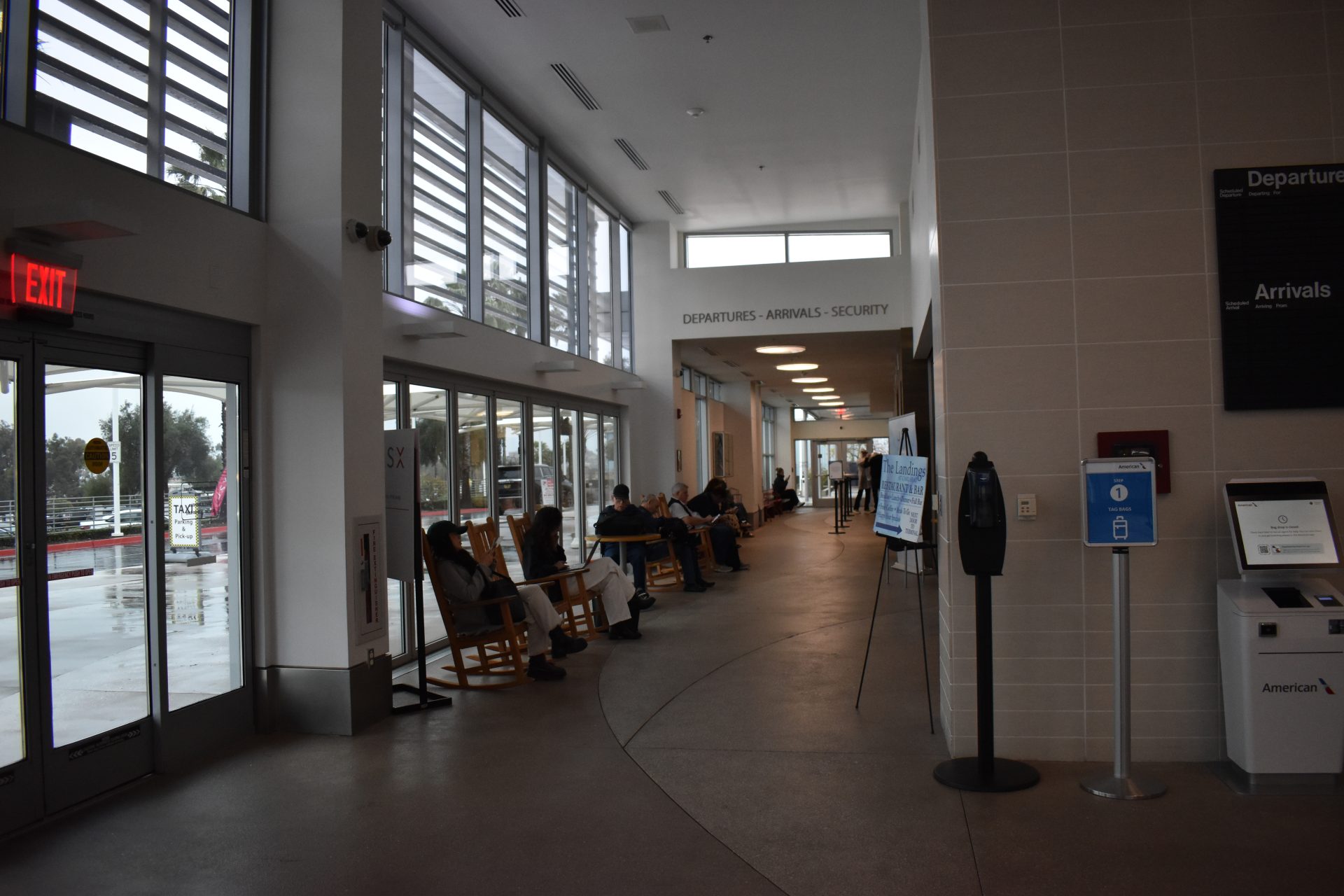
I walked into the terminal and you could immediately see JSX’s ticket counter, along with a screen listing its departures right behind it. At the time of writing this article, JSX flies to four destinations from Carlsbad: Las Vegas twice a day, Phoenix via Scottsdale once a day, flights to Oakland starting this month which will operate four times a week, and seasonal flights to Taos, New Mexico.
The JSX counter in Carlsbad (Photo: AirlineGeeks | Joey Gerardi)
Once you check in, agents print out a receipt with your seat assignment on it, versus a boarding pass, which was unique. The agents were very professional and courteous under pressure when multiple people showed up right before check-in cut off, especially since they had multiple flights on the ground at the same time.
Under normal circumstances, the carrier does offer snacks and drinks at FBO locations, but since this is a passenger terminal shared with other two other companies, JSX does not offer anything like that at this location.
The hallway leading to the departures area (Photo: AirlineGeeks | Joey Gerardi)
Onboard
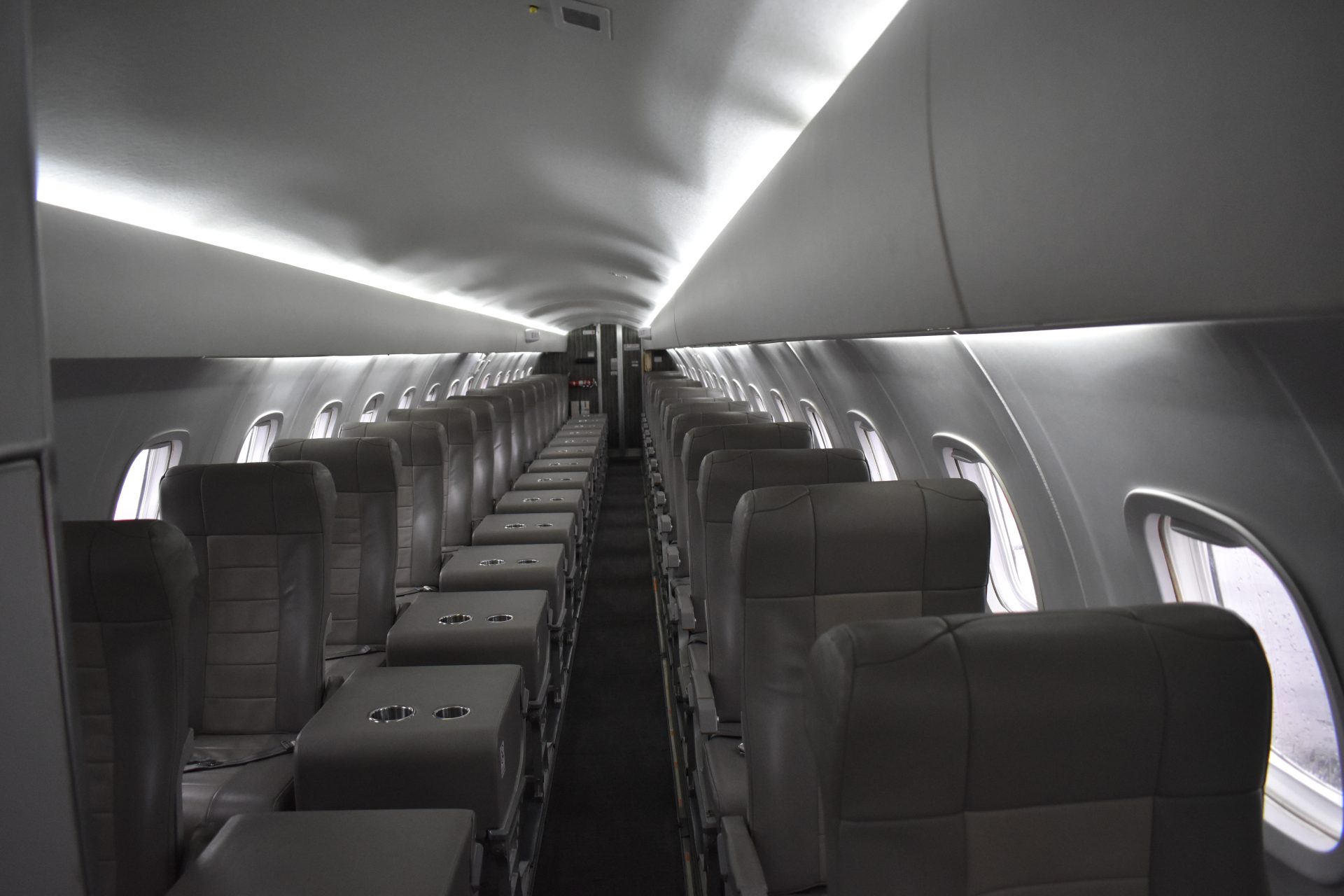
Because JSX is a Part 380 carrier, none of the aircraft in its fleet can have more than 30 seats. This is fine for the Embraer E135, as they normally only have 30 seats anyways, which are in a 1-2 configuration, however the Embraer 145 aircraft usually has 50 seats.
To remedy this while also having that semi-private experience, JSX has this aircraft in a 1-1 configuration, and on the side that usually has two seats, the carrier has instead put cupholders as well as a table.
The spacious 1-1 layout of JSX’s E145 aircraft (Photo: AirlineGeeks | Joey Gerardi)
To also make the aircraft feel more spread out, JSX has removed the overhead bins, which adds more headspace, giving a small and cramped aircraft, a more roomy feeling.
The flight was delayed a little bit going out of Carlsbad, as the aircraft was coming in from Las Vegas, and that airport had air traffic control issues on the day of my flight leading to some minor delays not only for my flight, but also the Taos flight.
Once my aircraft landed in Carlsbad, passengers deplaned rather quickly, and we started our boarding process for the flight.
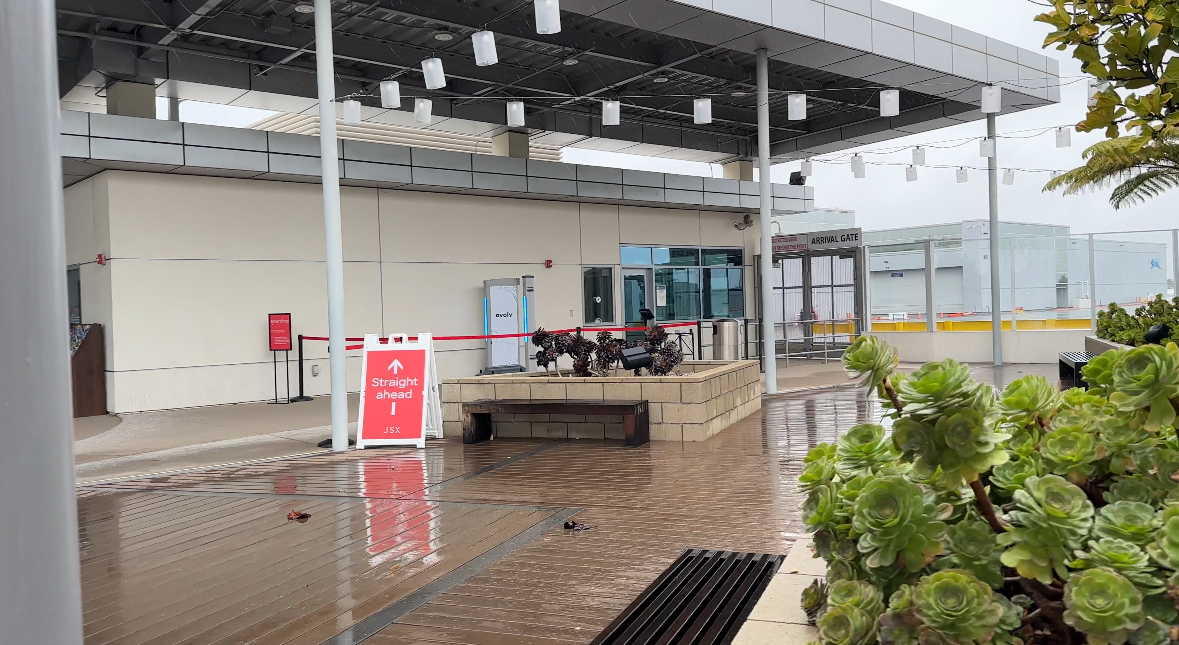
In Carlsbad, once it’s time to board you go out the side door of the terminal to the fence gate and there is a small scanner which you walk-through before going out to the aircraft, but it’s super simple and still feels like that private experience. Once you are through the scanner, you show your ID as well as the boarding receipt.
Where you board the JSX aircraft in Carlsbad (Photo: AirlineGeeks | Joey Gerardi)
My seat for this flight was 7C, A window on the right side of the aircraft, which is also closest to the cupholders/table.
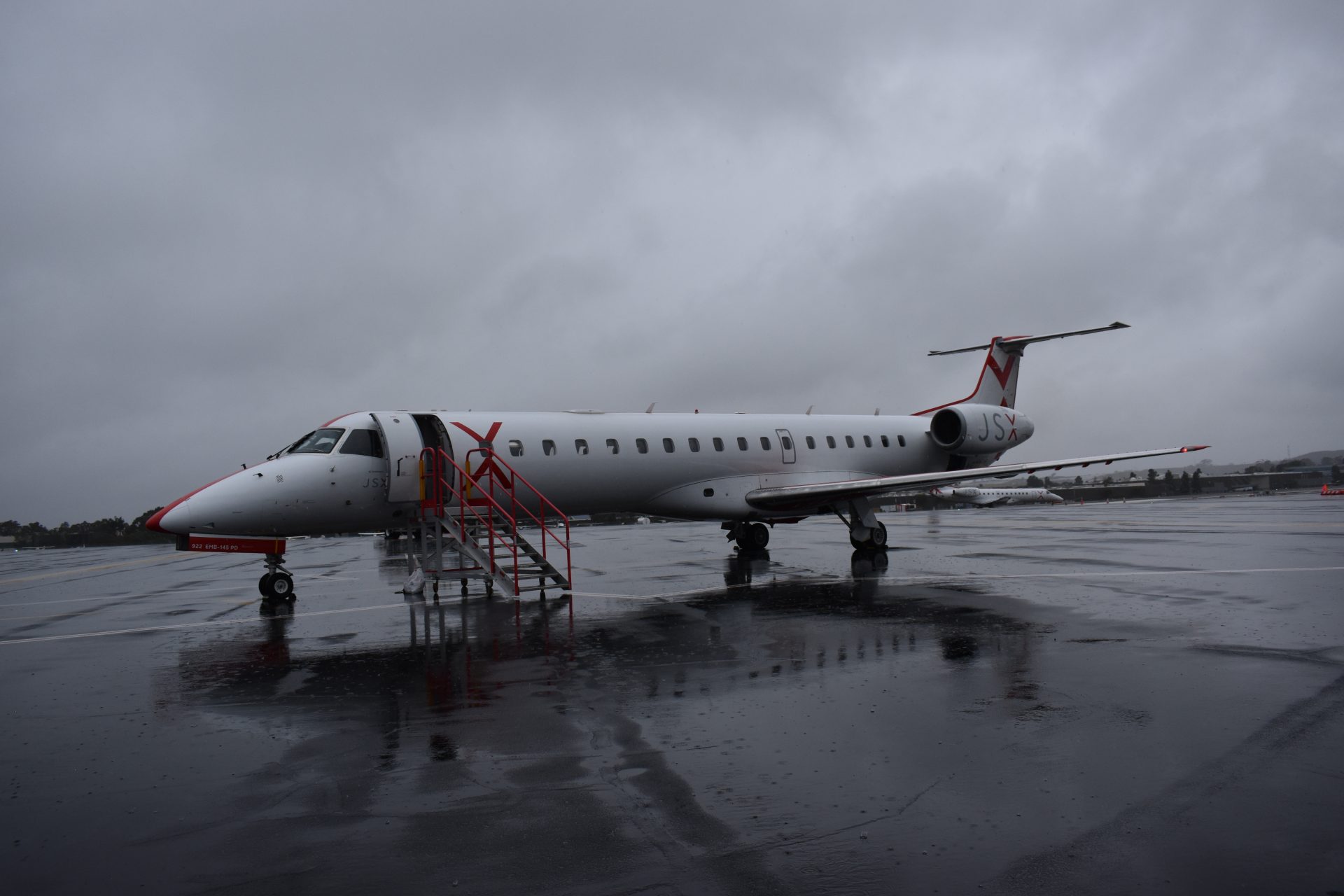
A JSX Embraer E135, my ride over to Scottsdale (Photo: AirlineGeeks | Joey Gerardi)
My ride for the flight was one of JSX’s Embraer E145s, which was in the 1-1 configuration and carried the tail number of N922JX. The aircraft was originally delivered to Continental Express in December 1999, went to ExpressJet in July 2001, and then finally came to JSX in August 2022.
Prior to leaving Carlsbad, the single flight attendant took all of our drink orders, which were served to all the passengers once we got in the air.
It was not a completely full flight, so we boarded rather quickly and after a short taxi to the runway we were in the air bound for Scottsdale.
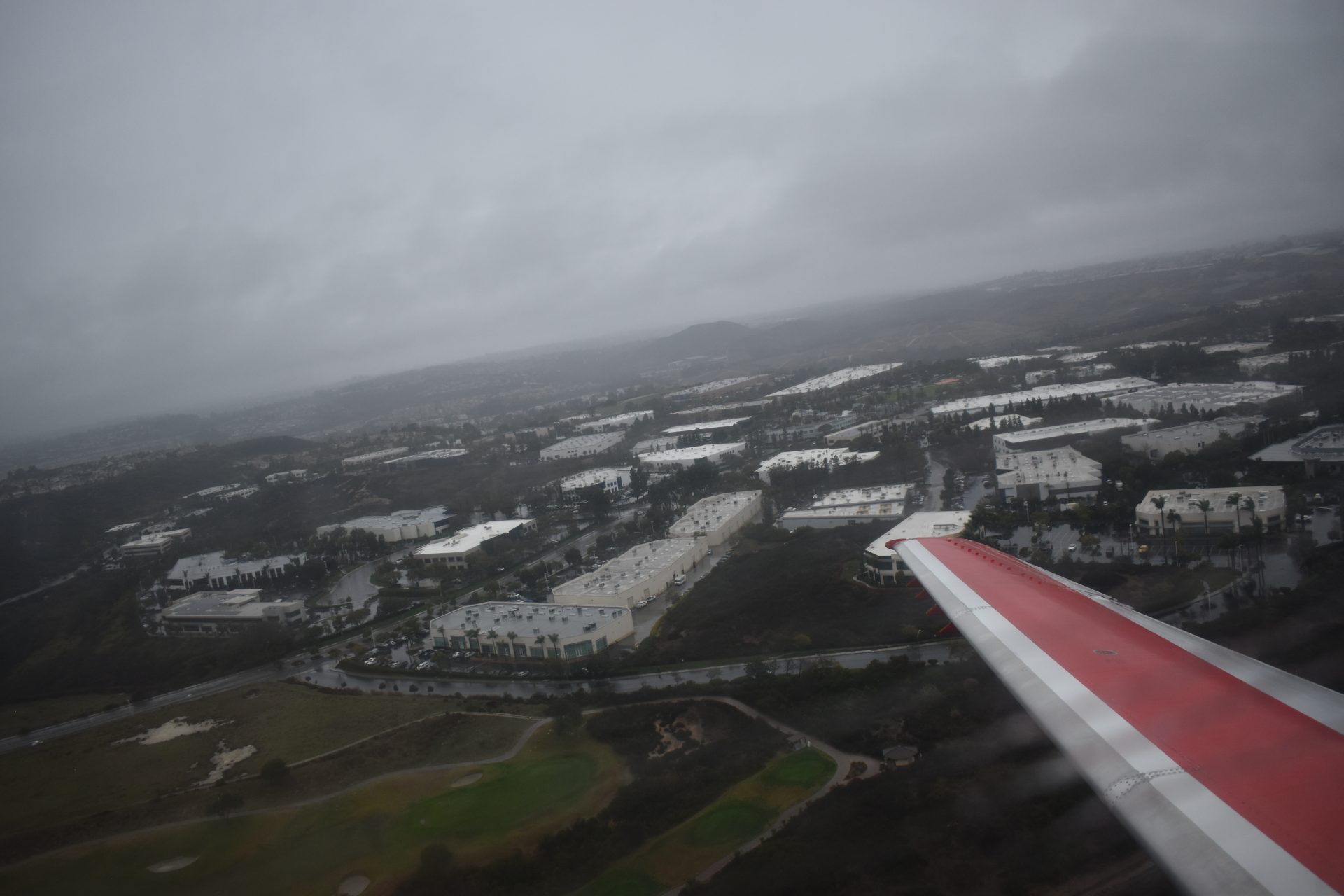
Taking off from Carlsbad onboard JSX (Photo: AirlineGeeks | Joey Gerardi)
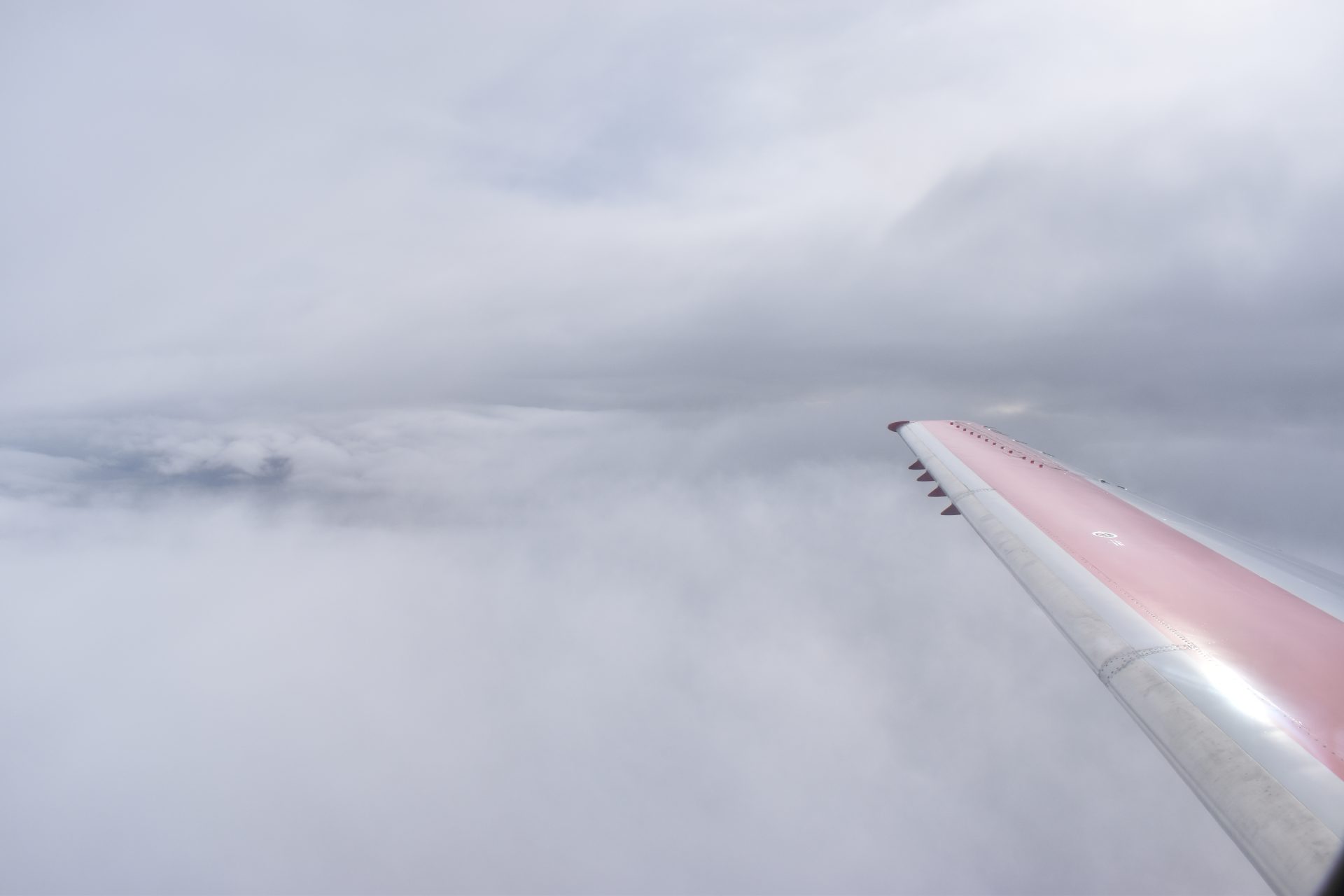
The weather was kind of gloomy, so unfortunately, there was not much scenery to be had departing from Carlsbad. However I was able to see the coast before going into the clouds for pretty much the remainder of the flight.
Flying into the clouds, en route to Scottsdale (Photo: AirlineGeeks | Joey Gerardi)
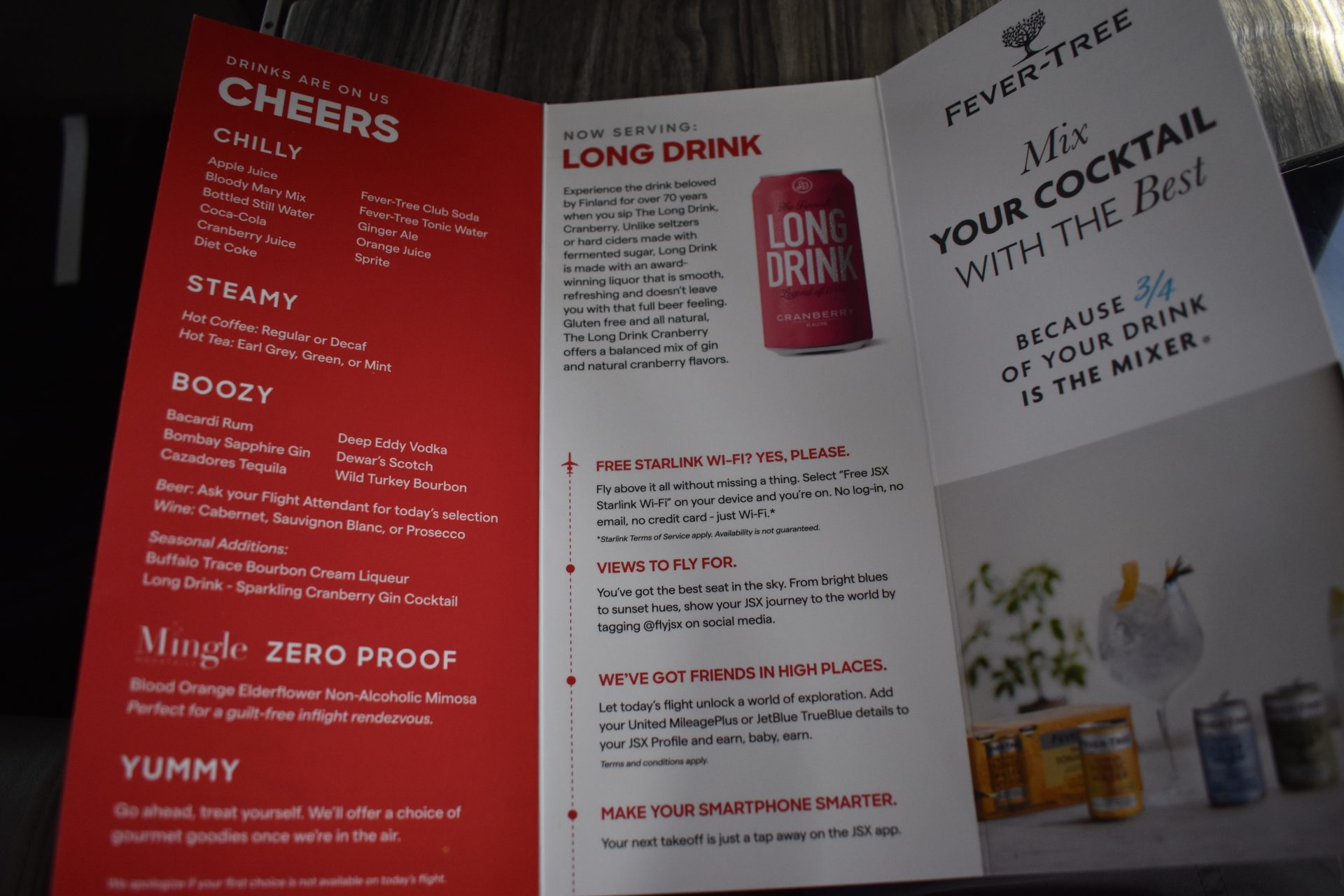
When we got to part of the flight that was relatively smooth, the flight attendant started her drink service. They had many different drink options, alcoholic, as well as nonalcoholic, along with the seasonal and temporary, and new items as well. I ordered Buffalo Trace Bourbon, which was a seasonal option that they had during my flight, and it was presented nicely along with a stir stick with the company’s logo on it.
The inflight drink menu on JSX (Photo: AirlineGeeks | Joey Gerardi)
The flight was rather bumpy, so the flight attendant had to sit down every couple of minutes if the turbulence became heavy. This was highly uncharacteristic of the area as the weather is usually very pleasant in Southern California and Arizona.
After taking off, we quickly climbed to our cruising altitude of 29,000 feet. The carrier usually has a snack selection as well, but because of the short flight and the rough air, there was no time for the snack service on this trip.
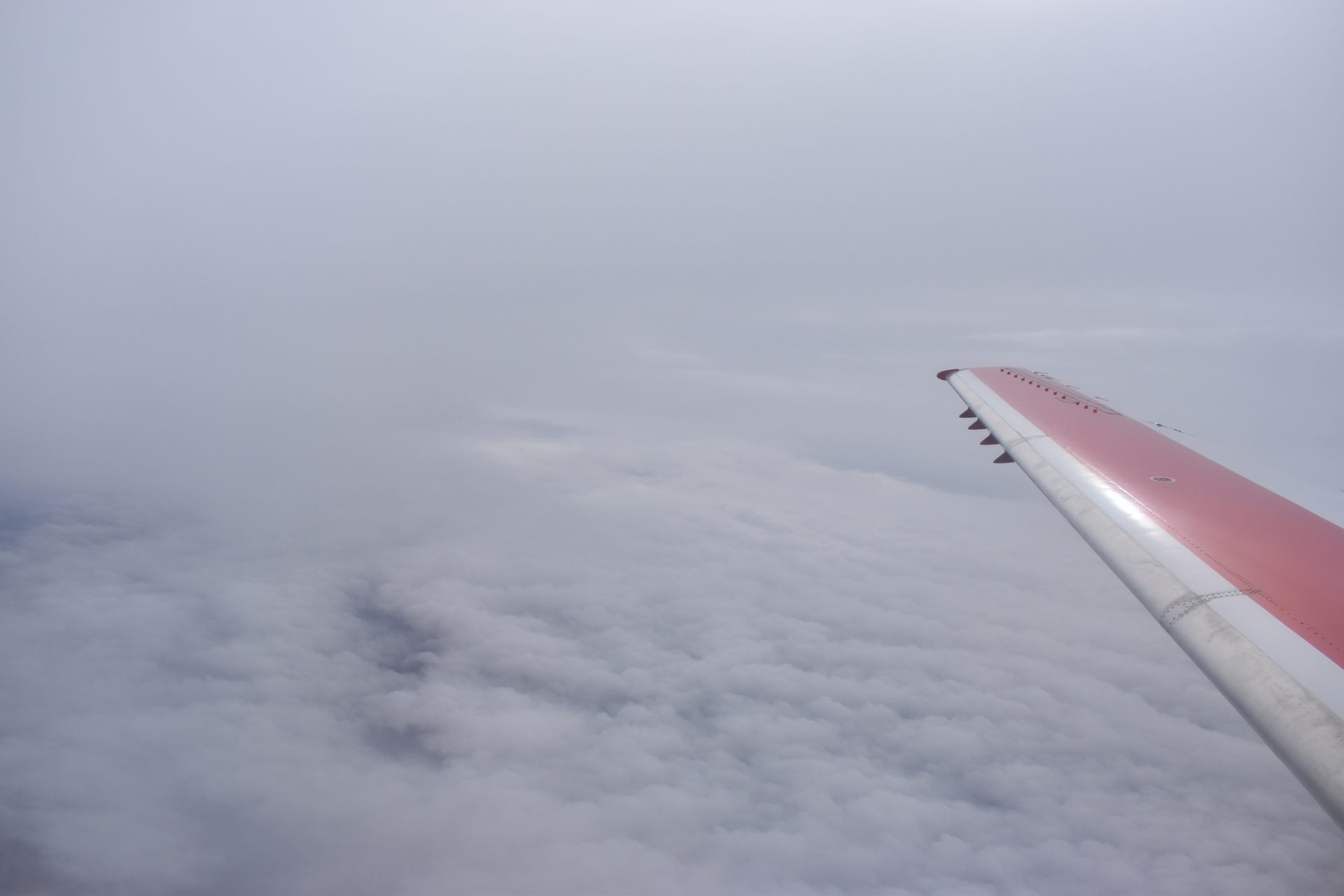
As previously mentioned, the weather was gloomy, so there wasn’t much to see, but some of the cloud formations were pretty along the route. But even without scenery, there is still plenty to do on the flight, as JSX offers Starlink Wi-Fi, which was fast and offered speeds on my flight up to 121 mbps. This is free for all passengers.
To complement the free Wi-Fi on board, they also offered power outlets on the flight so you can keep your devices charged with one at every seat located on the wall next to you.
Power outlets on JSX (Photo: AirlineGeeks | Joey Gerardi)
I was so wrapped up in the Wi-Fi and doing stuff online that I never realized how quickly the flight was going by, and it wasn’t long after getting to cruise that we started our descent towards the Scottsdale area.
At cruising altitude, heading to Scottsdale (Photo: AirlineGeeks | Joey Gerardi)
Only about a year ago, in January 2024, JSX moved their Phoenix operations from Sky Harbor to Scottsdale in favor of the smaller airport. Moving airports from Sky Harbor also reduced the taxi time, which made it quicker to turn aircraft around.
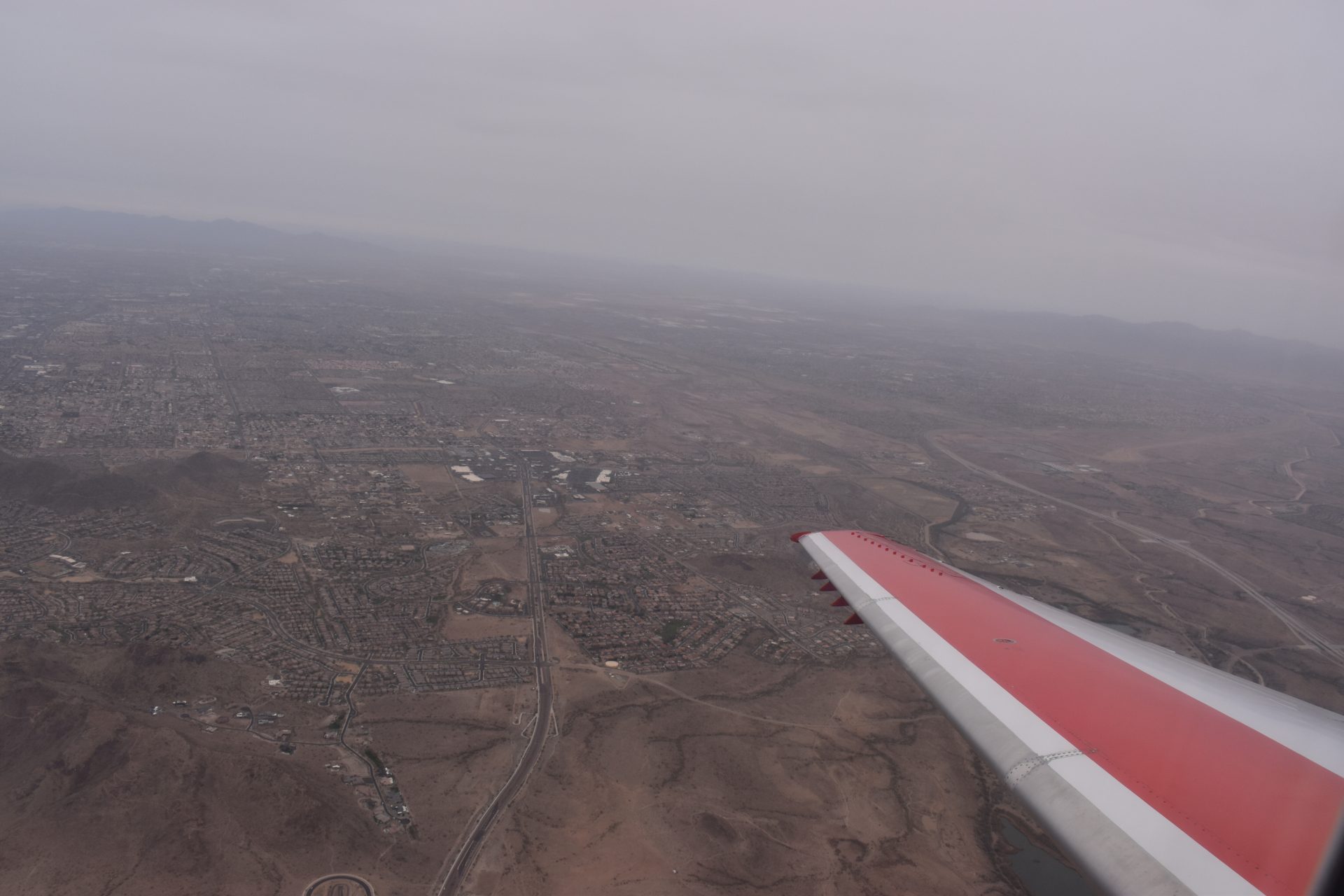
Descending into Scottsdale (Photo: AirlineGeeks | Joey Gerardi)
We landed in Scottsdale at 4:53 p.m., after just 56 minutes of flying time. The way JSX is set up for arrivals is by having passengers wait on the aircraft until your checked bags are unloaded, which takes maybe five minutes. They then put the bags next to the aircraft door and you can collect them as soon as you get off, that way you don’t have to go to a baggage claim.
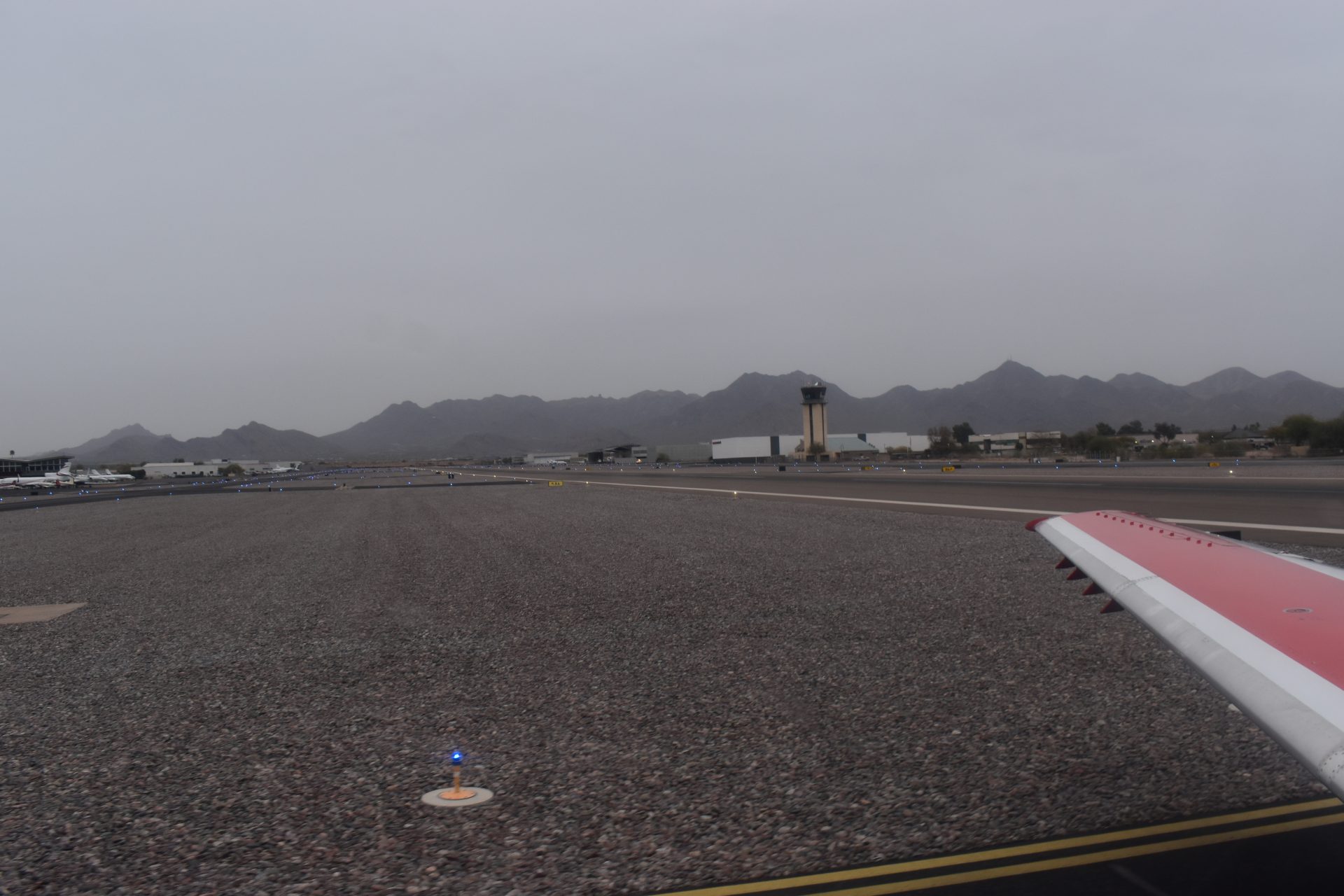
Arriving into Scottsdale (Photo: AirlineGeeks | Joey Gerardi)
As mentioned, they now compete indirectly with American on the route as the airline started flying Phoenix to Carlsbad, on February 13. However, even at a small airport like Carlsbad, flying on JSX is still a lot quicker and simpler than flying American given the cutoff for JSX check-in is 20 minutes before departure time, whereas American’s is 45 even at a small airport like Carlsbad.
JSX jets in Scottsdale (Photo: AirlineGeeks | Joey Gerardi)
So, despite now competing with each other, the service between JSX and American still differs greatly, JSX will probably continue to get the majority of passengers that are just going to the Phoenix area, whereas American will probably get more connecting passengers that are going onward to other places. However, if JSX does add one stop service from Carlsbad to other locations through Phoenix, that may shake up the game even more.
A video of the strip report can be found below:
Editor’s Note: JSX provided AirlineGeeks with a seat on this flight, but this trip report is an objective portrayal of the events and is in no way swayed by that aspect.
Joey has always been interested in planes for as long as he can remember. He grew up in Central New York during the early 2000s when US Airways Express turboprops ruled the skies. Being from a non-aviation family made it harder for him to be around planes and would only spend about three hours a month at the airport. He was so excited when he could drive by himself, the first thing he did with his driver's license was get ice cream and go plane spotting for the entire day. He graduated from Western Michigan University in 2022 with a B.S. in Aviation Management & Operations and a Minor in Business, and currently works for a major airline in his hometown.
Sign-up for newsletters & special offers!
Get the latest stories & special offers delivered directly to your inbox