A China Eastern A330. China's government is easing restrictions on foreign carriers flying into the country.
(Photo: AirlineGeeks | Fabian Behr)
Since Friday, March 4, China began to evacuate its citizens from active war zones in Ukraine via commercial flights. As of the moment this report has been posted, a total of 7 flights has been executed from Romania and Poland to pick up Chinese nationals and their families to go to China. Chinese foreign missions are continuing their efforts to arrange more flights.
All Hands On Deck
Air China, China Southern, and China Eastern each operated two flights from Bucharest, Romania to various locations in China; Xiamen Air operated one flight from Warsaw, Poland to Hangzhou, China, and Hainan Airlines is expected to dispatch a flight to Bucharest to continue the evacuation efforts.
More flights are scheduled to neighboring countries of Ukraine to pick up evacuated Chinese Citizens. According to the Chinese Embassy in Hungary, two flights will take off from Budapest, Hungary to China. The carrier and destination of those flights are still unknown.
China is actively responding to global events that may harm its citizens. In previous cases, China has evacuated citizens from Afghanistan, Yemen, and Libya, when those nations are in active conflicts. Behind all those courageous actions, are the powerful support of Chinese Airlines and adept crews.
Convoluted Routes
To avoid using any airspace that is above the war zone, the flights into and departing from Bucharest are taking the route over Central Asia and entering China from the western province of Xinjiang. This route avoids Ukrainian and Russian airspace, with the expense of prolonging flight time.
For Xiamen Air’s flight departing from Warsaw, the flight took a sharp turn north and then crossed the Eurasia continent via Russian airspace. The possible reason for taking this route is to dodge the complicated process of applying overflight permission to all Central Asian countries since Xiamen Air does not have any previous experience in operating flights over those nations. The flight was only flown via EU, Russian, and Mongolian airspace before reaching China. Time is precious for the evacuation.
Difficult Endeavors
Airlines are investing tremendous efforts to support the operation. Airlines only used days to gather eligible crews, dispatch aircraft, and apply for permissions to their flight plans. The Covid-19 situation was also complicating the situation. Among the passengers onboard the first two evacuation flights, over 30 people were tested positive for Covid-19. More cases will likely be found as the testing results of evacuees come out.
The Perfect Choice
The Airbus A330 was the go-to choice for those flights. The “Big-Three” state-owned airlines of China, Air China, China Southern, and China Eastern, all have larger aircrafts such as Boeing 777-300ER or even Airbus A380. However, considering the supportability of Bucharest Airport, as well as the availability of the crew resource, the A330 is the optimal choice to operate those evacuation flights. Xiamen Airlines, on the other hand, flew its’ Boeing 787-9 to Warsaw, as is the airline’s only aircraft that can reach Europe from China.
As the conflict goes on between Russia and Ukraine, more people are forced to flee their homes. More countries are arranging evacuation flights, or providing support to citizens to go home via commercial flights from neighboring countries of Ukraine. While people are thankful for knowing their fellow citizens are safe, they are also praying for the war to be end soon, so that everyone can go back to normal life.
Lei is from Inner Mongolia, China, and now lives in Guangzhou. He grew up in an aviation family, where his passion began. During his time at Penn State University, he studied Industrial Engineering specializing in operations research, and he graduated with an honor’s thesis on airport gate assignment optimization. Now, he is a Purchasing Manager with Procter & Gamble. In his free time, he enjoys flying, reading, and wandering around the city.
SIA To Operate 5 Boeing 777 Freighter Planes on Behalf of DHL Express
Singapore Airlines (SIA) will begin operating five freighter aircraft on behalf of DHL Express by the end of next year, as it aims to expand its presence in the burgeoning air cargo industry. DHL Express, the world’s top international express service provider, has signed a Crew and Maintenance agreement (CM) with the airline to deploy five Boeing 777 freighters.
The initial arrangement will last for more than four years, with the possibility to extend it further. The value of the agreement is undisclosed. This arrangement represents another milestone in DHL Express’ expansion of its intercontinental air network to suit customer demand in fast-growing international express shipping markets.
The freighters will be based at Changi Airport and will serve DHL’s South Asia Hub in Singapore, sporting a dual DHL-SIA livery with DHL and SIA branding. The aircraft will be maintained by SIA, and SIA pilots will fly them on routes to the United States via North Asia.
“With the provision of five Boeing 777 freighters, we can expand our express service between the Asia-Pacific region and the Americas. We are optimistic about growth on the trans-Pacific trade routes after the pandemic subsides. We see working with Singapore Airlines as a unique opportunity to build a long-term relationship with a long-standing partner who shares our values and meets the highest quality standards,” said Travis Cobb, EVP Global Network Operations and Aviation at DHL Express.
The first agreement is for more than four years, with the possibility for an extension; the first aircraft will be delivered in July 2022, the second in October 2022, and the remaining three aircraft will be delivered throughout 2023.
Strong Partnership
Lee Lik Hsin, Executive Vice President Commercial at SIA, said: “With today’s agreement, SIA and DHL continue to expand their long-standing partnership. These new cargo aircraft will support the fast-growing e-commerce segment, as well as other key business segments that rely on DHL’s world-class express services. In addition, SIA and DHL are paving the way for further expansion of their partnership in the future. The stationing of these aircraft at Changi Airport will strengthen Singapore’s position as a major air cargo and e-commerce logistics hub and contribute to the country’s growth and development.”
SIA’s cargo division flies to more than 90 destinations in its existing network and uses the cargo hold of SIA and Scoot passenger planes in addition to its own fleet of cargo aircraft. The airline has ordered Airbus A350F freighters as part of its fleet renewal program. SIA continues to invest in the expansion of its freight capabilities due to the increasing demand, which is fueled by the growth of segments such as online retail, fresh products, and pharmaceuticals.
“This new agreement guarantees additional capacity on our critical routes out of Singapore, enabling us to keep pace with the continued growth of trade in the Asia-Pacific region,” said Ken Lee, CEO of DHL Express Asia Pacific. He believes that it will also give the firm more flexibility to add new routes and optimize aircraft utilization in response to sudden changes.
DHL Express also continues to invest in its fleet in order to keep up with the steady increase in cross-border, time-sensitive goods. In its global network of 220 nations and territories, the firm flies more than 320 of its own planes. The Boeing 777 is the world’s largest, longest-range, and most powerful twin-engine cargo airplane. This partnership will also help contribute to DHL’s sustainability goals by cutting CO2 emissions by 18% compared to aging B747-400 freighters.
An Analyst’s Take
Brendan Sobie of consultancy Sobie Aviation, an independent aviation analyst, stated that SIA has been hauling huge volumes of cargo for DHL using its own fleet of planes. As a result of this deal, SIA will be able to expand a key relationship, he noted. He also stated that since SIA already operates Boeing 777 passenger planes, it has the capability to operate Boeing 777 freighters. He believes that prior to the pandemic, they may not have bid on this work since they did not have enough spare pilots and mechanics.
“But as it will be some time before SIA gets back to full capacity, particularly with their Boeing 777 fleet, they would be incentivized to bid on this contract and provide a competitive offer,” added Mr. Sobie.
It will be interesting to witness how this SIA-DHL cooperation unfolds and where it will lead in the future, similar to DHL’s present partnership with Air Hong Kong.
Kalai has always wanted to work in the aviation industry, having been fascinated by its inner workings since he was a child. In pursuit of his dream, he obtained a diploma in aviation management and is currently interning with a low-cost airline, under in-flight policies. In his free time, he loves to engage in recreational activities, and watch sports. In the upcoming years, Kalai intends to pursue his degree at a business school before working as an executive for a global airline around the world.
Australia’s Senate Inquiry Report into G.A. Industry to Be Released
A Qantas Airbus A330 approaches Sydney Airport with the city skyline in the background (Photo: Hisham Qadri | AirlineGeeks)
The Australian Senate Rural and Regional Affairs and Transport Legislation Committee are due to release its report on March 17, 2022, having been allowed an extension from the original due date of November 30, 2021. This report will conclude a multi-year inquiry into the current state of Australia’s general aviation industry.
The inquiry has given particular attention to aviation in rural, regional, and remote Australia, considering the operations, effectiveness and impact of the Civil Aviation Safety Authority (CASA) as well as other similar agencies, such as the Australian Transport Safety Bureau (ATSB).
CASA and ATSB Under Scrutiny
For many years, CASA has been at the receiving end of much criticism from Australia’s aviation sector, with notable complaints toward its safety regulations as being excessive and leading to increasingly expensive costs that plague the industry. According to the Senate Committee website, the report will address the committee’s view of the effect CASA’s aviation safety framework is having on the Australian GA industry, including whether the regulations are fit for purpose, as well as the economic impacts on the sector.
The ATSB has also been receiving heavy criticism for perceived unfairness and biased outcomes. Its investigation into the South Australia June 2017 fatal accident involving a charity Angel Flight SOCATA TB-10 Tobago was labeled “demonstrably wrong” by Angel Flight CEO Marjorie Pagani after its report claimed that charity flights from the organization were up to seven times more likely to end in a fatality as compared to other private operators.
Ms. Pagani defended the charity stating “we had three experts look at this — two of Australia’s top statisticians and an analyst — all of who conclude that it is grossly, demonstrably wrong,” adding “they have counted less than half our flights in order to arrive at this statistical conclusion.”
The ATSB admitted to not interviewing any Australian pilots who have flown for Angel Flight, despite suggesting organizational pressure on pilots contributed to the accident. It relied solely on information obtained from the United States despite the differences in both regulations and operations of Angel Flight.
Australian Industry Disappointed with CASA
In Nov. 2020, a five hour public hearing on the state of Australian GA heard evidence from nine groups, including the Aircraft Owners and Pilots Association (AOPA) Australia, which portrayed CASA as failing to keep aviation in Australia safer than countries with simpler safety systems, such as the United States and Papua New Guinea, despite the heavy and complex regulations of CASA.
Additionally, during the same hearing, it was alleged that CASA’s liaison with the industry amounted to little more than show, with Phil Hurst, CEO of the Australian Aerial Application Association (AAAA) claiming the consultation process with CASA as an “appalling window-dressing”, adding “the consultation consists of CASA telling you what they’ve decided and then you trying to talk them down off the high building.”
An interim report released on December 10, 2020, released no comment on the inquiry, stating that due to the COVID-19 pandemic “the inquiry has not progressed as far as the committee had intended. The committee, therefore, submits this letter to satisfy the committee’s commitment to reporting back to the Senate”.
It is hoped by many in the industry that the final report, if not further delayed, will finally address the perceived shortcomings of CASA and begin a process of simplifying regulations, reducing maintenance and safety-related costs, thus making it easier for aviation in Australia to grow.
Mike’s love affair with flight and mechanical objects in the sky began at an early age, fascinated by space documentaries and the vintage Flight Simulator ’95. He currently works as an instructor for UAVs and is training to receive his Private Pilot Licence with the goal of working in manned flight instruction. An avid reader of all things aviation and manned space flight, Mike stays close to developments in aerospace while reminiscing and sharing the rich history of flight with others. He loves writing, engineering and science.
Adria Airways Bombardier CRJ-900 (Credit: Bene Riobo via Wikicommons)
The European Commission has officially approved the Slovenian government’s 2022 plan of providing financial incentives for additional routes to the country. Slovenia, which plans to offer seven million euros to airlines, is looking to re-establish itself in the post-pandemic aviation industry.
The limitations to the economic incentive will be that no airline receives more than €2.5 million per airline and that the money will not be accessible till June 30. The country had previously allocated €3 million Euros per year during the pandemic-laden 2020 and 2021 but finds the development lacking as the country’s annual flyers are not recovering like other parts of Europe.
In a public statement, the Slovenian Ministry of Economic Development and Technology noted the benefit for Slovenians going forward, saying, “the purpose of the tender is to maintain the existing schedule operated by international airlines, to encourage the resumption of suspended flights due to the consequences of the pandemic, and to encourage new airlines to fly to Slovenia. Lacking a national carrier, Slovenia is currently experiencing a very slow recovery”.
The country has not recovered following the collapse of flag carrier Adria Airways in 2019 when the airline declared bankruptcy and suspended all operations. The airline had operated a fleet of Airbus A319s, Bombardier CRJ-700s and CRJ-900s and Saab 2000s that allowed it to link its hub in Ljubljana with most of Europe. The airline was a member of the Star Alliance, which further expanded the carrier’s network through fellow carriers like Turkish, SAS and the Lufthansa Group family of airlines.
The only airline expected to start service to Ljubljana in the near future is Transavia, which will link the city with Paris-Orly airport on April 14, 2022, using Boeing 737s. The rest of the airlines currently servicing the Slovenian capital are a mix of legacy brands like British Airways, LOT Polish Airlines, Swiss, Lufthansa and Air France alongside low-cost competition like Wizzair and easyJet.
Most notably missing from the Slovenian capital’s list of airlines is Irish low-cost carrier RyanAir. The Boeing 737 operator has been asked time and time again to consider flying to Slovenia, but the airline has stood its ground and says that its bases in Trieste, Italy and Zagreb, Croatia cover the country enough that direct flights are not necessary. Conversations have occurred most recently in the winter of 2021, with the airline last month announcing that no deal could be reached and that Ljubljana in February and the airline would still focus on other aspects of its route network.
Since the collapse of Adria and the impact of COVID-19, Ljubljana has been a shadow of its former self. Passenger numbers fell from 1.7 million in 2019 to 288,235 in 2020 as both impacts grappled the nation’s passenger count between the two years. 2021 saw some returns with 421,934 passengers flying through over the twelve calendar months. 2022 has shown continued small gains, with a 5% increase in January traffic showing some promise. However, the airport is still well off its former days of Adria and hopes that the increased incentive will return the airport to its former self.
Although Ian McMurtry was never originally an avgeek, he did enjoy watching US Airways aircraft across western Pennsylvania in the early 2000s. He lived along the Pennsylvania Railroad and took a liking to trains but a change of scenery in the mid-2000s saw him shift more of an interest into aviation. He would eventually express this passion by taking flying lessons in mid-Missouri and joining AirlineGeeks in 2013. Now living in Wichita, Kansas, Ian is in college majoring in aerospace engineering and minoring in business administration at Wichita State University.
An ITA Airways Airbus A320 with the new livery at Leonardo Da Vinci International Airport. (Photo: ITA Airways)
According to ReutersDelta Air Lines and Air France-KLM are reportedly working with a third-party investor to secure a majority stake in Alitalia’s successor ITA Airways. Reuters reported that according to an unnamed Italian government official the parties had presented an expression of interest to the Italian government in the form of a letter. The Italian government has been seeking an equity partner for ITA Airways since the airline launched in October 2021 after the demise of Alitalia.
A partnership between the German Lufthansa Group and Swiss-based shipping organization MSC had confirmed in January that they were undertaking due diligence of the Italian airline. Reuters has also cited an article from the Italian news outlet La Repubblica that a further expression of interest was received from ‘another international fund which is already invested in low-cost carriers’. If the numbers add up for those expressing interest the news of further potential interested parties could set the scene for a bidding war.
ITA Airways was admitted to the SkyTeam alliance almost immediately after its inception as a replacement for Alitalia. Delta, Air France and KLM are all members of SkyTeam which makes the expression of interest in ITA Airways less of a surprise. None of the airlines has made any official or direct comment on this week’s report of the expression of interest in the Italian airline. A spokesperson for Delta Air Lines has stated: “Delta has a longstanding history with the former Alitalia and has created a partnership with ITA Airways which Delta is committed to strengthening.”
Last week the chief executive officer of Lufthansa Carsten Spohr outlined to investors that the German company would not be the majority stakeholder in ITA Airways but a ‘junior partner’ to the Swiss cruise company. Given the past financial woes of the Italian airline’s predecessor Mr. Spohr appears to have sought to allay the fears of shareholders. According to Reuters he stated, “We know what we are doing in Italy, no worry. I hear my shareholders – don’t worry we know there is a legacy.”
In his address Mr. Spohr advised that it was the Italian government that paired the German airline with the Italian owners of Swiss-based MSC. “The government linked us up with MSC, and they asked us for a blind date, and we fell in love,” he said. Reuters reported that the consortium could soon be given access to ITA Airways’ financial records. According to La Repubblica access to the financial documents will be made available once the Italian government appoints a financial advisor and a legal advisor. The two candidates for these advisory roles are expected to be finalized as early as this week.
John has always had a passion for aviation and through a career with Air New Zealand has gained a strong understanding of aviation operations and the strategic nature of the industry. During his career with the airline, John held multiple leadership roles and was involved in projects such as the introduction of both the 777-200 and -300 type aircraft and the development of the IFE for the 777-300. He was also part of a small team who created and published the internal communications magazines for Air New Zealand’s pilots, cabin crew and ground staff balancing a mix of corporate and social content.
John is educated to postgraduate level achieving a masters degree with Distinction in Airline and Airport Management. John has held the positions of course director of an undergraduate commercial pilot training programme at a leading London university. In addition he is contracted as an external instructor for IATA (International Air Transport Association) and has been a member of the Heathrow Community Fund’s ‘Communities for Tomorrow’ panel.
LATAM Airlines Group showed considerable progress in its operation in the 2022 fourth quarter. The 2021 was a challenging year for the carrier, since it has had to fight against new variants, infections, restrictions, and measures.
Despite all the difficulties, the Chilean carrier has been able to overcome all the complications that have arisen and continue its way out of its reorganization process.
LATAM Airlines Group released its financial results corresponding to the 2021 fourth quarter, which show the continuous improvement in air traffic levels.
During the 2021 last quarter, LATAM’s total operating income totaled $1,995.9 million, that is, 30.5% below 2019 levels, but 51.9% higher than the 2021 third quarter.
And for the first time since the COVID-19 pandemic, the LATAM Airlines Group posted a positive operating result, amounting to $73.4 million during the 2021 fourth quarter.
The Group’s total revenues for 2021 reached $5,111.3 million, representing a decrease of 51.0% compared to 2019.
LATAM Airlines Group’s operations reached 63.5% of 2019 levels during the 2021 fourth quarter (measured in ASK), corresponding to a capacity increase of 29.6% compared to the 2021 third quarter.
As in previous 2021 quarters, LATAM’s cargo operations continued to show a solid performance, with revenues that increased 66.0% compared to the same period of 2019, amounting up to $464.8 million.
Total operating expenses were $1,992.4 million in the 2021 fourth quarter, representing a decrease of 23.7% compared to the same period in 2019.
The group is aiming to get out of Chapter 11 bankruptcy proceedings during the second half of 2022, closing a stage of important transformation.
This new LATAM Airlines will be a renewed organization, more agile, with a solid balance sheet, a competitive cost structure and a good level of liquidity.
During 2021, LATAM Airlines Group not only simplified processes, redesigned fleet strategies, renegotiated contracts, and restructured costs, but also took a fundamental step for the future projection of operations.
LATAM Evaluates to Reduce or Suspend Destinations
Amid the Chilean carrier’s operations recovery after the COVID-19 pandemic and Chapter 11 reorganization process effects, a new struggle affects the airline.
The increase in oil prices, which have reached record levels because of the conflict between Russia and Ukraine, is leading LATAM to analyze the possibility to reduce flight frequencies or temporarily suspend destinations to reduce costs.
According to La Tercera, LATAM consumes approximately 2.8 million barrels per month, and the price of fuel two days ago was $50 lower than what we are seeing now.
The Chilean carrier is adapting its offer to this context, so there are many scenarios, and it is difficult to specifically comment on how much LATAM will be flying in the next May or June, since the fuel price is volatile, and the carrier is adapting its capacity based on what is happening in the markets.
Although it is true that LATAM expects to exit the Chapter 11 process in May, if this fuel price crisis continues, it is possible that the long-awaited exit will not take place in the time estimated by the Chilean carrier.
The three things Juan Pedro loves most about aviation are aircraft, airports, and traveling thousands of miles in just a few hours. What he enjoys the most about aviation is that it is easier and cheaper to travel around the world and this gives you the opportunity to visit places you thought were too far away. He has traveled to different destinations in North, Central, South America and Asia. Born, raised and still living in Perú, Juan is a lawyer, soccer lover, foodie, passionate traveler, dog lover, millennial and curious by nature.
United Express Requests Termination of 29 EAS Routes
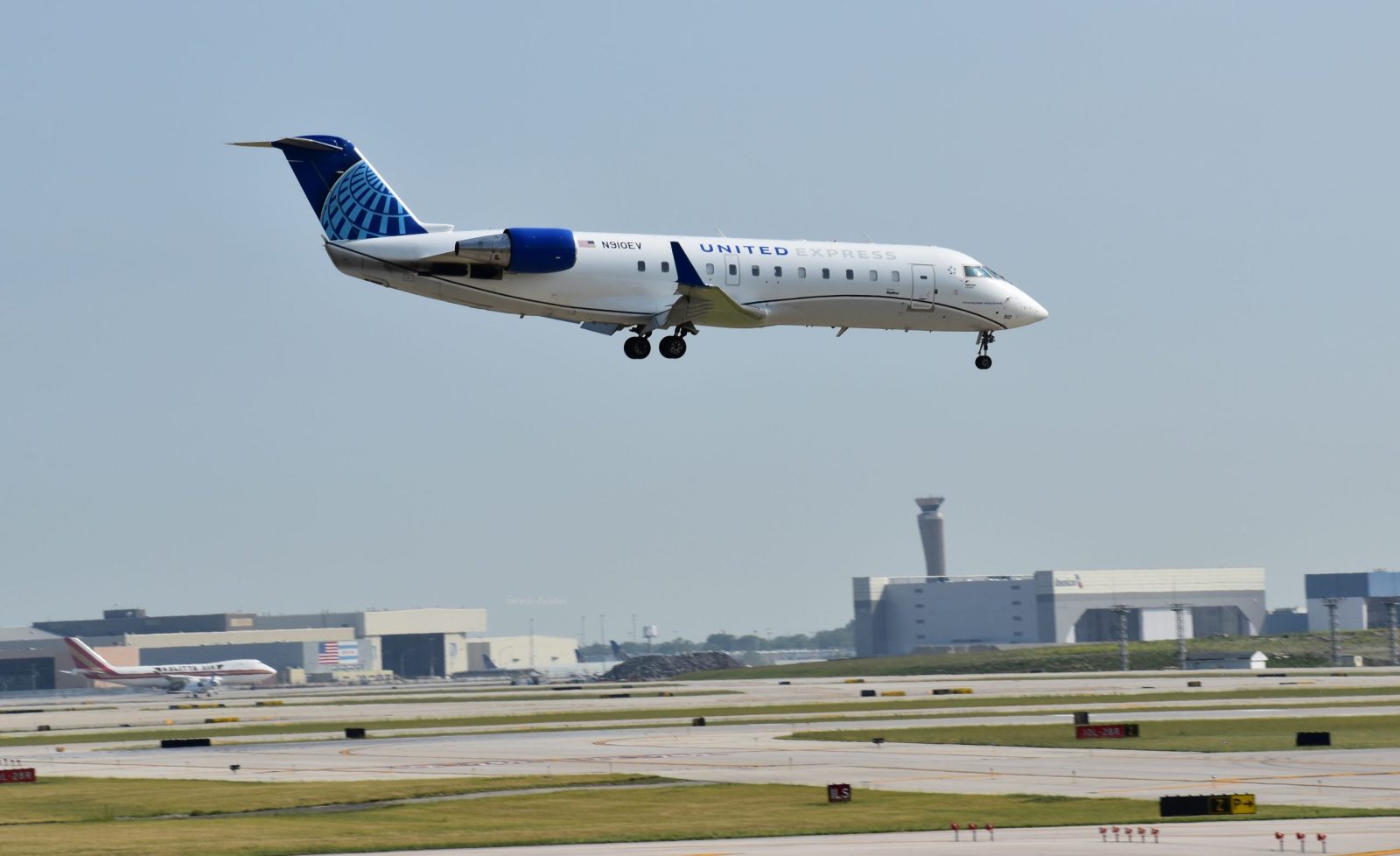
A United Express CRJ-200 arriving into Chicago O'Hare. (Photo: AirlineGeeks | Joey Gerardi)
While the aviation industry is on the rise from the pandemic, pilot shortages are now facing carriers in full stride. But one area is being hit the most: small communities. Back at the beginning of January 2022, United exited 11 small cities all of which were served by small 50-seat regional aircraft, either the Embraer E145 or the CRJ-200.
More recently, in the middle of January 2022, SkyWest announced the request to terminate two smaller Essential Air Service (EAS) cities in upstate NY; Plattsburgh and Ogdensburg.
This month, Skywest, under the United Express brand, is now requesting to terminate 29 additional cities, all of which are in the government-funded EAS program. This is the full list of cities they are requesting to terminate:
Alamosa, Colo.
Pueblo, Colo.
Fort Dodge, Iowa
Mason City, Iowa
Sioux City, Iowa
Dodge City, Kansas
Liberal, Kansas
Salina, Kansas
Paducah, Kent.
Decatur, Ill.
Houghton, Mich.
Muskegon, Mich.
Cape Girardeau, Missouri
Fort Leonard Wood, Missouri
Joplin, Missouri
Meridian, Miss.
Hattiesburg, Miss.
Devils Lake, N.D.
Jamestown, N.D.
Kearney, Neb.
North Platte, Neb.
Scottsbluff, Neb.
Johnstown, Penn.
Victoria, Texas
Shenandoah, Vir.
Eau Claire, Wis.
Clarksburg, W.V.
Lewisburg, W.V.
All of the routes to the communities above are operated using 50-seat CRJ-200s and the airline is citing pilot shortages as the reason they are requesting termination.
United Airlines CRJ200 operated by SkyWest at Muskegon-County Airport (Photo: AirlineGeeks | Joey Gerardi)
The document posted on regulations.gov from Skywest says they are giving a “90-day notice” in all of the above communities. But, most of the cities are still in the middle of their EAS contract term and some have just recently started in the past 12-months. Similar to Plattsburgh and Ogdensburg, the DOT will most likely deny the request until a new carrier is found and start the EAS bidding process immediately.
It is interesting to note that the only cities SkyWest is terminating are operating under the United Express banner, they are not ending any of the 15 cities that they operate on behalf of Delta Connection at this point in time.
A Delta Connection CRJ-200 in the EAS city of Butte, Mont. (Photo: AirlineGeeks | Joey Gerardi)
If they are all approved, that means that the United brand will have left 42 cities in just over six months. All of them are small, underserved or government-funded communities on 50-seat jets.
This will be the end of all EAS contracts under the United Express banner east of Wyoming, with the exception of Presque Isle, Maine. The only remaining EAS cities that will still see scheduled service on a United branded aircraft are Presque Isle, Maine; Laramie and Cody, Wyo.; Dickinson, N.D.; Prescott, Ariz.; Vernal and Moab, Utah and finally West Yellowstone, Mont. during the summers only.
Joey has always been interested in planes for as long as he can remember. He grew up in Central New York during the early 2000s when US Airways Express turboprops ruled the skies. Being from a non-aviation family made it harder for him to be around planes and would only spend about three hours a month at the airport. He was so excited when he could drive by himself, the first thing he did with his driver's license was get ice cream and go plane spotting for the entire day. He graduated from Western Michigan University in 2022 with a B.S. in Aviation Management & Operations and a Minor in Business, and currently works for a major airline in his hometown.
Interview: The Southern Airways Express Saab340 Unveiled
Southern Airways Express first Saab340 (Photo: Southern Airways Express)
Southern Airways Express — a Palm Beach, Fla. based commuter airline — operates an impressive fleet of over 35 Cessna 208s and over 200 daily flights across 37 destinations on the U.S. Mainland and Hawaii. The airline merged with Hawai’i-based Mokulele Airlines and operates the Hawaiian flights under the Mokulele brand.
During the early days of the pandemic, Ohana by Hawaiian ceased operations due to decreasing demand for inter-island travel. In June 2021, AirlineGeeks had a chance to interview Stan Little, chairman and CEO of the airline, who said the carrier would be receiving 19-seat Beech-1900’s to fill in the gaps left by Hawaiian Airlines. Now, nine months later the new aircraft is finally out of the paint shop, but not the Beech-1900 like originally planned, but a Saab340.
A rendering of the Beech-1900D with the Southern livery, the originally planned newest addition (Photo: Southern Airways Express)
AirlineGeeks once again had the chance to interview the carriers Chief Market Officer, Keith Sisson, about the newest addition to the Southern Airways Express family.
AirlineGeeks (AG): In an interview with SAE last summer, it was discussed that Mokulele/Southern would be getting Beech-1900s. Why did the airline make the switch to the Saab340?
Keith Sisson (KS): In the months following that interview, we determined that the Beech-1900 would not be the optimal aircraft for the mission. Instead, we decided to go with Saab 340s. These aircraft are equipped with 30 seats and will operate scheduled service under DOT 380 rules. In addition to scheduled flying, they will provide needed lift for local sports charters. (It may be hard for people to understand, but when Molokai High School has a football game, they can’t get on a bus…they have to fly to another island for the competition.) There is not enough demand on the smaller islands for large aircraft on a daily basis. There are only about two peak travel times during the week. These aircraft will supplement our Caravan schedule during those times. The extra 10 or so seats (relative to the Beech-1900) were a driving factor, but also aircraft quality and availability were important factors, as well. We looked at a dozen available 1900s and we just couldn’t locate any that were up to our standards. On the contrary, the Saabs we acquired are in “flagship condition.” People will really enjoy flying on these planes! We expect the first one to arrive in late April of this year.
(AG): When might we be seeing the first of those emerge from the paint shop and be put into service?
(KS): The first one is completing its new livery at the paint shop (which has since been completed). From there it goes to our DuBois, Pennsylvania maintenance base to undergo conformity and begin its proving runs. We are hoping to bring it across the ocean (to Hawai’i) in late April.
Southern Airways Express first Saab340 (Photo: Southern Airways Express)
(AG): Will the Saab340 be painted in the SAE livery, similar to the plan for the Beech-1900?
(KS): Great question! The Mokulele brand is nearing its 30th anniversary in Hawaii. We are going to keep the legacy of that brand alive for the 9-seat operation (Cessna 208’s). As a way for people to easily identify which aircraft type they will be buying seats on, we are going to operate the Saabs under the Southern Airways brand. The livery between the two brands is similar. So, on a ramp, the average person will be able to notice that the aircraft livery, while different, is similar enough to show that the brands are related.
(AG): How many Saab340s will be based in Hawai’i for inter-island flying?
(KS): We will be starting with two Saabs. We think that it will give us plenty of lift to meet the demand. As international visitors return, we are prepared to increase this investment, if needed.
(AG): Kaua’i is the only major Hawaiian island you don’t currently fly to, do you see the airline adding flights to this island with the Saab340?
(KS): We are limited by single-engine (Cessna 208) rules from flying to Kauai with the Caravan. We fully intend on serving that island, though not with the Saab. Instead of the main city of Lihue, we are hoping to provide scheduled flights to an unserved airport on the other side of the island, Princeville. For this, we have looked at a few different options, including the King Air Super 200. We have also taken a close look at the Tecnam Traveler and even took a demo flight near our Palm Beach, Florida headquarters. The Traveler may be a good solution for this service. No decision is made, but hopefully, we may be able to make an announcement this fall.
(AG): The Cessna208 that you currently fly are 8/9 seats so they fall under a different PART of the FAA regulations, not requiring them to have a TSA check-point. The Saab is significantly larger than that at 34 seats, does this mean Saab340 flights will operate out of the main terminal as they require security screening? or will you operate them as ‘public charter flights’?
(KS): We will operate these as public charter flights under DOT 380. We will remove four seats to comply with the regulation. These flights will operate non-sterile, just as the Caravans.
(AG): Will you have any of the Saab340 on the mainland?
(KS): At this point, the initial Saabs are designated only for Hawaii. We’ll make future plans as market conditions dictate. Having hired over 200 new pilots in the last 12 months, we certainly have the crews to support them.
(AG): What will be the registrations of these new Saab340s?
(KS): The first one will be N95SA, The Phil Lefevre. The second will be N79SA, The Phil Trenary.
(AG): Who are the individuals you’ve named the aircraft’s in honor of and why are they significant?
(KS): Phil LeFevre was our long-time Chief Operating Officer who earlier this year lost his battle with cancer at the age of 49. Phil had been in aviation his entire life, with long stints at Gulf Stream and Silver, where he developed their Saab program. Phil was very well-liked and respected in the airline community. We felt it was only fitting to name our first Saab in his memory since he spent so much of his career growing Silver’s Saab network. Phil served Southern Airways as Director of Operations and Chief Operating Officer for the last six years and worked full-time at our Palm Beach headquarters until the week before his death in January. He was a close personal friend of both of Southern’s founders.
The other Saab (N79SA) that is going to Hawaii is also named for a “Phil”, Phil Trenary. Phil was the founder of Lone Star Airlines in 1984 and was the CEO of Pinnacle Airlines in Memphis at the time of the Northwest merger with Delta in 2012. As we were starting Southern Airways in Memphis in 2013, Phil was extremely supportive and became a great friend. His life also ended prematurely when he was murdered in a street robbery in downtown Memphis in 2018 at the age of 64. At the time of his death, he was the Executive Director of the Memphis Chamber of Commerce and is known as one of the most respected business leaders in the history of that city. Before flying The Phil Trenary to Hawaii, we plan on commissioning it in Memphis and inviting his friends, family, and various community leaders to the event.
Both of “The Phil’s” had a significant impact on aviation and the success of Southern Airways. We are proud to offer this lasting tribute to each of them.
Thank you Keith Sisson for talking to AirlineGeeks about Southern Airways Express’ brand new aircraft type to its fleet. Stay tuned later this week as I have an interview with him regarding the airline’s unique inter-island operations with Mokulele.
Joey has always been interested in planes for as long as he can remember. He grew up in Central New York during the early 2000s when US Airways Express turboprops ruled the skies. Being from a non-aviation family made it harder for him to be around planes and would only spend about three hours a month at the airport. He was so excited when he could drive by himself, the first thing he did with his driver's license was get ice cream and go plane spotting for the entire day. He graduated from Western Michigan University in 2022 with a B.S. in Aviation Management & Operations and a Minor in Business, and currently works for a major airline in his hometown.
Alaska Airlines, Horizon Air Launch Ascend Pilot Academy
An Alaska 737-800 at Reagan National Airport (Photo: AirlineGeeks | Craig Fischer)
Alaska Airlines and Horizon Air — the Seattle-based carrier’s regional partner — have teamed up to launch their Ascend Pilot Academy (APA), aimed towards providing pilots with a simple, more affordable path to becoming commercial pilots. Participants in the program will eventually land themselves in the right seat at Horizon Air, with the opportunity to further advance to Alaska Airlines after specific requirements are met.
The program ultimately aims to aid the company in the hiring of pilots amidst the ever-growing pilot shortage that currently plagues the industry.
The two airlines have partnered with the Hillsboro Aero Academy — a Pacific Northwest flight school — to train upwards of 250 cadet pilots per year. Pilots in the program will be eligible for a $25,000 stipend to help cover the cost of their commercial pilot license, including an opportunity for low-interest financial aid assistance. Along the way, cadets will have access to mentorship from existing Alaska Airlines and Horizon Air pilots.
Following the completion of ratings, and after receiving the required 1,500 flight hours, graduates will receive a conditional job offer at Horizon Air. Having reached the flight deck at Horizon, and looking to advance with Alaska, Ascend Pilot Academy graduates may apply for quarterly openings with the airline’s pathway program, which could lead to the standard interview process with the airline.
“Launching the Ascend Pilot Academy addresses a critical need to build a larger and more diverse talent pipeline and remove historical barriers to entry for aspiring pilots,” Joe Sprague, said, Horizon Air president. “Our goal is to create a program that enables students to complete an intensive training and time-building program, with a clear and established path toward flying for Horizon as a first officer.”
Ongoing Pilot Shortage
The pandemic played a large role in the industry-wide pilot shortage as it pushed many pilots into early retirement amongst major air carriers. As a result, airlines have turned to programs similarly designed like the Ascend Pilot Program to help tackle the growing problem. In 2022, it is projected that upwards of 10,000 pilots will be hired by mainline airlines, up 50 percent from 2019, prior to the pandemic. Alaska and Horizon combined will hire an estimated 500 pilots per year till 2025.
“We’re taking a number of steps to actively recruit pilots at both Alaska and Horizon, including enhancing our existing Pilot Development Program and launching a robust marketing recruiting campaign,” Sprague added.
About Hillsboro Aero Academy
Prior to this program, Horizon Air and Hillsboro Aero Academy had already been established partners — helping students gain employment following the completion of their training.
The Pacific Northwest flight school has two campuses, the main one located in Hillsboro, Ore. and the other in Redmond, Ore. Hillsboro’s campus operates a fleet of 95 aircraft equipped with modern avionics.
Many Alaska and Horizon pilots started their careers flying, instructing or both at the Hillsboro campus.
“Through this program, an aspiring commercial pilot will be able to realize their dream of learning to fly, and work toward becoming a captain at Alaska Airlines,” Nik Kresse, Hillsboro Aero Academy’s Vice President of airplane flight operations, said. “Enrolling in Ascend Pilot Academy is the first step of what we hope will be a long relationship with Horizon Air and Alaska Airlines. We’re eager to work with students through their entire journey and provide world-class training and dedicated pilot mentorship along the way.”
Ascend Pilot Academy not only benefits its cadet pilots by providing them with the tools and resources needed for success, but it also helps the carriers fill cockpit seats with pilots they know came from a trusted flight school.
Chase Hagl grew up in Twin Falls, Idaho. His love and passion for Aviation landed him in Orem, Utah where he obtained a B.S. in Aviation Management with a minor in Business Management from Utah Valley University. Chase currently works as a flight attendant in Charleston, SC and is also the primary Inflight ASAP ERC representative for startup airline, Breeze Airways. His experience in the aviation industry spans back four years, working in areas including agriculture application, customer service, maintenance, and flight ops. In his free time, Chase enjoys road biking, astronomy, and flying.
Ethiopian Airlines Expands Air Cargo Fleet with Boeing Agreement
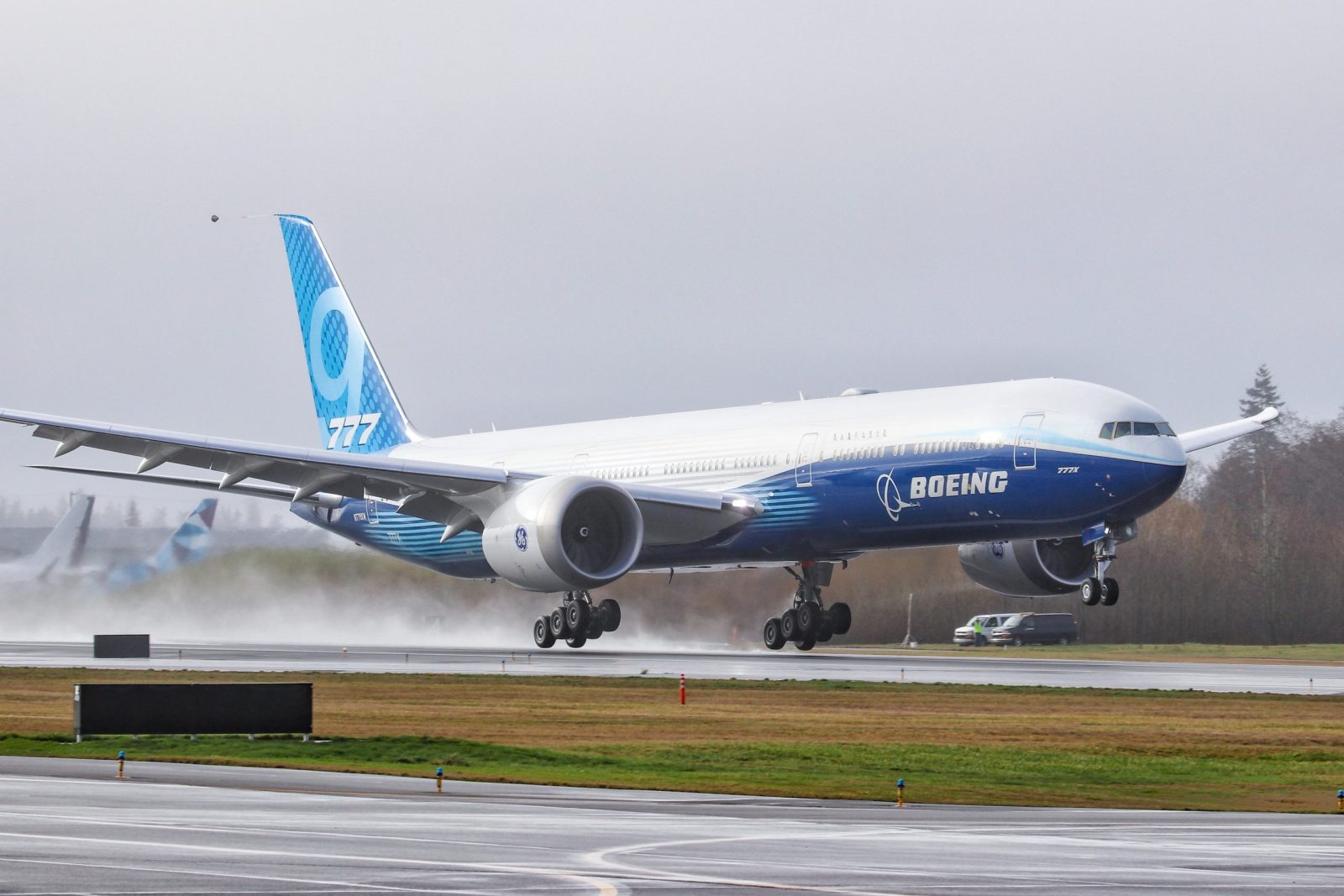
Boeing's 777X departs on its maiden test flight (Photo: AirlineGeeks | Katie Zera)
Ethiopian Airlines has agreed to buy up to 5 of Boeing’s new 777X freighter jets — with the carrier launching the plane during a boom in air cargo.
The airline will also become the second carrier to operate the recently launched freighter and Boeing’s newest plane whose development has faced delays, declining customer orders for the passenger model and regulatory snags amid airlines’ broader shift toward smaller jets designed to fly on longer, direct routes.
The order will enable Ethiopian Airlines to meet expanding global air cargo demand from its hub in Addis Ababa and position the carrier for long-term growth.
Tewolde Gebremariam, Chief Executive Officer of Ethiopian Airlines Group, said, “In our vision 2035, we are planning to expand our Cargo and Logistics business to be one of the largest global multimodal logistics providers in all continents, to this effect, we are increasing our dedicated freighter fleet with the latest technology, fuel-efficient and environment-friendly airplanes of the 21st century. We have also started the construction of the largest E-commerce Hub Terminal in Africa.
Ethiopian Airlines currently operates nine 777 freighters. The carrier’s fleet also includes three Boeing 737-800s converted freighters and a combined commercial fleet of more than 80 jets including Boeing 737s, Boeing 767s, Boeing 787 Dreamliners and Boeing 777s.
“The new 777-8 Freighters will be instrumental in this long journey of growth agenda. Today, our air cargo services cover more than 120 international destinations around the world with both belly hold capacity and dedicated Freighter services,” Gebremariam added.
Boeing launched the new 777-8 freighter in January with Qatar Airways as the launch customer. Qatar Airways ordered 34 of the aircraft with options for a further 16 in a deal that is valued at more than $20bn based on list prices.
According to Boeing, their 777-8 twin-engine freighter features advanced technology from the new 777X family and the performance of the 777 freighters. With payload capacity nearly identical to the 747-400 freighter and a 30% improvement in fuel efficiency, emissions and operating costs, the 777-8 freighter is expected to enable a more sustainable and profitable business for operators.
International Cargo Transport
Ethiopian Airlines has partnered with International Djibouti Industrial Park Operation (IDIPO) and Air Djibouti as it looks to develop sea-air operations between China and Africa.
Based on a strategic agreement signed between the parties, cargo will be transported from China to Djibouti Free Zone by sea and will then be transported to Djibouti International Airport for onward transportation by air. Typically, Sea-air services are pitched as being less expensive than a pure air cargo operation but faster than pure sea transport.
According to Ethiopian, the new multimodal logistics solution will enable African businesses, multinational companies, Chinese companies and other business people to enhance their supply chain management system with the best combination of speed, cost and quality services.
“The markets of China and Africa are highly complementary and the partnership has huge potential in facilitating cost and time-efficient logistics solutions for African traders,” the carrier said. “As the world’s production base, China is the largest supplier, while Africa with a population of 1.3bn people has huge market demand. China has been Africa’s largest trading partner with a trade volume of $254bn in 2021.”
Victor Shalton's love for aviation can be traced to when he was 11-years-old. As a seasoned aviation writer, he takes pride in providing the best aviation coverage around the globe and is passionate about advancing his skills in the aviation space. In addition, he loves travelling, writing, arts and while his speaking engagements have taken him around the world, he is proud to call Nairobi home.