










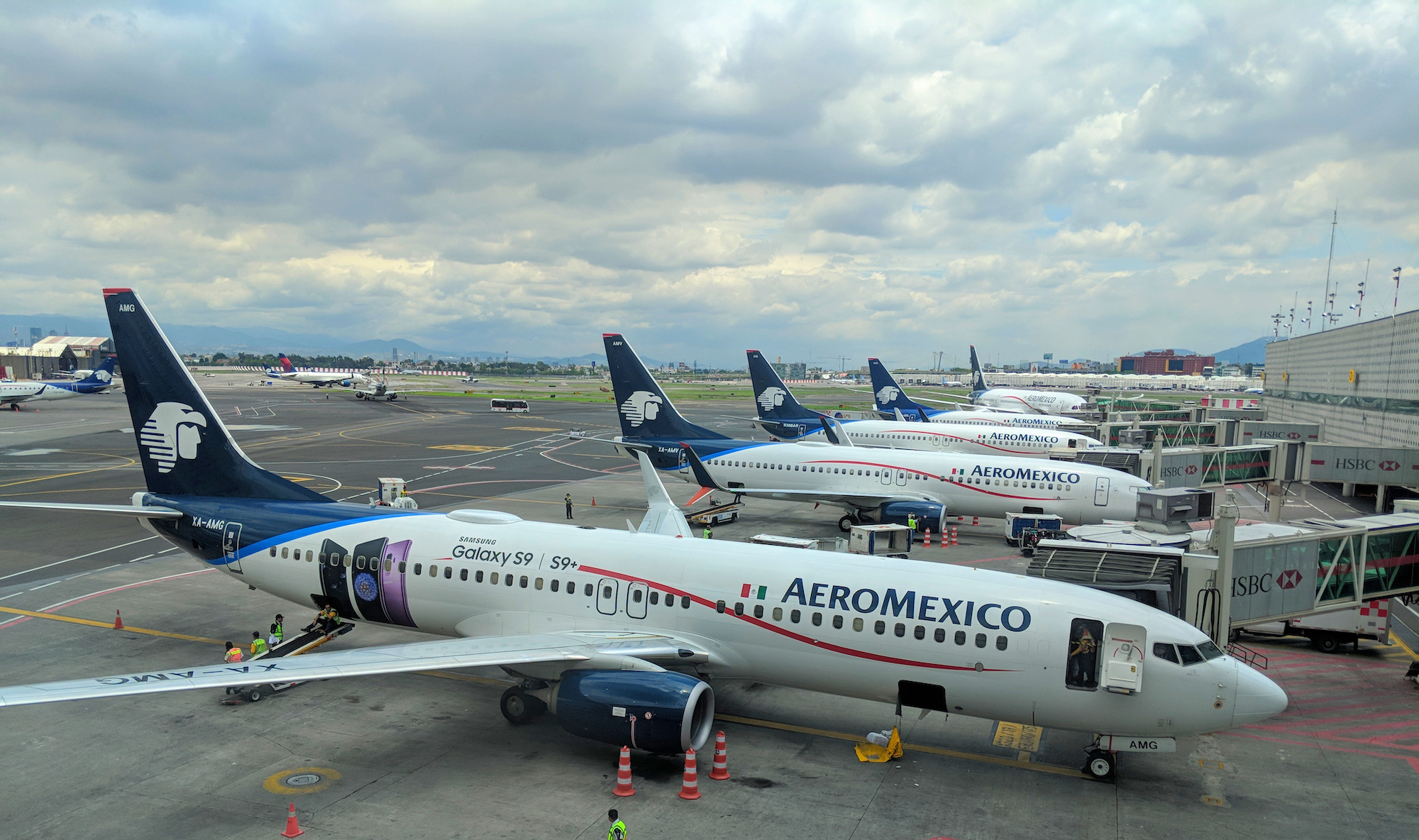

Mexico has been steadily placing its airports under military control, a move that has raised concerns among some experts and citizens. As of November 2023, the military now oversees and controls 31% of all airports in Mexico, including both Mexico City airports, according to Yahoo News.
The Mexican government has justified this move by citing the need to combat drug trafficking, corruption, and organized crime. President Andrés Manuel López Obrador has argued that the military is better equipped to handle these challenges than civilian authorities.
“There are various airports in the country that have had big problems for many years, and they had to be fixed,” said Rear Admiral Carlos Velázquez Tiscareno, airport director at Mexico City’s Benito Juarez International Airport in an interview with CBC News.
In Mexico City, Felipe Angeles airport (NLU), which is the capital’s newest, National Guard troops manage a wide array of functions, including taking passenger tickets at the gate. On the other hand, at Benito Juarez (MEX) airport, the only uniformed military are the 1,500 marines deployed since February 2022 for security, according to CBC News. The airport director said the rest of the airport workers will be civilians.
However, critics of the policy argue that it could lead to increased militarization of Mexican society and a decrease in transparency and accountability. Some also worry that the military may not be properly trained to perform airport security in addition to other job functions.
A Growing List
Mexican President Andrés Manuel López Obrador – also known by his initials ‘AMLO’ – has swiftly been placing airports under military control over the last several months. Most recently, Palenque (PQM), Puebla (PBC), Puerto Escondido (PXM), and Uruapan (UPN) were transferred to the custody of a company controlled by the defense ministry on Nov. 28, 2023.
Alongside both Mexico City airports, these airports join Nuevo Laredo (NLD), Campeche (CPE), and Chetumal (CTM) under the military’s oversight. In addition, one of the country’s newest airports – Tulum International Airport (TQO) – is also operated by the Mexican armed forces.
Privately-Owned Airports
Despite a continued push for militarization of the country’s airports, some of Mexico’s busiest tourism hubs remain in the hands of private companies. One company – ASUR – operates nine airports in southeastern Mexico, including the country’s second busiest in Cancun (CUN).
Farther west, another airport operator called Grupo Aeroportuario del Pacífico (GAP) has a portfolio of 12 airports in Mexico, including Guadalajara (GDL) and Tijuana (TIJ). Tourist hotspots Cabo (SJD) and Puerto Vallarta (PVR) are also operated by GAP, which is a publicly traded company.
AMLO’s term is set to end in September 2024. Right now, it is unclear how many more airports he intends to place under the military’s control.