










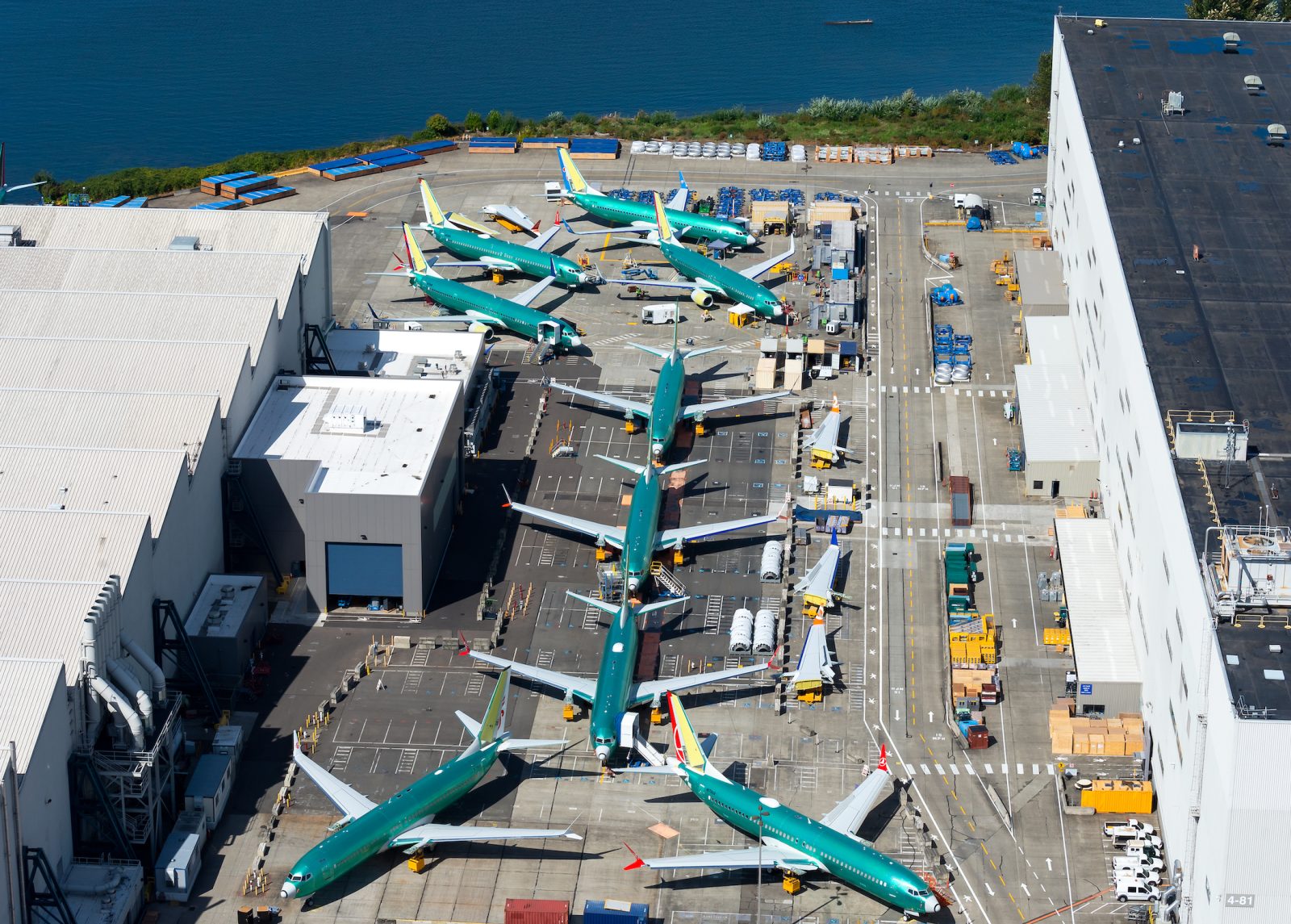

American aircraft manufacturer Boeing announced Sunday it will need to do more work on 50 undelivered 737 MAX aircraft after Spirit AeroSystems, the contractor that builds 737 fuselages, discovered two mis-drilled holes on some fuselages.
Boeing told Reuters that a problem with “edge margins,” or gaps between a fastener and the edge of the sheet metal, was found in holes drilled on a window frame on some jets. Boeing will devote several “factory days” at its Renton, Wash. plant to working on these misaligned holes this week, in addition to finishing other outstanding work.
“This past Thursday, a supplier notified us of a non-conformance in some 737 fuselages. I want to thank an employee at the supplier who flagged to his manager that two holes may not have been drilled exactly to our requirements,” Boeing Commercial Airplanes CEO Stan Deal said in a letter to staff.
“While this potential condition is not an immediate flight safety issue and all 737s can continue operating safely, we currently believe we will have to perform rework on about 50 undelivered airplanes,” Deal continued in the letter.
Spirit says they are “in close communication with Boeing on this matter.” The two companies have reportedly come to an agreement on how many mis-drilled holes must be addressed and how many problems are so minor that fuselages can be used as-is.
The quality defect in question has been found on 22 of the 47 fuselages inspected. It is possible that this problem is also present on airframes already in service.
The FAA has occasionally ordered inspection for cracks resulting from fastener holes being mis-drilled in the past.
Boeing says that delays stemming from this drilling problem will affect its production schedule but will improve overall quality and stability. The manufacturer has also asked a major supplier to halt all shipments until this new problem is rectified.
Points such as rivet holes can be among the most critical places on aircraft. Aircraft life cycles are largely defined by the number of times it is pressurized. This is because microcracks form around rivets and other welding points with each pressurization, and the airplane must be permanently removed from service if the cracks reach a certain severity.
Modern aircraft can withstand thousands of pressurization cycles, and the oldest commercial aircraft in service are decades old. Many especially old aircraft might even still be flying if it weren’t for new, more-efficient aircraft replacing them.
This is the latest blow to Boeing, who is under investigation for quality control issues stemming from the Alaska Airlines door plug blowout on a 737 MAX 9 jet last month. The FAA blamed Boeing, not Spirit AeroSystems, for leaving bolts holding the plug door in place too loose.
737 MAX production has been indefinitely capped at 38 aircraft per month while the FAA investigates. There are also more third-party investigators in Boeing plants to continually monitor safety.
