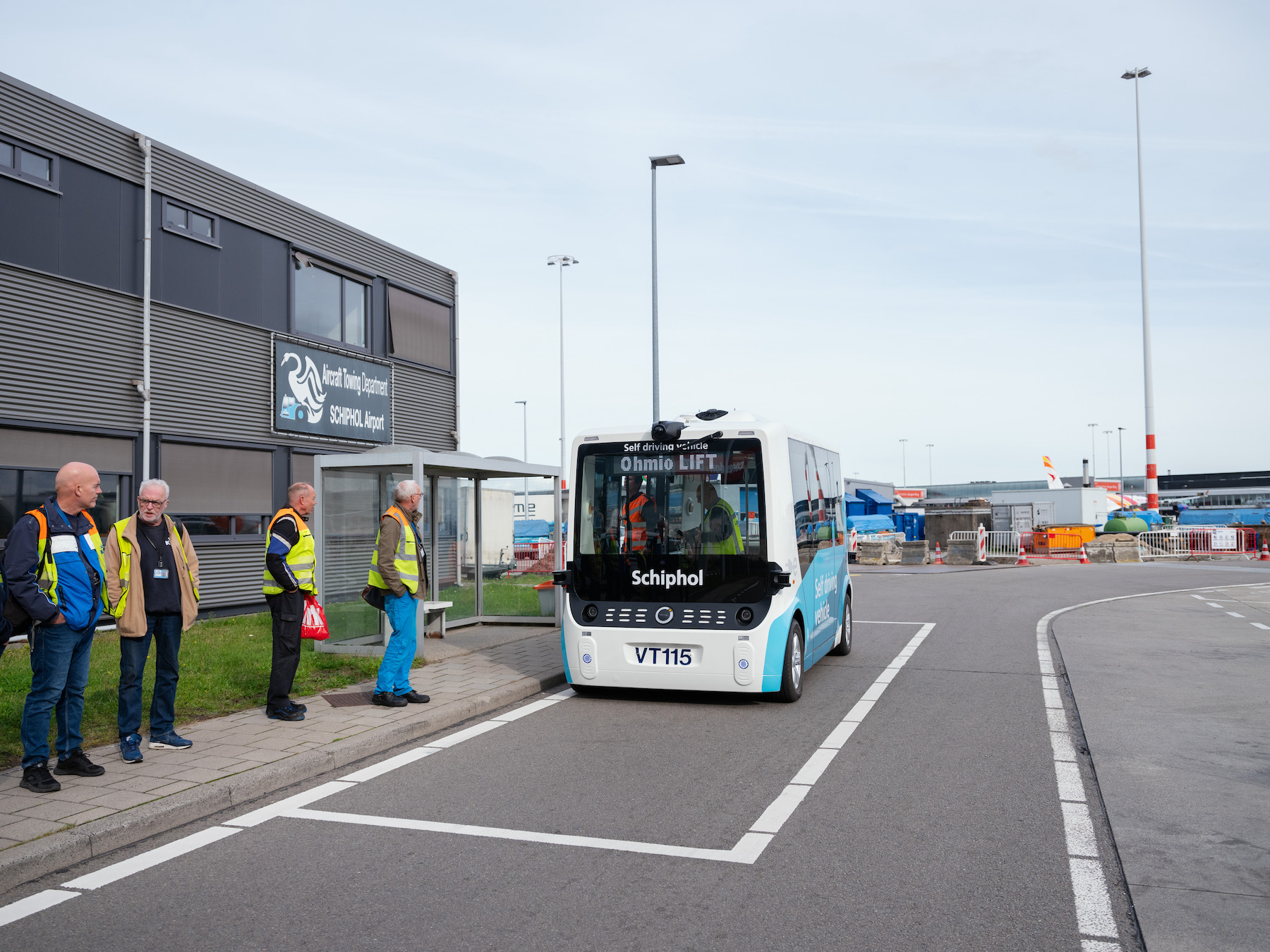

Amsterdam Schiphol Airport is trialing self-driving electric buses to transport employees working in the airport’s airside area. The two self-driving Ohmio buses follow a fixed route with stops at various facilities used by cleaning and ground handling companies, according to the airport.
The initial phase of the trial focuses on testing the technology and how it adapts to the airport environment. Employee experience is also being evaluated, with 89% of initial users reporting a positive experience and willingness to use the service again. The trial will continue until the end of April to assess the feasibility of expanding the program.
“This trial represents another step towards our ambition of having an emission-free and autonomous ground operation by 2050,” said Jan Zekveld, head of innovation at Royal Schiphol Group, in a news release. “The knowledge and insights gained during this test period are of significant added value to future autonomous developments at Schiphol.”
Schiphol is the first airport in the Netherlands to utilize Ohmio’s self-driving technology for passenger transport on the airside. These pre-programmed Automated Guided Vehicles (AGVs) consider other vehicles and pedestrians on the road when determining speed, stopping, and yielding.
In 2023, similar Ohmio vehicles were tested at New York’s JFK Airport. The company is based out of New Zealand.
Each autonomous bus can carry eight passengers and takes about five minutes to complete its route. Employees can board directly from designated staff walkways.
Future-Proofing Ground Operations
“This collaboration underscores Ohmio’s commitment to advancing visionary approaches for the future of transport,” said Mohammed Hikmet, Executive at Ohmio. “We are enthusiastic about the opportunity and are honored to join hands with Schiphol Airport, a leading player in Europe’s aviation industry.”
The trial is part of Schiphol’s long-term goal of achieving a zero-emission ground operation by 2050. The airport says it envisions a future where all ground vehicles are replaced with a fleet of autonomous, electric vehicles, while employees transition to more supervisory and task-oriented roles.