









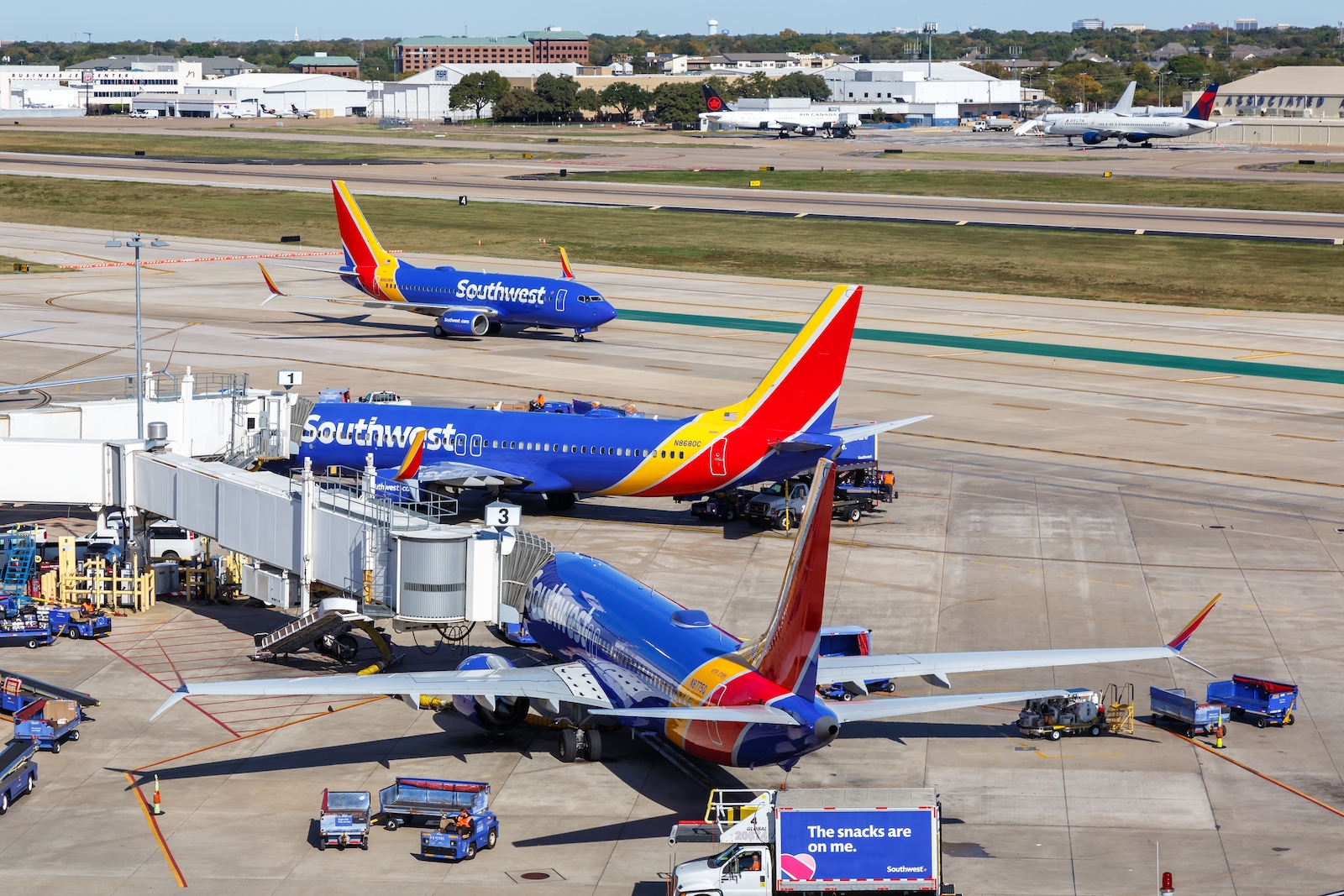

Southwest has filed an amended legal complaint against the City of San Antonio and its airport director, Jesus Saenz, further elaborating on its prior allegations regarding the decision to deny the airline a lease at the new $1.4 billion Terminal C at San Antonio International Airport.
In September, Southwest claimed that the defendants’ actions violated the Supremacy Clause and the Airline Deregulation Act, which prohibits local authorities from basing airport gate allocations on subjective criteria related to airline service routes and offerings.
In the U.S. District Court for the Western District of Texas, Southwest’s amended complaint alleged that the gate allocation process unfairly excluded the airline based on subjective factors.
The airline alleged that the city favored carriers that provide premium services and hold international routes. The complaint argues that this violates federal law designed to prevent local biases. The carrier also seeks injunctive relief, including a temporary restraining order to halt the execution of these lease agreements.
The amended legal complaint reveals internal communications that suggest the city’s preference for airlines catering to business travelers, offering first-class services, and having VIP lounges.
The documents indicate that verbal assurances were made to Southwest regarding its inclusion in Terminal C, but these were later undermined by the city’s decision-making process, which was influenced by factors such as the presence of airline clubs.
“Even though VIP airline clubs rank near the bottom of the list of airport amenities that are important to taxpayers, the City’s documents reveal that Defendants prioritized VIP clubs above everything else when designing and assigning gates in the new terminal,” the amended complaint stated.
The complaint alleged that the city instructed its master architect of the new terminal to begin by including tens of thousands of square feet of VIP clubs in its initial design.
“By insisting that the new terminal include substantial space for VIP lounges, Defendants stacked the deck against low-cost carriers that do not offer VIP lounges,” the complaint added.
The complaint alleged that the city then instructed the master architect “to make gating recommendation based on its insistence that the new terminal have large VIP lounges.”
“Third, and confirming its bias, the City agreed to assign Delta to the new terminal only if Delta agreed to build a VIP club,” it continued.
Southwest accused the city of deliberately concealing its plans to keep the airline in the older, less functional Terminal A, impeding Southwest’s ability to negotiate renovation funds.
The Dallas-based airline is the city’s largest with a 37% share of passenger traffic at the airport. Southwest has asked the court to declare the city’s criteria void and unenforceable, and has asked for damages and additional legal relief.
