









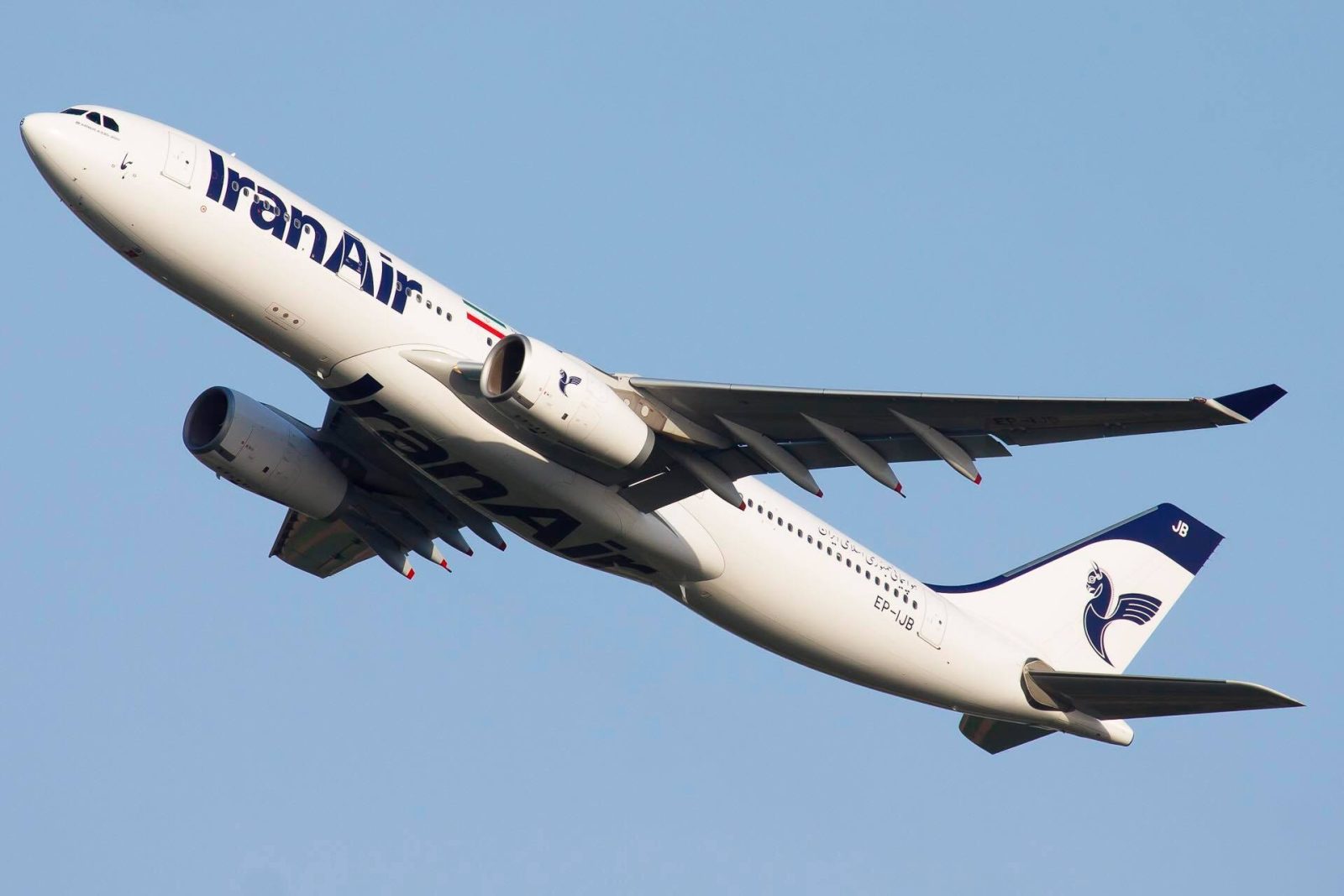

Iran Air is reportedly putting out feelers to potential partners and suppliers as it prepares for a possible release from U.S. sanctions.
With U.S. and Iranian officials once again discussing limits on Tehran’s highly controversial nuclear program, Iran Air sent representatives to a gathering of the International Air Transport Association in New Delhi to sound out prospects for expansion, Bloomberg reported Tuesday. The news agency cited people with knowledge of the event, who did not want to be named “discussing private matters.”
Iran Air reportedly approached Japan Airlines, Vietnam Airlines, and Royal Air Maroc, possibly concerning codeshare agreements. The encounters were not pre-planned, Bloomberg said.
Iran Air representatives also stopped in at a night reception hosted by Boeing. There was some brief contact between the representatives and Boeing officials, the sources said, but no commercial discussions.
Under current U.S.-led sanctions, no American-made aircraft or related aviation technology can be sold to Iran without prior authorization, and Boeing and Airbus cannot discuss aircraft or parts sales with the country without a license. As a result, Iran Air operates a comparatively small, aging fleet and frequently runs short on needed spare parts, hurting operations.
The carrier has also become isolated from international markets. Some companies refuse to service and refuel Iranian aircraft, and in 2024, Iran Air was banned from some European airspace for providing weaponry to Russia during its invasion of Ukraine.
Now that sanctions relief is in the picture, Iran Air hopes to grow its fleet from less than 50 aircraft to at least 100 through direct purchases, Bloomberg reported. The carrier is most interested in Boeing and Airbus jets and doesn’t want to pursue Russian or Chinese alternatives.
Iran Air reportedly sees promise in building its network within Asia. It would like to expand service to China, Thailand, Japan, India, and Malaysia, according to Bloomberg.
Prospects for a Breakthrough
The U.S. and European Union loosened restrictions on Iranian civilian flights in 2015 after the country agreed to limit its enrichment of uranium in exchange for economic benefits. The deal, which had the backing of France, Germany, China, Russia, and the U.K., collapsed in 2018 after President Donald Trump withdrew from it and announced a policy of “maximum pressure” on Iran, which entailed new sanctions.
Now back in office, Trump seems intent on reaching a new deal with Iran, though it is not clear if the end result would be meaningfully different than the 2015 accord, or if it will even come to fruition. Iranian Supreme Leader Ali Khamenei has said his government will not accept limits that impinge on Iran’s sovereignty, and he has taken a dim view of Trump and negotiations with the U.S. for years.
Iran maintains that it is not pursuing a nuclear bomb and wants to use nuclear power for peaceful purposes, like energy.
The talks remain ongoing. On Monday, Reuters reported that Iranian negotiators had submitted a counterproposal to the U.S. after deeming an earlier offer from Washington “unacceptable.”