










There are certain airports that AvGeeks love flying into, some because of the terrain, others due to the difficult or thrilling approach, and others just because of the aircraft type the flight is on. One airport that is a treat flying into is Billy Bishop Airport, located on Toronto Island, and simply referred to as Toronto City Airport.
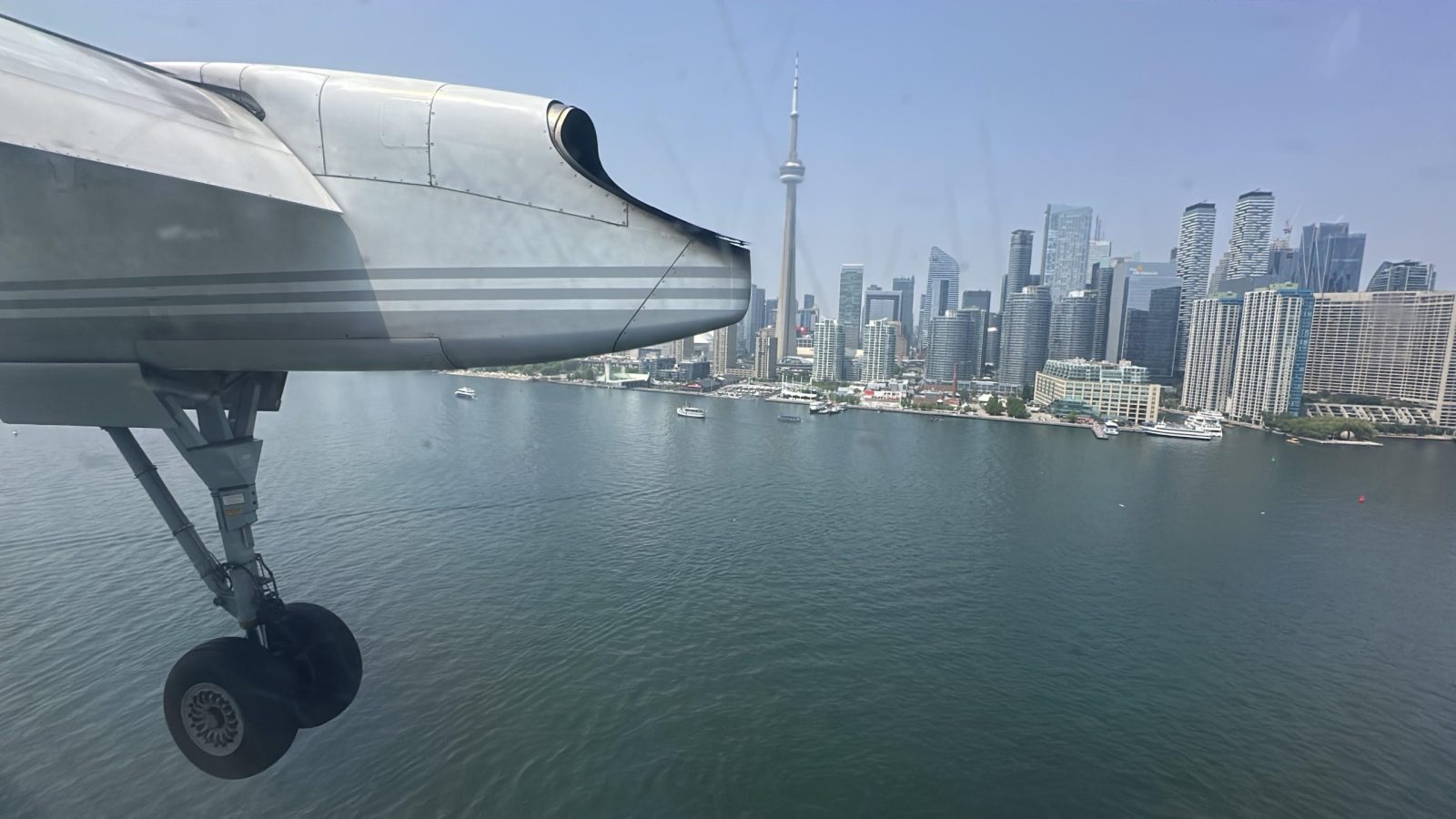
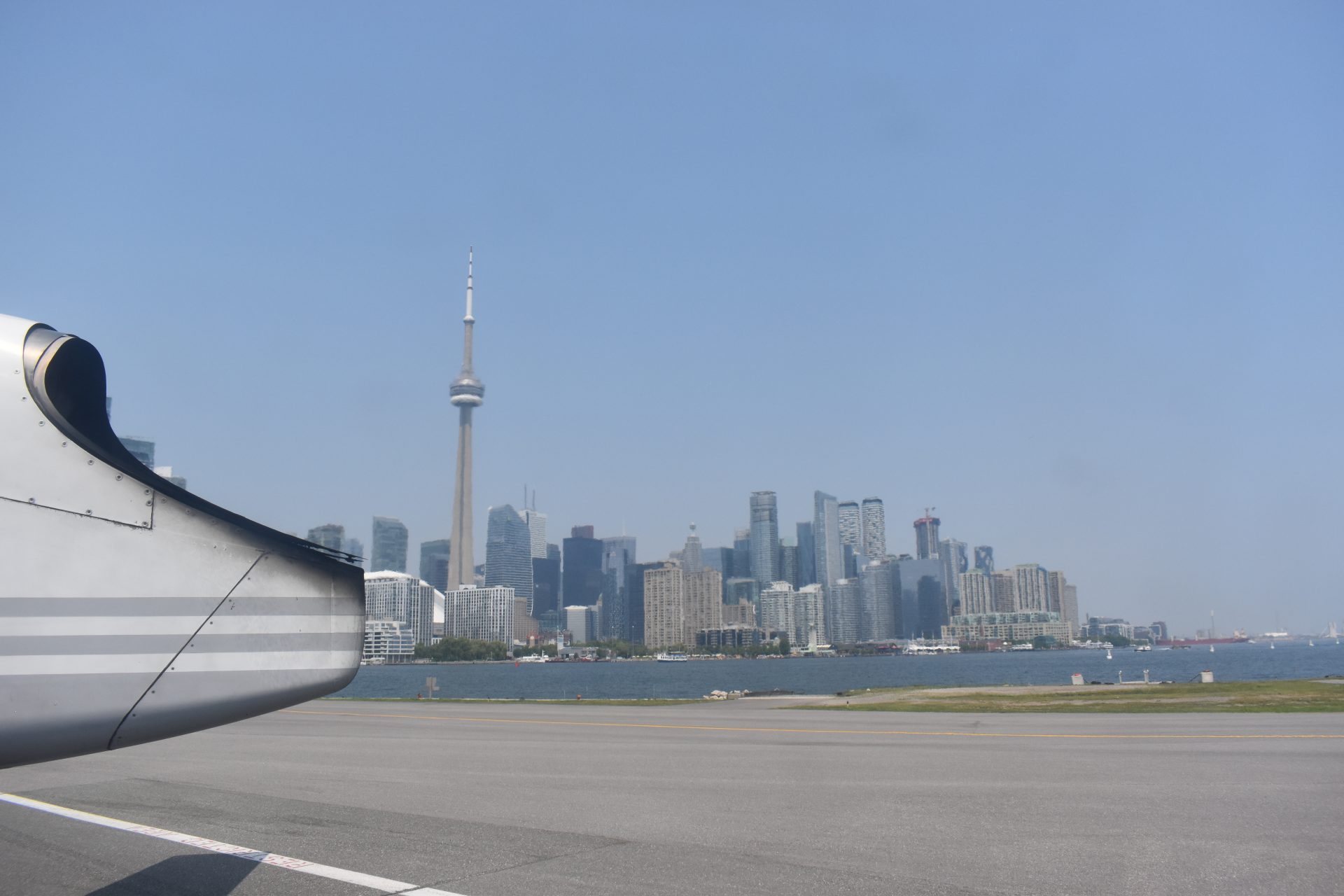
This airport has a shorter runway of 3,988 feet/1,216 meters and sits on an island next to downtown Toronto. Passengers going into the airport are treated to scenic views of the Toronto skyline close by, and the Q400s used by Porter are one of the only commercial aircraft still flying that can land on the runway, since the airport has a very strict ban on jet aircraft (except for medivac). With most airlines retiring propeller planes in favor of faster jets, this is where Porter shines.
Started in 2006, Porter based its operations out of the small airport and operated a fleet of entirely propeller-driven Q400 aircraft, with the expectation of giving passengers an elevated economy experience with premium snacks and free alcoholic drinks served in glassware. This was unheard of at the time, and still to this day, as most airlines continue to look for ways to cut costs and weight from their flights.
With Toronto City Airport being in the literal shadow of downtown, it is also by far the easiest way to get to downtown Toronto by airplane, especially if you are coming from one of the cities that Porter serves from its base here at YTZ, making it the preferred airport for business travelers who need quick access to downtown Toronto.
Day of the Flight
Porter offers a handful of interline agreements with different airlines, many of which operate out of Boston, including Delta and JetBlue, which both operate a hub from the airport. All of the terminals at Boston are now connected post-security, so you won’t have to go through it again. You can walk between terminals B through E, and for Delta passengers coming from Terminal A, you just need to show a boarding pass that you just got off a Delta flight or are going to a Delta flight, and they’ll put you on a bus that connects A and E.
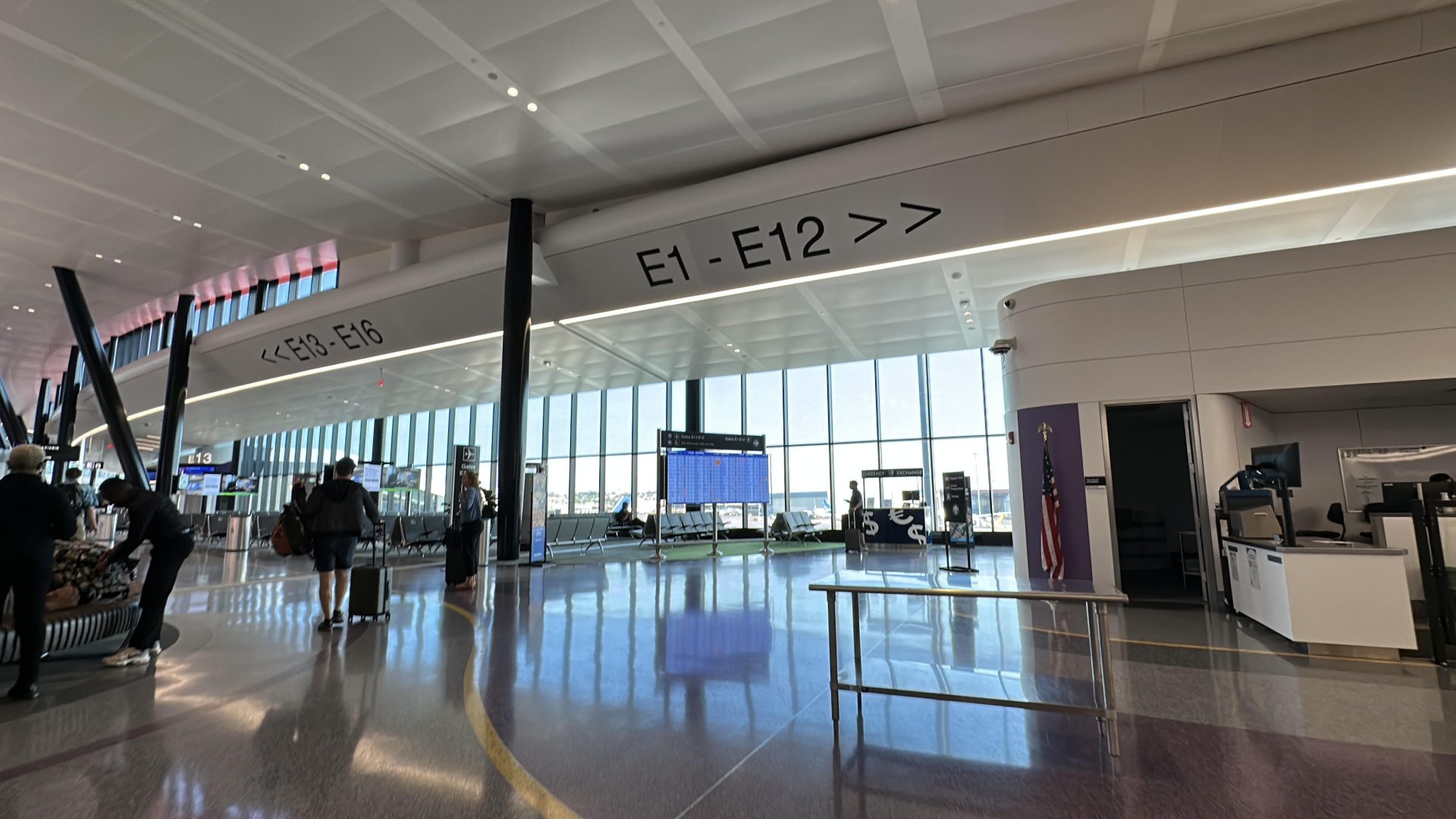
I arrived at the airport earlier in the day off of another flight, but I wanted to get a boarding pass, so I headed to the airline’s ticket counter, which is located in the E terminal. Porter offers three to four flights a day, depending on what day of the week it is, and I was scheduled on the flight that was going out around noon.
Even though Porter has three to four flights a day, its ticket counter is not open the entire day, so make sure to pay attention to what time it is if you do need to stop at the counter to get a boarding pass or check a bag. The airline opens its ticket counter two hours before the departure time of each flight, but if your flight is in the evening and you happen to be at the ticket counter when it opens for another flight, you are permitted to check in during that time as well.
There were not many flights going out of the international terminal at that time of the day, so the terminal, as well as the security checkpoint, was rather empty, making it a breeze to get through, especially since Porter participates in TSA PreCheck.
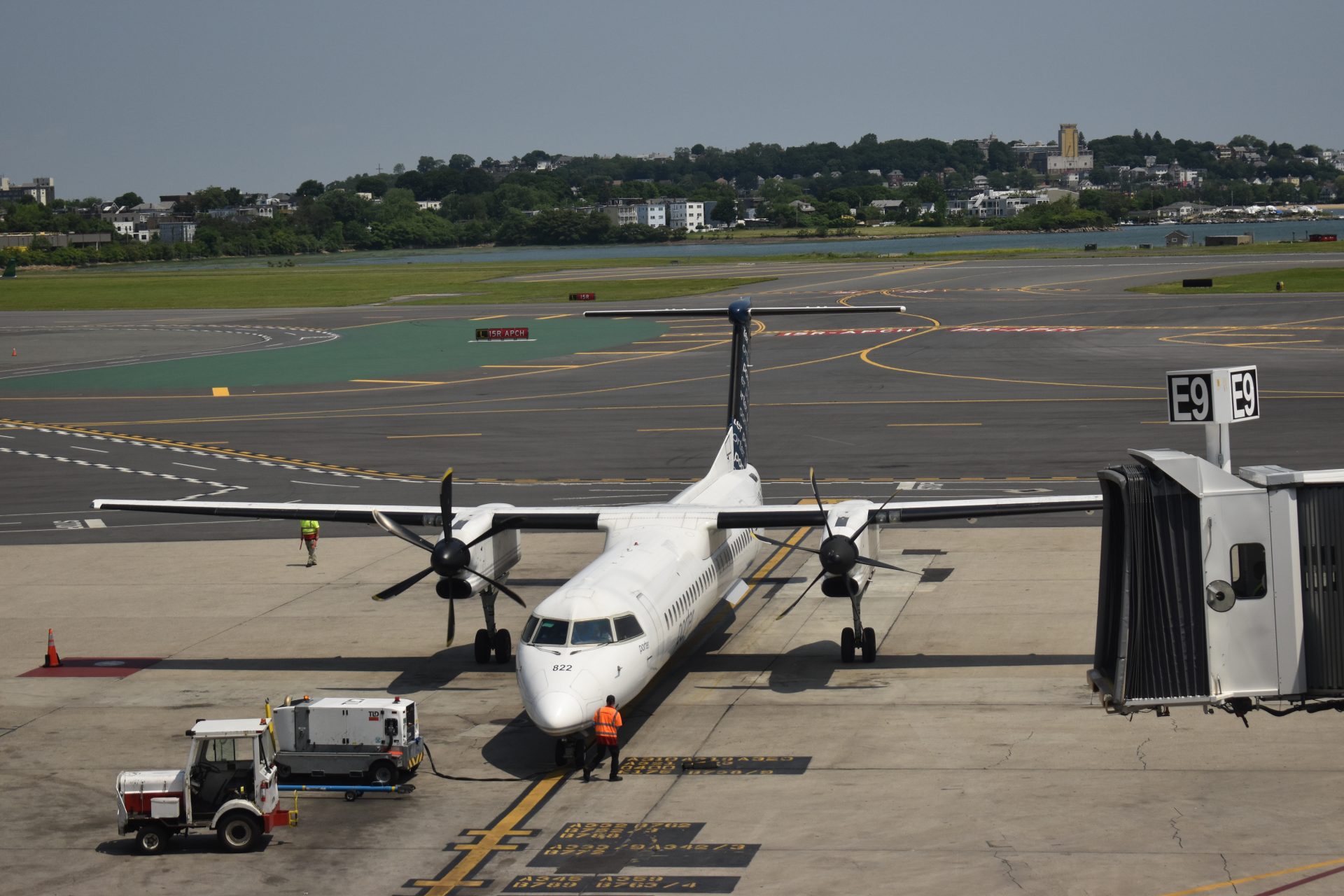
The aircraft for my flight was C-GKQB, a DeHavilland Dash-8 400, more affectionately known as the Q400. This particular aircraft was delivered directly to Porter in April 2011 and has been flying for them ever since. It’s not often you find turboprop aircraft operating in the U.S. anymore, with most airlines retiring them from their fleets, and since it’s even more rare to have one of these aircraft hooked up to a jet bridge, it was nice to see that for my flight leaving from Boston.
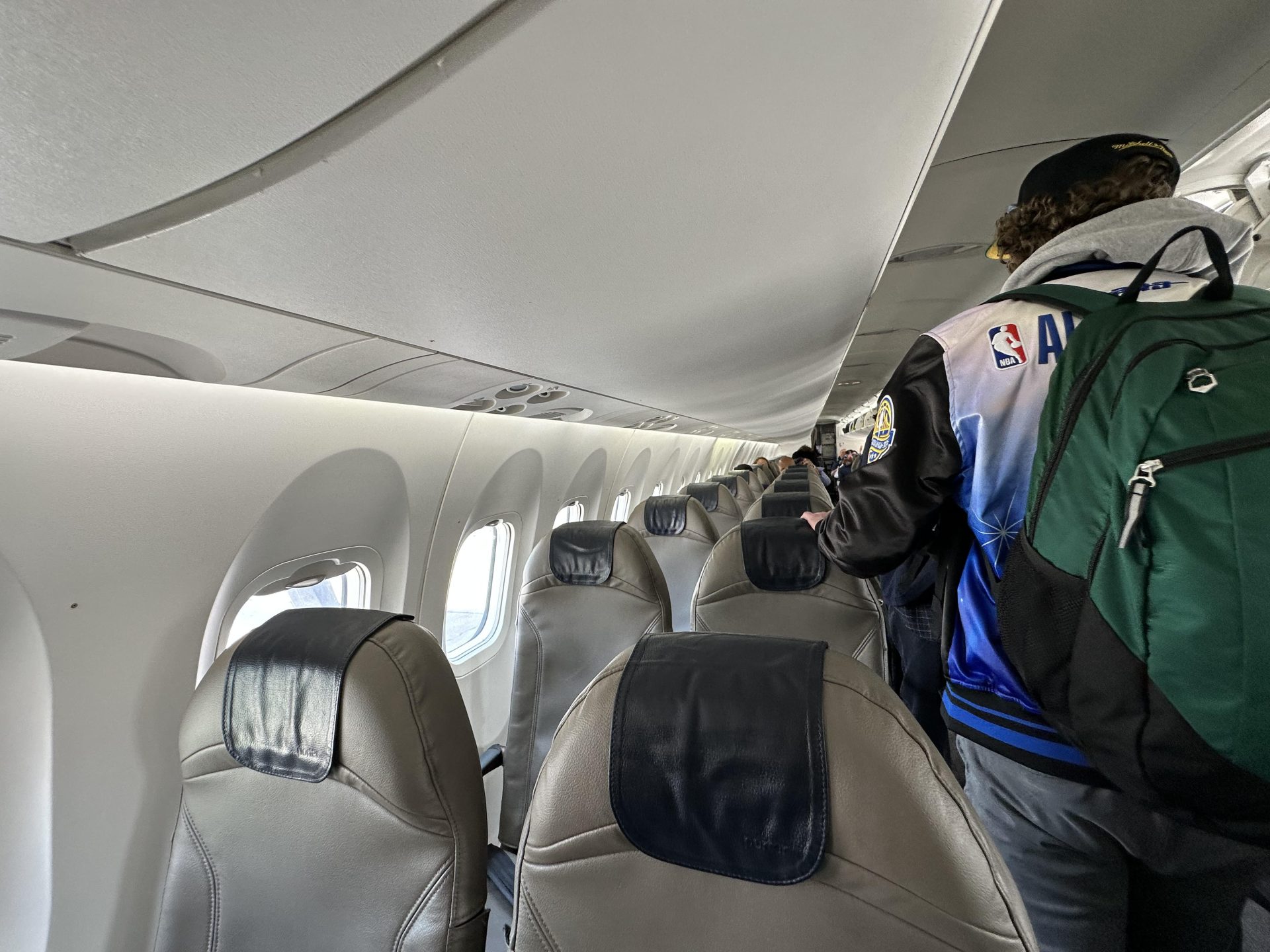
On the airlines’ Q400, the first two rows are PorterReserve, which is essentially the premium economy section with a bit of extra legroom. When it came time to board, once the PorterReserve passengers had boarded, we continued with the rest of the passengers, boarding from the back of the plane to the front.
The Porter Q400 is arranged in a 2-2 layout, with 20 rows and row 1 only having seats on the A/B side of the aircraft due to a galley closet.
For my seat on the flight up to Toronto City, I specifically chose a seat in the back of the aircraft on the right side, 18D. The reason I chose the back is so I didn’t have a blocked view by the engine, but I also wanted to be able to see the landing gear operations. I chose the right side because most of the time, aircraft flying into Toronto City Airport land from the east, meaning on runway 26, giving you a nice view of the city just before landing.
Just before pushback, the crew put on all of the announcements, which are automated on board. According to Canadian regulations, announcements have to be done in English and then French. Startup and pushback were super quick, and so was the taxi to the runway for takeoff. It was nice seeing the gear retract into the wings as we took to the sky towards Toronto City. During the climb out, we also passed over downtown Boston, which was cool to see as well.
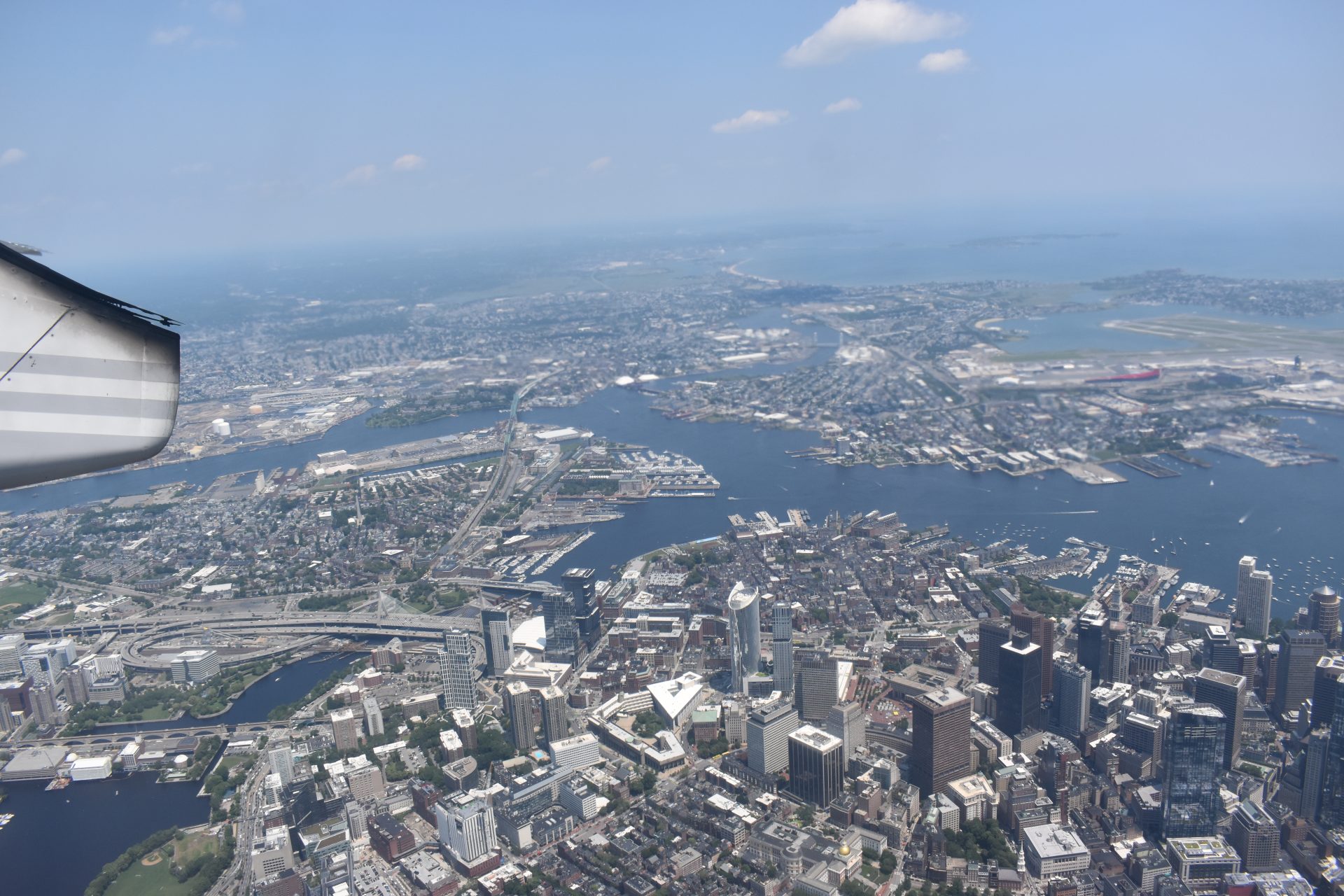
All of Porter Airlines ’ Q400s have 74 passenger seats on board, and on this flight up to Toronto, there were only three or four empty seats, which is pretty good considering they operate the flight three to four times a day. There was a decent amount of leg space, especially for a Q400.
It didn’t take long for us to get up to a cruising altitude of 24,000 feet/7315.20 meters, and the crew began the in-flight beverage and snack service. One of the things Porter became known for was its elevated economy experience, including the use of glassware, which it continues to use to this day on board all of their flights, even short journeys on the turboprop Q400s.
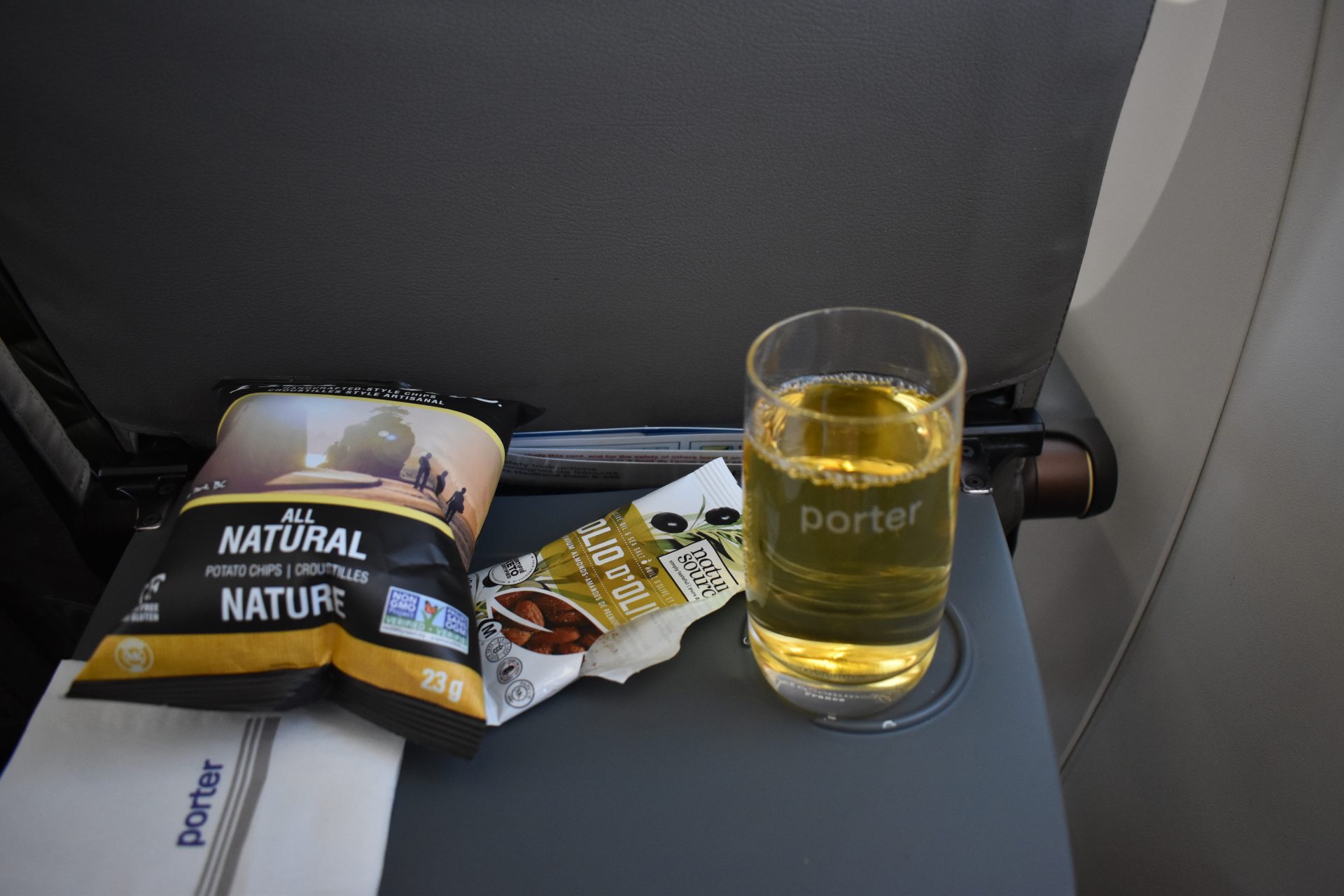
The seatback pocket had, of course, the safety card, a pamphlet on how to get a Porter credit card, and an in-flight magazine which had the carrier’s current route map. With no Wi-Fi or in-flight entertainment on board the airline’s Q400 aircraft, I spent the entirety of the flight looking at the view below us.
We passed over northern New York State, and then continued across Lake Ontario.
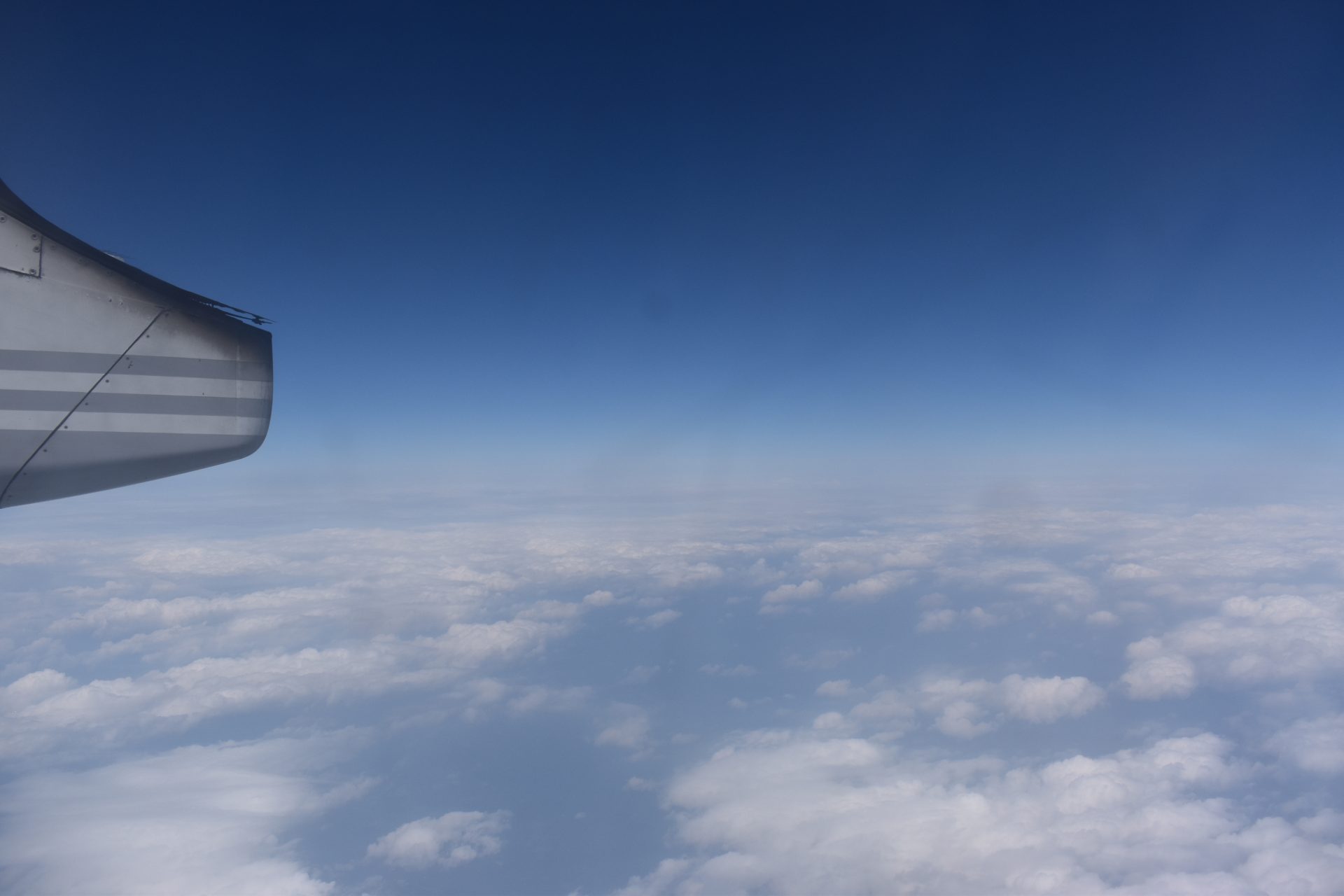
It didn’t take very long for us to begin our descent into Toronto, and I continued to have views of the lake below, given the beautiful blue skies.
About five or so minutes before landing, the landing gear came out of the wing section, and we began our final descent into Toronto City Airport. As predicted, we did come into the airport from the east, giving me a spectacular view of downtown Toronto, including the CN Tower, just before landing.
We landed at the airport just after 2 p.m., after about 1.5 hours of flying from Boston. After pulling into the gate, I got off and went through customs, which didn’t take very much time at all since I had Nexus, but even then, the regular line wasn’t very long either. Although there’s a tunnel between Toronto Island and the mainland, if you still want to take the ferry like all passengers used to before the tunnel opened back in 2015, you are still able to ride it for free.
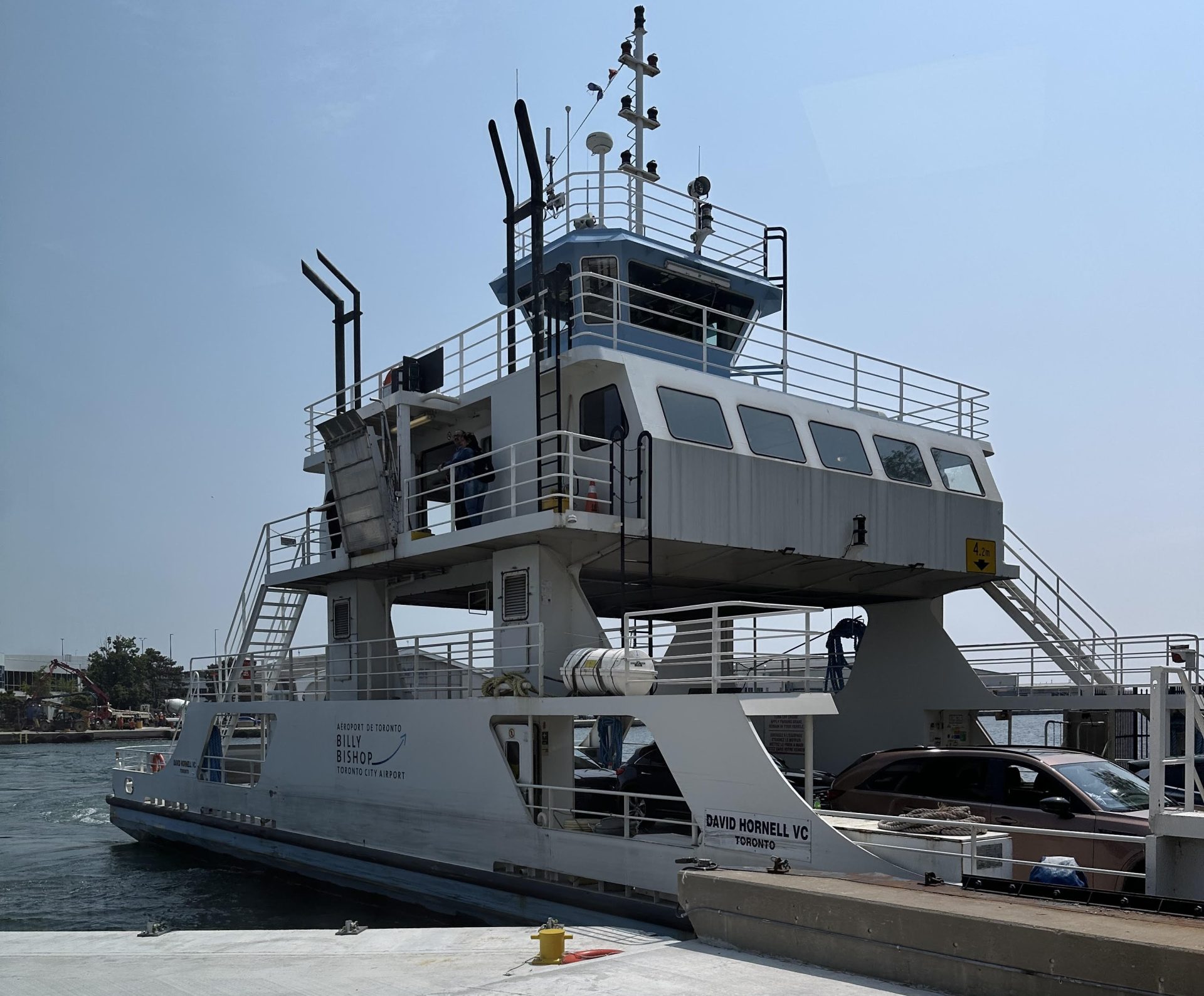
The airline also offers a complimentary shuttle from the airport to downtown Union Station for those who need to take a train or other transit to their final destination, or if you just need to get to the heart of the city.
If downtown Toronto is your final destination, this airport is by far the easiest way to get there if you happen to live near one of the airports that Porter flies to from Toronto City Airport. From the time I got off the plane until I reached Union Station, it was probably only about 15 to 20 minutes, whereas if you flew into Toronto Pearson, it would probably take just that to get to baggage claim.
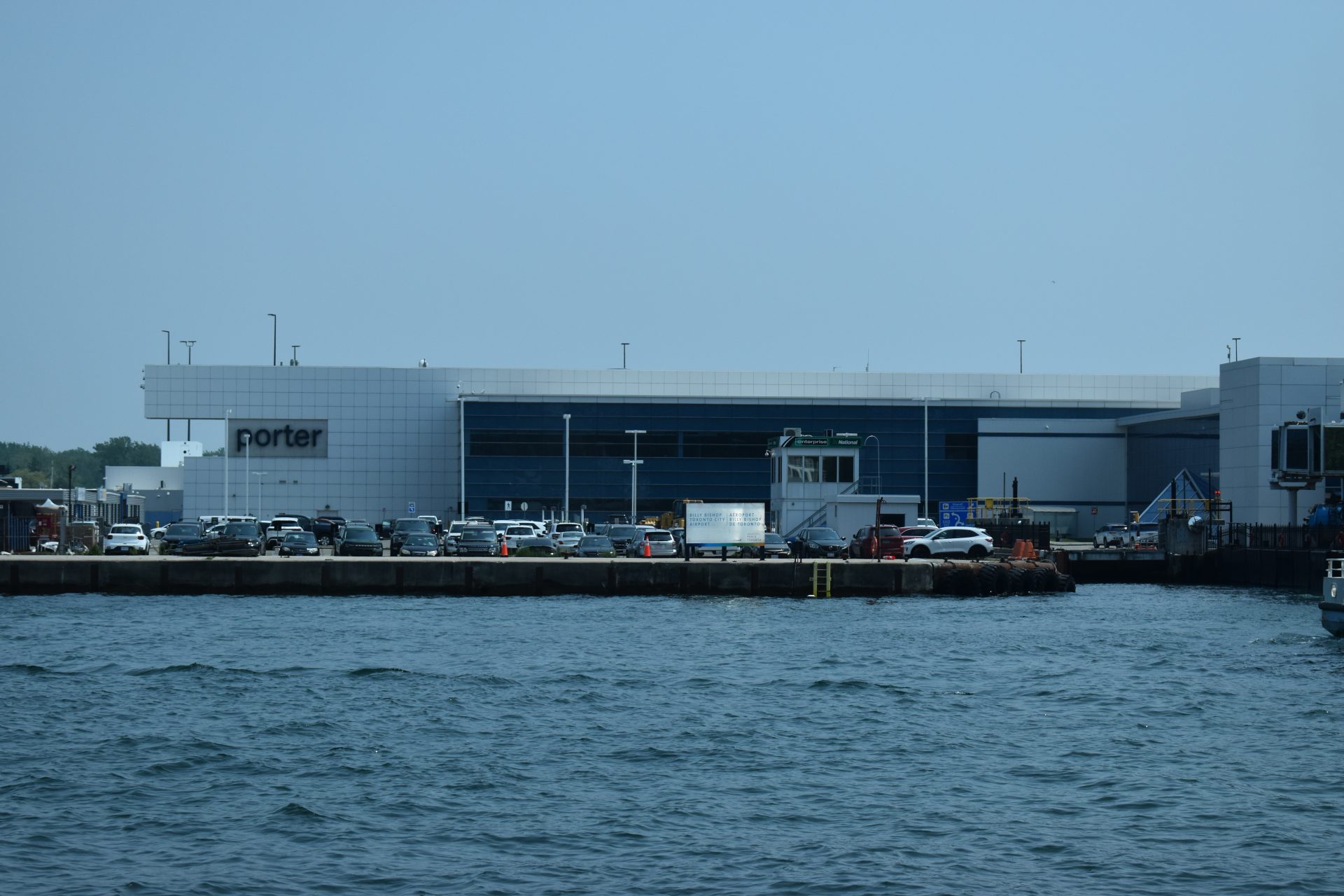
The experience flying on Porter was definitely worth it, and I 100% recommend it to any AvGeek who wants the experience of landing at Toronto City/Billy Bishop Airport, and it is by far the easiest way to get to downtown Toronto by plane.
I did get to experience Porter’s Reserve seat cross-country from Vancouver to Ottawa, but that experience will be in a different article. A video experience of this Boston to Toronto City trip can be found below.
Editor’s Note: Porter provided AirlineGeeks with a seat on this flight, but this trip report is an objective portrayal of events and is in no way swayed.