











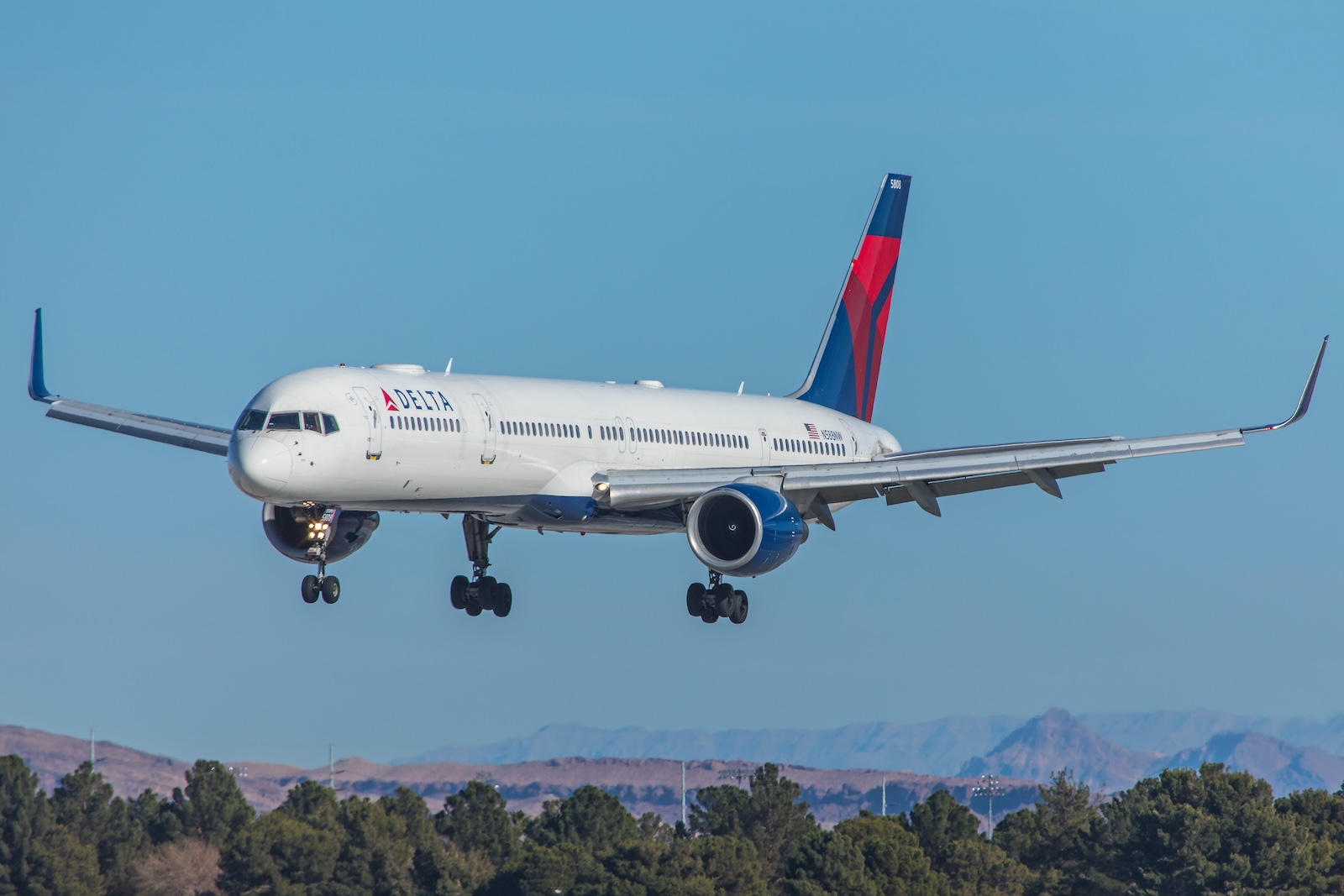

The Trump administration on Saturday took the first step toward undoing the close alliance between Delta and Mexican flag carrier Aeroméxico.
In a statement, the U.S. Department of Transportation said the partners no longer qualify for immunity from antitrust enforcement, which was granted by the federal government on a provisional basis in late 2016. The airlines now have until Oct. 25 to show why they still deserve that protection, or else their joint venture will be “disapproved.” This would not necessarily dissolve the joint venture, though it would make it harder to operate and would probably force the airlines to end some aspects of their partnership.
Administration officials said the move was prompted by Mexico’s violations of a 2015 air transportation agreement with the U.S. government. Those violations allegedly include seizing slots from U.S. carriers at Mexico City International Airport and forcing U.S. all-cargo carriers out of the Mexico City market.
“When the Department first reviewed the Delta/Aeromexico [joint venture], the Department made the grant of [antitrust immunity] subject to strict conditions because we were concerned that Mexico would not adhere in practice to the open and pro-competitive regulatory framework that the two countries agreed to in principle,” the Transportation Department said. “Unfortunately, as the facts and circumstances show, those concerns have materialized. The Department now determines tentatively, in light of Mexico’s failure to honor its obligations under the Agreement, that approval of the [joint venture] and a grant of [antitrust immunity] are no longer consistent with the public interest.”
Delta answered the government’s announcement over the weekend.
“The U.S. Department of Transportation’s tentative proposal to terminate its approval of the strategic and pro-competitive partnership between Delta and Aeromexico would cause significant harm to consumers traveling between the U.S. and Mexico, as well as U.S. jobs, communities, and transborder competition,” the carrier said in a statement to ABC News.
The administration also moved more broadly to limit the operations of all Mexican airlines in the U.S., ordering the carriers to file schedules for flights to and from the U.S. and get prior approval “before operating any large passenger or cargo aircraft charter flights to or from” the U.S.
Ties Under Scrutiny
Delta and Aeroméxico, which is headquartered in Mexico City, have had a close relationship since the 1990s. In the 2010s, the two airlines began codesharing and coordinating on some operations, including maintenance and repairs. An expanded partnership, which allowed the carriers to share information and jointly determine routes, was approved by Mexican regulators in 2015 and U.S. Transportation officials one year later, during the closing days of the Obama administration.

- An Aeromexico Boeing 787 Dreamliner flares for landing. (Photo: AirlineGeeks | William Derrickson)
The deal set the stage for Delta to acquire up to 49% of Aeroméxico’s shares, and gave Delta a seat on Grupo Aeroméxico’s board. That stake was reduced after Aeroméxico’s restructuring, and Delta currently owns about 20% of the airline.
The partners’ initial antitrust immunity agreement was subject to renewal after five years, giving the federal government time to determine if it was serving the flying public’s interests as intended. Delta and Aeroméxico successfully petitioned for a delay, and when the matter came up again in 2022, they filed to extend their venture.
This time around, though, the Transportation Department was more critical. U.S.-based carriers like Alaska Airlines and JetBlue were having trouble accessing Mexico City International Airport due to seemingly arbitrary slot changes, and Mexico’s aviation safety protocols were called into question by a temporary FAA safety assessment downgrade.
The situation worsened in 2023 when the Mexican government, citing congestion problems, ordered U.S. cargo operators like FedEx and UPS to relocate from Mexico City International Airport to the recently opened Felipe Ángeles International Airport. Felipe Ángeles is considered a less desirable landing point for freight carriers, as it is further away from Mexico City and increases logistical hurdles.
By 2024, the Transportation Department had tentatively decided to dismiss Delta and Aeroméxico’s application and let the antitrust immunity agreement expire. Both carriers urged the department to reconsider and claimed the decision violated their due process rights while failing to show that any U.S. carriers were materially harmed.
Deadline In Place
The Trump administration offered a point-by-point rejoinder to those complaints, saying Mexico’s interventions have forced U.S. airlines to cut service to Mexico City while placing the majority of U.S.-Mexico air cargo under the control of the Delta-Aeroméxico alliance. Now that Delta and Aeroméxico have a dominant position at Mexico City International Airport, further protection from the U.S. government will only serve to worsen the imbalance, it said.
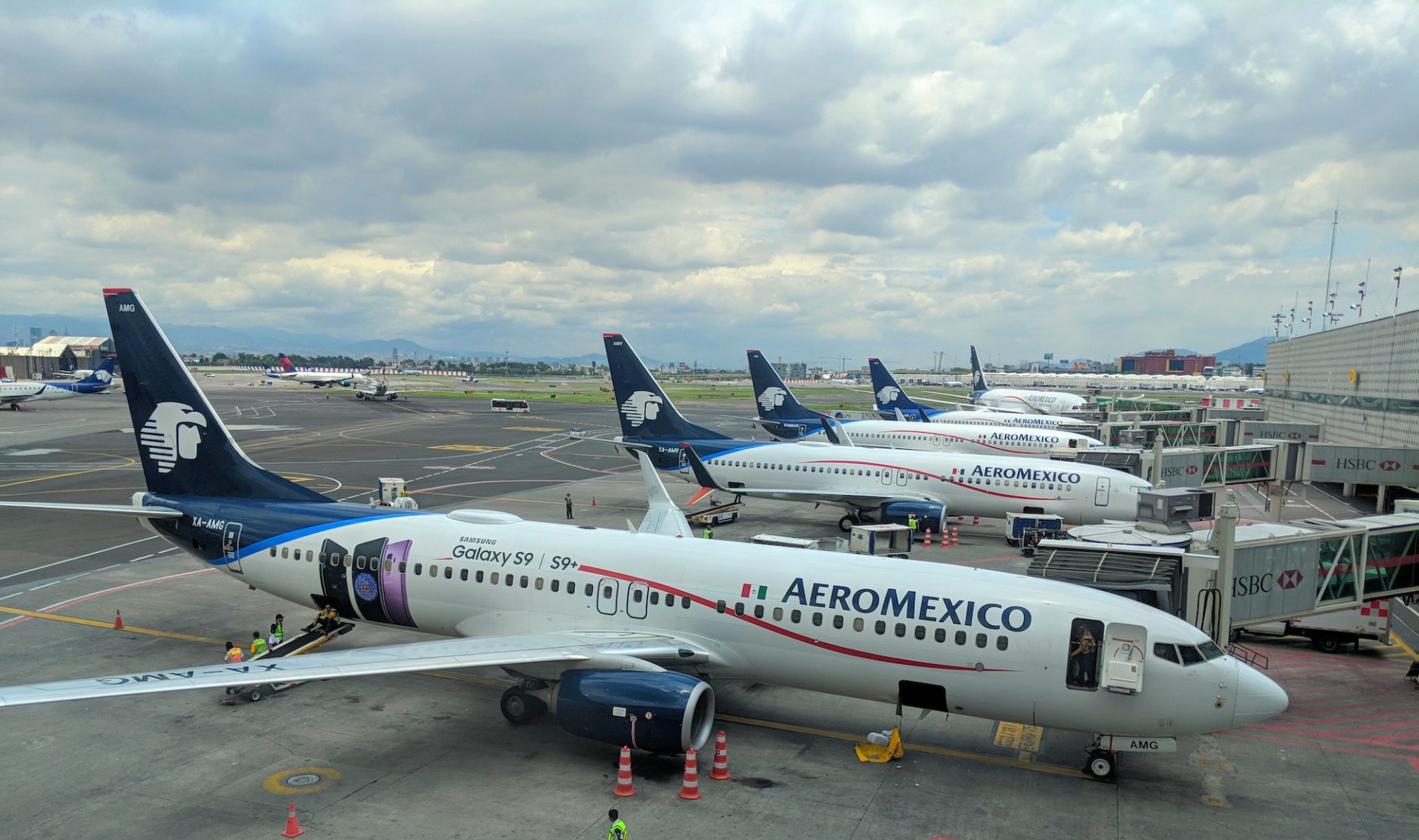
- Aeromexico’s Boeing 737s lined up at the gates of Mexico City’s Benito Juárez International Airport. (Photo: Shutterstock)
“Mexico lacks a transparent and non-discriminatory slot allocation regime that adheres to international standards and applies consistently across the country’s airports, including MEX,” the Transportation Department stated. “The lack of a coherent slot allocation regime and the prospect of arbitrary action looming at any time raises serious concerns about the long-term competitiveness of the U.S.-Mexico market and the ability of the Department to depend upon the air services agreement as a mechanism to ensure adequate competition. Mexico’s actions harm airlines seeking to enter the market, existing competitor airlines, consumers of air travel, and products relying on time-sensitive air cargo shipments traded between the two countries, and other stakeholders in the American economy.”
The department noted that it does not intend to discourage all collaboration between Delta and Aeroméxico and wants “the Joint Applicants to continue pro-competitive commercial cooperation.”
“Because this is a complicated matter involving multiple agreements and arrangements, the Department invites comment by the Joint Applicants as to which agreements would be terminated as a result of this disapproval and which would survive to be implemented by Delta and Aeromexico without antitrust immunity,” it said.
In the meantime, Delta and Aeroméxico’s application for a renewal of their antitrust immunity will be suspended. If the administration is not swayed by any new information or appeals, that protection will expire permanently at midnight on Oct. 25.