











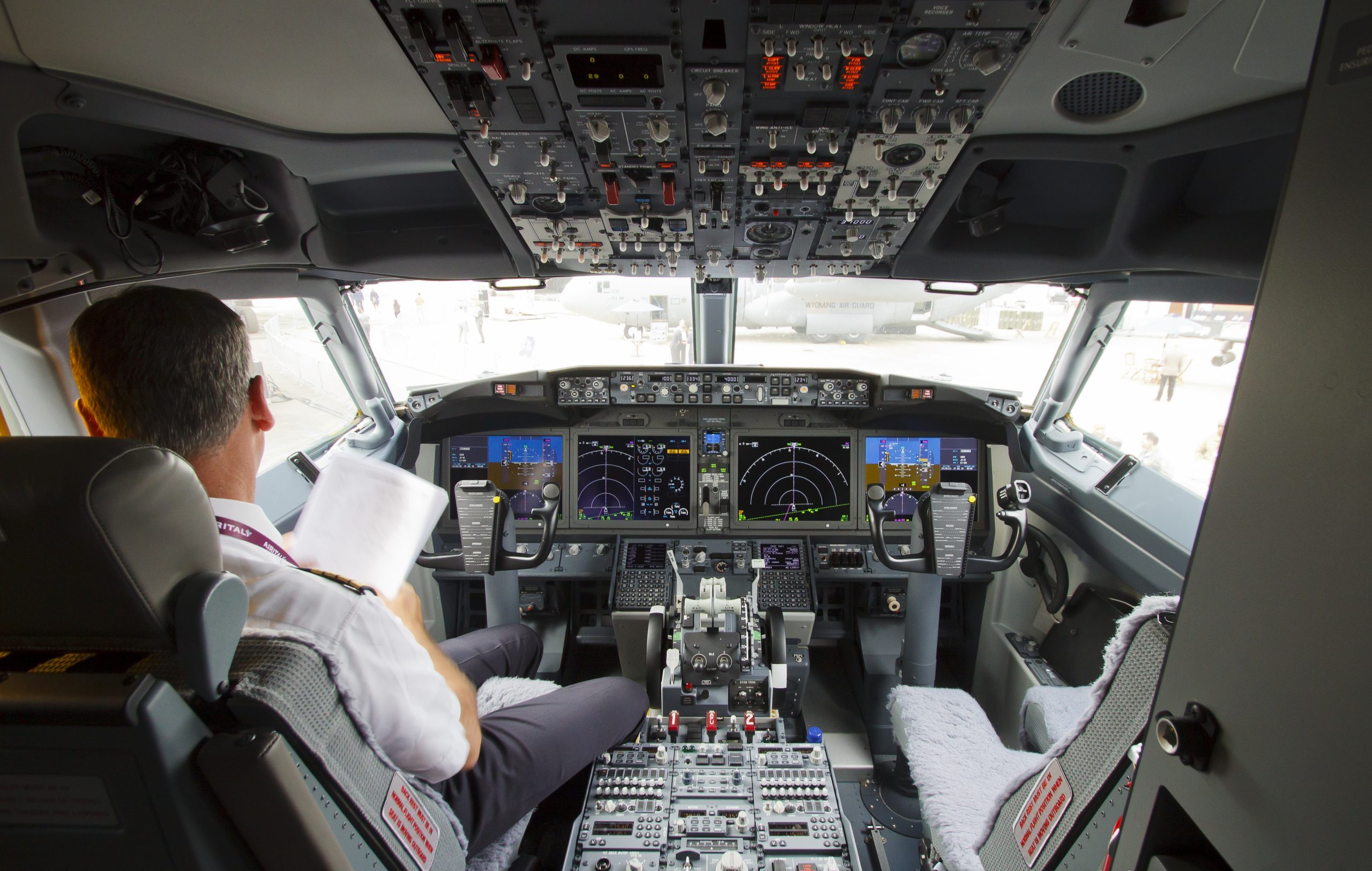

The FAA this week agreed to delay a requirement for new U.S. passenger aircraft to have a second barrier to the cockpit to prevent unauthorized intrusions and hijacking attempts.
The rule, which has been years in the making already, was supposed to take effect in August. But Airlines for America, a trade group which represents the major U.S. carriers, filed a petition in May for a two-year grace period because the FAA had not yet certified a secondary barrier from any original equipment manufacturer.
The FAA ultimately opted for a one-year delay, moving the installation deadline from August 2025 to August 2026.
“The FAA granted a one-year exemption to install and use additional barriers on new commercial airplanes to protect against unauthorized access to the flight deck,” the agency said. “This will allow time to facilitate FAA certification and install the barriers.”
The Air Line Pilots Association, which represents over 77,000 pilots in the U.S. and Canada, criticized the delay in a statement on Tuesday.
“The FAA’s decision to grant airlines yet another delay on the secondary barrier rule is deeply disappointing and undermines our nation’s aviation security,” said ALPA President Jason Ambrosi. “While we acknowledge this ruling falls short of the unacceptable delay requested by Airlines for America, this extension still compromises the safety and security of our skies. This pattern of endless delays must stop.”
“Airlines have had ample time — two full years — to comply with this congressionally mandated safety requirement, yet once again, they are shirking their responsibility to implement this critical security measure,” he added.
ALPA has lobbied for years in favor of secondary flight deck barriers following the terrorist attacks of Sept. 11, 2001. In 2018, Congress passed a law requiring the FAA to come up with a new rule requiring the protections, but it took five more years before the agency finalized it. The industry was then given a two-year deadline, until August 2025, to install the barriers on aircraft.