

Spirit reported a net loss of $245.8 million for the second quarter of 2025, according to its quarterly filing with the U.S. Securities and Exchange Commission on Monday. That compares to a net loss of $192.9 million for the same period in 2024.
The airline’s losses continue to mount this year. In the first quarter, it reported a net loss of $143 million.
Total operating revenues fell to $1.02 billion from $1.28 billion year-over-year, while operating expenses totaled $1.2 billion.
‘Substantial Doubt’
In its filing, the beleaguered ultra-low-cost carrier stated that it has “concluded there is substantial doubt as to the Company’s ability to continue as a going concern within 12 months from the date these financial statements are issued.”
The disclosure follows Spirit’s emergence from Chapter 11 bankruptcy in March. The airline cited elevated domestic capacity, continued weak demand for domestic leisure travel, and a challenging pricing environment as key factors affecting results in the second quarter.
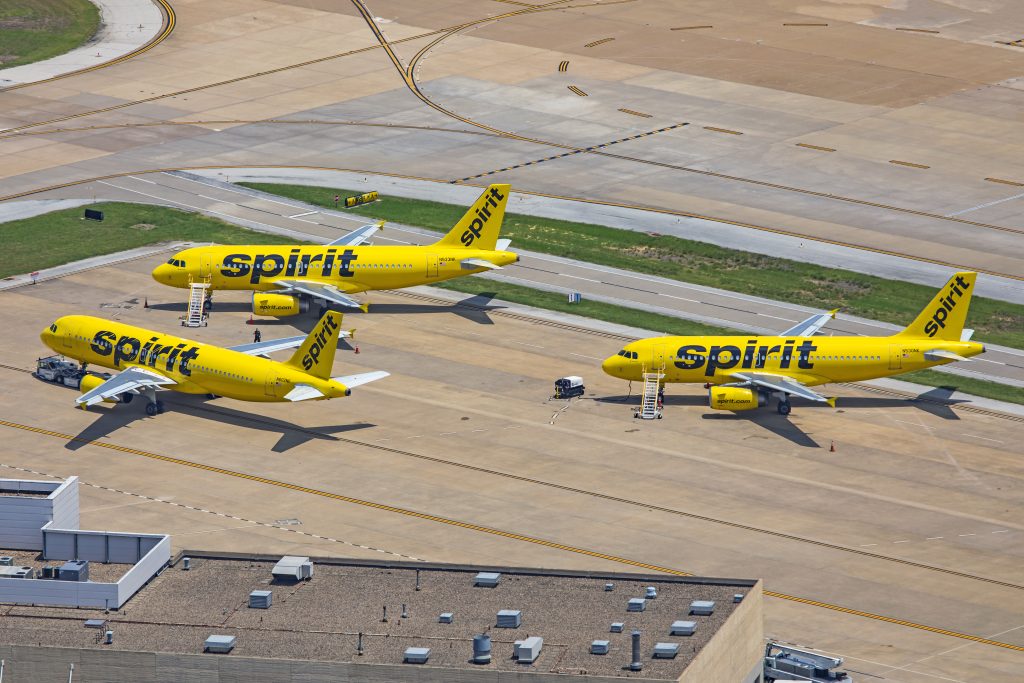
(Photo: AirlineGeeks | William Derrickson)
Spirit said it has taken steps to address its liquidity position, including network and product adjustments such as the introduction of a Premium Economy option, sale-leaseback transactions involving spare engines, and discretionary cost reductions, including pilot furloughs announced last month.
So far, the carrier has furloughed around 500 pilots and is in the process of selling 23 A320 and A321 aircraft.
Cost-Cutting
The airline is considering additional measures, such as the sale of aircraft and real estate, monetization of excess airport gate capacity, and elimination of certain fixed costs. It is also in discussions with its credit card processor, which has requested additional collateral before the current processing agreement expires at the end of 2025. Spirit noted that the required collateral could materially reduce its unrestricted cash balance.
The company warned that if these initiatives are unsuccessful, it may be unable to meet liquidity covenants, which could trigger events of default and potentially accelerate debt maturities.