













Air Canada called off plans to resume flights Sunday as its striking flight attendants announced they will defy a government-issued return-to-work order.
The carrier, Canada’s largest, initially signaled it would restart operations Sunday afternoon after the Canadian Industrial Relations Board directed its roughly 10,000 flight attendants to abandon their strike and return to work. But the Canadian Union of Public Employees, which represents the flight attendants, said it will not comply as long as members’ demands for higher wages remain unmet.
Air Canada has denounced CUPE’s move as “illegal.” It now plans to resume flights Monday, though it is not clear how this will happen if the flight attendants remain off the job.
In the meantime, Air Canada and its low-cost, leisure-focused subsidiary Air Canada Rouge remain effectively shut down, impacting about 130,000 would-be travelers per day. Only Air Canada Express flights, which are operated by Jazz and PAL Airlines, are continuing to operate as normal.
Order Ignored
Long-simmering tensions between Air Canada and CUPE came to a head last week when the airline declared contract negotiations at an “impasse” and the union issued a 72-hour strike warning. Flight attendants walked off the job early Saturday, but within hours, Federal Jobs Minister Patty Hajdu and the CIRB imposed binding arbitration on the two sides and ordered the flight attendants to return to work. In a statement, Hadju said she was acting to spare Canadian businesses and travelers from “too much disruption and uncertainty.”
“This is not the time to add additional challenges and disruptions to their lives and our economy,” she said. “The government must act to preserve stability and supply chains in this unique and uncertain economic context.”
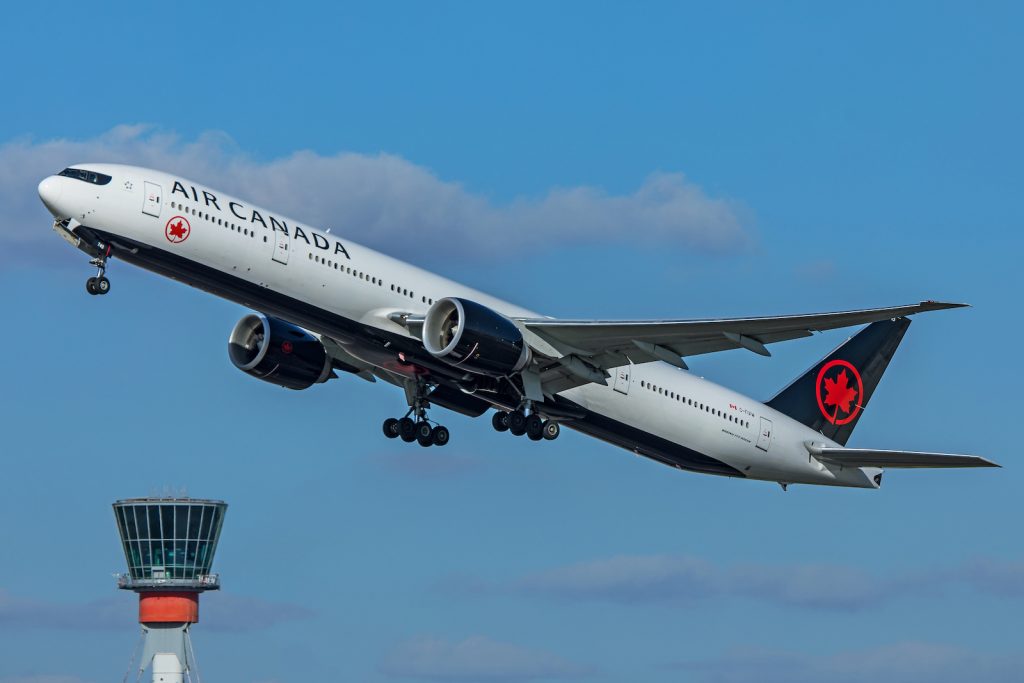
The order was poorly received on the picket lines, and on Sunday, CUPE national president Mark Hancock indicated that the strike will continue.
“Our members are not going back to work,” Hancock said at a rally outside Toronto Pearson International Airport. “We are saying no.”
He then ripped up a printed copy of the return-to-work order.
It was not immediately clear if the Canadian government is considering any further steps to end the strike. A representative for Hadju told the Associated Press that the minister will continue monitoring the situation.
Air Canada said the return-to-work order extended the term of its flight attendants’ previous contract, which expired on March 31. That contract will remain in effect until the airline and CUPE work out a new labor agreement through arbitration.
The two sides remain far apart on several key issues, including wages.
Air Canada’s latest offer includes a 38% pay increase for flight attendants over four years, but CUPE claims that, with inflation factored in, its members would actually be taking a pay cut if they accepted the deal. The union also said the tentative contract does little to fix the problem of flight attendants performing “unpaid work,” including “critical safety-related duties.”
Air Canada has been contacting passengers with affected flights and offering refunds and, where possible, alternate arrangements with other Canadian and foreign airlines. While this system has allowed some travelers to continue on to their destinations, others remain stranded.
Also on Sunday, Air Canada said it will suspend its third-quarter and annual profit forecasts until the strike is resolved.