







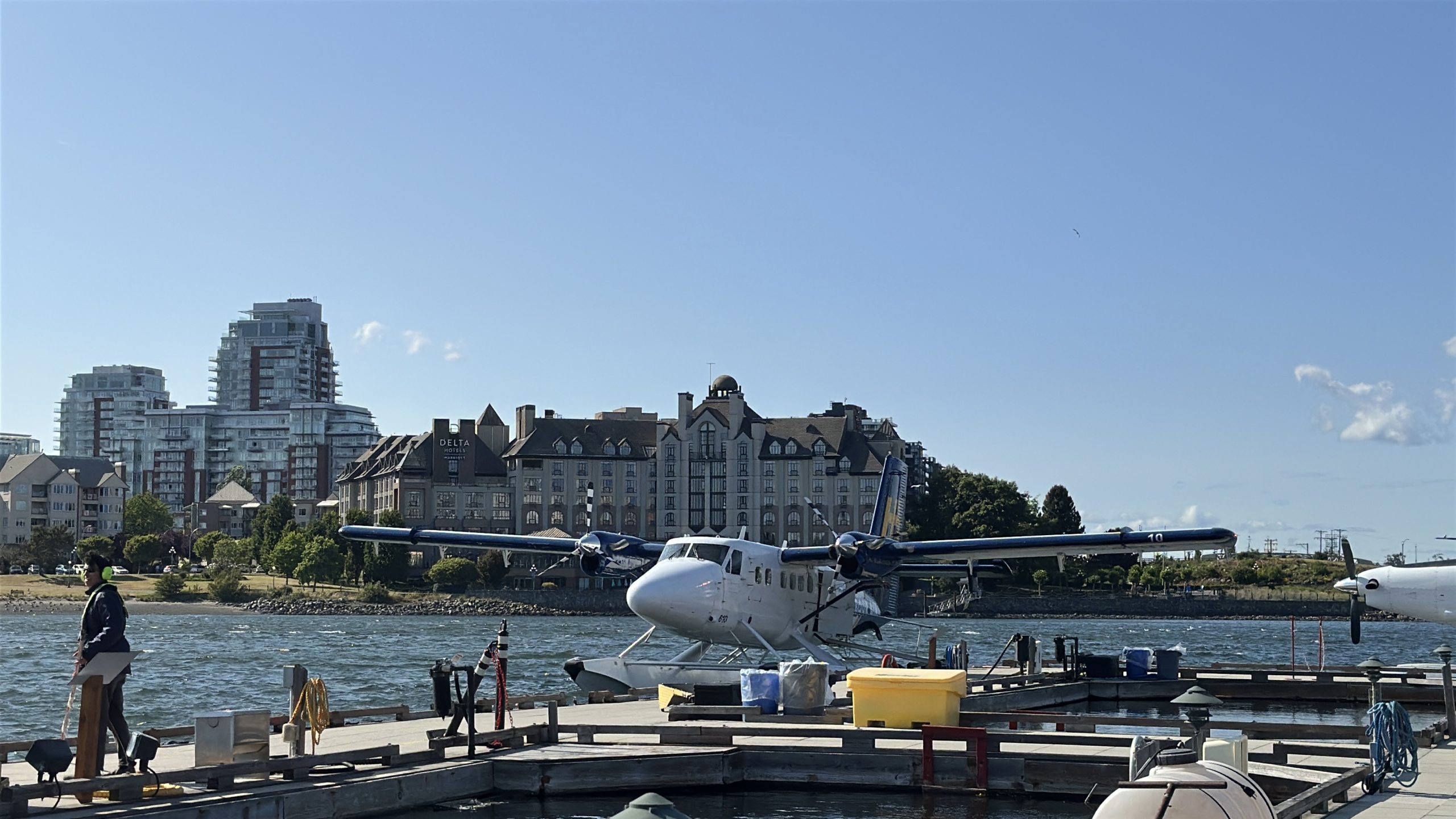


Harbour Air, North America’s largest commercial seaplane operator, has its main headquarters at the Vancouver Harbour Flight Centre located at Coal Harbour in downtown Vancouver. Commuters and AvGeeks alike can see the airline’s fleet of aircraft buzzing in and around Vancouver during the daylight hours.
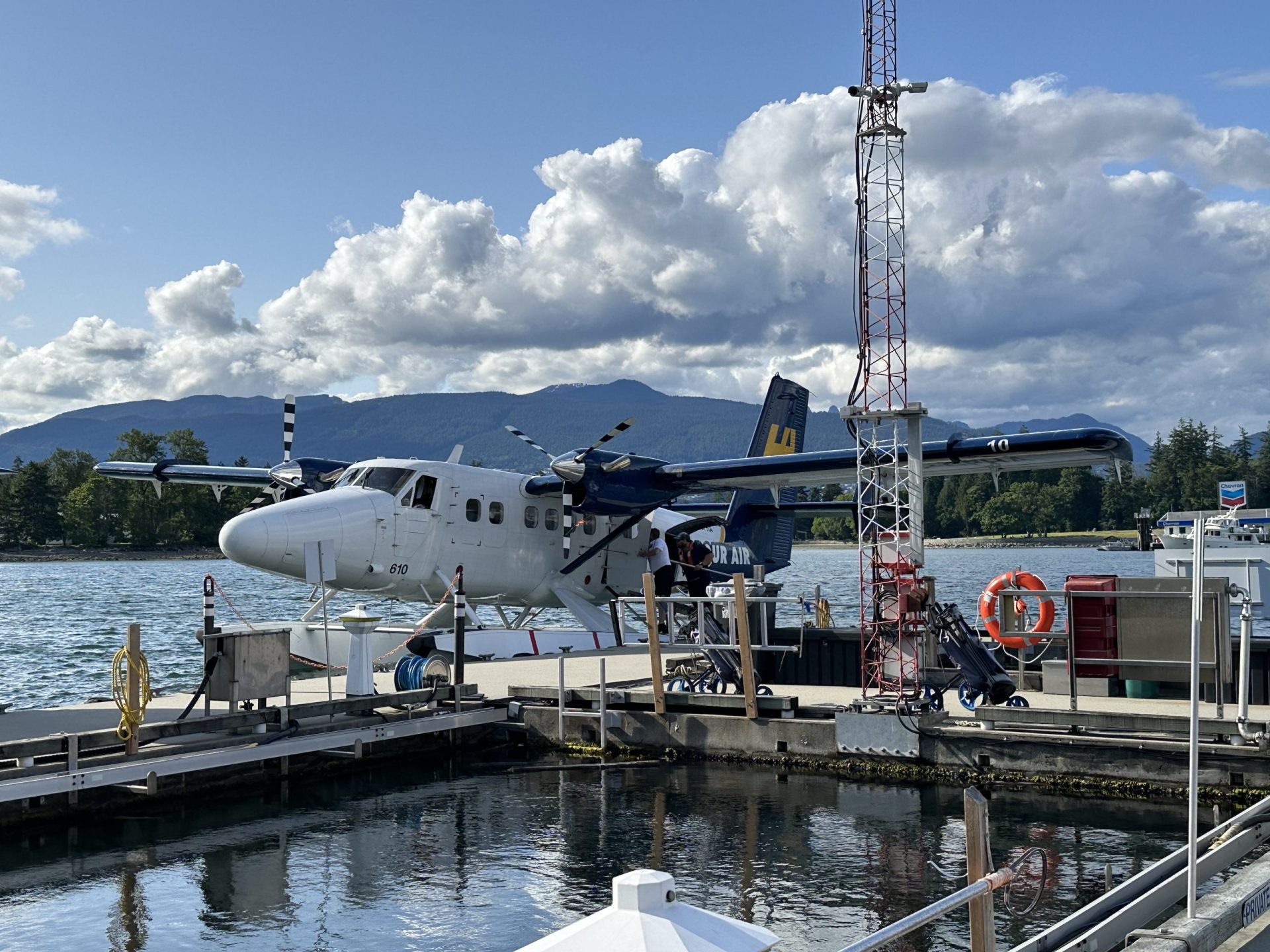
Everyone loves a great seaplane ride, especially AvGeeks, since finding an operator with high-frequency flights is rare, especially within North America.
Commercial flights, seaplane or otherwise, onboard aircraft such as the DHC3 or Twin Otter are becoming few and far between in North America, with only a few operators left. The majority are in the Caribbean and Canada.
We had the opportunity to take a ride on the famous Twin Otter on Harbour Air’s busiest route in its network, which operates between Victoria Harbour and the Vancouver Harbour Flight Centre with a frequency of at least 20 times a day, and sometimes even more during peak travel times or days of the week.
Day of the Flight
Because Harbour Air operates from small terminals usually in downtown harbors, and sometimes just random docks in the remote Canadian wilderness, the check-in process can vary greatly, so make sure to check with the airline for the specific check-in requirements for your flight.
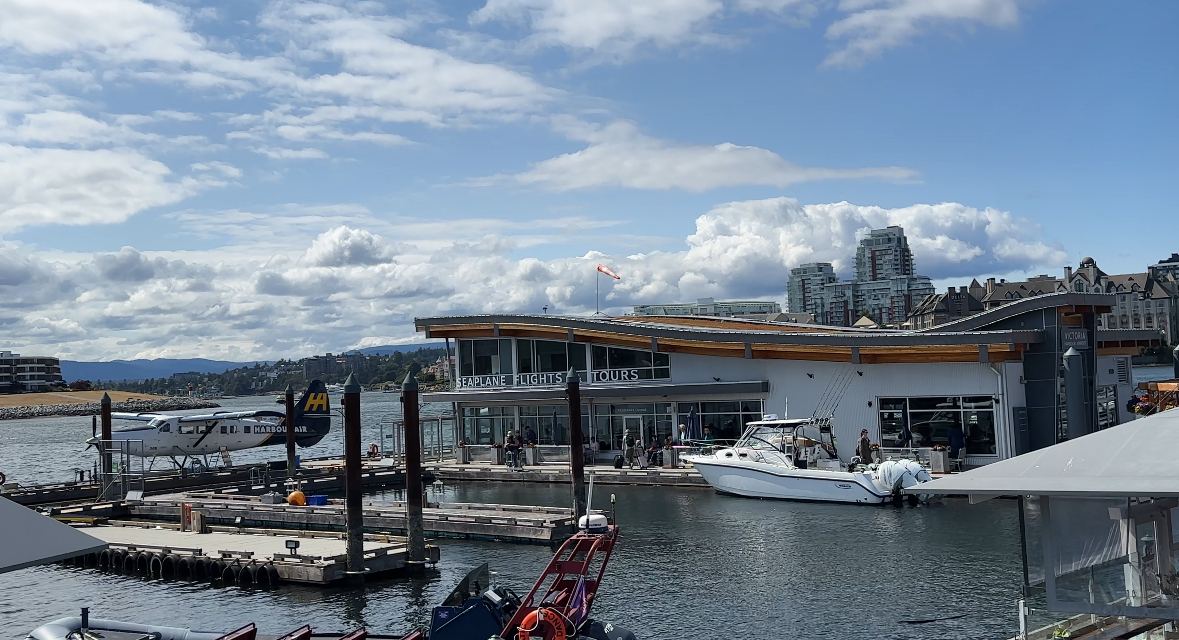
For me, flying out of Victoria Harbour, the carrier operates out of a very nice terminal right in the heart of Victoria’s downtown. Since its largest aircraft only seats 19 passengers, there is no security checkpoint you have to go through before the flight, and the airline recommends that you get to the airport about 40 minutes before the scheduled departure time. Make sure you don’t get there too late, as the check-in cutoff is 15-20 minutes before the flight, depending on the ticket type.
As you walk in the main door, the ticket counters are to the right, along with a giant route map, which was super cool to see on such a large scale. For check-in, you weren’t given a typical-looking boarding pass, and instead got what looks like a receipt from a grocery store with a flight.
The gate/check-in area was really nice with plenty of comfortable seating options, and for those wanting to get some work done, they do offer really fast free Wi-Fi. It wasn’t long before they announced the boarding, which happened about 10 minutes before the scheduled departure time. We handed them the receipt we got during check-in, and then we headed out to the aircraft for the flight.
The star of the show was C-GFHA, a DeHavilland Twin Otter that was originally built in 1981 and flew for a handful of different airlines before coming to Harbour Air in February 2018.
There are no assigned seats on this airline, and it has an open seating policy, meaning that the earlier you get on, the more likely you are to get a window seat, especially when the flight is close to full, like mine was with 15 of the 19 passenger seats taken.
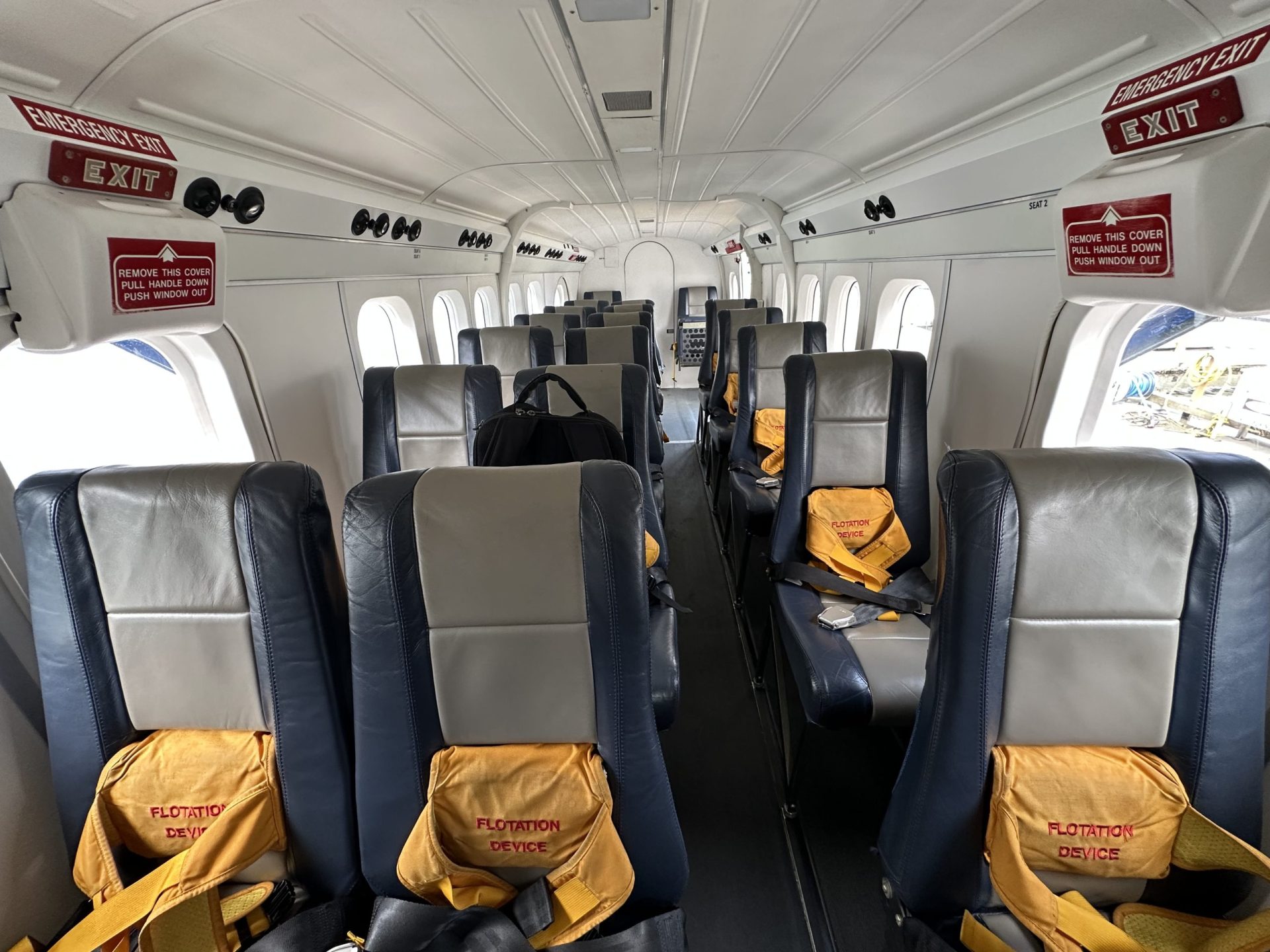
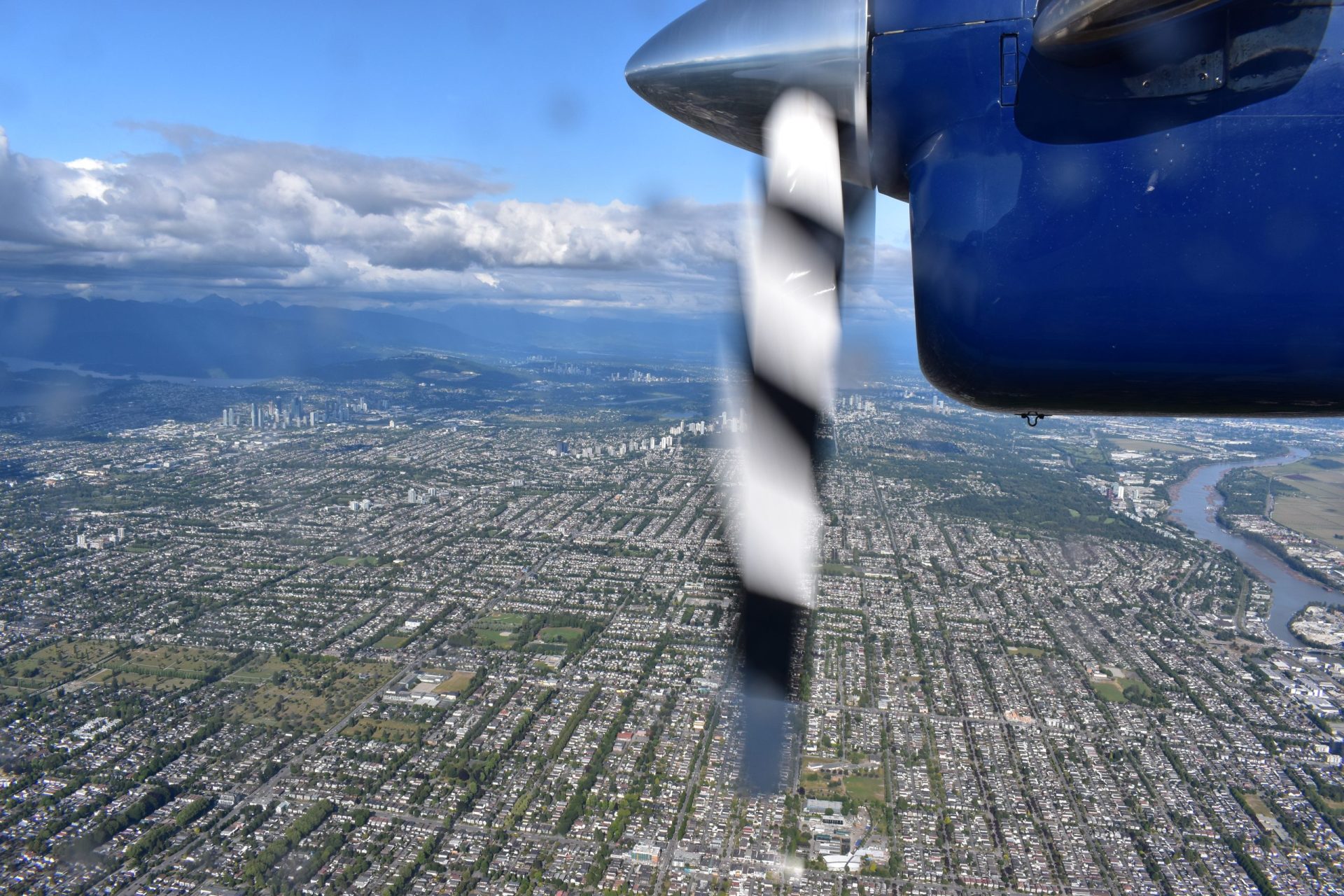
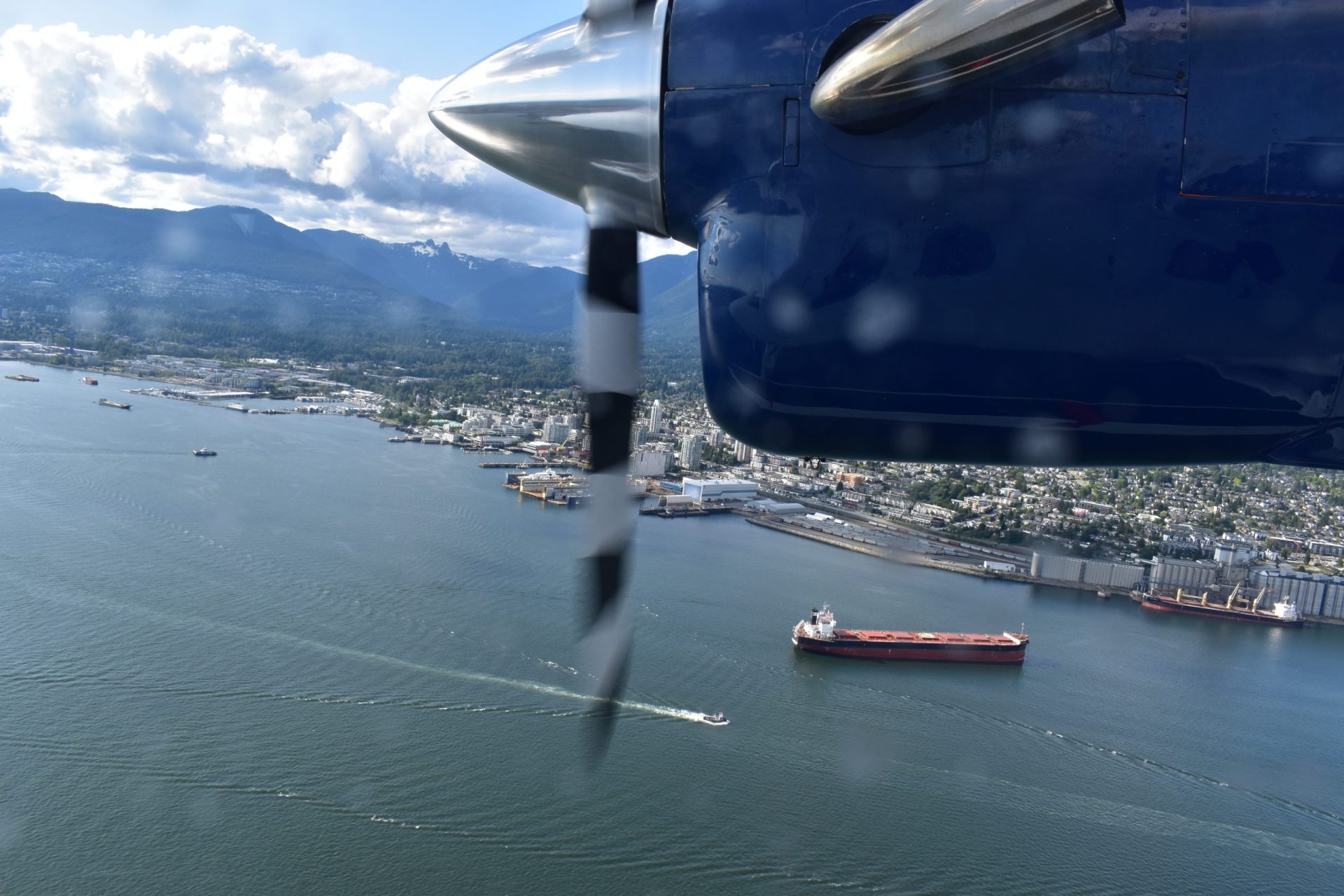
The passenger cabin is laid out in a 1-2 configuration, which means aisle seats do exist, and even though the windows are big, it is nice getting a window seat so you can sit right next to it. Also, at every seat was a flotation device/life vest, which you buckled around your waist along with your seatbelt when sitting in your seat. This is standard for all Harbour Air flights. I chose a seat in the front row on the right side of the aircraft, which offered a great view of the propeller.
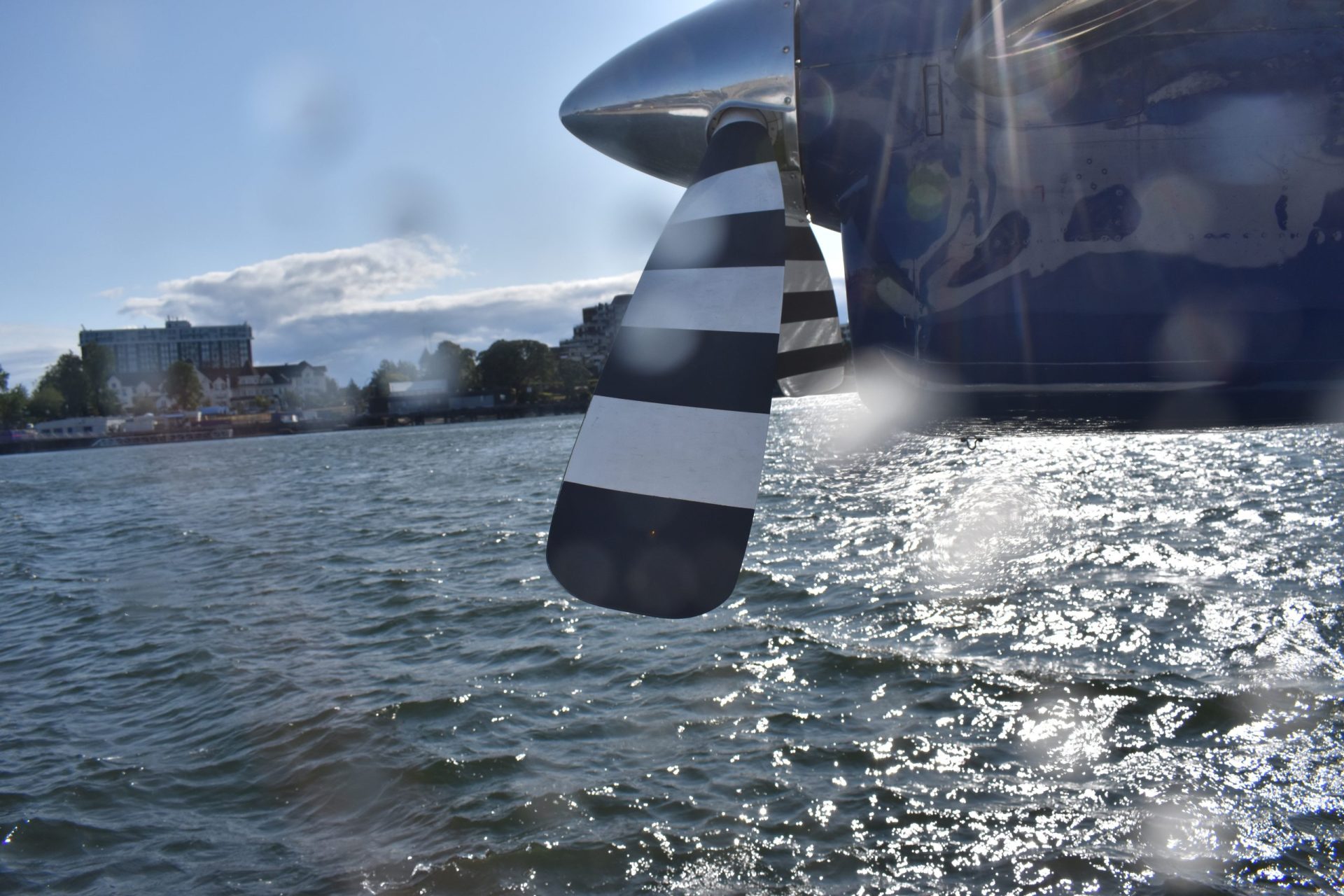
Prior to taxiing out, the pilot put their iPad in a slot on the front wall to show us the flight safety video. After the video was finished, they started the engines and we taxied out to the water runway, which was marked by buoys in Victoria Harbour.
Takeoff didn’t take long at all, given that the aircraft is made for short takeoff and landings, and we were on our way for the short flight up to Vancouver Harbour.
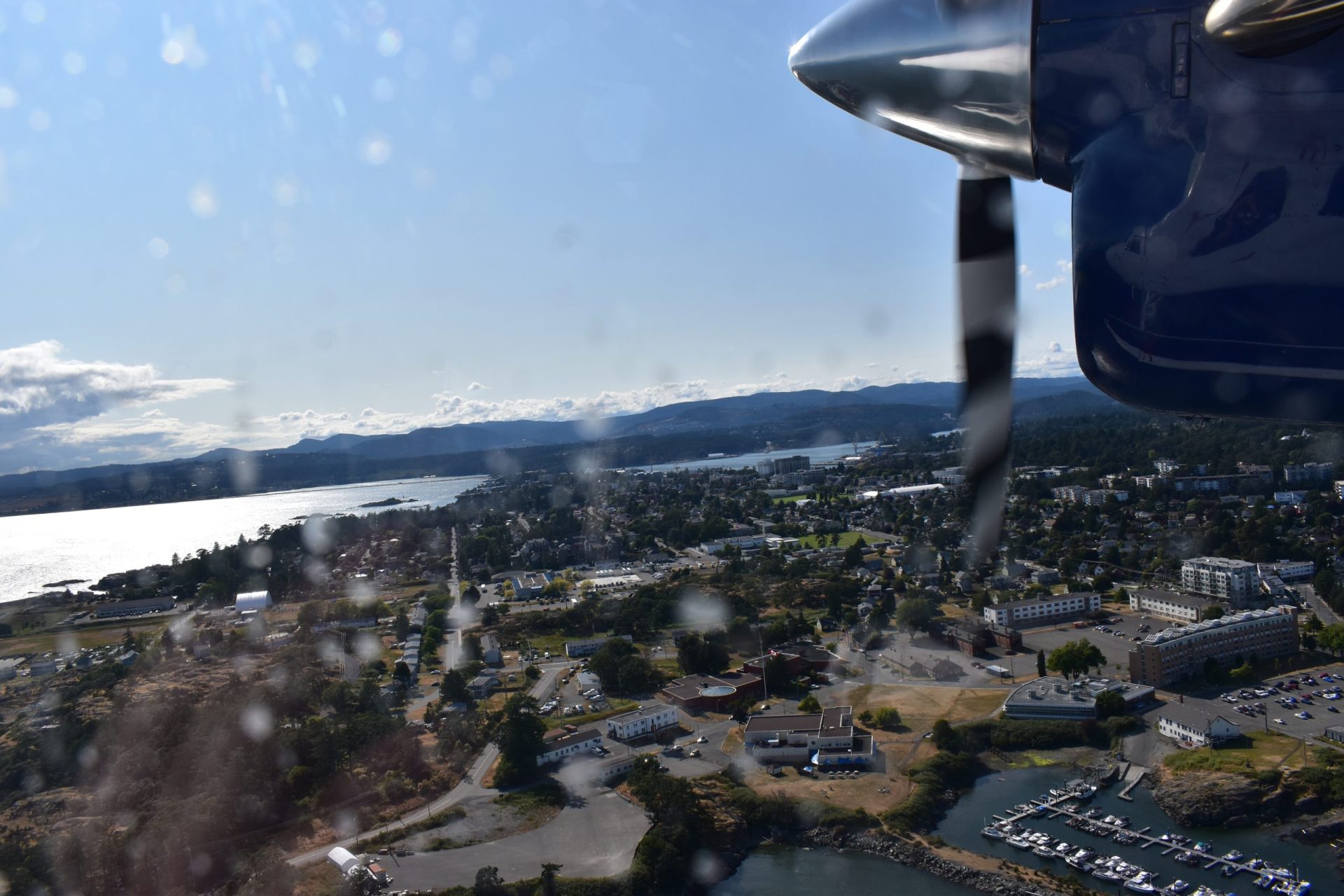
After takeoff, we banked to the left and headed directly for Vancouver. The weather was fantastic and there weren’t many clouds to speak of, meaning the views were absolutely spectacular, especially since we were cruising at an altitude of only 3,520 feet.
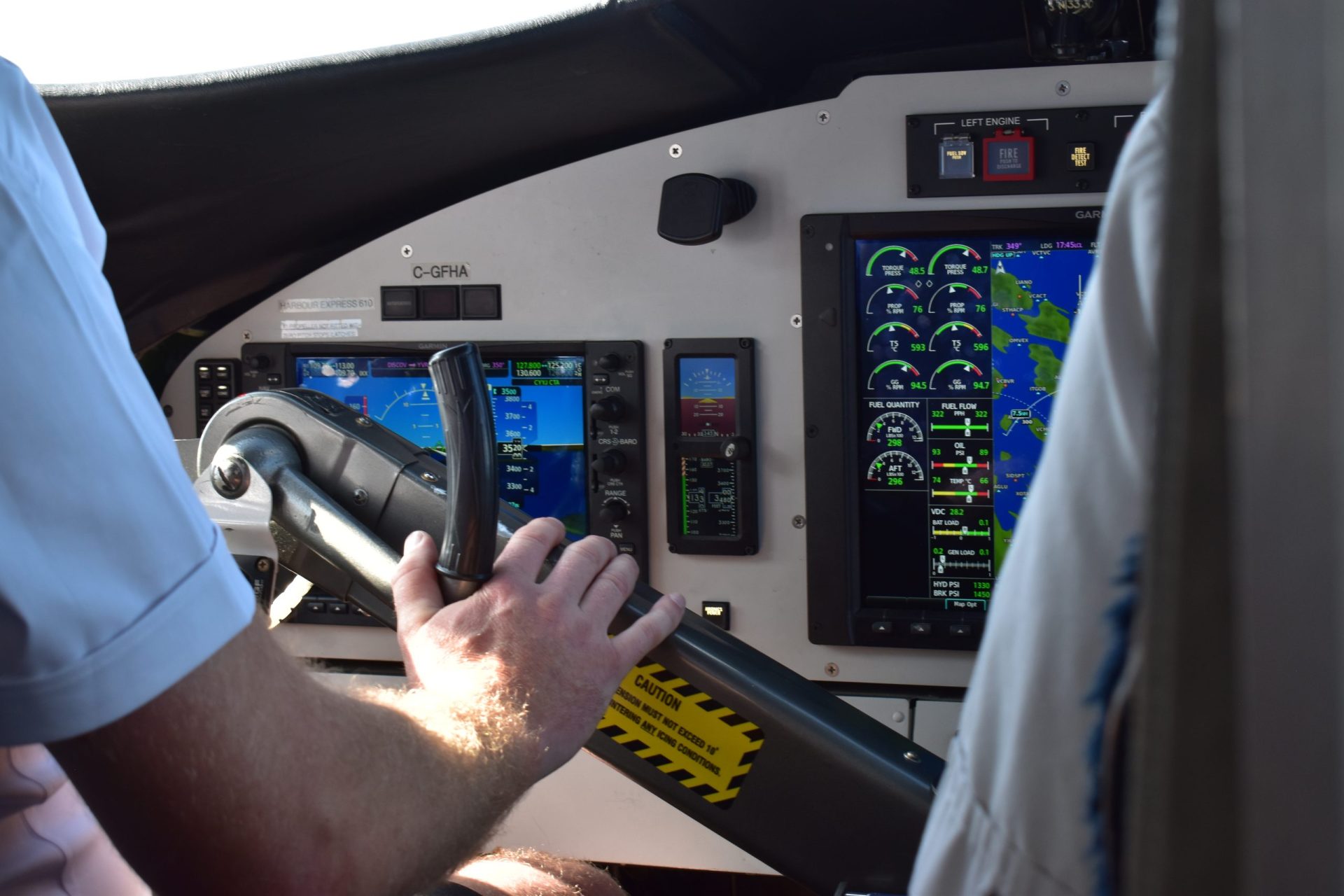
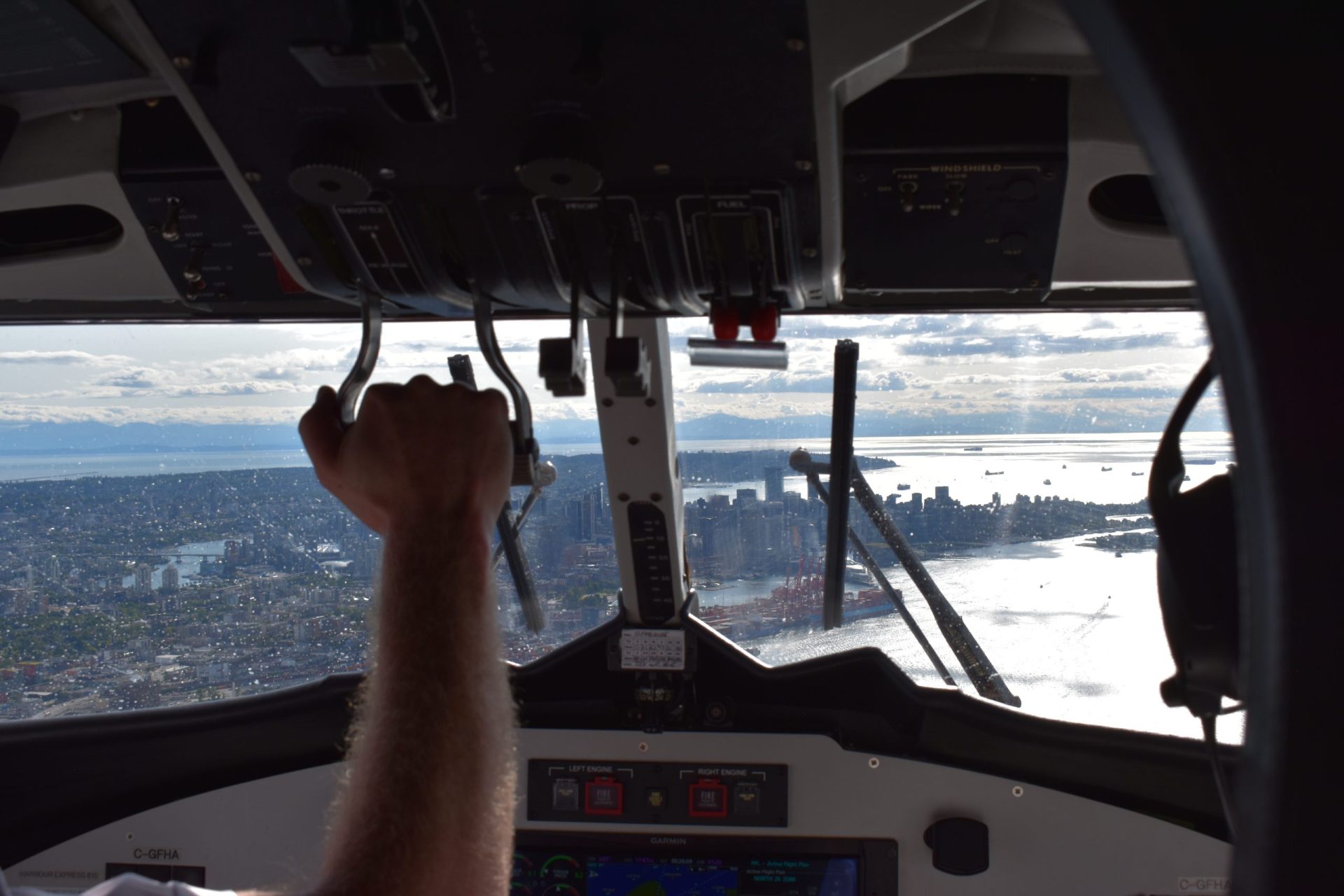
In the first row, we had the opportunity to look directly into the cockpit and see all of the instruments on the panel, which was really cool for AvGeeks like myself. Above, or next to your head, there was a reading light as well as air vents to keep you cool during the fight. In the seatback packet, there was the safety card as well as earplugs, which come in handy, especially for those who don’t like loud noises, and a sick bag, which luckily nobody had to use during this flight.
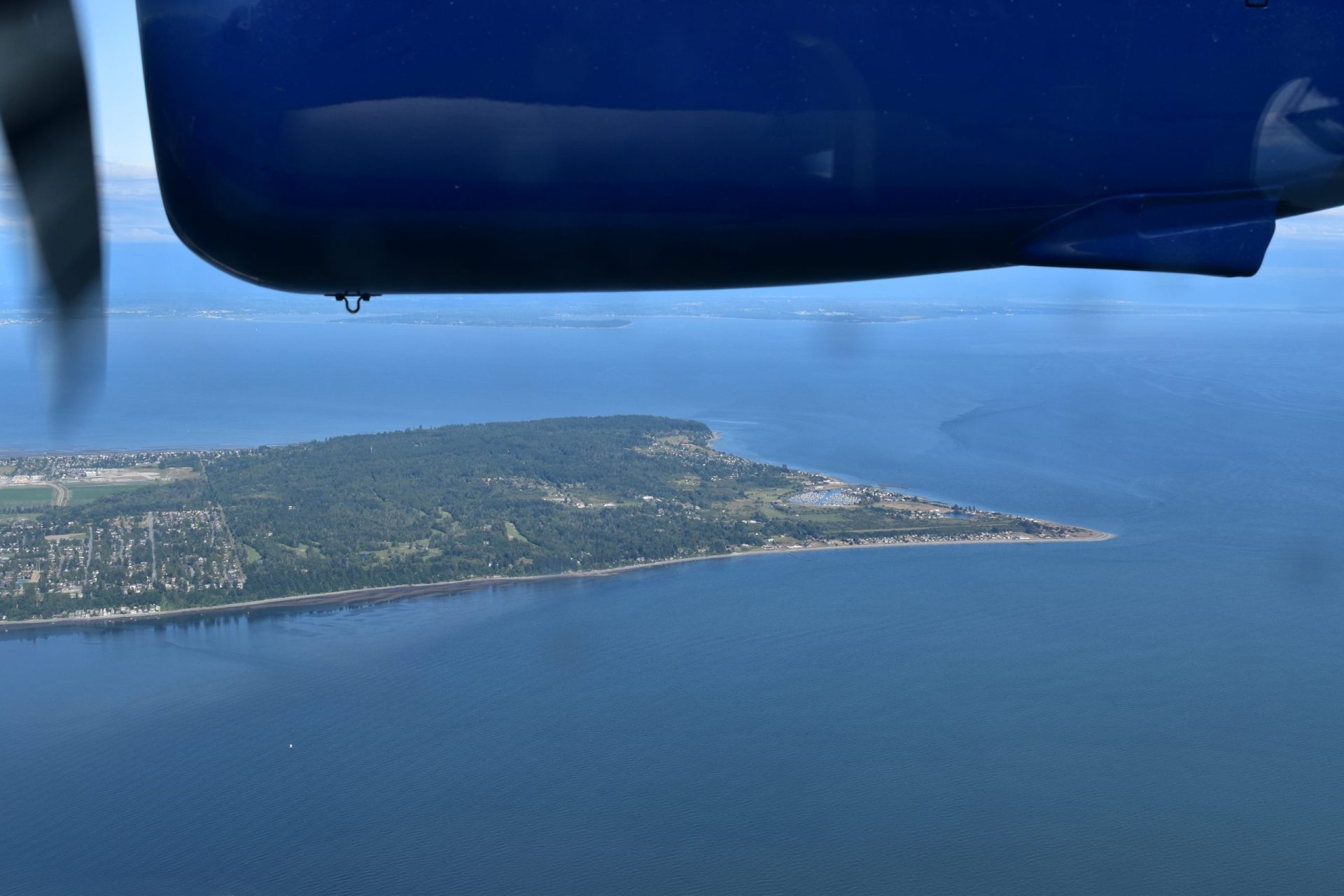
Along the way, we passed over many islands as we crisscrossed into the United States and back into Canada. This is a small seaplane, so obviously, there was no in-flight entertainment, Wi-Fi, or anything like that. But with views and weather like we had, we didn’t need other entertainment.
It’s also cool that, even without internet, you can see exactly where you are on the map if you’re in the first couple of rows, because you can see the GPS on the instrument panel in the cockpit.
I spent the entirety of the flight looking out at the views beneath me as we flew towards Vancouver.
One interesting thing to point out is that the control tower for the Vancouver Harbour Flight Centre is the highest in the world, standing at 466 feet. Most in the aviation world do not give it the distinction of tallest tower, however, because it is simply a control tower box put on top of a building in Vancouver, not a purpose-built control tower.
It was also cool that I could hear air traffic control audio from this flight as well, as it is very rare to find seaplane airports with dedicated air traffic control frequencies. The audio can be heard in the video at the end of this story.
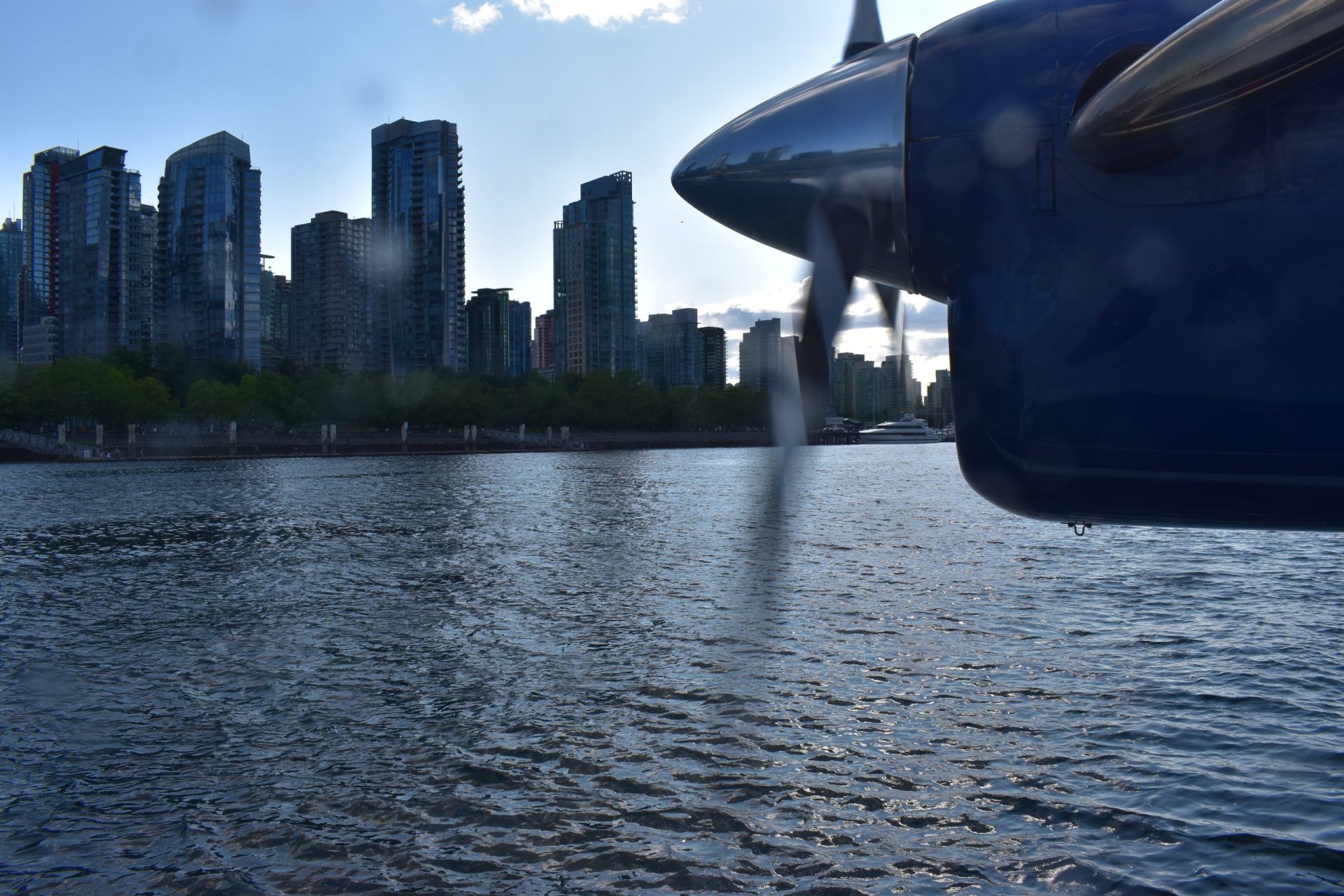
We landed in downtown Vancouver Harbour at 5:46 p.m. after only 28 minutes of flight time.
I had an absolutely wonderful time on Harbour Air, and I’m so glad I finally got to try out the Twin Otter. This is by far the quickest and easiest way to get between Victoria and Vancouver, especially if you’re going between the two downtown areas.
It is also one of the easiest ways for AvGeeks in the U.S. and Canada to fly on the Twin Otter given how frequently it operates. The flight is also operated with the DeHavilland DHC-3.
A video account of this article can be found below:
Editor’s Note: Harbour Air provided AirlineGeeks with a seat on this flight, but this trip report is an objective portrayal of events and is in no way swayed.