










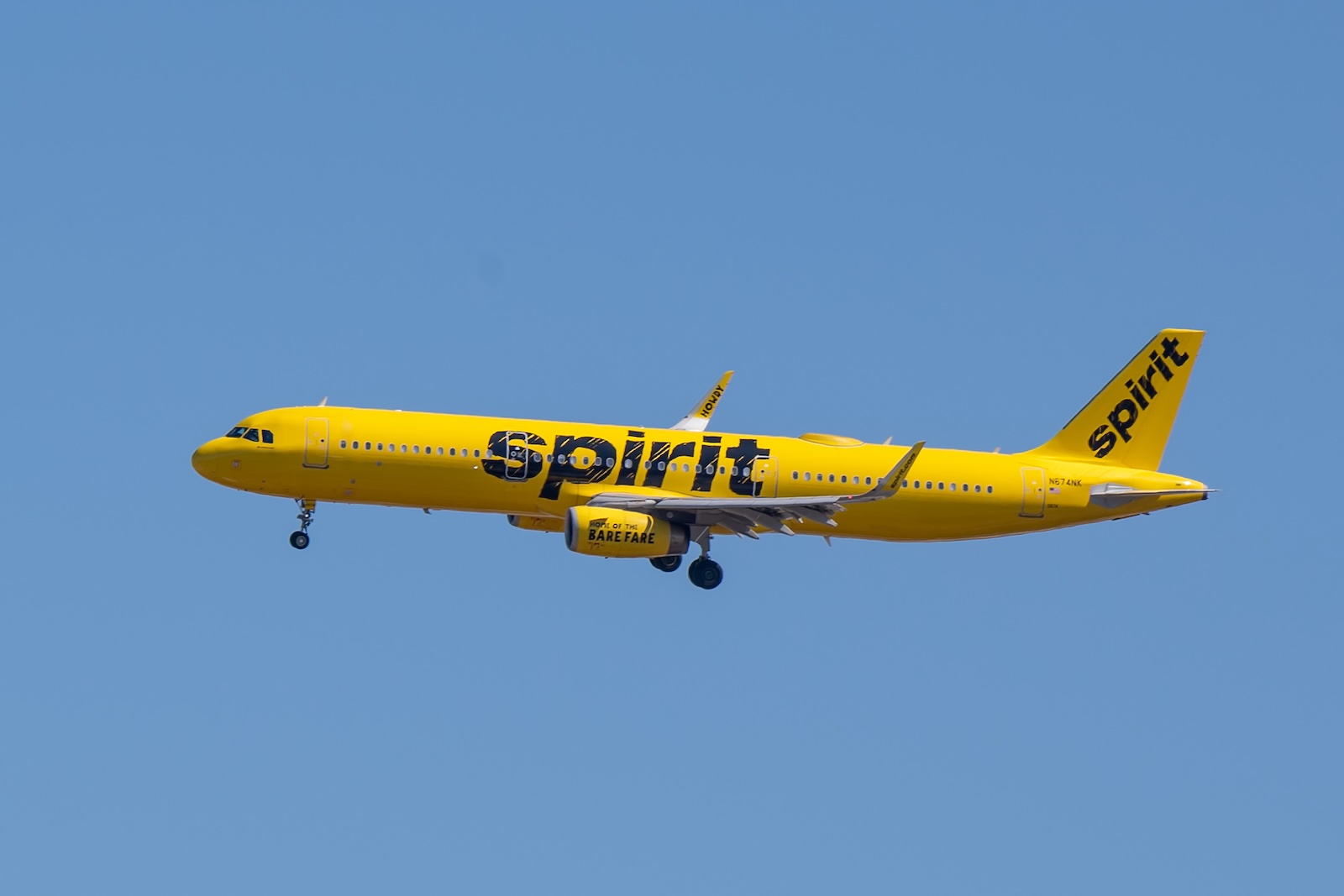

One month after filing for bankruptcy, Spirit says it is making “significant progress” toward a successful restructuring and has secured access to badly needed capital.
At a hearing Tuesday before the U.S. Bankruptcy Court for the Southern District of New York, the ultra-low-cost airline said it negotiated a multi-tranche debtor-in-possession financing facility of up to $475 million from its existing bondholders to support normal business operations. The financing is subject to court approval, with a hearing scheduled for Oct. 10.
If the court rules in Spirit’s favor, $200 million would immediately become available.
The cash would supplement $120 million in liquidity freed up by the bankruptcy court this week.
Spirit has been dangerously short of liquid capital for months. The carrier reported net losses in the two quarters since its emergence from its first bankruptcy and has struggled with weak demand for domestic leisure travel.
In another promising sign, Spirit said it negotiated a deal with its largest aircraft lessor, AerCap, to speed up fleet optimization with the eventual delivery of 30 aircraft. AerCap helped trigger Spirit’s second bankruptcy by claiming defaults on 37 aircraft in Spirit’s fleet, but as part of the new deal, AerCap will pay Spirit $150 million, and Spirit will reject leases on 27 aircraft, freeing itself from the financial commitment.
The agreement settles all disputes between the two companies, Spirit said.
The court also approved Spirit’s motion to reject 12 airport leases and 19 ground handling agreements, which the airline called an “important step forward in cost and network rationalization.”
“These are significant steps forward in a short period of time to build a stronger Spirit and secure a future with high-value travel options for American consumers,” President and CEO Dave Davis said in a statement. “While there’s more work to be done, we’re grateful to our stakeholders who have stepped up to support us during the restructuring.”
Spirit warned shareholders in August that it might not survive the year as a going concern. Industry analysts have faulted the airline for not making more substantial changes during its first bankruptcy, and the heads of major U.S. carriers have voiced growing doubts about the viability of the ultra-low-cost business model.