










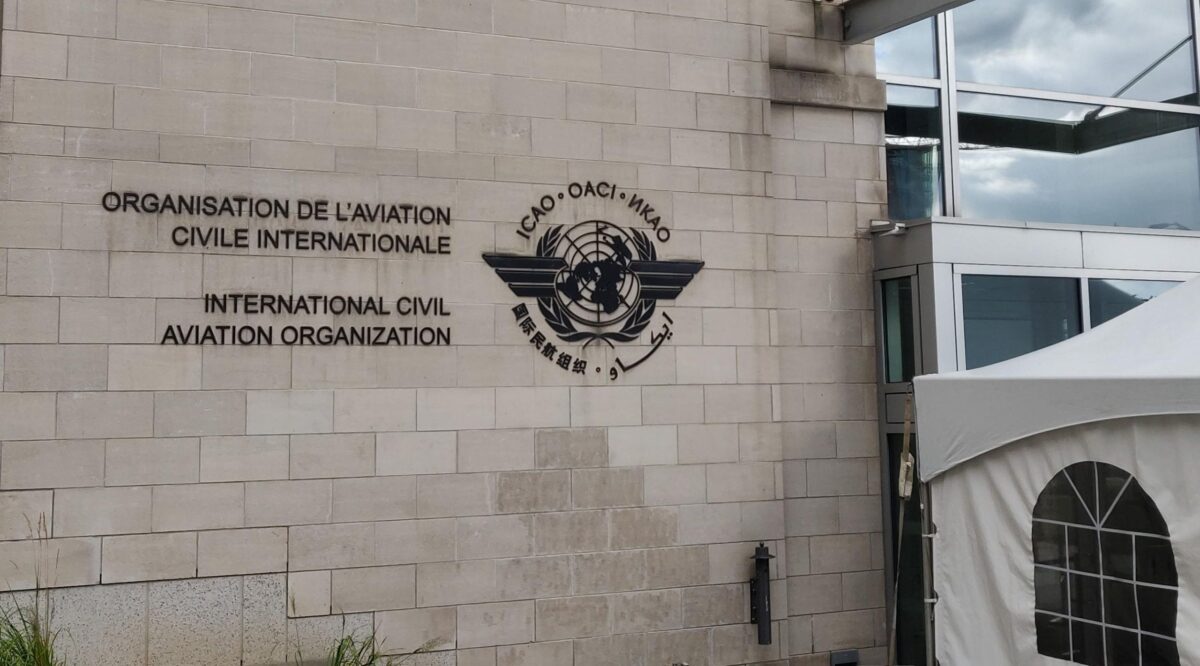


As red maple leaves started to color the Montreal skyline during the first week of October, the 42nd ICAO General Assembly drew to a close at the organization’s headquarters in the Canadian city. During this triannual event, delegates from the 193 Member states and invited observers discussed the hundreds of working papers and potential resolutions that will set the path for the next three years.
Net-Zero Emissions
The Assembly’s most prominent outcome was its solidification of ICAO’s commitment towards a sustainable future for air transport. For the first time since the beginning of aviation’s journey towards sustainability, Member States unanimously endorsed the ICAO Global Framework for Sustainable Aviation Fuels (SAF) and other cleaner energy initiatives.
The Framework sets a collective target for a 5% reduction in CO₂ emissions by 2030 and strengthens commitment to the Carbon Offsetting and Reduction Scheme for International Aviation (CORSIA) and the pursuit of net zero carbon emissions by 2050.
The Assembly also emphasized the importance of the full operationalization of the ICAO Finvest Hub, a fundamental tool to connect decarbonization projects with public and private investors to accelerate the launch of a fully functional emission credits market.
Raising the Pilot Retirement Age: More Data Needed
One of the hottest topics discussed during the first week of the Assembly was the proposal made by IATA to raise the pilot retirement age from 65 to 67, reflecting ongoing research and analysis into workforce needs, health, and safety trends.
While currently some jurisdictions (such as Australia, Canada, Japan, and New Zealand) allow pilots to continue in their profession indefinitely until they can no longer satisfy the required medical standards, no pilots over 65 years of age are allowed to operate on international routes because this was established by ICAO Members in 2006.
For the time being, ICAO stated that “medical science is inconclusive on the effects of raising the age limit for pilots”, but there was clear consensus that ICAO should continue to consult with stakeholders, analyze evidence, and evaluate medical and operational impacts before issuing any regulatory change, ensuring that safety remains paramount.
Safety and Security Systems
The Assembly unanimously committed to the highest safety standards by endorsing the 2026-2028 Global Aviation Safety Plan, the eighth Global Air Navigation Plan (with a new six-year cycle for enhanced efficiency), and the Second Edition of the Global Aviation Security Plan, which introduced new global targets and a monitoring system.
Furthermore, the Assembly endorsed the ICAO Council’s determination that radio frequency interference (RFI) with Global Navigation Satellite Systems (GNSS) from North Korea and Russia violates the Chicago Convention (1944), and two resolutions were passed formally condemning both States and urging compliance with international obligations.
Finally, the Assembly tasked ICAO with taking the lead on establishing a framework for new challenges emerging in today’s commercial aviation, such the need to implements plans for cybersecurity at a national level, the creation of a new Task Force on Artificial Intelligence to shape safe applications and performance benchmarks for AI in aviation, and the modernization of the regulatory approaches for new entrants, notably remotely piloted aircraft systems (RPAS).
Next Stop: 2028
Member States will now have to incorporate the resolutions approved by the Assembly in their national legislations as soon as possible as with the support of ICAO’s “no country left behind” principle once again reaffirmed during the meetings in Montreal.
The delegates will return to Montreal in 2028 for the 43rd ICAO General Assembly.