










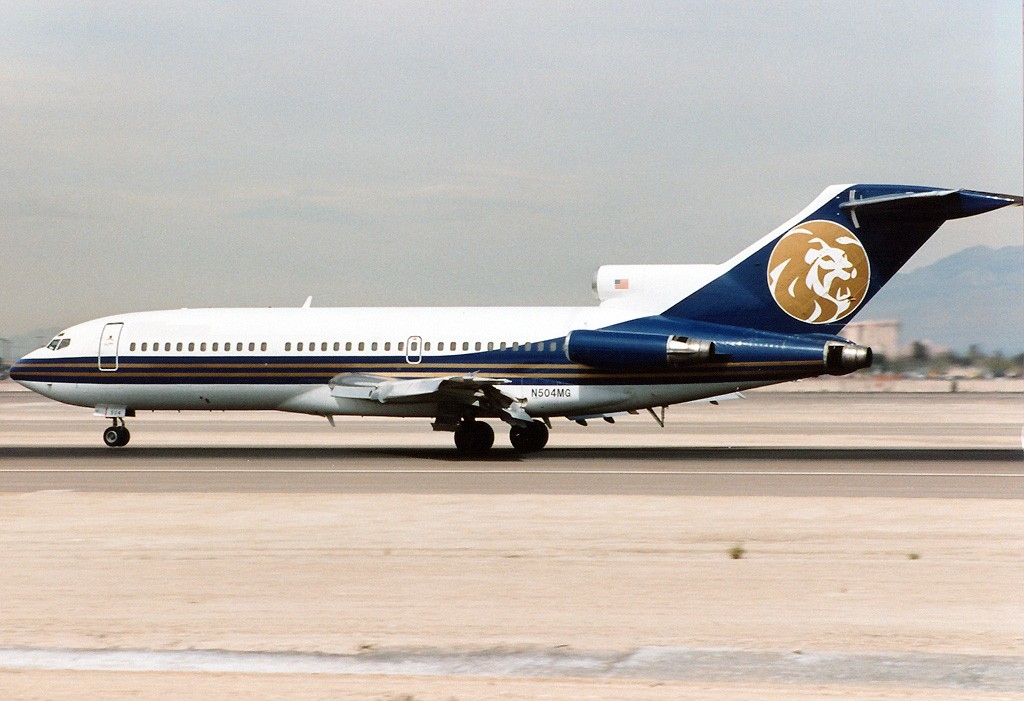


Like something out of Wall Street or Lifestyles of the Rich and Famous, MGM Grand Air typified 1980s-style luxury with plush seats, champagne, and liberal gold plating. Passengers queued for their flights in private terminals with couches and desks, walked red carpets to their airplanes, and, once in the air, enjoyed a seemingly-endless parade of gourmet food, drinks, entertainment, and likely famous company. With an experience closer to a private jet than commercial flying, the airline won over actors, musicians, and executives who wanted to get from one coast to the other without hassles, delays, or inconveniences.
As one former flight attendant later recalled, the flights were like one big party in the sky.
MGM Grand Air flew high and burned bright, but after only six years in business, the party was over for good.
Grand Plans
The airline was the creation of Kirk Kerkorian, the flamboyant owner of Metro-Goldwyn-Mayer and developer of the MGM Grand Hotel and Casino in Las Vegas.
Kerkorian had financed earlier ventures that flew celebrities and high-rollers to the Strip, but he envisioned a proper airline with transcontinental reach. To that end, he acquired three Boeing 727-100 aircraft and had their interiors redesigned to accommodate 32 swiveling leather seats, a bar, and extra rooms for dining, sleeping, and work. On the tails, he painted an oversized version of MGM’s instantly recognizable corporate logo, a roaring lion in gold.
MGM Grand Air launched in 1987 with two daily flights between Los Angeles and New York, and occasional service from those two cities to Las Vegas.
From the start, the carrier had a reputation for over-the-top luxury.
Cabins were adorned with velvet window coverings, mirrors, smoked glass dividers, and high-quality carpets; bathrooms with Italian marble vanities and gold fixtures. Space in the cabin was divided between a main seating area, a bar, a dining room, a conference room, and, in the rear of the airplane, private “staterooms” with queen-sized beds and privacy curtains.
Flight attendants distributed menus and hot towels, then fetched drinks and appetizers like shrimp, paté, and caviar. Formal meals of beef, poultry, and seafood were served on fine china.
Aside from eating, drinking, and socializing, passengers could watch movies or listen to music, since all the airplanes in the fleet were equipped with VHS and cassette players. The setup was considered state-of-the-art at the time.
Hollywood embraced MGM Grand Air’s service wholeheartedly. The airline’s reported client list reads like a who’s-who of the era, with Robert De Niro, Julia Roberts, Tom Cruise, Michael Jackson, Eddie Murphy, Johnny Carson, and O.J. Simpson all making appearances.
Ticket prices ranged from $1,000 to $1,400, which the carrier’s management advertised as just slightly more expensive than a first-class seat on a larger commercial airline. Adjusted for inflation from 1987, those tickets would cost between $2,900 and $4,000 today.
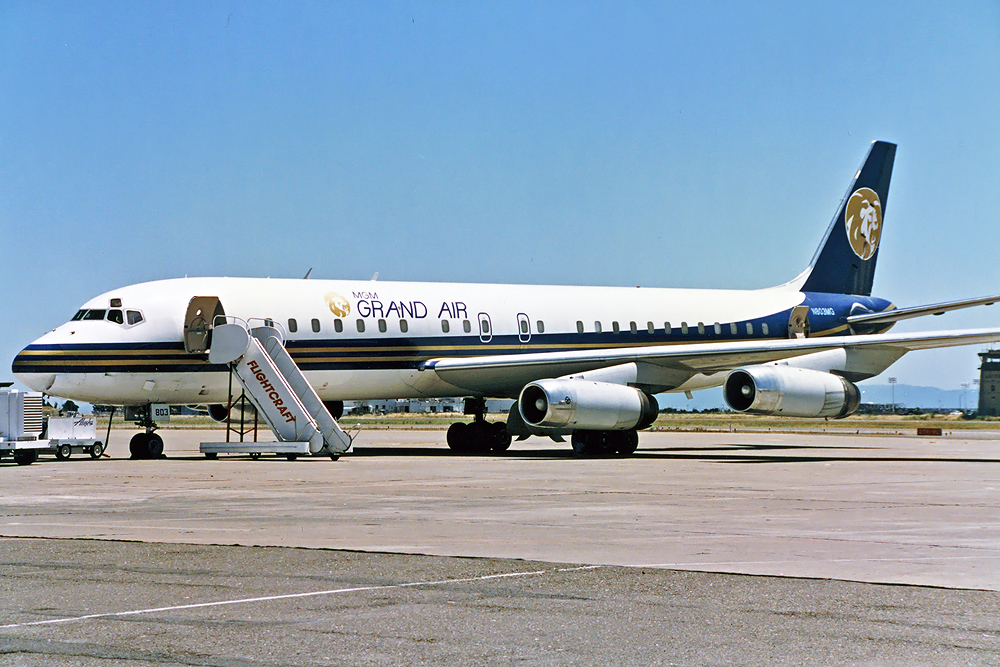
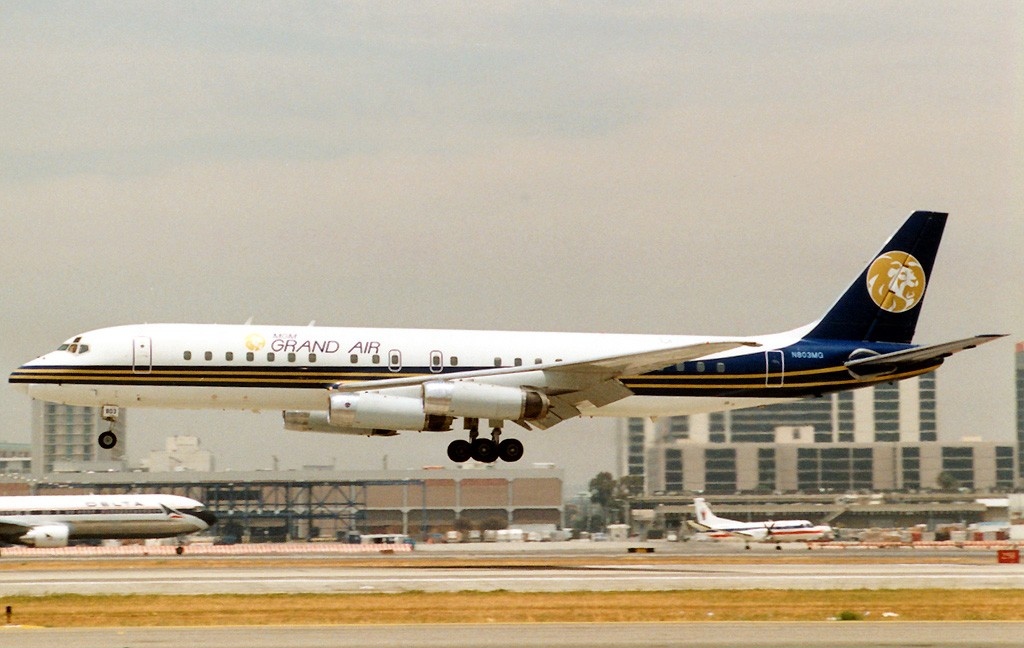
Despite its cultural cachet and glowing reviews, MGM Grand Air’s extremely limited number of seats per flight made it impossible for the airline to turn a profit. Larger DC-8s were added to the fleet in 1990 and a more economical “Grand Class Coach” cabin was installed, but neither change pulled the business out of the red. Scheduled service was discontinued in 1993, and by 1995 MGM Grand Air’s assets had been sold off to a small Minnesota-based aviation company called Front Page Tours.
Gone But Not Forgotten
Under new ownership, MGM Grand Air was renamed Champion Air and reoriented toward charter flying. Champion was best known for flying professional sports teams to and from games, but it gradually expanded its clientele to include vacation wholesalers and government agencies.
Champion went out of business in 2008, when its CEO announced the carrier could not survive in a world of “$110 oil, a struggling economy, and rapidly changing demand.”
MGM Grand Air is long gone, but it made a lasting impression. Former customers, staff, aviation enthusiasts, and ‘80s nostalgics still find something to admire in the go-for-broke gaudiness that perfectly reflected the decade’s financial excesses and fusion of celebrity and business culture.
“It wasn’t like any other plane I’d ever flown in,” actress and radio host Sandra Bernhard told The Hollywood Reporter in 2015. “That thing had more rooms than a mansion. And everybody was flying it, models and celebrities, so you’d always be running into people. There’ll never be anything like it again.”