











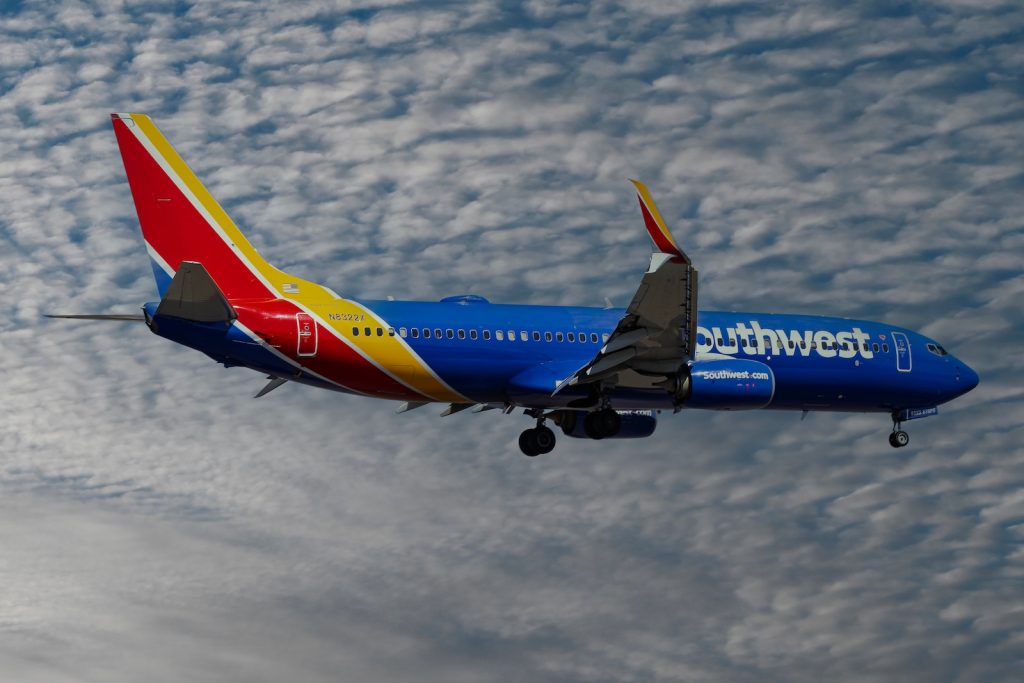
The National Transportation Safety Board has released its final report into a March 2025 incident in which a Southwest Boeing 737-800 initiated a takeoff roll on a taxiway in Orlando, Florida, before aborting.
The incident occurred on March 20 and involved Southwest Flight 3278, from Orlando to Albany. The aircraft, registered as N8315C, was carrying 152 passengers and six crew members. No injuries or aircraft damage were reported, and the flight returned to the gate after the rejected takeoff.
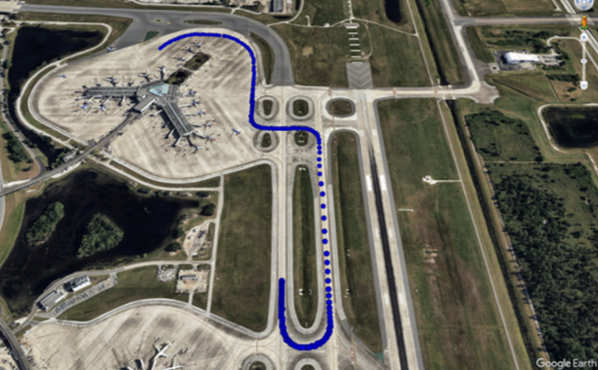
According to the NTSB, the flight had been cleared for takeoff from Runway 17R via the H2 intersection. After taxiing from the terminal ramp, the aircraft turned from taxiway H2 onto taxiway H. Flight data recorder information showed both engines advancing to takeoff thrust as the aircraft accelerated along the taxiway.
“At about 0930, when the flight approached taxiway H and subsequently made a right turn onto taxiway H, the recorded ground speed was 14 kts, the engine N1 speed increased to about 90.6%, and the takeoff roll began,” the report stated.
The first officer realized the aircraft was on a taxiway moments after takeoff thrust was applied and called for a rejected takeoff. Air traffic control simultaneously instructed the crew to stop, canceling the takeoff clearance.
The aircraft reached a maximum recorded ground speed of 66 knots before decelerating and exiting the taxiway.
In post-incident statements, the captain told investigators that he mistakenly believed the aircraft had turned onto Runway 17R.
“After taxiing past taxiway G, I mistakenly turned right onto taxiway H, thinking that it was the runway,” the captain stated. “Maintaining the centerline required my full attention and I didn’t notice we were on a taxiway until the Tower and my FO both directed me to reject the takeoff.”
The captain said he recalled seeing runway signage and had visually scanned for traffic on final approach, but acknowledged he did not verbally verify the aircraft was on the assigned runway before initiating the takeoff.
The first officer described a brief cockpit distraction immediately before the turn.
“As I was finishing my scan of the panel, I felt the aircraft turning,” the first officer stated. “I looked outside the aircraft and realized that we were on a taxiway… it took a few seconds for me to vocalize ‘we are on the taxiway—reject.’”
Non-Compliance
The NTSB report noted that the captain did not comply with the carrier’s standard operating procedures, which require both pilots to cross-check all available references and verbally confirm the assigned runway before takeoff.
Investigators cited missed visual cues, including a yellow taxiway centerline, narrower pavement width, the absence of runway hold-short markings, and signage inconsistent with a runway environment.
The captain, 58, had approximately 21,100 total flight hours, including 6,000 hours in the Boeing 737. The first officer, 53, had logged about 11,000 total flight hours, with 4,200 hours in the 737.
The NTSB determined the probable cause of the incident was “the captain’s failure to recognize that the airplane’s location did not agree with the assigned departure runway,” along with a plan continuation error that led him to initiate takeoff despite multiple cues indicating the aircraft was not on the runway.