











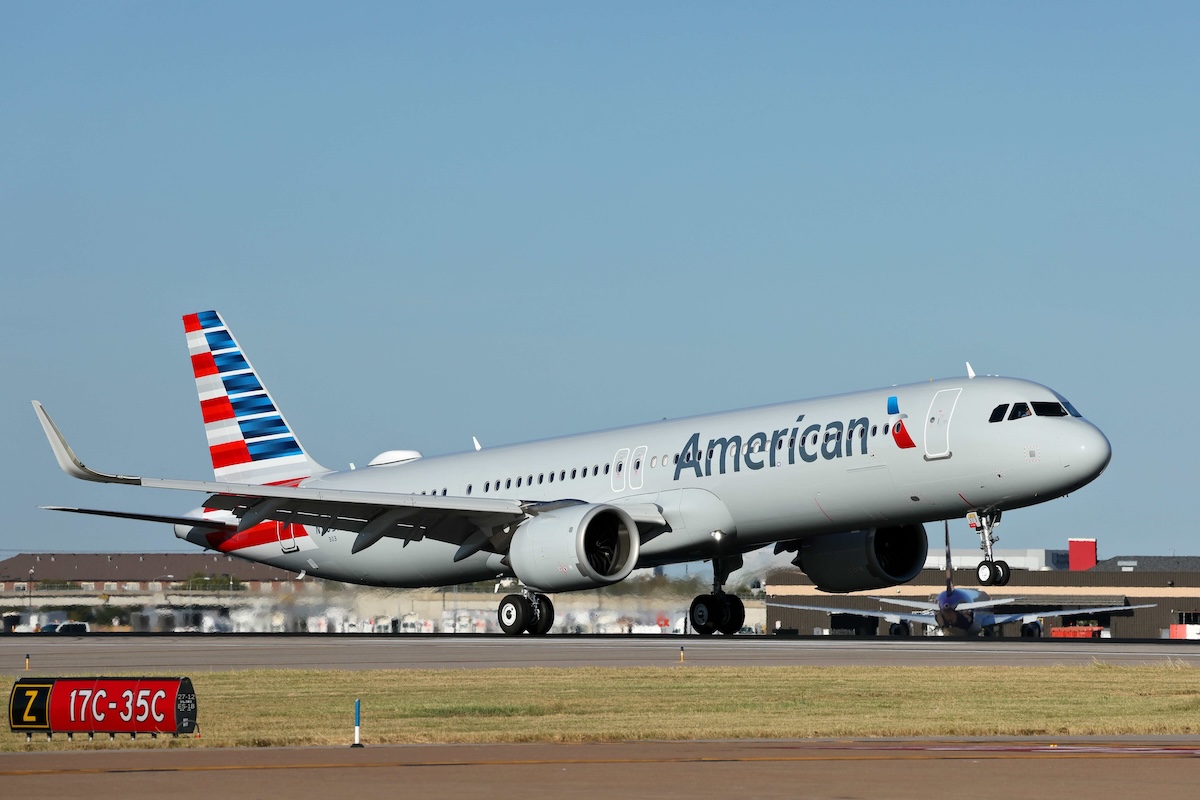


American Airlines expects its Airbus A321XLR fleet to play a meaningful role in expanding premium transcontinental flying, giving the carrier more flexibility to add routes and frequencies that are currently constrained by its limited Airbus A321T fleet.
Speaking during an interview with AirlineGeeks at an unveiling event for the new jet in New York, American’s senior vice president of network planning, Brian Znotins, said the small size of the A321T subfleet has historically limited American’s ability to grow its transcon network without making tradeoffs elsewhere.
“One of the real limitations of the A321T is we only have just over a dozen of them,” Znotins said. “If we want to grow frequency in JFK–L.A., then something else has to shrink. If we want to add a new destination, something has to shrink.”

The airline currently has 16 A321Ts in service, according to Cirium Fleet Analyzer data. The premium-heavy aircraft feature 10 first class seats, 20 in business, and 72 in economy. These aircraft will eventually be converted to American’s standard A321 configuration once more A321XLRs arrive.
Znotins said the A321XLR changes that dynamic by allowing American to expand its premium domestic footprint without reducing service in existing markets. He pointed to the airline’s launch of New York–Orange County, California, as an example of strong demand for premium-heavy transcontinental routes.
“We recently added JFK to Orange County, and that did really well for us,” he said. “It gives us the flexibility to say, ‘Would a second Orange County do well, or JFK–Seattle, or San Diego?’”
Znotins said the airline does not currently operate JFK–Seattle, for example, despite significant premium demand between the two markets. “There’s a lot of premium traffic that goes between those two,” he said, adding that San Diego is another market that could be well-suited to the aircraft.
According to Znotins, the A321XLR allows American to add routes or frequencies without reallocating aircraft from its existing transcontinental services. “It gives us the opportunity to offer the product to someone that we wouldn’t otherwise be able to,” he shared.
Remain Competitive
American’s near-term priority remains strengthening its current transcontinental portfolio before expanding into additional domestic markets. “Our priority is really to get the existing portfolio filled out and make sure our frequencies are competitive with the other guys,” Znotins continued.
Over the longer term, Znotins said American envisions growing both its premium transcontinental and transatlantic networks in parallel as more A321XLRs are delivered.
“Come 2027, 2028, I’d like to be able to be growing both Europe and the transcon flatbed franchise at the same time,” he said.
The carrier will launch A321XLR service on Thursday between New York-JFK and Los Angeles, before it starts connecting New York and Edinburgh next year. The new jet features 20 Flagship Suites, 12 premium economy seats, and 123 economy seats.
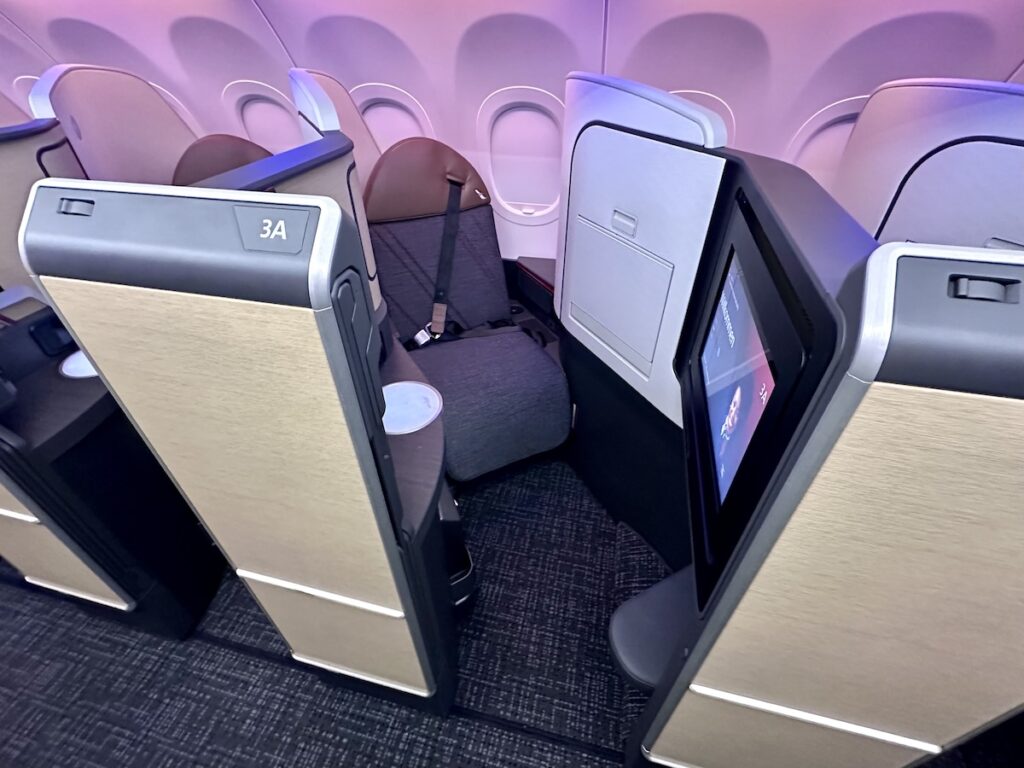
During prepared remarks at the event, Znotins confirmed that replacing the airline’s aging A321T fleet is a priority for the A321XLR.
“First and foremost, we are going to be replacing our A321T fleet,” he said. “It’s pretty old, and we’re eager to get the best, brand-new product onboard our transcon services.”
The aircraft will initially operate premium transcontinental routes, including New York JFK–Los Angeles, JFK–San Francisco, JFK–Orange County, and Boston–Los Angeles, according to Znotins. He said the expanded fleet will also allow American to add new frequencies and destinations across its domestic premium network.
“By having an expanded fleet, we’ll be able to add new frequencies and new destinations,” Znotins said.
Range ‘No Longer an ‘Unknown’
Znotins also addressed early questions around the A321XLR’s range and performance, saying those concerns have largely been resolved as the aircraft has entered service with other carriers. He said American has held discussions with both Iberia and Aer Lingus, which are already operating the type.
“It’s no longer an unknown,” Znotins added. “Iberia has been flying it, and our partner Aer Lingus has been flying it, and we’ve talked with them.”
According to Znotins, those conversations have helped American better understand the aircraft’s real-world capabilities. “They’ve been giving us their experience with the airplane,” he said. “We feel like we’re honed in on what the range and the performance of the airplane is.”
While Znotins said American would prefer additional range, he emphasized that the airline now has confidence in the aircraft’s performance envelope. “We’d like it to be longer,” he said, “but we know what it is now, and we can make our plans accordingly.”
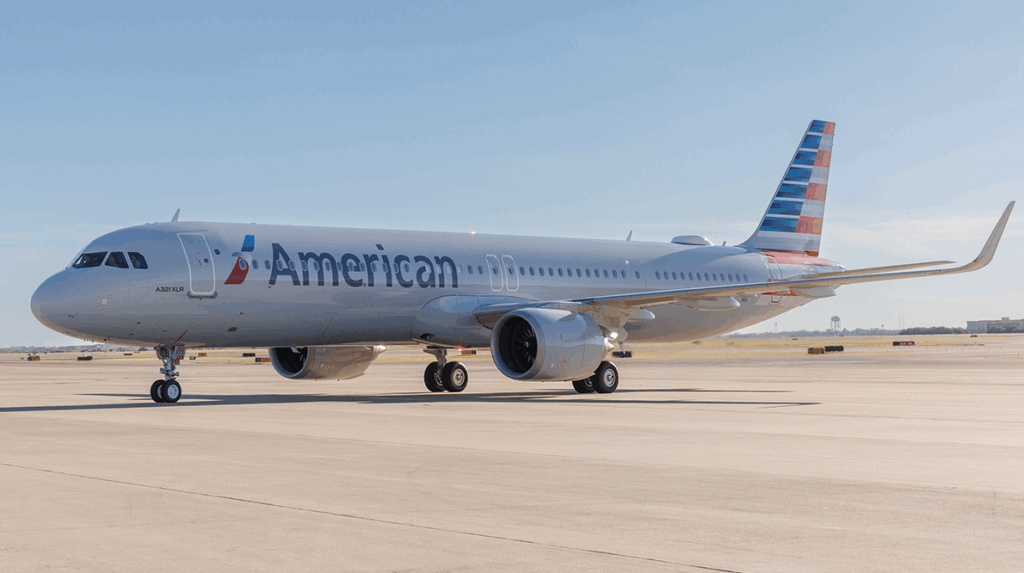
Beyond domestic flying, Znotins said the A321XLR will also enable long-haul growth from several of American’s hubs, particularly in transatlantic markets. He added that the aircraft allows American to right-size capacity and improve seasonality in Europe.
“Philly–Edinburgh, we run that eight months of the year right now,” he said. “I’d love to run it 12 months of the year, but a widebody is too big for the winter. I can use an XLR in the four months of the winter and then keep that year-round for us.”
As additional aircraft are delivered, Znotins said American could deploy the A321XLR on long-haul routes from hubs including Philadelphia, Miami, Chicago O’Hare, Dallas/Fort Worth, Boston, and Phoenix. He cited potential opportunities in secondary European markets, seasonal South American flying, and longer routes where widebodies have proven inefficient.
“In the winter months, an XLR could fly Miami to Córdoba,” Znotins said, referencing a previously attempted widebody route. He also pointed to potential flying from Chicago and Dallas/Fort Worth, adding that the aircraft could allow American to offer a flatbed product in markets that currently do not support widebody service.
“From a product perspective, DFW to Lima would be great,” he said. “It would be great to be able to offer a flatbed on the whole itinerary.”
Znotins also pointed to Phoenix as another market where the A321XLR could change American’s long-haul and premium domestic strategy, particularly on flights to Hawaii. He said the aircraft would give the airline more flexibility in how it deploys premium cabins on those routes.
“Out of Phoenix, flatbeds to Hawaii on a narrowbody would be great,” Znotins said. “Right now, Phoenix, we can either have flatbeds to Hawaii on a widebody or domestic narrowbody first class.”
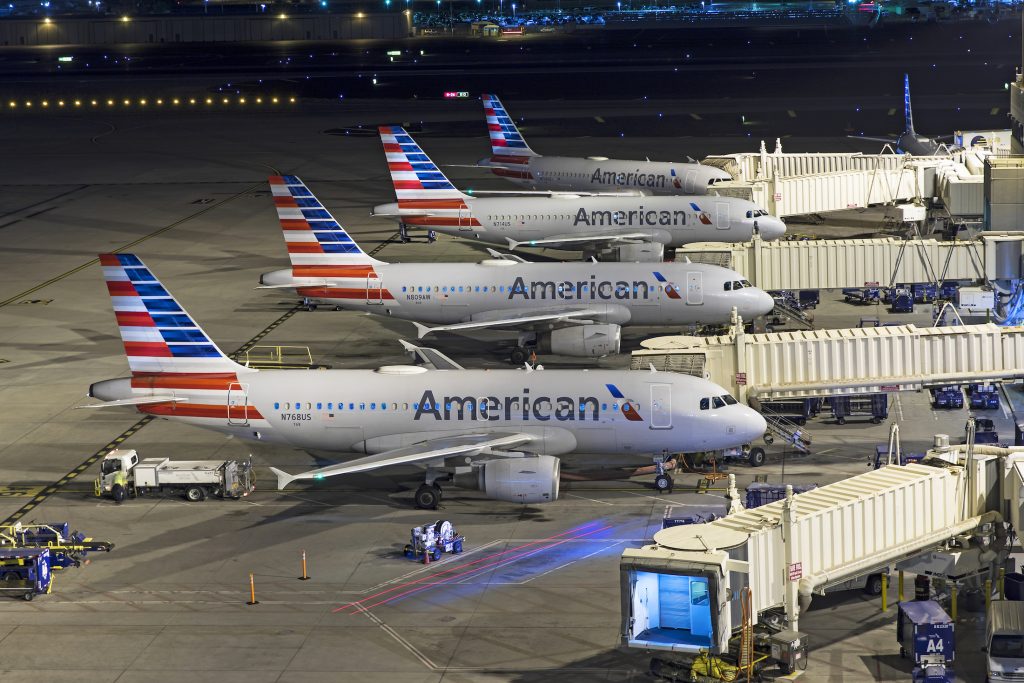
He added that the XLR would allow American to balance capacity and product more precisely. “Sometimes I want one of one and one of the other,” Znotins said. “And the XLR will let us do that.”
The carrier’s second-largest hub in Charlotte could also see limited A321XLR flying over time, though Znotins said it is not a near-term priority compared with other hubs. While he did not rule out future deployments, he described Charlotte as a lower-ranked opportunity within the overall network plan.
“I wouldn’t exclude Charlotte,” Znotins said. “But if I’m working down the top 10, it’s probably closer to the bottom of the 10 than the top.” He added that widebody flying from Charlotte is currently performing well. “Charlotte widebodies are great, and it fills them up fantastically.”