











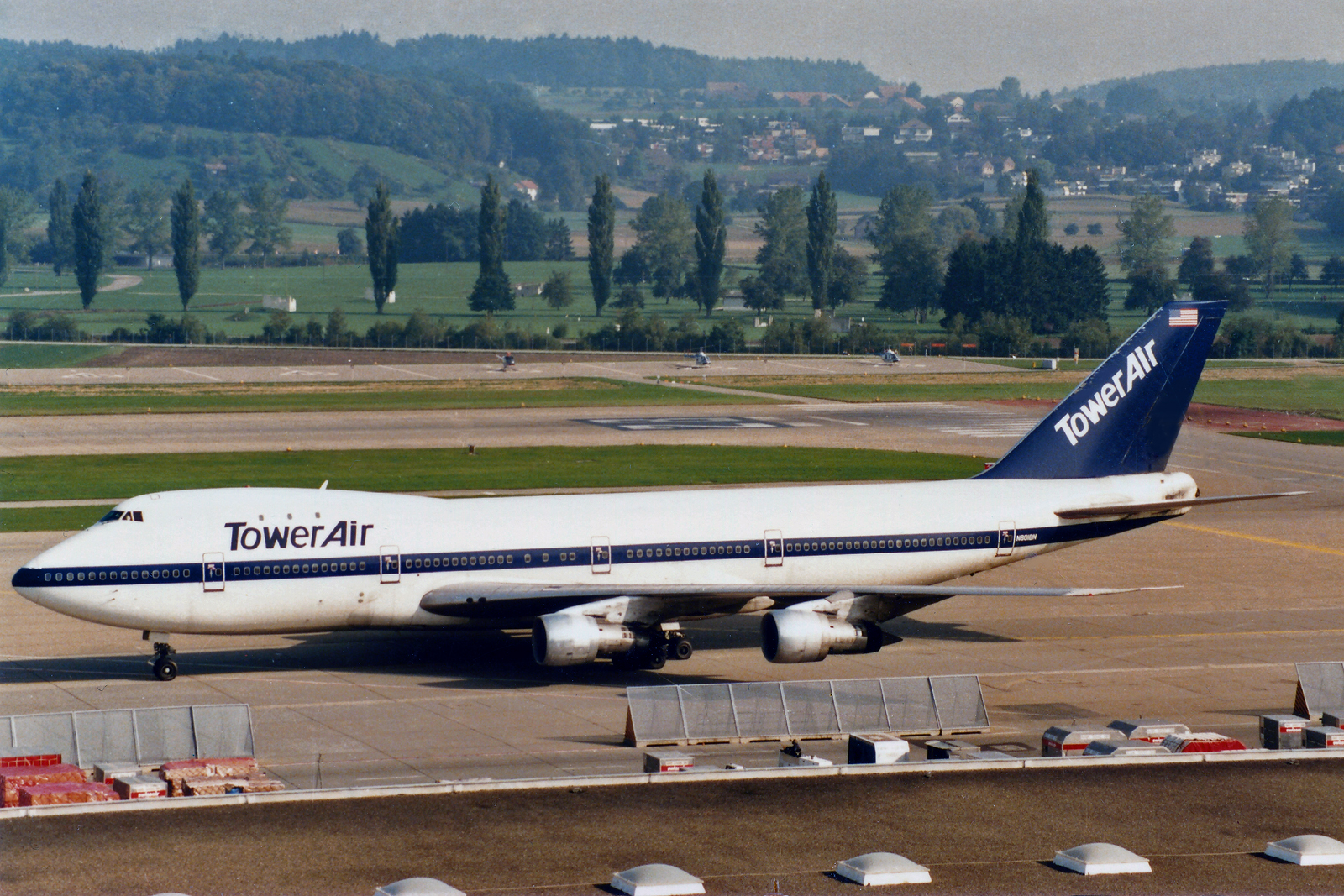


In the 1980s and ‘90s, Tower Air seemed to have its hands in every niche market in commercial flying. It operated flights for the U.S. military, tapped into then-marginal markets like Tel Aviv and New Delhi, and ferried pilgrims to Mecca for the hajj.
Holding Tower’s business model together was an obsession with efficiency and cost control. The airline used older Boeing 747s, eschewed first class, and outsourced bookings to local travel agencies. Routes that did not immediately prove their profitability were cut. Schedules and markets were constantly reevaluated to keep finances in the black.
Tower’s relentless mission to cut costs, however, ultimately undermined its operations. The shoddy state of its airplanes and bare-bones service hurt its reputation with the flying public, and a non-fatal crash in 1995 only increased concerns. Growing scrutiny from regulators led to the loss of its military contracts, and in 2000, with the majority of its aging fleet grounded, Tower filed for bankruptcy and surrendered its air operator’s certificate.
Beginnings
Tower Air was the creation of Morris Nachtomi, an Israeli-American pilot who formerly worked for El Al. Nachtomi led the short-lived passenger operation at Flying Tiger Line, known as Metro International Airways, and when that business folded, he started Tower essentially as a replacement. He purchased the “Tower” name from Tower Travel Corporation, a travel agency that provided packaged tours of destinations in Israel and Western Europe.
Tower Air began operating charter and regular scheduled flights from New York-JFK in 1983 using a small fleet of Boeing 747 aircraft. Its first and main destination was Israel, Nachtomi’s home country, but the carrier eventually expanded to markets such as Paris, Brussels, and São Paulo.
Nachtomi and his partners guided the airline to profitability by keeping costs as low as possible. They scheduled flights to avoid rush hours, opted for less expensive airports (such as Orly in Paris), and immediately dropped money-losing routes.
Part of that cost-saving strategy involved operating flights less frequently than other airlines. Most of the carrier’s routes only operated once a day, or a few times per week. This made Tower Air inconvenient for certain customers, like business travelers, but the results spoke for themselves: in the early 1990s, Tower was able to offer New York-Paris fares at one-third the price of the major U.S. carriers.
1990s Heyday
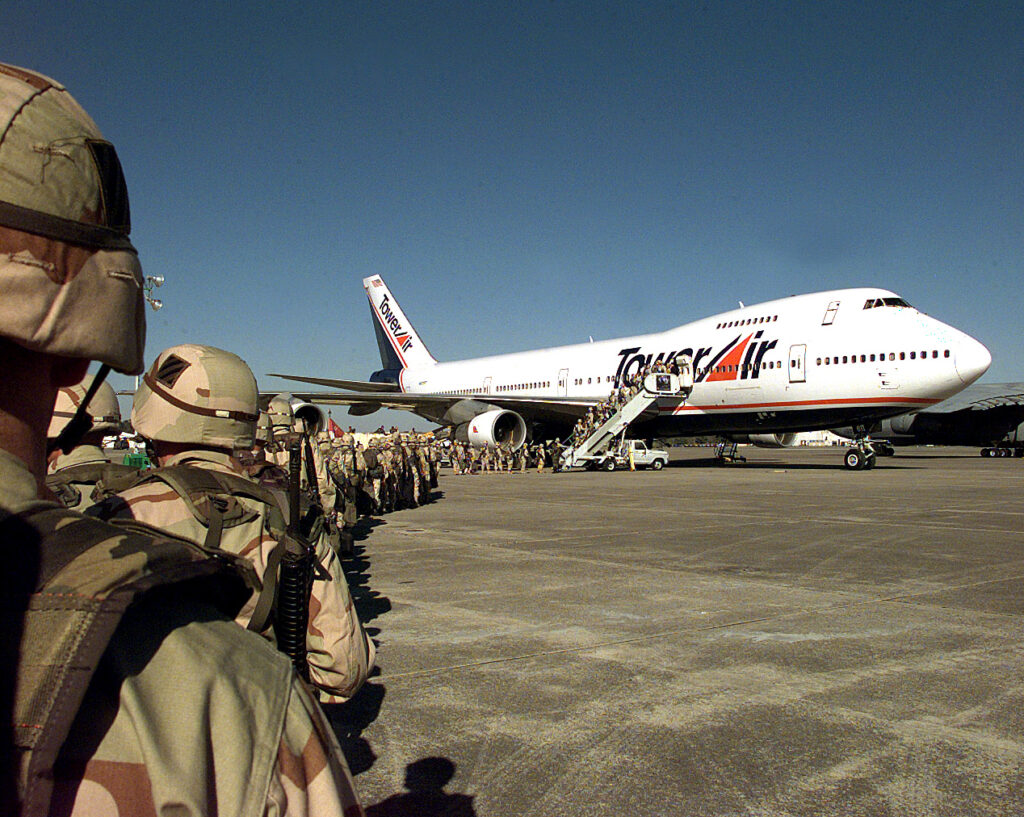
The Gulf War opened a new chapter for Tower Air. The carrier picked up contracts with the U.S. Defense Department to transport troops between the U.S. and foreign military bases. It also helped evacuate U.S. citizens from Tel Aviv on the otherwise empty return trips on military charters.
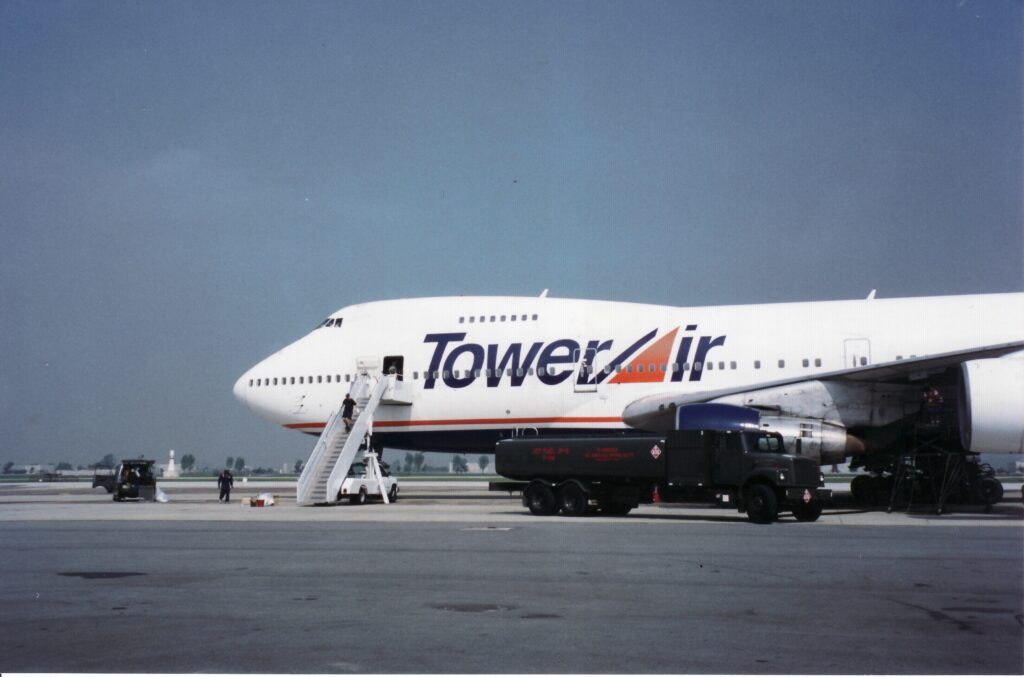
Business from the Defense Department and cargo operations boosted Tower Air’s bottom line and helped fuel investment in the airline’s network and infrastructure. The carrier broadened its reach, starting flights to countries like Ireland, India, Germany, and Greece, and leased two buildings at JFK, which served as its dedicated passenger terminal and corporate headquarters.
By 1993, Tower Air was the third-busiest airline at its home airport, a significant achievement considering the highly competitive market.
Another important revenue stream in this period was chartered service to Mecca during the hajj. The carrier transported tens of thousands of Muslim pilgrims to and from Saudi Arabia each year in partnership with Air India and Garuda Indonesia. The annual trips became integral to Tower’s earnings, and it booked hajj charter flights through 2001 – a year it would not survive long enough to see.
Crash, Complaints, and Shutdown
On Dec. 20, 1995, Tower Air Flight 41 veered off the runway while attempting to take off from JFK. All 468 people on board survived, but 25 were injured, and the aircraft itself was too badly damaged to be repaired and returned to service. A subsequent NTSB investigation linked the accident to a pilot’s error.
While hardly catastrophic in itself, the crash reinforced the growing perception that Tower Air’s service and product were unreliable and low quality. Customers spotted signs of deferred maintenance, like torn seats and speed tape, and it did not improve their confidence. According to one account, by the mid-1990s, Tower Air was receiving 10 times as many complaints from passengers as its competitors.
Another crash, this time at ValuJet, blackened Tower Air’s brand by association. Flight 592 crashed into the Florida Everglades after taking off from Miami, killing all 110 people on board. Though Tower had nothing to do with the flight, the accident cast suspicion on all low-cost airlines. Customers began to steer away from budget operators, a choice made easier as major airlines continued to drop their prices through the late 1990s.
In a 1996 interview with The New York Times, Nachtomi called his company a victim of the ValuJet crash.
At the same time, the airline reportedly lost some of its famous financial discipline. According to lawsuits filed after the carrier’s collapse, Tower maintained some routes that never made money because Nachtomi personally insisted they remain up and running. The lawsuits also claimed that Tower’s Tel Aviv office kept a separate set of books, making it impossible for executives in New York to properly audit them.
Maintenance problems also worsened in Tower’s final years. The 747s were showing their age, and engines began to break down. Rather than buy or lease new engines, the airline opted to cannibalize its own jets, which gradually took more and more airplanes out of service. News outlets picked up on Tower’s maintenance crisis, and it came to light that 24-year-old Guy Nachtomi, the son of Morris Nachtomi, had for a time been placed in charge of day-to-day operations at the carrier despite his lack of experience in the industry. The younger Nachtomi departed Tower in 1998.
By 2000, the majority of Tower Air’s 747 fleet was out of service, and it had shrunk its network to New York, Tel Aviv, Miami, and San Juan, Puerto Rico. It filed for bankruptcy later that same year and surrendered its FAA certification.
Little remains of Tower Air today, though its subpar service is memorialized – and often mocked – on internet aviation enthusiast forums.