











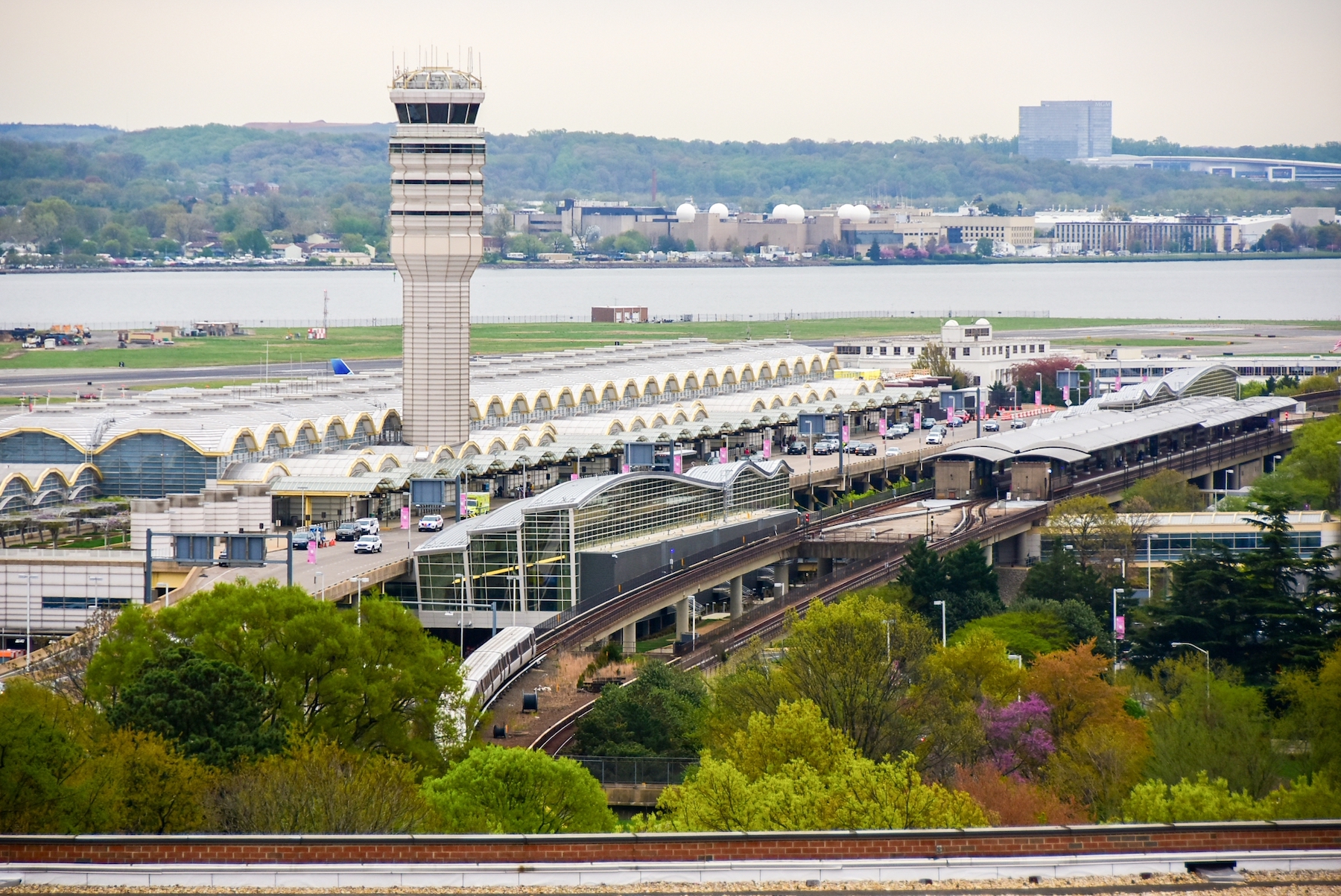


The FAA reportedly denied a request to reduce flight arrivals at Ronald Reagan Washington National Airport in the months leading up to a fatal midair collision over the Potomac River in January 2025.
The Washington Times reported this week that the FAA did not act on a request from air traffic controllers at Potomac Consolidated TRACON in Virginia in 2023. The request pointed to difficulties maintaining separation among arriving commercial aircraft.
The Times cited an internal FAA memo released by the NTSB, which is investigating the collision.
According to the document, an FAA manager resisted forwarding the request to higher-ups. The controllers who made the request were later told the matter was “too political,” possibly because members of Congress depend on flights to and from the airport to travel between their home districts and Washington, D.C.
The NTSB on Tuesday will vote on a final report about the probable cause of the crash. The agency is expected to hand down numerous safety recommendations drawn from its investigation, but it is not clear if reducing slots at Washington National will be among them.
An American Airlines flight from Wichita, Kansas, collided with a U.S. Army Black Hawk helicopter while approaching Washington National on Jan. 29, 2025. A total of 67 people on board both aircraft were killed.
For much of the last 12 months, conversation among regulators and lawmakers has centered on ADS-B broadcasting for military aircraft and measures to further separate civilian and military air traffic in the capital region. An interim rule published by the FAA last week prohibits helicopters and powered lift aircraft from operating in certain areas near Washington National.
The FAA and U.S. Department of Transportation have also closed a potentially hazardous helicopter route in the area and eliminated the use of visual separation within five nautical miles of the airport. In October, the FAA updated helicopter routes and zones at Washington National, Washington Dulles, and Baltimore/Washington International in Maryland.
Concerns about commercial traffic at Washington National have occasionally come up, however. During a public NTSB hearing on the crash last August, an FAA contractor said the center overseeing Washington National is under constant pressure to “make it work” despite limits on their resources and manpower.
At that hearing, the FAA maintained that the airspace around Washington National is the safest it has ever been, due in part to the changes made after the crash.