











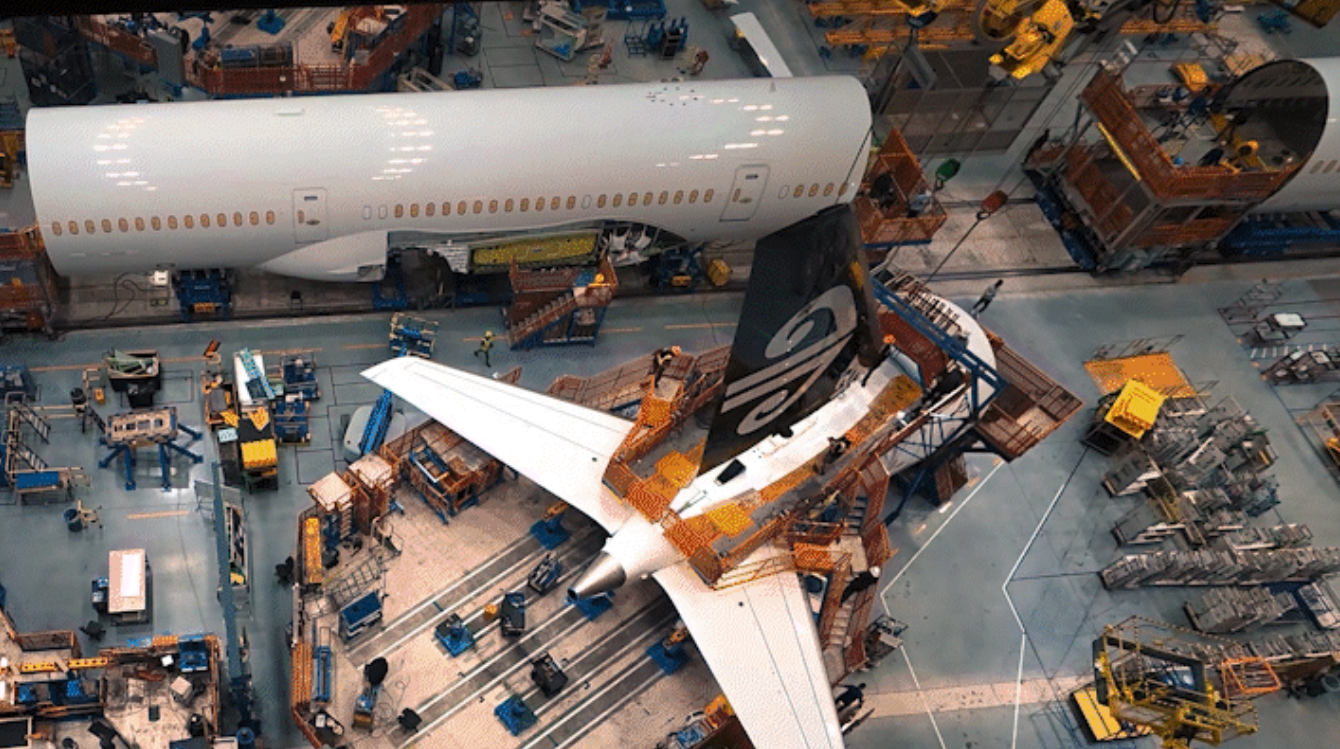


The FAA has approved higher takeoff weights for Boeing’s 787-9 and -10, steps the manufacturer said will improve the variants’ payload and range.
Boeing said Tuesday that slightly heavier Dreamliners will preserve the type’s fuel efficiency while enabling carriers to support new routes that were not possible or economical before.
“We started this effort after airlines sent Boeing a clear message: they wanted greater flexibility,” 787 chief project engineer John Murphy said in a news release. “Some wanted the 787-10 to fly longer missions; others wanted the 787-9 to carry additional payload with range trade-offs. Boeing designed a solution that delivers both.”
All 787-9s and 787-10s assembled as of December 2025 are structurally capable of the higher weights. Airline customers can choose to activate that capability at delivery or later, Boeing officials said, allowing them to match performance needs with route economics.
For the 787-9, a roughly 10,000-pound increase in weight enables about three metric tons of extra payload, or more than 300 nautical miles of additional range. For the -10, a 14,000-pound increase translates to five metric tons of extra payload or over 400 nautical miles of additional range.
The first jets built with the increased maximum takeoff weight (iMTOW) capability are progressing through ticketing and delivery. Boeing said Air New Zealand will be among the first carriers to use the option.
“This upgrade gives us greater ability to carry additional payload on our ultra long-haul routes – an important enabler for our network ambitions, supporting trade, tourism, and better connectivity for New Zealand,” said Baden Smith, Air New Zealand’s general manager of strategy, networks, and fleet. “We’re looking forward to bringing this new airplane into our fleet.”