

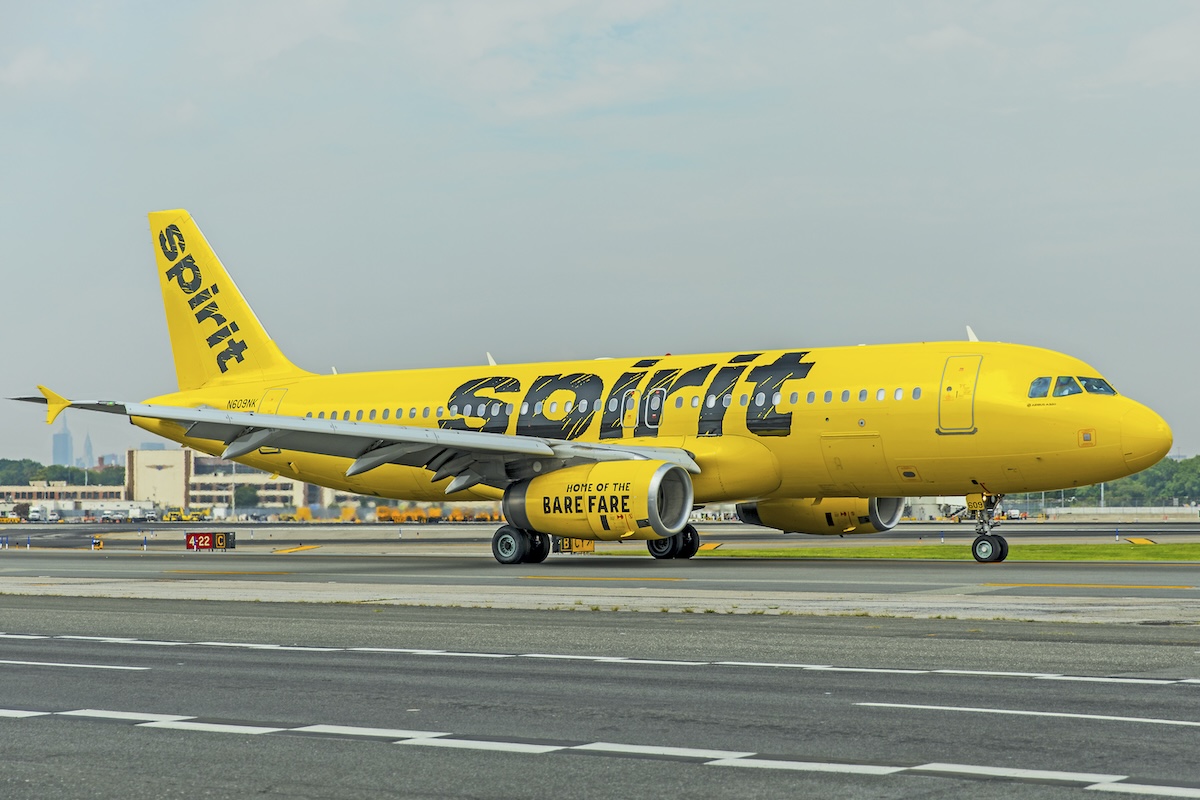


A tumultuous year and a half-long journey to rebuild Spirit Airlines could reach an abrupt and unsuccessful end within days barring last-minute intervention from the federal government.
The Wall Street Journal reported Friday that the ultra-low-cost carrier is preparing to cease operations after negotiations for a $500 million rescue package fell apart. According to the Journal, Spirit was not able to get its creditors and the Trump administration to agree on the terms of the deal.
It was not immediately clear Friday afternoon if the talks are conclusively over, or if the various parties, including Spirit’s backers, could return to the negotiating table.
If Spirit does fold within the coming days or weeks, thousands of employees could lose their jobs, and ticket holders would almost certainly see their bookings canceled.
Spirit’s predecessor company was founded in 1964; it has been flying under its current name since 1992. The carrier saw explosive growth in the 2000s and 2010s, eventually becoming the largest ultra-low-cost carrier in the U.S. and, for a time, the most profitable airline in the country.
Many customers readily embraced Spirit’s very low prices, even while sometimes deriding its no-frills approach.
But Spirit’s business model, which focuses on rigidly controlling expenses, began to falter during and after the COVID-19 pandemic, when the cost of everything from labor to aircraft parts surged.
The airline declared bankruptcy in late 2024 and reemerged the following year, apparently in better financial health. But analysts worried that Spirit had not dealt with the underlying structural problems that left the company vulnerable to rising prices, and their concerns were validated only months later when, in August 2025, the carrier again filed for bankruptcy protection.
This time around, Spirit would make more meaningful changes. It rejected aircraft leases, terminated routes, furloughed employees, laid off some corporate staff, and secured temporary pay cuts from the union representing its pilots. Plans approved by a U.S. bankruptcy court called for Spirit to become a much smaller, more efficient airline, with an emphasis on paid upgrades, such as larger seats.
Officials had targeted late spring or summer for Spirit’s exit from bankruptcy. But those projections were upended in March, when Iran moved to close the Strait of Hormuz in response to attacks from the U.S. and Israel. In the months since, the price of oil has increased sharply, and with it the price of jet fuel.
While higher fuel prices have dinged almost every airline worldwide, the impact is greater for budget carriers, who depend on a low-cost environment to stay in the black.
Last month, reports suggested that Spirit, stung by higher prices, was looking at liquidation. Then came a lifeline, in the form of talks with the Trump administration and a potential $500 million rescue package.
President Donald Trump confirmed the talks and said he would like to save Spirit if possible. He also raised the prospect of buying Spirit outright and running it as a state asset.
Earlier this week, however, another setback materialized when some of Spirit’s creditors raised concerns about a bailout’s effect on the value of their claims. In exchange for aid, the federal government was looking to obtain warrants for a stake in the company, which could have diluted or otherwise adversely affected the other stakeholders’ positions.
Asked about the prospects for a deal on Friday, Trump told CBS News that he’d still like an agreement to come together. He said there would be an announcement some time later Friday.