











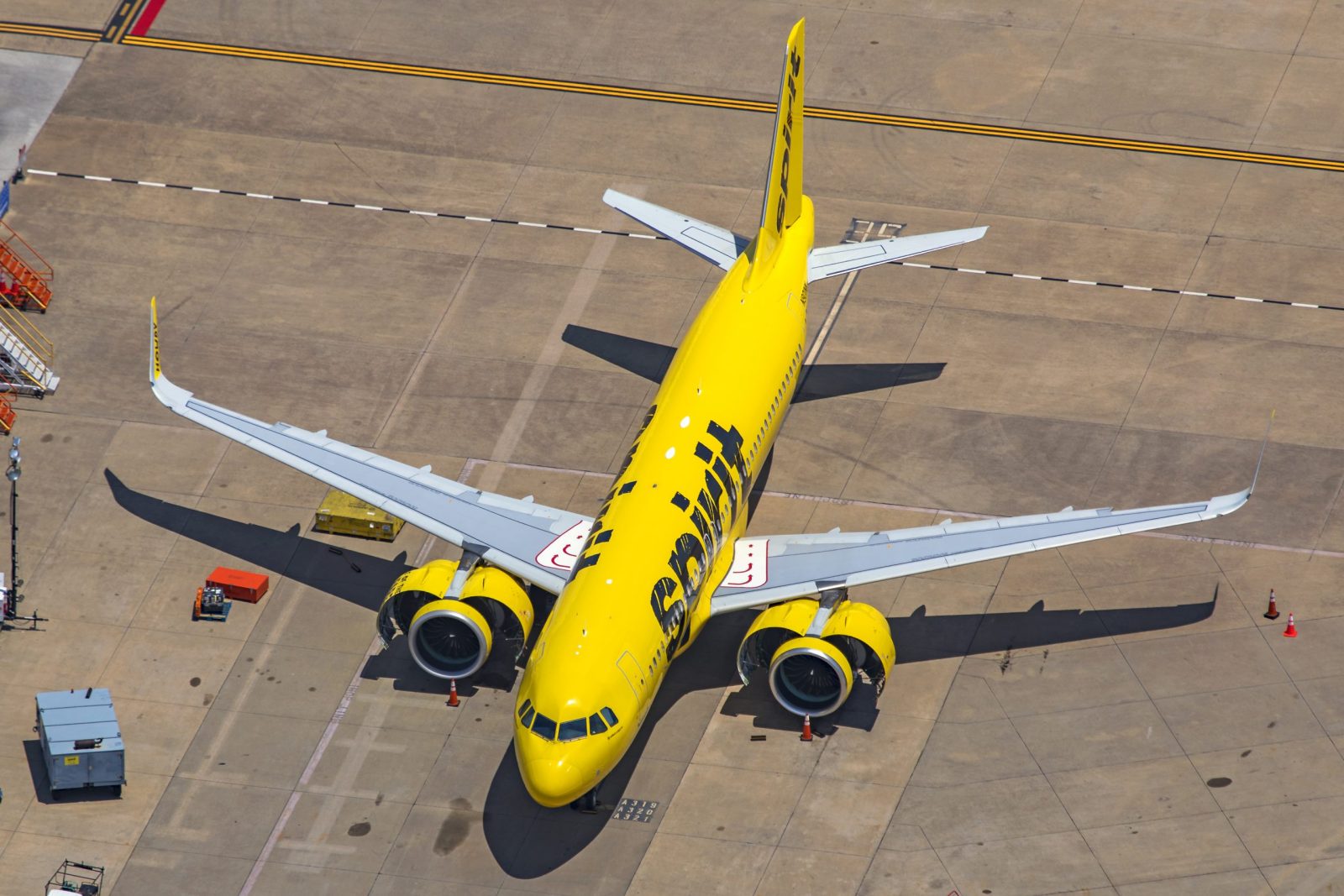


Spirit is winding down operations after failing to reach an agreement with the Trump administration for an emergency bailout.
As of Saturday morning, all Spirit flights have been canceled, according to a message posted on the carrier’s website. Passengers who expected to fly with Spirit on Saturday have been told not to go to the airport.
“It is with great disappointment that on May 2, 2026, Spirit Airlines started an orderly wind-down of our operations, effective immediately,” officials said in a statement. “To our guests: all flights have been canceled, and customer service is no longer available. We are proud of the impact of our ultra-low-cost model on the industry over the last 34 years and had hoped to serve our guests for many years to come.”
The airline said that while it cannot help customers rebook flights with another carrier, it will “automatically process refunds for any flights purchased through Spirit with a credit or debit card to the original form of payment.”
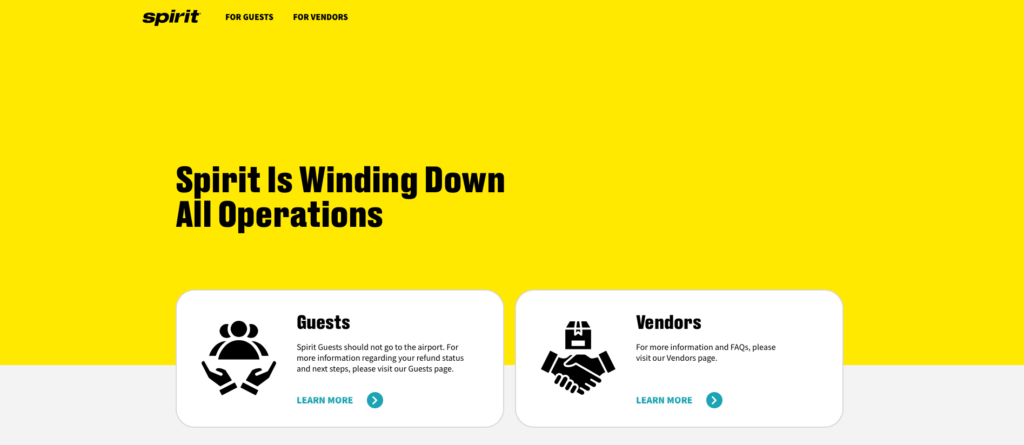
Customers who booked flights through a travel agent should contact the agent directly for a refund, officials said.
Spirit’s website now includes phone numbers and an email address for ticket holders requiring further assistance.
End of an Era
Early Saturday morning, Spirit President and CEO Dave Davis confirmed the shutdown is linked to the rising cost of jet fuel and “other pressures” that significantly impacted the carrier’s financial outlook.
“For more than 30 years, Spirit Airlines has played a pioneering role in making travel more accessible and bringing people together while driving affordability across the industry,” Davis said in a statement. “In March 2026, we reached an agreement with our bondholders on a restructuring plan that would have allowed us to emerge as a go-forward business. However, the sudden and sustained rise in fuel prices in recent weeks ultimately has left us with no alternative but to pursue an orderly wind-down of the company. Sustaining the business required hundreds of millions of additional dollars of liquidity that Spirit simply does not have and could not procure. This is tremendously disappointing and not the outcome any of us wanted.”
Davis went on to thank the Trump administration for its “extraordinary” efforts to keep Spirit functioning, and singled out Commerce Secretary Howard Lutnick, the Commerce Department, and the Transportation Department for praise.
He also thanked Spirit’s employees, union groups, aircraft lessors, and investors, including Citadel, Cyrus Capital, and Ares Management Corp., for “working with us on tangible solutions to restructure our business.”
What Comes Next?
Spirit has around 10,000 employees. It was not immediately clear what kind of compensation or severance, if any, they will receive now that the carrier is heading toward liquidation.
Spirit has been in bankruptcy protection since August, but it entered a new phase of financial turbulence in March after jet fuel prices nearly doubled. Executives were reportedly looking at liquidation by mid-April, but a lifeline appeared in the form of talks with the Trump administration, which floated the possibility of a $500 million taxpayer-funded rescue.
While other administration officials declined to comment on the proceedings, President Donald Trump sounded an optimistic note as late as last week, telling reporters that he would like to save Spirit if possible. He also raised the idea of buying the airline outright.
According to reports from The Wall Street Journal, talks hit an impasse when some of Spirit’s creditors objected to the terms of the rescue package.
Analysts have long predicted that if Spirit goes out of business, consumers will lose a powerful force exerting downward pressure on ticket prices.
Several U.S. airlines have announced “rescue fares” or similar offers for stranded Spirit passengers, including American Airlines, United, Southwest, and Frontier. The offers began Saturday and extend from several days to two weeks, depending on the airline. Similar deals are being made available to Spirit employees.
American said it is in touch with the Trump administration and will review “opportunities to add additional capacity,” which could include scheduling more flights and using larger aircraft on certain routes.