









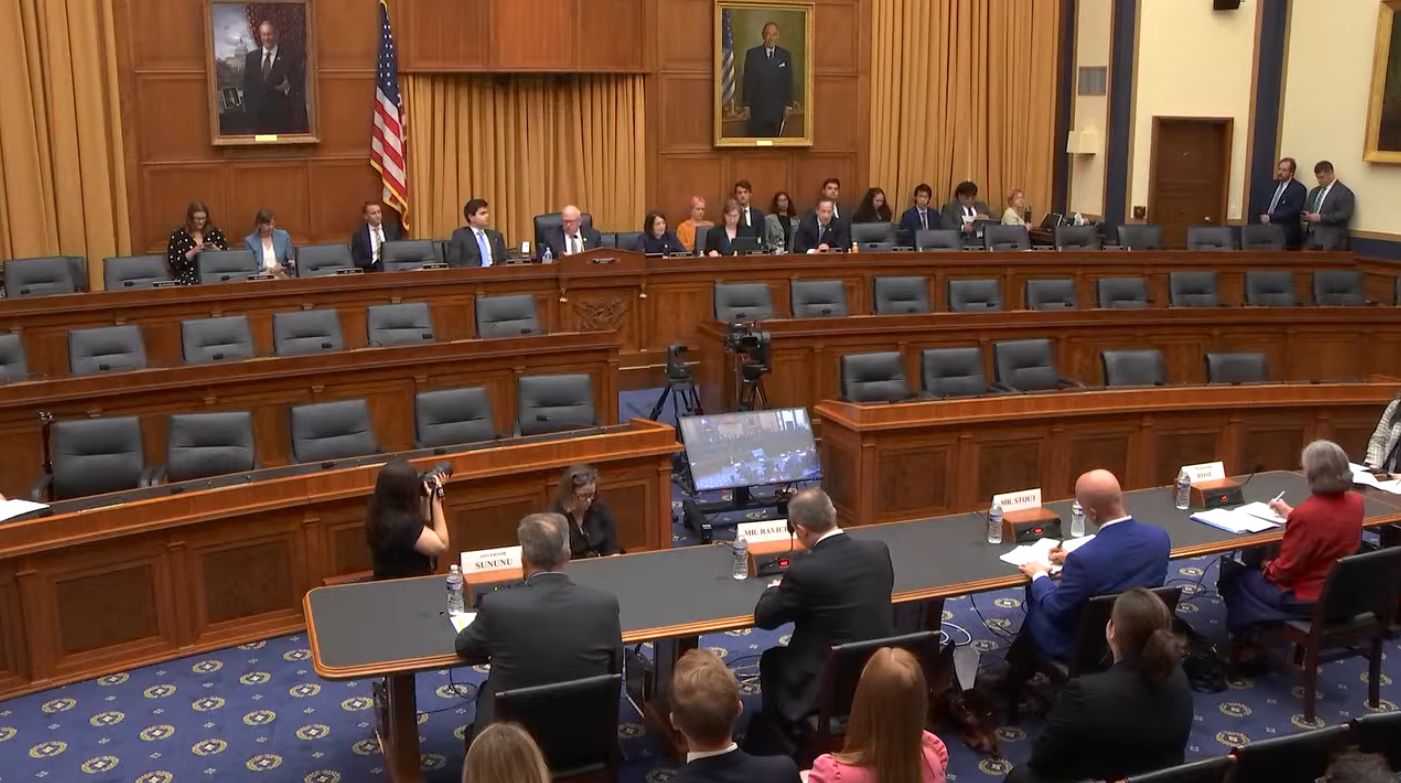


Lawmakers and experts put forward two dramatically different evaluations of the U.S. airline industry at a House subcommittee hearing Wednesday.
To the panel’s Republican members, as well as Airlines For America CEO Chris Sununu, airline deregulation, begun in the 1970s, has expanded access to flights, improved the customer experience, and delivered more flexibility for travelers. Competition among U.S. airlines is robust, they argued, and most shortcomings can be attributed to infrastructure bottlenecks, poor federal policymaking, and interference by past administrations.
But to the subcommittee’s Democrats, the airline sector has taken a massive step backwards. Carriers are increasingly acting as a cartel, they argued, and consolidation is gradually raising prices, not containing them.
“It’s no secret that flying has gotten worse over the years,” Rep. Becca Balint, D-VT, said in a blistering opening statement. “Tickets cost more, more flights are canceled, and everything from seat selection to carry-ons are now ‘perks’ that you get to pay for.”
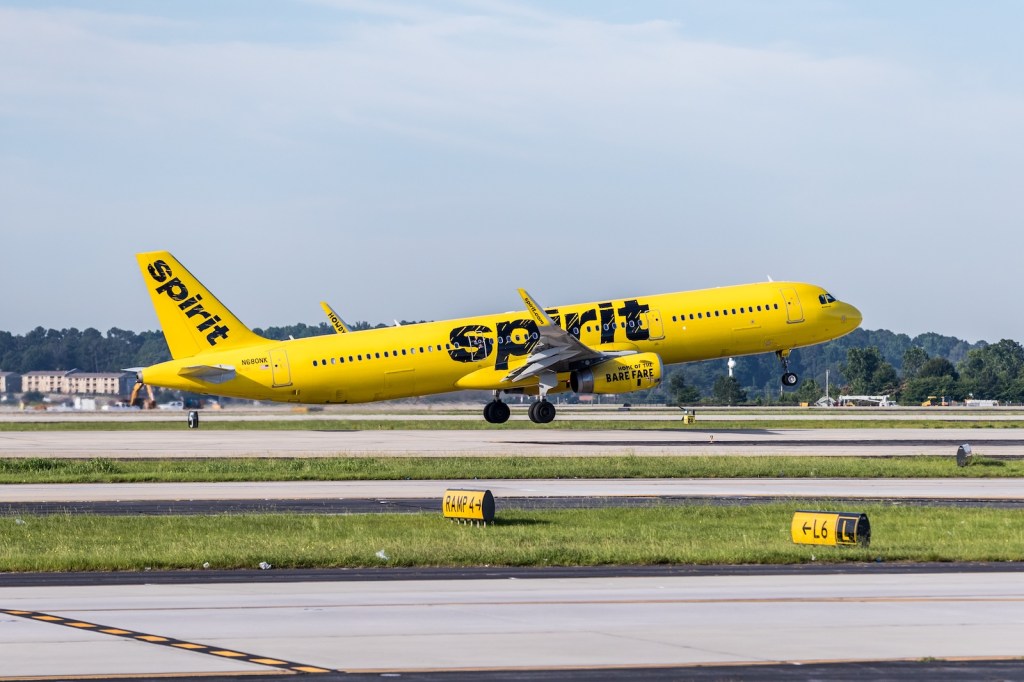
The House Subcommittee on the Administrative State, Regulatory Reform, and Antitrust staged Wednesday’s hearing as a forum on competition in the airline industry, consolidation, and, to a lesser extent, the merits of antitrust enforcement. Discussions ranged from the demise of Spirit Airlines last month to the prospect of market-altering mergers, like the one advanced by United and shut down by American Airlines in April.
Some Republicans, as well as witness Kristian Stout, director of innovation policy at the International Center for Law and Economics, scrutinized the Biden administration’s opposition to JetBlue’s proposed acquisition of Spirit, and the federal court that ultimately blocked it. A combination with JetBlue might have saved the ultra-low-cost airline from its eventual collapse, they said, a possibility regulators failed to grasp at the time.
Nancy Rose, a professor of applied economics at Massachusetts Institute of Technology and a former deputy assistant attorney general in the Justice Department’s Antitrust Division, pushed back on that argument, noting that JetBlue did not plan to retain Spirit’s budget-friendly cost structure.
“Antitrust did not kill Spirit Airlines,” she said.
Rose, along with several Democrats, cited statements from Spirit’s former leaders blaming the airline’s collapse on the sudden spike in jet fuel prices brought about by Iran’s closure of the Strait of Hormuz.
Rep. Jamie Raskin, D-MD, directed blame at President Donald Trump, not only for starting the war against Iran in February but for allegedly turning the federal merger approval process into a “grift.”
“Antitrust practitioners talk about a ‘Trump transaction tax,’ the recognition that merger approval depends less on objective considerations and competition factors and more on companies’ willingness to curry subject political and financial favor with the president and the money-making operation being conducted at the White House,” he said.
Question of Access
Perhaps the strongest argument in favor of deregulation is the fact that more Americans fly on commercial airlines today than in the days of the Civil Aeronautics Board.
Timothy Ravich, senior counsel at law firm Tressler LLP, related a story about the deregulation hearings of the 1970s, when a Boston resident asked Senator Ted Kennedy why he was so concerned with air carriers when the constituent himself had never been able to fly with one. Kennedy replied that that was exactly why he was pushing for changes.
But unlike in Kennedy’s day, Ravich said, the factors most pertinent to healthy competition are not fares and routes, but airport infrastructure, capacity, and access to slots and gates.
“A carrier cannot compete without access,” he said. “Access to gates matters. Access to terminals matters. Infrastructure matters.”
Sununu took a similar position, arguing for comprehensive air traffic control modernization, which has been a major focus of the current Transportation Department and Transportation Secretary Sean Duffy. Congress has allocated over $12 billion for the effort, but that figure is less than half of what the DOT is asking for to complete its ATC overhaul.
Another point of contention at Wednesday’s hearing was the numerous consumer protection regulations advanced by the Biden administration in 2024, including a rule that would have required carriers to refund customers set amounts in cash for lengthy delays. Most of those directives were struck down by courts or withdrawn voluntarily by the DOT after the change in administrations in 2025.
Republicans argued that piling on mandates hurts the low-cost carriers that serve lower-income customers and exert downward pressure on fares generally.
“Every time we in Washington or our agencies create new rules, new nice-to-have, socially interesting and responsible rules, we do not disfavor the larger airlines,” said Rep. Darrell Issa, R-CA. “We in fact hurt the very entities like Spirit that want to offer a low budget and do not necessarily have the means of a United or an American.”
Democrats, however, defended the Biden-era rules, and said they would have returned half a billion dollars to consumers per year. Airlines and the trade groups representing them lobbied hard against these regulations to safeguard their profits, Balint remarked, and found a willing collaborator in the current president.