








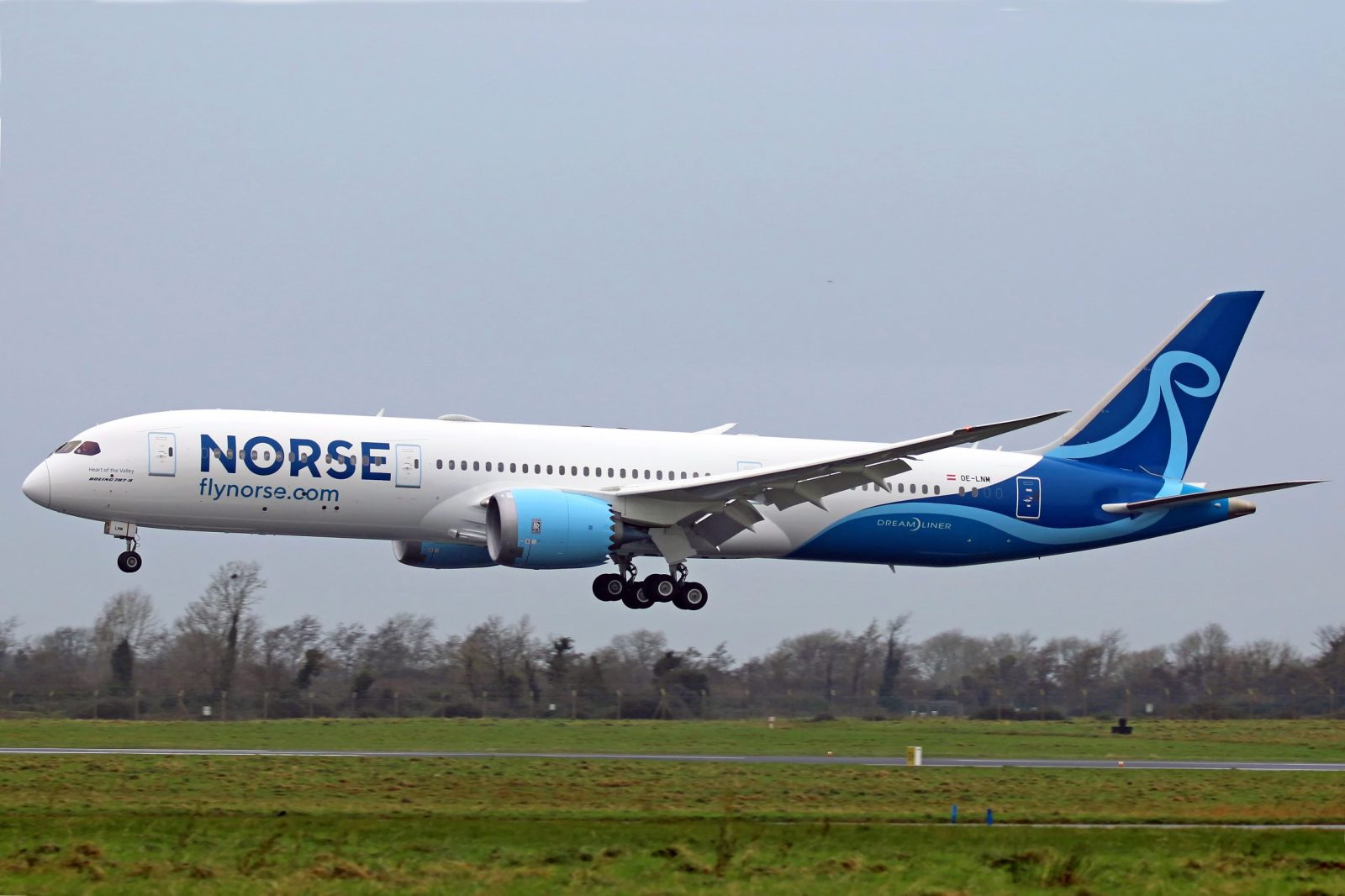

After close to a year of dire financial warnings, Norway’s Norse Atlantic Airways said Wednesday that its situation is “critical” and that it must obtain short-term financing to continue operations.
The Arendal-based carrier has struggled with higher jet fuel prices brought on by the war in Iran and the closure of the Strait of Hormuz. In the months since the war started, the airline has cut staff, furloughed some crew members, suspended unprofitable routes, and instituted temporary pay reductions for some non-flying crew, but these steps have apparently not put Norse Atlantic back on solid ground.
“[The company’s financial condition is] dependent on securing financing to meet its short term liquidity needs and to continue its operations,” officials said in a statement. “Norse, supported by its advisors, has explored various strategic alternatives and entertains discussions for a potential takeover.”
“Norse is also engaged in discussions with selected parties on short term financing, however, there can be no assurances that such discussions will result in a viable solution,” the message continued. “Norse will provide further information as and when appropriate.”
Rising fuel costs have set back airlines around the world, but the squeeze is arguably worst in Europe, since the continent depends mainly on Gulf oil and has little domestic refining capacity. The crisis has forced Latvia’s airBaltic into bankruptcy, teed up EasyJet’s sale to Apollo Global Management, and inflicted considerable damage on Lufthansa’s core brand.
It was not immediately clear if Norse Atlantic has any candidates in mind for a potential merger. The carrier is not part of any global airline alliance, though it partners with operators such as EasyJet, Norwegian Air Shuttle, and Pegasus through its Norse Connections program.
Bloomberg reported in 2023 and 2024 that the carrier was weighing alliances with larger airlines, possibly through an equity stake, but none were named.
Norse Atlantic operates only long-haul flights. Its network has been adjusted multiple times over the last year in an effort to reduce costs.