











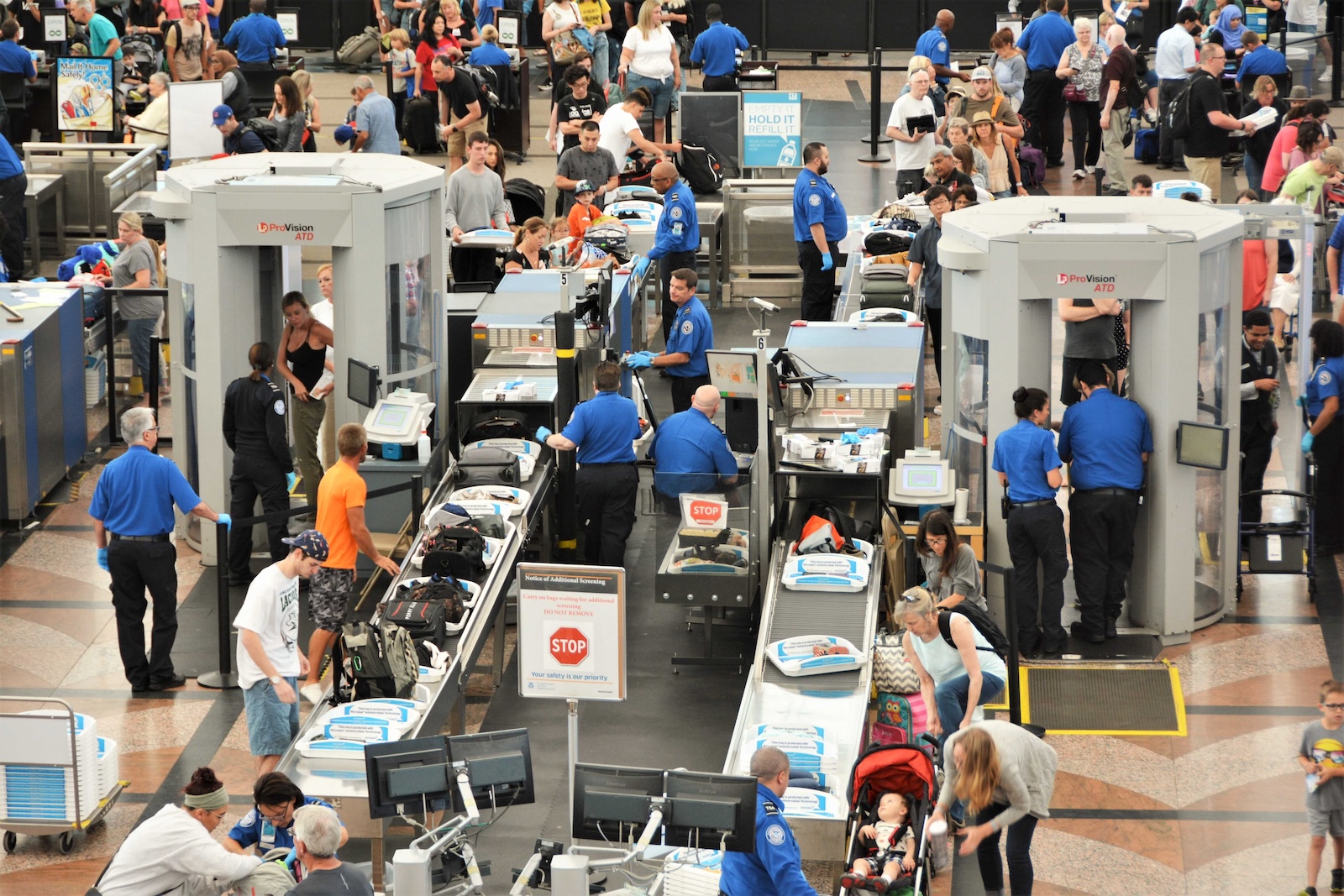


The TSA is pulling the plug on a recently launched program that would have allowed airports to use private contractors for passenger screenings and other security operations.
The agency on Monday announced its “Horizon 25 Strategy,” which calls for modernizing security checkpoints, improving the customer experience, and streamlining the acquisition of new technology. As part of the new plan, Gold+, which debuted in May, will be abandoned.
“An evolved Screening Partnership Program will replace TSA Gold+ to better harness the role of the private sector in delivering a safer, more secure, and more efficient aviation system,” the agency said.
The SSP, which has been in place since 2004, allows qualifying airports to use private companies for checkpoint screenings. Gold+ would have gone a step further by placing broader operations and specialized technology in the hands of private firms, though federal oversight would have remained in place and private staff would have been required to meet official TSA standards and use approved equipment.
As of July, at least two airports had joined Gold+, and a third was strongly considering it. Tampa International Airport in Florida and Charleston International Airport in South Carolina both confirmed to AirlineGeeks that they had opted in to the program, and Des Moines International Airport said it was “exploring participation.”
Gold+ was still in development prior to Monday’s announcement, and no airport had formally transitioned to its privatized model.
Just hours before the program was spiked, Tampa International Airport said it would continue to use TSA officers for security operations. Opting in to Gold+ allowed the airport to evaluate the program’s requirements and provisions in detail, it said, and after a careful review, a decision was made not to join.
“We approached Gold+ carefully and deliberately, with a focus on our passengers, employees, airline partners, and long-term operational excellence,” airport CEO Michael Stephens said in a news release. “We are thankful to the TSA for bringing us the opportunity to learn more about a program with the potential to enhance operational resiliency and innovation, and to reach an informed decision.”
The American Federation of Government Employees (AFGE), which represents around 47,000 TSA officers, strongly opposed Gold+ and sharply criticized the airports that expressed interest in it. The union said the kind of privatization envisioned by Gold+ would undermine airport security and put TSA officers’ jobs at risk. Earlier this month, AFGE sued the TSA for records about the development of the program, which it said was put together with minimal transparency.
On Monday, the union applauded Tampa’s withdrawal and said the other airports that had opted in to Gold+ should follow its lead.
The TSA has not said what an “evolved” SSP might look like, or if it would incorporate some aspects of Gold+.
In a statement, Administrator David P. Cummins said the agency will not sacrifice advances in one area for progress in others.
“TSA does not have to choose between a secure checkpoint, an efficient checkpoint, and an elevated passenger experience,” Cummins said. “Through Horizon 25, TSA can, and will, deliver all three at once.”