









Stories

Philadelphia Airport Adds Airplane Safety Net

Philadelphia International Airport recently added an Engineered Material Arresting System to Runway 8-26 that can slow and stop an airplane.

The EMAS at Philadelphia International Airport. (Photo: Philadelphia International Airport)

Work has been completed on a new runway safety feature at Philadelphia International Airport.

The city’s first Engineered Material Arresting System, now located at the end of Runway 8-26, is designed to stop overrunning aircraft traveling at up to 80 miles per hour.

The feature looks like an extension of the runway, but it contains special crushable materials that collapse under the weight of an aircraft. The materials drag down the landing gear and safely decelerate the airplane.

Engineered Material Arresting Systems are used on runways without a large surrounding safety area to ensure that runaway airplanes do not slide onto the ground, crash through a fence, or collide with objects within or beyond the airport’s boundaries.

Runway 8-26 is a 5,000-foot-by-150-foot commuter runway for general aviation. It is located on the east side of the airport.

The project to install the EMAS began in September 2024 and received about $8.5 million in funding from a FAA infrastructure grant. The work involved grading the project site, putting in utilities, building stormwater management systems, and installing the EMAS bed.

“To date, EMAS has safely stopped more than 20 overrunning aircraft carrying over 430 crew and passengers,” said FAA Administrator Bryan Bedford. “It is one more tool that helps us keep travelers, crews, and aircraft safe – and we’re glad to see it in place here.”

There are currently 117 material arresting systems installed at over 60 airports in the U.S.

Zach Vasile

Zach Vasile is a writer and editor covering news in all aspects of commercial aviation. He has reported for and contributed to the Manchester Journal Inquirer, the Hartford Business Journal, the Charlotte Observer, and the Washington Examiner, with his area of focus being the intersection of business and government policy.

Greenland’s Nuuk Airport Suspends International Flights

International flights have been suspended at Nuuk Airport in Greenland because staff conducting security screenings have not received proper training.

United arrives in Nuuk
United touches down in Nuuk (Photo: United Airlines)

International flights have been suspended at the airport serving Greenland’s capital city.

In a statement, Greenland Airports, which owns and operates all civilian airports in the territory, said Danish transportation officials have suspended security checks for international travelers passing through Nuuk Airport because staff there have not received adequate training. Without security checks in place, international flights cannot operate, the agency said.

“We are working intensively with the Danish Transport Authority to address the specific conditions identified in the training,” the statement read. “The goal is to restore normal operations for international traffic as soon as possible.”

The suspension went into effect Tuesday with little advance notice. According to CBS News, a United flight traveling from Newark, New Jersey, to Nuuk had to turn around while over Canada.

Domestic flights to and from Nuuk are not affected and are operating as normal.

Greenland Airports said that, “in the near future,” travelers departing Greenland on certain international routes will be able to be screened at Kangerlussuaq Airport and Narsarsuaq Airport.

Nuuk, Kangerlussuaq, and Narsarsuaq are the only airports in Greenland with runways large enough to accommodate large passenger aircraft.

Kangerlussuaq was the largest and busiest airport in Greenland in 2024, but that distinction may shift to Nuuk this year after an ambitious renovation and expansion program. Air Greenland, the territory’s state-owned flag carrier, also relocated its main hub from Kangerlussuaq to Nuuk.

Tuesday’s suspension of service at Nuuk came one day after United announced it would resume summer flights to Greenland in 2026. The seasonal route is the only nonstop flight between the U.S. and Greenland.

Zach Vasile

Zach Vasile is a writer and editor covering news in all aspects of commercial aviation. He has reported for and contributed to the Manchester Journal Inquirer, the Hartford Business Journal, the Charlotte Observer, and the Washington Examiner, with his area of focus being the intersection of business and government policy.

Delta to Pay $79 Million in Fuel Dumping Settlement

Settlement resolves claims after Delta Flight 89 released jet fuel over neighborhoods and schools during 2020 emergency return.

Delta 777-200
A Delta 777. (Photo: AirlineGeeks | William Derrickson)

Delta has agreed to pay nearly $79 million to resolve a class action lawsuit stemming from the 2020 fuel dump incident that affected thousands of Los Angeles-area residents.

The settlement, which received preliminary approval from U.S. District Judge John A. Kronstadt, resolves claims brought after Delta Flight 89 released approximately 15,000 gallons of jet fuel at low altitude over neighborhoods near Los Angeles International Airport.

The aircraft, a Boeing 777-200 bound for Shanghai, was forced to return to Los Angeles shortly after takeoff due to an engine issue.

Flight 89 departed Los Angeles on January 14, 2020, and experienced a compressor stall in its right engine shortly after takeoff. The crew opted to return to Los Angeles and jettisoned fuel to reduce landing weight.

Lower-Than-Normal Altitude

According to the lawsuit, the fuel dump occurred at a lower altitude than standard procedure and over populated areas, resulting in exposure at several schools and across thousands of homes. The aircraft landed safely with no injuries reported onboard.

Court filings show that plaintiffs alleged trespass, nuisance, and negligence after the fuel landed on tens of thousands of homes, schools, and properties across Los Angeles and Orange counties. More than 60 people, including children, were treated at area schools following the incident. Residents also reported lingering property damage and contamination.

Under the agreement, Delta will create a non-reversionary settlement fund of $78.75 million to compensate affected property owners and residents. The settlement was reached following more than three years of litigation.

The carrier continues to deny liability and wrongdoing but said it agreed to settle in order to avoid further litigation costs and uncertainty.

The court has set a final approval hearing for March 2, 2026. If approved, claims administration will be overseen by Verita Global, LLC, which will notify eligible residents and distribute payments.

Following the incident, the Federal Aviation Administration launched an investigation and noted that standard fuel-dumping procedures require aircraft to release fuel at higher altitudes and over unpopulated areas so it can safely disperse before reaching the ground.

Ryan Ewing

Ryan founded AirlineGeeks.com back in February 2013 and has amassed considerable experience in the aviation sector. His work has been featured in several publications and news outlets, including CNN, WJLA, CNET, and Business Insider. During his time in the industry, he's worked in roles pertaining to airport/airline operations while holding a B.S. in Air Transportation Management from Arizona State University along with an MBA. Ryan has experience in several facets of the industry from behind the yoke of a Cessna 172 to interviewing airline industry executives. Ryan works for AirlineGeeks' owner FLYING Media, spearheading coverage in the commercial aviation space.

Aleutian, Argentum Partner On Planned Route Expansion

Alaska’s Aleutian Airways is partnering with its sister company Argentum Airways to restore lost connectivity in the mainly rural state.

Aleutian Airways airplane in Anchorage
An Aleutian Airways airplane at Anchorage Airport. (Photo made available through Wikimedia Commons)

Alaska’s Aleutian Airways is partnering with its sister company to restore lost connectivity in the mainly rural state.

Aleutian on Tuesday announced an alliance with Argentum Airways, which was set up by private investment firm Wexford Capital using assets acquired from the defunct Florida-based Silver Airways. The linkup is expected to support the expansion of air service in the Last Frontier, with Silver’s old ATR-600s deployed to destinations once served by other airlines, though the carriers have not said exactly which routes they are looking to take over or resume.

Aleutian officials said a number of former Silver employees with ATR-600 expertise have joined Argentum, which will make it easier to bring the turboprop aircraft back into commercial service.

Silver Airways ATR 72
A Silver Airways ATR 72-600 aircraft. (Photo: AirlineGeeks | William Derrickson)

Both Aleutian and Argentum are operated by Sterling Airways. Sterling, in turn, is a portfolio company of Wexford Capital.

The long-term plan is to have Argentum operate shorter, high-frequency routes using the ATR-600s, while Aleutian will continue to serve the Aleutian Islands chain with its Saab 2000s. The combination is expected to help reconnect many cities and towns that have been left without reliable air service since the collapse of Ravn Alaska, once the largest of Alaska’s in-state carriers. Ravn pared back routes in the years following its 2020 revival and ceased all operations earlier this month.

The two airlines said the U.S. Department of Transportation and the FAA will have to approve their partnership and the planned route expansion.

Zach Vasile

Zach Vasile is a writer and editor covering news in all aspects of commercial aviation. He has reported for and contributed to the Manchester Journal Inquirer, the Hartford Business Journal, the Charlotte Observer, and the Washington Examiner, with his area of focus being the intersection of business and government policy.

Airbus Makes A220 Delivery With 50% SAF

Air France-KLM’s 46th Airbus A220 arrived in Paris on Monday after a flight powered in part by sustainable aviation fuel, commonly known as SAF.

Air France A220
An Air France A220 (Photo: AirlineGeeks | William Derrickson)

Air France-KLM’s 46th Airbus A220 arrived in Paris on Monday after a flight powered in part by sustainable aviation fuel, commonly known as SAF.

The aircraft used a fuel blend containing 50% SAF to fly from Airbus’ site in Mirabel, Quebec, across the Atlantic to France. It was the first time an A220 has used that blend during its delivery.

SAF reduces carbon emissions by at least 65% over a commercial aircraft’s lifetime.

All Airbus aircraft currently in production can operate with up to 50% SAF. The manufacturer is aiming for compatibility at up to 100% SAF by 2030.

Airbus Canada CEO Benoît Schultz said the company’s Mirabel site is projected to cut carbon emissions by around 440 tons this year through the use of almost 45,000 gallons of SAF integrated into operations.

Air France-KLM is among the world’s largest buyers of SAF. The airline said its newest A220, nicknamed “Vaison-La-Romaine,” will reduce greenhouse gas emissions by 25 tons during its lifetime compared to an aircraft using fossil fuels.

Air France’s first Airbus A220. (Photo: Air France)

Airbus and Air France-KLM said the ferry flight is part of a broader partnership between the two companies aimed at financing the purchase of SAF, which can cost between two and seven times as much as conventional jet fuel. Air France gives Airbus employees traveling for work the option of donating money toward the purchase of SAF, which the carrier said offsets some of the environmental impact of their trip.

Airbus estimates that, since the beginning of the partnership in November 2023, it has cut its emissions by more than 2,000 tons of carbon through the purchase of over 670 tons of SAF.

SAF can be produced from sources such as plants, algae, tallows, solid biomass, waste oils, and some natural vegetable oils.

Air France-KLM has its own standards for the types of SAF development it supports and only uses fuel that does not compete with human food supply, does not contribute to deforestation, and is not produced from palm oil.

Zach Vasile

Zach Vasile is a writer and editor covering news in all aspects of commercial aviation. He has reported for and contributed to the Manchester Journal Inquirer, the Hartford Business Journal, the Charlotte Observer, and the Washington Examiner, with his area of focus being the intersection of business and government policy.

Southwest Partners With Taiwan’s EVA Air

Southwest has inked a new interline agreement with Taiwan’s EVA Air for flights between North America and Asia from a handful of markets.

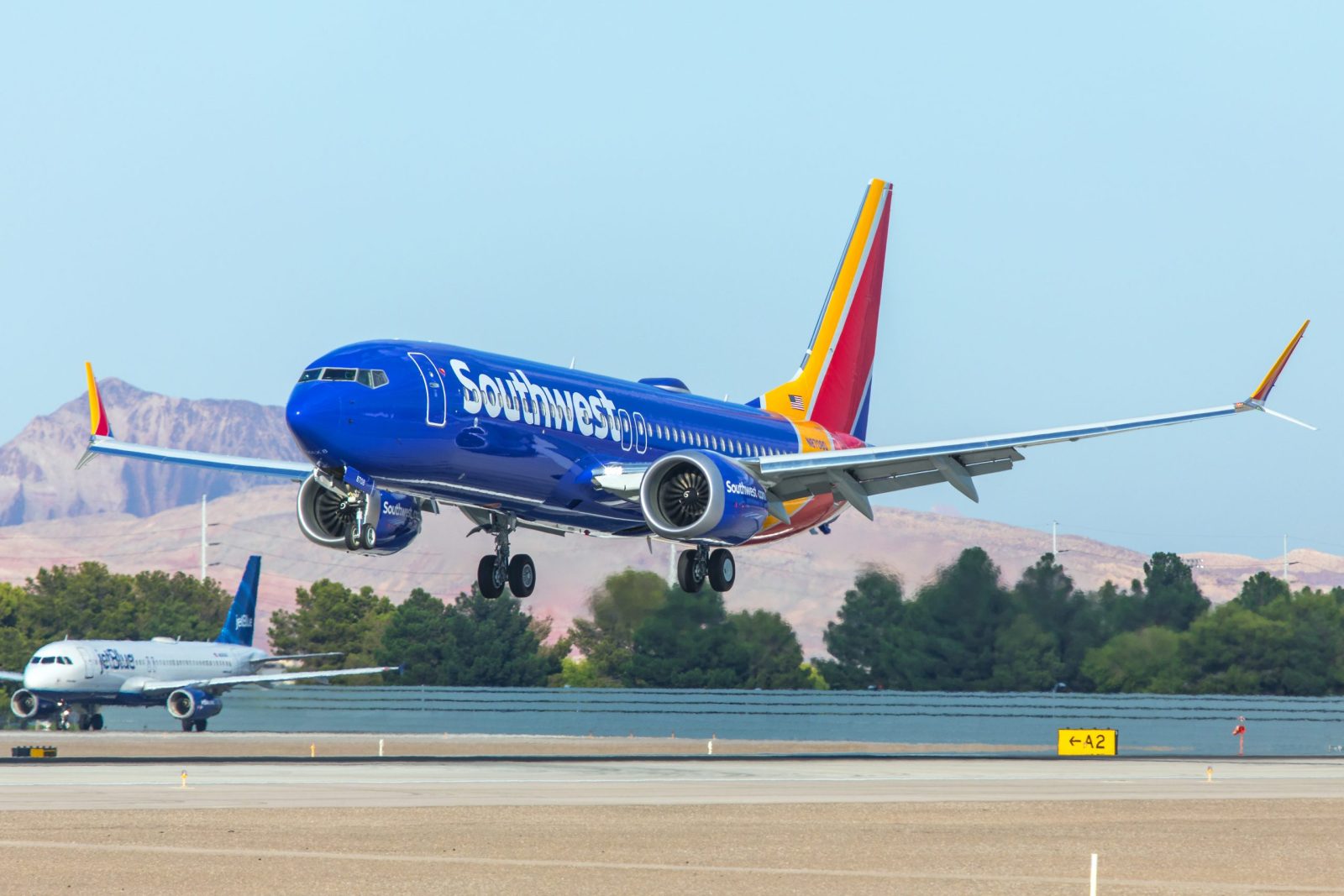
A Southwest Boeing 737-700 (Photo: Shutterstock | Darryl Brooks)

Southwest has inked a new interline agreement with Taiwan’s EVA Air for flights between North America and Asia.

In a statement, the Dallas-based carrier said customers will be able to book connections with Southwest- and EVA-operated flights to and from four U.S. gateways – Los Angeles, San Francisco, Seattle-Tacoma, and Chicago O’Hare. Consistent with the partners’ route networks, transpacific service will be provided by EVA, and Southwest will operate flights within the U.S.

Bookings became available on Tuesday.

EVA Air 777
An EVA Air 777-300ER in Los Angeles (Photo: AirlineGeeks | William Derrickson)

EVA has its main hub at Taoyuan International Airport in Taiwan. It operates short-haul flights to Japan, China, Southeast Asia, and the Philippines, and long-haul service to destinations in North America, India, Europe, and Australia.

The carrier has been expanding its presence in the U.S., and is set to launch nonstop service between Taipei and Dallas/Fort Worth in October.

EVA is Southwest’s third international and second Taiwanese partner, after China Airlines. Southwest also has an interline agreement with Icelandair.

Zach Vasile

Zach Vasile is a writer and editor covering news in all aspects of commercial aviation. He has reported for and contributed to the Manchester Journal Inquirer, the Hartford Business Journal, the Charlotte Observer, and the Washington Examiner, with his area of focus being the intersection of business and government policy.

Southwest Adds New Caribbean Routes

Southwest announced Tuesday that it will launch nonstop service to the Caribbean island of St. Maarten, its first new international destination since 2021.

Southwest 737-700
A Southwest Boeing 737-700. (Photo: AirlineGeeks | Katie Zera)

Southwest announced Tuesday that it will launch nonstop service to the Caribbean island of St. Maarten, its first new international destination since 2021.

Starting April 7, 2026, the carrier will fly once daily between Orlando, Florida, and St. Maarten, with Saturday and Sunday service from Baltimore/Washington International Airport in Maryland starting two days later.

Southwest will serve Princess Juliana International Airport on the Dutch side of the island, known as Sint Maarten. The other part of the island belongs to France and is referred to as Saint-Martin.

Southwest currently serves several destinations in the Caribbean, including Nassau, The Bahamas; Montego Bay, Jamaica; Punta Cana, Dominican Republic; San Juan, Puerto Rico; and Aruba. The carrier has signaled its intention to add more international destinations.

Southwest also announced two new seasonal domestic routes this week. Starting April 9, the carrier will operate flights between Knoxville, Tennessee, and Denver on Saturdays and Sundays, and between Chicago O’Hare and Panama City, Florida, on Saturdays only.

Zach Vasile

Zach Vasile is a writer and editor covering news in all aspects of commercial aviation. He has reported for and contributed to the Manchester Journal Inquirer, the Hartford Business Journal, the Charlotte Observer, and the Washington Examiner, with his area of focus being the intersection of business and government policy.

Frontier Adds 20 Routes

Frontier announced Tuesday that it will launch 20 new routes later this year and into early 2026, expanding its network across six U.S. cities.

Frontier A321neo
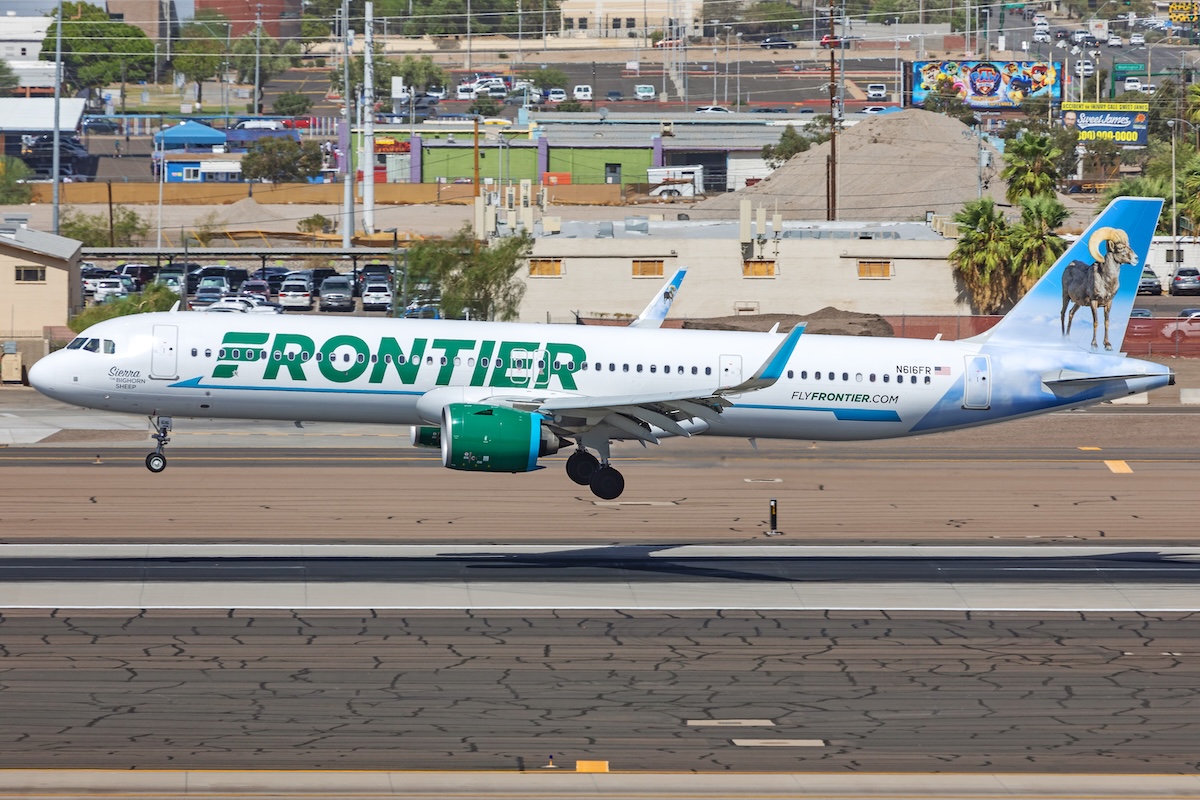
A Frontier Airbus A321neo (Photo: AirlineGeeks | William Derrickson)

Frontier announced Tuesday that it will launch 20 new routes later this year and into early 2026, expanding its network across six U.S. cities.

The additions come as the carrier works toward its stated goal of becoming the number one low-cost airline in the U.S.’s 20 largest metro areas.

Baltimore

Frontier is adding four routes from Baltimore/Washington International Airport. Service to Fort Lauderdale and Houston begins Nov. 20, each operating three times per week.

Flights to Cancun start Nov. 22 with weekly service, while Baltimore will also see twice-weekly flights to New Orleans beginning Feb. 12, 2026.

Charlotte, North Carolina

Charlotte Douglas International Airport will gain two new links. Service to Fort Lauderdale begins Nov. 21 with three weekly flights, while a new connection to Detroit launches Nov. 23 with twice-weekly service.

Dallas

From Dallas-Fort Worth International Airport, Frontier will add three weekly flights to Fort Lauderdale starting Nov. 20. Twice-weekly service to New Orleans will begin Feb. 13, 2026.

Detroit

Detroit Metropolitan Wayne County Airport will see several additions. Service to Fort Lauderdale begins Nov. 20 with three weekly flights, followed by new routes to Houston and Miami on Nov. 21, each operating three times per week.

A Frontier A320neo
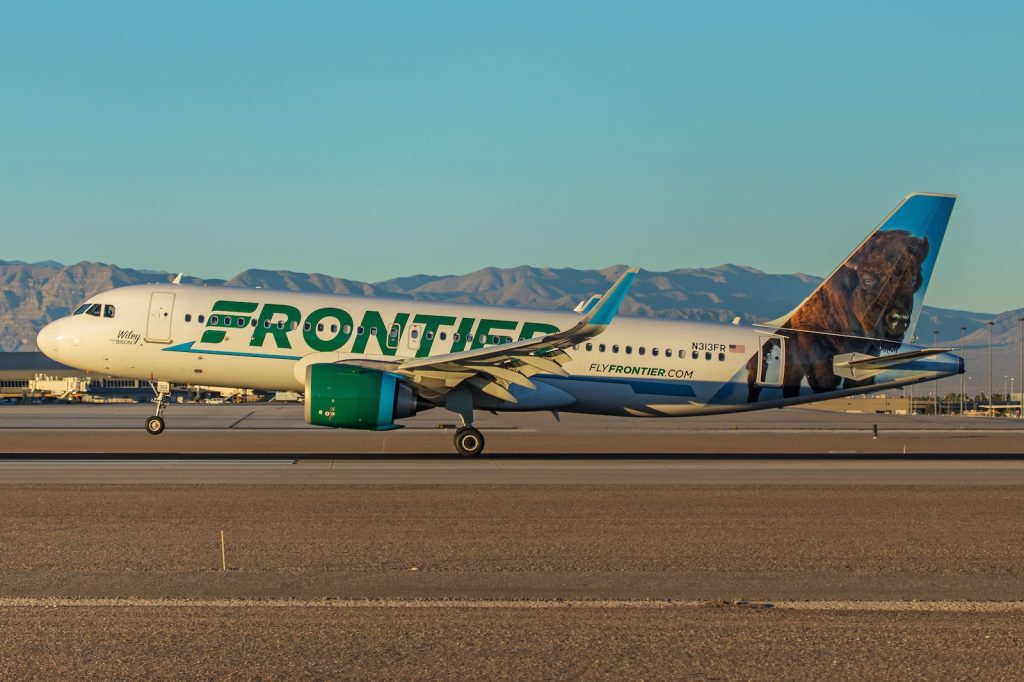
A Frontier Airbus A320neo (Photo: AirlineGeeks | William Derrickson)

Detroit-Cancun flights launch Nov. 22 with weekly service, while a new link to New Orleans begins Feb. 12, 2026, with twice-weekly operations.

Fort Lauderdale, Florida

Fort Lauderdale-Hollywood International Airport will see a new connection to Chicago O’Hare International Airport beginning Nov. 20, operating three times per week.

Houston

Houston’s George Bush Intercontinental Airport will see significant growth with both domestic and international additions.

Domestically, service to Fort Lauderdale begins Nov. 22 with weekly flights, while new service to Philadelphia starts Nov. 21 with three weekly flights. Twice-weekly flights to New Orleans begin Feb. 13, 2026.

International routes include flights to Guatemala City on Dec. 18 at three times per week, San Salvador on Dec. 19 at three times weekly, and San Pedro Sula, Honduras, on Dec. 20 with weekly service, all subject to government approval.

Frontier said the first flights will begin in November 2025, with additional launches through February 2026. The airline also signaled more expansion in 2026 as additional aircraft join its fleet and market conditions evolve.

Ryan Ewing

Ryan founded AirlineGeeks.com back in February 2013 and has amassed considerable experience in the aviation sector. His work has been featured in several publications and news outlets, including CNN, WJLA, CNET, and Business Insider. During his time in the industry, he's worked in roles pertaining to airport/airline operations while holding a B.S. in Air Transportation Management from Arizona State University along with an MBA. Ryan has experience in several facets of the industry from behind the yoke of a Cessna 172 to interviewing airline industry executives. Ryan works for AirlineGeeks' owner FLYING Media, spearheading coverage in the commercial aviation space.

Korean Air To Buy Over 100 Boeing Jets

Korean Air has agreed to purchase 103 new Boeing aircraft, the largest order ever for the airline and Boeing’s largest widebody order from an Asian carrier.

Korean Air 787-10
A Korean Air 787-9 being delivered at Boeing's North Charleston, S.C. facility (Photo: AirlineGeeks | Hisham Qadri)

Korean Air has agreed to purchase 103 new Boeing aircraft, the largest order ever for the airline and Boeing’s largest widebody order from an Asian customer.

In a statement, the South Korean flag carrier said its commitment is part of an effort to modernize its fleet with more fuel-efficient aircraft. The delivery of new aircraft will also help sustain growth as the airline integrates operations with former competitor Asiana, which it merged with last year, officials said.

The order was officially announced Monday at a meeting between U.S. Commerce Secretary Howard Lutnick and South Korean Trade and Industry Minister Kim Jung-kwan. It includes 20 777-9s, 25 787-10s, 50 737-10s, and eight 777-8 freighters, the first Korean Air has ever purchased.

Boeing’s 777X series, to which the 777-9 and 777-8F belong, is currently undergoing testing as part of a long-delayed certification process. Earlier attempts at certification were set back by design problems and an “uncommanded pitch event” during a test flight in late 2020. Deliveries to the 777X’s launch customer, Lufthansa, have been pushed back to 2026.

Similarly, the 737 MAX 10 has faced significant delays in certification and may not be ready to enter commercial service until 2027 or 2028.

Still, Korean Air signaled its confidence in Boeing and said the manufacturer’s newest types will open a new chapter for its fleet and operations.

Boeing 777X test aircraft. (Photo: AirlineGeeks | William Derrickson)

“This agreement with our long-standing partners, Boeing and GE, marks a pivotal moment for Korean Air,” said airline Chairman and CEO Walter Cho. “Acquiring these next-generation aircraft is the core of our fleet modernization strategy, delivering significant gains in fuel efficiency and enhancing the passenger experience across our global network.”

With this week’s deal, Korean Air’s order book with Boeing will grow to 175 aircraft in total.

In March, the carrier agreed to buy up to 50 widebody airplanes, including 20 777-9s and 20 787-10s, with options for 10 additional 787 Dreamliners.

Korean Air currently operates 108 Boeing aircraft, including 737s, 747s, 777s, and 787s.

In its own statement, Boeing said the new order will support an estimated 135,000 jobs across the U.S.

“We are honored to strengthen our partnership with Korean Air through this landmark agreement, which reflects the value and capabilities of Boeing’s market-leading airplane family,” said Stephanie Pope, president and CEO of Boeing Commercial Airplanes. “As Korean Air transitions to a larger unified carrier, we are committed to supporting the airline’s growth with one of the world’s most efficient fleets.”

Zach Vasile

Zach Vasile is a writer and editor covering news in all aspects of commercial aviation. He has reported for and contributed to the Manchester Journal Inquirer, the Hartford Business Journal, the Charlotte Observer, and the Washington Examiner, with his area of focus being the intersection of business and government policy.

United Deploying CRJ-550s From Denver

The CRJ-550 is a modified CRJ-700 with only 50 seats, including 10 in first class and 40 in economy. GoJet debuted the CRJ-550 for United in 2019.

A United Express CRJ-700 in Denver
A United Express CRJ-700 in Denver (Photo: Shutterstock)

United will start flying the CRJ-550 from its Denver hub this fall. Currently, the regional aircraft regularly flies from the airline’s hubs in Chicago, Washington Dulles, and Newark, New Jersey.

That will change beginning in October, though, as the type heads west, operating on a handful of routes from Denver.

The CRJ-550 is a modified CRJ-700 with only 50 seats, including 10 in first class and 40 in economy. GoJet debuted the CRJ-550 for United in 2019, with over 40 now in active service.

Snack bar on United’s CRJ-550 (Photo: Dylan Oakes)

SkyWest recently began operating CRJ-550s under the United Express banner, joining GoJet.

The regional airline will operate the CRJ-550s for United out of Denver as well. The aircraft are slated to fly between the Mile High City and six markets before ramping up with more flights in late 2025.

According to data from aviation analytics firm Cirium, these first markets include Midland and Lubbock, Texas; Billings, Montana; Fargo, North Dakota; Idaho Falls, Idaho; and Lincoln, Nebraska.

Amarillo, Texas, and Santa Fe, New Mexico, are also scheduled to get CRJ-550 service from Denver in December.

SkyWest currently flies 15 CRJ-550 aircraft for United, per Cirium Fleet Analyzer data. The regional airline expects to operate 30 CRJ-550s by the end of 2025, and 20 more will enter service in 2026.


Ryan Ewing

Ryan founded AirlineGeeks.com back in February 2013 and has amassed considerable experience in the aviation sector. His work has been featured in several publications and news outlets, including CNN, WJLA, CNET, and Business Insider. During his time in the industry, he's worked in roles pertaining to airport/airline operations while holding a B.S. in Air Transportation Management from Arizona State University along with an MBA. Ryan has experience in several facets of the industry from behind the yoke of a Cessna 172 to interviewing airline industry executives. Ryan works for AirlineGeeks' owner FLYING Media, spearheading coverage in the commercial aviation space.
Sign-up for newsletters & special offers!

Get the latest stories & special offers delivered directly to your inbox

SUBSCRIBE

Uh-oh! It looks like you're using an ad blocker.

Our website relies on ads to provide free content and sustain our operations. By turning off your ad blocker, you help support us and ensure we can continue offering valuable content without any cost to you.

We truly appreciate your understanding and support. Thank you for considering disabling your ad blocker for this website