










Stories

Qantas Beard Ban Sparks International Debate

Australian flag carrier Qantas is facing growing backlash over plans to extend a ban on beards for pilots to its regional airline.

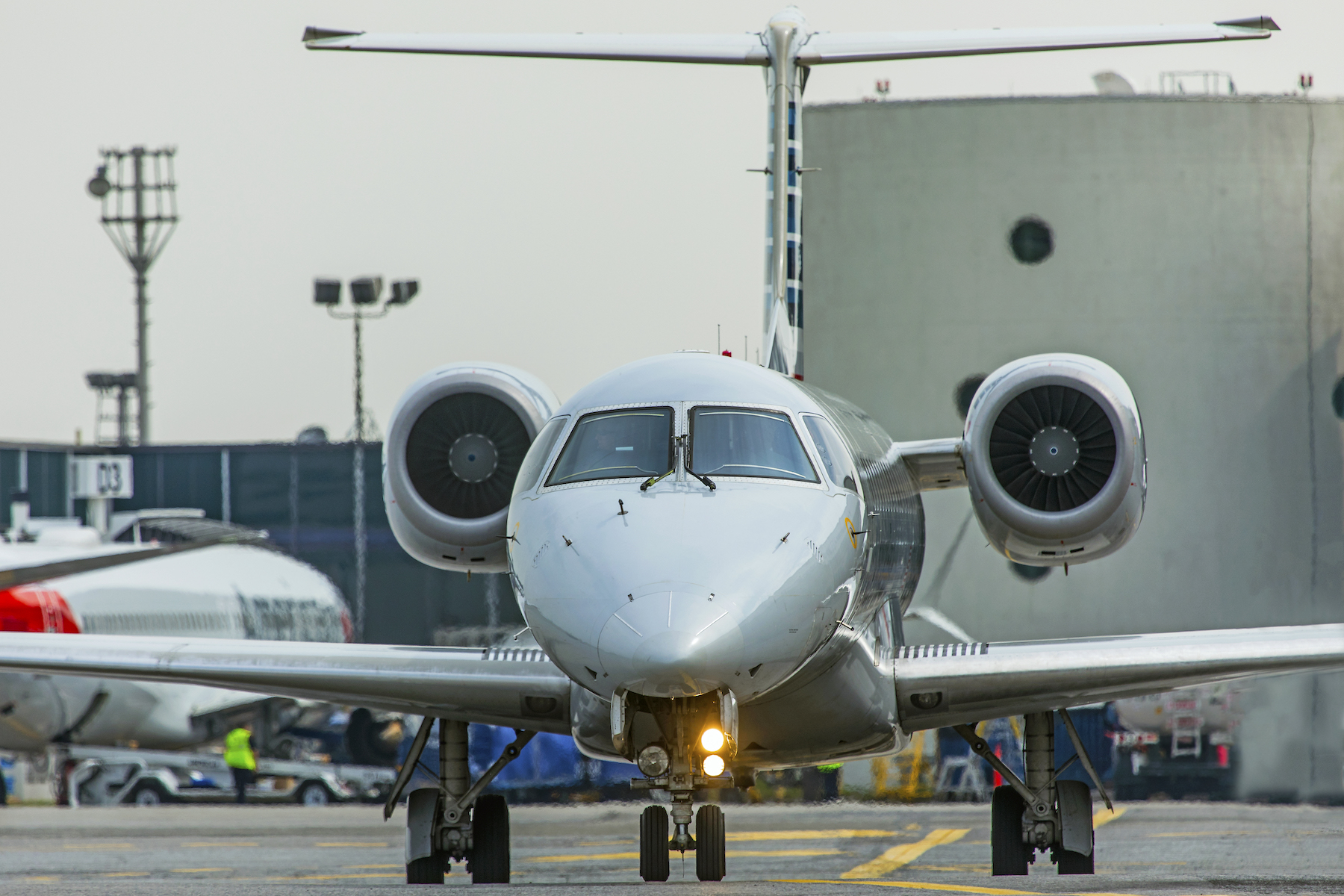
A QantasLink Embraer E190
A QantasLink Embraer E190 (Photo: Shutterstock | Vidit Luthra)

Australian flag carrier Qantas is facing growing backlash over plans to extend a ban on beards for pilots to its regional airline.

Qantas mainline and Jetstar pilots are already prohibited from growing facial hair, and under a proposal announced in July, that rule would apply to QantasLink pilots as well. Pilots working for the regional brand are currently permitted to sport short, tidy beards on the job.

The carrier says that the ban is about safety, not strictly appearances, and it commissioned a study from the U.K.-based defense technology and research firm QinetiQ that raised concerns about pilots’ facial hair interfering with the seal of oxygen masks.

“[QinetiQ’s] review of existing global evidence concluded that facial hair can compromise the seal of emergency oxygen masks, reducing their effectiveness when they’re needed most,” the airline wrote to pilots, according to messages seen and first reported on by The Australian.

But QinetiQ’s study is now being challenged by an expert at Embry-Riddle Aeronautical University in Florida.

Professor John French presented Qantas with a rebuttal of QinetiQ’s research using a 2024 Embry-Riddle study that found no evidence pilots’ beards cause mask leaks, hypoxia, or other problems. French also pointed out that QinetiQ relied on studies from the 1970s and ‘80s, many of which were conducted at sea level using now-obsolete technology, such as military respirators that would not be used in civilian air transport.

The critique also faulted the company for spending “over 70 pages dismissing peer-reviewed or empirically valid research using speculative counterpoints rather than offering alternative data” and using “risk language (‘potentially catastrophic,’ ‘early incapacitation’) without correlating to any recorded instances of harm or failure.”

According to The Australian, QinetiQ said it found flaws in the Embry-Riddle study and took the unusual step of writing to the journal that published it to raise concerns.

Pushback From Pilots

Qantas is currently reviewing feedback from pilots about the proposed rule change for QantasLink. It is expected to make a final decision on the beard ban in the coming weeks.

If posts on popular pilot forums are any indication, most are decidedly against prohibitions on facial hair.

“It is indicative of an arrogant Qantas management who always feel they know best and enjoy lecturing all who will listen,” one contributor wrote.

Some opponents of the ban have seized on the Royal Australian Air Force’s 2022 decision to permit facial hair, including beards, provided they are kept neat and professional-looking. Military officials said the change was meant to help the service branch “evolve and modernize.”

Pilot in flight deck
Pilot executing pre-flight procedures in a commercial airliner cockpit before takeoff. (Photo: Shutterstock | l i g h t p o e t)

The Australian and International Pilots Association, which represents Qantas pilots, has also registered its disapproval of the airline’s beard ban and any extension of it. In filings obtained by The Australian, the union said it made no sense for Qantas management to relax dress rules for flight attendants while continuing to enforce outdated standards on pilots.

Up until 2023, Qantas’ female flight attendants had to wear makeup and heels, and male flight attendants could not wear their hair long.

“Facial hair is now commonplace, and it appears inconsistent for Qantas Group to offer cabin crew modern flexibility in dress and grooming while enforcing outdated standards on pilots without scientific consensus,” the AIPA wrote.

Airlines around the world vary in their treatment of pilots’ facial hair. Most U.S.-based carriers still prohibit beards, but British Airways, Virgin Australia, Emirates, and Cathay Pacific, among others, allow them.

Zach Vasile

Zach Vasile is a writer and editor covering news in all aspects of commercial aviation. He has reported for and contributed to the Manchester Journal Inquirer, the Hartford Business Journal, the Charlotte Observer, and the Washington Examiner, with his area of focus being the intersection of business and government policy.

Cayman Airways Weighs New U.S. Service

However, a spokesperson from Cayman Airways said that this addition was an oversight as part of a broader batch of "hypothetical" routes.

Cayman Airways 737 MAX
A Cayman Airways 737 MAX (Photo: Shutterstock | Blue Sky imagery)

Cayman Airways plans to expand its network in the United States in the coming years.

In this week’s Cirium Diio schedule update, the Cayman Islands’ flag carrier loaded once-weekly flights between Grand Cayman and Austin, Texas. However, a spokesperson from Cayman Airways said that this addition was an oversight as part of a broader batch of “hypothetical” routes.

“No decision has been made on Austin,” the spokesperson added. “We have not filed for Austin with any regulatory authority and it remains simply one of several markets that are future possibilities only.”

Flights between Grand Cayman and Austin were scheduled to begin on May 30, operating once per week with a Boeing 737 MAX 8.

Cayman Airways serves seven countries, primarily in the Caribbean, as well as Central and North America.

The airline previously served more U.S. markets, including Chicago, Washington, and Orlando, Florida, but those routes have since been terminated.

Editor’s Note: This story was updated on Tuesday, Aug. 26, 2025, at 9:45 a.m. ET to correct an error. An airline spokesperson confirmed that Cayman Airways has no immediate plans to serve Austin, and the schedule update was made in error.

Ryan Ewing

Ryan founded AirlineGeeks.com back in February 2013 and has amassed considerable experience in the aviation sector. His work has been featured in several publications and news outlets, including CNN, WJLA, CNET, and Business Insider. During his time in the industry, he's worked in roles pertaining to airport/airline operations while holding a B.S. in Air Transportation Management from Arizona State University along with an MBA. Ryan has experience in several facets of the industry from behind the yoke of a Cessna 172 to interviewing airline industry executives. Ryan works for AirlineGeeks' owner FLYING Media, spearheading coverage in the commercial aviation space.

Spirit Reportedly Hires Advisers to Weigh Options

Struggling ultra-low-cost carrier Spirit has brought on outside advisers as it considers its options, including a possible second restructuring.

Spirit A320neo
A Spirit A320neo in Los Angeles. (Photo: AirlineGeeks | William Derrickson)

Struggling ultra-low-cost carrier Spirit has brought on outside advisers as it considers its options, including a possible second restructuring.

The Wall Street Journal reported Friday that the airline has retained New York-based financial adviser PJT Partners and consulting firms FTI and Seabury Airline Strategy Group. The advisers are expected to help the carrier weigh its strategic alternatives as it faces a severe cash crunch, downgrades of its creditworthiness, and growing concerns about its long-term viability.

One option could be a second restructuring to address problems that were not dealt with during Spirit’s time in Chapter 11 bankruptcy protection.

The newspaper cited unnamed sources with knowledge of Spirit’s internal deliberations.

The airline sparked a new round of industry speculation last week by drawing down all $275 million it had available under a revolving credit facility. The move prompted rating house Moody’s to downgrade the carrier’s credit rating by two notches.

Spirit’s first A321neo (Photo: Spirit Airlines)

Spirit has not commented publicly on the Journal’s report.

Spirit emerged from bankruptcy protection in March with a plan to become the “premium” option among U.S.-based budget carriers. It has nixed some aspects of its former no-frills strategy, and now offers larger seating and extra legroom for a fee. It is also building up its presence at Fort Lauderdale–Hollywood International Airport in Florida, near its Dania Beach headquarters.

But the airline remains critically short on cash, and relatively weak domestic leisure demand is hurting the possibility of a financial rebound. Some experts have criticized Spirit for failing to make important decisions during its bankruptcy period, like renegotiating aircraft leases or scaling back operations, that could have alleviated its debt burden.

Earlier this month, the airline warned investors that it may not survive the year as a going concern if it doesn’t raise more cash. It has furloughed around 500 pilots and is in the process of selling 23 Airbus A320 and A321 aircraft.

CNBC has reported that aircraft lessors are contacting other airlines to gauge their interest in potentially acquiring some of Spirit’s aircraft.

Zach Vasile

Zach Vasile is a writer and editor covering news in all aspects of commercial aviation. He has reported for and contributed to the Manchester Journal Inquirer, the Hartford Business Journal, the Charlotte Observer, and the Washington Examiner, with his area of focus being the intersection of business and government policy.

Air Algérie Resumes Flights to Beirut

On Aug. 14, Air Algérie achieved a significant milestone with the resumption of nonstop flights between Algiers and Beirut.

Air Algerie 737
An Air Algerie 737-800 (Photo: Anna Zvereva / Wikimedia Commons)

On Aug. 14, Air Algérie achieved a significant milestone with the resumption of nonstop flights between Algiers and Beirut, ending a suspension caused by regional instability and the COVID-19 pandemic.

The inaugural service, operated by a Boeing 737-600 (registered as 7T-VJR), departed Algiers at 08:57 and landed at Beirut–Rafic Hariri International Airport at 14:25 local time. The arrival was marked with an official reception attended by Lebanon’s Minister of Information, Paul Morcos, Algerian Ambassador Kamal Bou Shama, and Engineer Amin Jaber, Director General of Civil Aviation.

The twice-weekly service, scheduled on Sundays and Thursdays, was reinstated following recent discussions in Algiers between Algerian President Abdelmadjid Tebboune and Lebanese President Joseph Aoun. Air Algérie had suspended flights to Beirut on August 1, 2024, in response to security risks linked to Israeli military actions in Lebanon.

Looking beyond Beirut, Air Algérie is preparing to relaunch several suspended routes and introduce new destinations as part of its Winter 2025/26 schedule. On Nov. 1, the airline will resume flights to Budapest after a five-year pause, operating a triangular route linking Algiers, Budapest, and Vienna. This service will run twice weekly on Wednesdays and Saturdays using a Boeing 737-700, reinstating a connection that was halted in 2020 due to the pandemic.

The revival of the Budapest service is part of a broader expansion strategy aimed at strengthening the carrier’s international footprint. By the end of 2025, Air Algérie plans to launch new long-haul flights to Guangzhou, China, and Kuala Lumpur, Malaysia, alongside regional services to N’Djamena, Chad, Zanzibar, Tanzania, and Libreville, Gabon.

The airline also intends to relaunch Addis Ababa flights and increase capacity on its Abuja, Nigeria, service, which has been running twice weekly since April.

Speaking in April to the Algerian Press Service (APS), Marketing Director Hosnia Kaoua outlined additional destinations planned for the coming season, including New York, Caracas, Havana, and Amsterdam.

To support its growth, Air Algérie has reinforced its medium- and long-haul operations through a series of wet-leases. On June 29, 2025, a leased Airbus A330-200 from Hi Fly Malta (registration 9H-HFI, MSN 805) entered service, helping cover long-haul operations while three of the airline’s own A330-200s remain grounded. These include 7T-VJC (MSN 1649), grounded since March 2025; 7T-VJW (MSN 647), grounded since December 2024; and 7T-VJZ (MSN 667), grounded since April 2025.

Additionally, since January 2025, Air Algérie has been operating an Airbus A340-300 (registered as YR-LRC) leased from Romania’s Legend Airlines to further ease pressure on its long-haul network.

On the medium-haul side, the airline continues to rely on supplementary leased aircraft. The latest is an Airbus A320 (registered as LZ-FSD, MSN 03461) from Bulgarian ACMI provider Fly2Sky, which joined the fleet on May 17, 2025. This marks the second partnership between the two carriers. Air Algérie is also operating two Airbus A320s from French operator Amelia (registrations F-HDRE and F-HBNA) and a Boeing 737-800 (registration 9H-SAT) leased from Ukraine’s SkyUp Airlines since February 2025.


Victor Shalton

Victor Shalton's love for aviation can be traced to when he was 11-years-old. As a seasoned aviation writer, he takes pride in providing the best aviation coverage around the globe and is passionate about advancing his skills in the aviation space. In addition, he loves travelling, writing, arts and while his speaking engagements have taken him around the world, he is proud to call Nairobi home.

Delta to Cut Three Routes

Delta will make changes to its domestic network later this year, including adjustments that affect service in both Texas and California.

A SkyWest E175 operating for Delta Connection
A SkyWest E175 operating for Delta Connection. (Photo: Shutterstock | Wenjie Zheng)

Delta will make changes to its domestic network later this year, including adjustments that affect service in both Texas and California. The carrier said the moves are part of ongoing efforts to align its schedule with demand trends.

A Delta spokesperson confirmed that one of the changes will take place in Central Texas, where service between Austin and Midland will end this fall.

Airport Exit

This will be a complete station exit for the carrier, as Midland is not served from the airline’s other hubs. Service in this market began last year.

“Delta will discontinue its Austin–Midland (AUS–MAF) route effective Nov. 9, 2025, as we adapt our schedule to align with consumer demand,” the spokesperson said. “We apologize for any inconvenience this may cause and remain committed to serving Central Texas as the leading global carrier in Austin.”

In addition to the Midland suspension, Delta will also end service between Las Vegas and two Northern California airports: San José and Sacramento. Both routes will end in January, according to Cirium Diio schedule data.

The airline is simultaneously adding flights from Austin to Denver, Columbus, and Kansas City, while boosting frequencies to San Francisco and Indianapolis. Service between Austin and McAllen also remains part of the carrier’s South Texas network.

Ryan Ewing

Ryan founded AirlineGeeks.com back in February 2013 and has amassed considerable experience in the aviation sector. His work has been featured in several publications and news outlets, including CNN, WJLA, CNET, and Business Insider. During his time in the industry, he's worked in roles pertaining to airport/airline operations while holding a B.S. in Air Transportation Management from Arizona State University along with an MBA. Ryan has experience in several facets of the industry from behind the yoke of a Cessna 172 to interviewing airline industry executives. Ryan works for AirlineGeeks' owner FLYING Media, spearheading coverage in the commercial aviation space.

El Al to Relaunch Tel Aviv-Eilat Service

El Al Israel Airlines, Israel's flag carrier, will resume daily flights to the Red Sea city of Eilat after a 10-year hiatus.

El Al 737-800
An EL AL 737-800 (Photo: AirlineGeeks | William Derrickson)

El Al Israel Airlines will resume daily flights to the city of Eilat after a 10-year hiatus.

Israel’s national carrier will restart regular service between Tel Aviv and Eilat in October. The resumption comes after a request from Israel’s Transportation Ministry, which seeks improved flight connectivity between central and southern Israel. Eilat, which sits on the Red Sea in southern Israel, is a popular leisure destination.

New Double Daily Service

El Al will operate two daily flights between Ben Gurion International Airport in Tel Aviv and Ramon International Airport in Eilat, from Oct. 21. The airline will offer morning and evening services. The flight has a block time of one hour and five minutes, in both directions.

Flights will be operated with a Boeing 737-800 aircraft, configured with all-economy class seating.

Israel’s aviation sector has faced severe disruptions over the last two years due to fighting in the region. A number of foreign carriers have suspended service to and from Israel, citing the possible danger to their aircraft and passengers.

Lorne Philipot

Lorne is a South Africa-based aviation journalist. He was captivated and fascinated by flying from the day he took his first airline flight. With a passion for aviation in his blood, he has flown to destinations in all corners of the globe. Lorne has traveled extensively and lived in various countries. Drawing on his travels and passion for aviation, Lorne enjoys writing about airlines, routes, networks, and new developments.

Spirit Faces Growing Uncertainty After Warning to Investors

Ultra-low-cost carrier Spirit is facing mounting hurdles in its effort to fully rebound from bankruptcy and may be worse positioned than it was 10 months ago.

Spirit A319
A Spirit Airlines Airbus A319 prepares for landing. (Photo: AirlineGeeks | William Derrickson)

Ultra-low-cost carrier Spirit is facing mounting hurdles in its effort to fully rebound from bankruptcy and may be worse positioned than it was 10 months ago when it first filed for Chapter 11 protection.

Rating business Moody’s downgraded the airline’s credit rating by two notches to Caa3 on Friday, citing “higher than expected cash burn” compared to its previous forecast when Spirit emerged from bankruptcy in March.

“We forecast Spirit will burn more than $500 million of cash in 2025 due to weak domestic leisure demand, elevated domestic capacity, and a challenging pricing environment,” Moody’s analysts wrote.

The downgrade came hours after the carrier borrowed the entire $275 million available under a revolving credit facility administered by Citibank. The credit facility was set up as part of Spirit’s bankruptcy restructuring.

Also this week, CNBC reported that aircraft lessors are contacting other airlines to gauge their interest in potentially acquiring some of Spirit’s aircraft. The news outlet cited people with knowledge of the discussions.

Spirit has furloughed about 500 pilots and is in the process of selling 23 Airbus A320 and A321 aircraft. It is also looking at selling off real estate and cutting other fixed costs.

‘Substantial Doubt’

Earlier this month, the airline warned investors that it may not survive the year as a going concern if it doesn’t raise more cash.

Spirit A320neo jet
A Spirit Airbus A321neo aircraft. (Photo: Shutterstock | Kevin Hackert)

“The Company has continued to be affected by adverse market conditions, including elevated domestic capacity and continued weak demand for domestic leisure travel in the second quarter of 2025, resulting in a challenging pricing environment,” the carrier wrote in its second-quarter earnings report.

It reported a net loss of $245.8 million for the period, building on a loss of $143 million during Q1.

“Because of the uncertainty of successfully completing the initiatives to comply with the minimum liquidity covenants and of the outcome of discussions with Company stakeholders, management has concluded there is substantial doubt as to the Company’s ability to continue as a going concern within 12 months from the date these financial statements are issued,” the filing stated.

In a letter to employees, Spirit President and CEO Dave Davis clarified that the seemingly dire language is “required by our outside auditors to convey that there is risk if we do not make changes. But, we are.”

The airline has adjusted some of its customer-facing products in recent months in a bid to become the “premium” of budget carriers. It now offers larger seating and extra legroom for a fee, and is in the process of rolling out other perks, like the Free Spirit Debit Card.

Still, analysts say it’s becoming increasingly difficult to see how Spirit will regain its footing, especially as demand cools after the summer travel season.

A number of industry experts who spoke with CNBC said Spirit avoided making hard decisions during bankruptcy protection, like renegotiating aircraft leases or scaling back operations.

“It made it that much more unlikely for them to succeed without having tackled some of those issues,” Joe Rohlena, an airline analyst at Fitch Ratings, told the news outlet.

Fitch downgraded Spirit last week.

Zach Vasile

Zach Vasile is a writer and editor covering news in all aspects of commercial aviation. He has reported for and contributed to the Manchester Journal Inquirer, the Hartford Business Journal, the Charlotte Observer, and the Washington Examiner, with his area of focus being the intersection of business and government policy.

Using a Home-Based Flight Simulator as an Airline Pilot

The Thrustmaster TCA Yoke Pack Boeing Edition is just one recommended tool for an airline pilot's flight simulation setup.
The Thrustmaster TCA Yoke Pack Boeing Edition is just one recommended tool for an airline pilot's flight simulation setup. [Courtesy: Amazon]

For those who have been around the airline industry for a while, it is well known that change is a constant, and even minor updates to procedures or systems can have a significant impact on front-line operations.

As a flight crew training instructor, I often work with pilots who do not meet the required standards during training, and most failures are linked to change fatigue. Yes, there is such a thing as too much change, and when faced with frequent, complex, or poorly managed updates, it can lead to poor performance.

So, how can you offset the impact of change on your operational and training performance? Let’s explore the advantages and disadvantages of home-based flight simulators and how they can help maintain your skills in the ever-changing airline environment.

Pros of Home-Based Flight Sim Training

Maintaining peak proficiency is non-negotiable for airline pilots. Regardless of the effects of change fatigue, continuous learning is essential to safe operations.

In recent years, home-based flight sims have evolved into competent tools that can complement your company’s training. Let’s explore the advantages of leveraging a home-based simulator to refine your techniques, stay sharp, and prepare for upcoming changes and training events.

Training Preparation Using Home-Based Sims

Whether you are beginning initial training, returning for recurrent training, or resuming after a leave of absence, airlines offer comprehensive training programs that utilize simulators and devices designed to help you complete your training successfully.

However, the devices and tools used by airlines are often only available during your scheduled training sessions. Therefore, your preparation for these events is crucial to ensure a successful outcome within the designated timeframe.

A home-based simulator can allow you to practice procedures, checklist flows, and system familiarization at your own pace as you prepare for your training. Additionally, home-based simulators do not need to be complex to achieve the desired results.

Cost-Effectiveness of Using Home-Based Sims

When I first began instructing at a major airline, I was told it costs approximately $10,000 to train a crew each day. Several factors drive this cost, including the use and maintenance of advanced flight simulators, participant salaries, and other logistical expenses. A home-based simulator can help minimize these costs by allowing you to prepare for your airline training and stay on schedule without needing additional training.

Reinforcing SOPs Using Home-Based Sims

With the constant changes to airline standard operating procedures (SOPs), callouts, checklist flows, and systems, a home-based simulator can help you adapt to the changes before executing them in the flight deck. Practicing these in a home-based sim can help reinforce your muscle memory and minimize errors when the stakes are higher. Even with the most basic setup, you can run through configuration changes, automation logic, and failure management routines in a calm, pressure-free environment.

Practicing Non-Normal Scenarios Using Home-Based Sims

Although standard operating procedures are routine, pilots may go years without encountering a major non-normal situation in line operations. Therefore, airlines place significant emphasis on managing these failures during simulator training.

However, while airline training covers key failure scenarios, a home-based simulator can offer you the flexibility to dig deeper. You can walk through various emergency checklists, such as engine failures, fires, or pressurization problems, to build procedural confidence. Practicing these without time limits or performance pressure can help solidify your responses that are critical in high-pressure situations.

Practicing New or Complex Scenarios Using Home-Based Sims

Airlines frequently operate at complex airports, where weather, terrain, and traffic can increase your workload. Additionally, newly published or modified procedures, such as STARs, approaches, and SIDs, are distributed regularly, which can further increase the workload in an already high-stress environment. Using home-based simulators, you can practice these procedures in advance, boosting situational awareness and overall performance during actual line operations.

Staying Current with System Updates Using Home-Based Sims

As modern jets continue evolving with advanced avionics and system updates, home-based simulators can help you stay familiar with the latest changes. Additionally, for pilots transitioning to new aircraft or operating in unfamiliar regions, home-based flight simulators can offer a low-stress environment for developing technical proficiency.

Enhancing Confidence and Mental Fitness Using Home-Based Sims

Flying is a high-performance cognitive activity. Therefore, repetition can help build your confidence, sharpen your focus, and enable you to recall things promptly under pressure. Just as an athlete reviews game footage or rehearses plays, you can utilize a home-based simulator to maintain mental agility and composure, especially in the ever-changing airline environment.

Cons of Home-Based Flight Sim Training

While there are many apparent benefits to home-based simulators, for complete transparency, let’s also consider some of the common criticisms.

Lack of Certification of Home-Based Flight Sims

Home-based simulators are not FAA-certified; therefore, they cannot be used for official currency or qualification. This is because they lack the dynamic movement, tactile control feedback, and instructor interaction that define advanced flight simulators.

However, with structured scenarios, disciplined use, and high-fidelity aircraft models, home-based flight simulators can be a powerful supplement to formal airline training. Think of them as reps in the mental gym, preparing you to perform when it matters.

Limited Realism of Home-Based Flight Sims

Simulators help pilots sharpen procedural fluency, muscle memory for cockpit operations, and even recognize non-normal scenarios. However, flying in the real world introduces variables you cannot fully script in a home-based flight simulator. Therefore, a simulator can only serve as a supplement to official training.

Building a Home-Based Flight Simulator

A home-based flight simulator can be as simple or complex as you want it to be.

Basic Home-Based Flight Simulator Setup

At its most basic, a home-based flight simulator should include components such as:

Advanced Home-Based Flight Simulator Setup

For someone looking to elevate their home setup, you can assemble the ultimate flight simulator with components such as:

 Staying Sharp Year-Round from Home

The advantage of a home-based setup is that it can be tailored to fit your specific training needs. From simulating normal flight crew flows in a virtual Boeing 737 cockpit to practicing engine failures with VR and tactile feedback, it is this flexibility that truly gives home-based flight simulators their edge.

In the ever-changing airline environment, your professional development does not have to begin and end in the airline training center. Home-based flight simulation can provide a valuable way to prepare, review, and enhance performance on your own schedule.

Whether you are looking for a simple home setup or the ultimate flight simulator, start building it today to help you elevate your next training experience and stay sharp year-round.

AirlineGeeks may earn revenue from the products available on this page and participate in affiliate programs.

AirlineGeeks.com Staff

AirlineGeeks.com was founded in February 2013 as a one-person blog in Washington D.C. Since then, we’ve grown to have 25+ active team members scattered across the globe. We are all here for the same reason: we love deep-diving into the fascinating realm of the airline industry.

Livery of the Week: Aerolineas Argentinas

Aerolíneas Argentinas, the flag carrier of Argentina, operates its fleet in a livery that draws heavily from the colors of the national flag.

An Aerolineas Argentinas A330 aircraft.
An Aerolineas Argentinas Airbus A330 (Photo: Shutterstock | Soos Jozsef)

Editor’s Note: AirlineGeeks is proud to present our ‘Livery of the Week’ series. Every Friday, a team member will share an airline livery, which can be from the past, present, or even a special scheme. Some airline liveries are works of art. The complexity associated with painting around critical flight components and the added weight requires outside-the-box thinking from designers. The average airliner can cost upwards of $200,000 to repaint, creating a separate aircraft repainting industry as a result. 

Have an idea for a livery that we should highlight? Drop us a line

Aerolíneas Argentinas, the flag carrier of Argentina, operates its fleet in a livery that draws heavily from the colors of the national flag. The design prominently features a light blue fuselage top that fades into white on the lower half of the aircraft, with a sharp, upward-pointing sweep at the tail. The national airline’s logo — a stylized condor — is displayed on the vertical stabilizer.

The livery’s lettering spells out “Aerolíneas Argentinas” in a bold blue font across the forward fuselage. Near the cockpit windows, a small Argentine flag is displayed. The airline has applied this design across its modern fleet, which includes Boeing 737s and Airbus A330s, ensuring consistency throughout its domestic and international network.

An Aerolineas Argentinas Boeing 737 (Photo: Shutterstock | claudio santisteban)

This current livery was first introduced in 2010 as part of a rebranding effort following the airline’s renationalization. The update replaced an earlier scheme that had featured darker blue tones, silver elements, and a more complex striping pattern. The modern design aimed to streamline the carrier’s image while maintaining strong ties to Argentina’s national colors.

Today, Aerolíneas Argentinas continues to use the blue-and-white scheme as part of its identity, making the airline instantly recognizable at airports across South America, North America, and Europe.

Looking for a new airplane model? Head over to our friends at the Midwest Model Store for a wide selection of airlines and liveries.

Ryan Ewing

Ryan founded AirlineGeeks.com back in February 2013 and has amassed considerable experience in the aviation sector. His work has been featured in several publications and news outlets, including CNN, WJLA, CNET, and Business Insider. During his time in the industry, he's worked in roles pertaining to airport/airline operations while holding a B.S. in Air Transportation Management from Arizona State University along with an MBA. Ryan has experience in several facets of the industry from behind the yoke of a Cessna 172 to interviewing airline industry executives. Ryan works for AirlineGeeks' owner FLYING Media, spearheading coverage in the commercial aviation space.

Delta Expands Its U.S. Route Map

The expansion coincides with the airline’s decision to establish a permanent flight attendant base in Austin this October.

Delta A320 in Austin
A Delta A320 in Austin (Photo: Shutterstock | lorenzatx)

Delta is adding more flights in Austin, Texas, as it looks to strengthen its position in Central Texas. The airline says it has carried more than one million passengers through Austin so far in 2025, a 12% increase over last year.

The carrier will introduce new nonstop service to Denver beginning Nov. 9, operated twice daily by SkyWest Embraer E175 aircraft.

Additional growth is planned for next summer, when new flights to Columbus and Kansas City begin on June 7. Both routes will also be operated with E175s.

Service between Austin and Columbus will operate once per day, while Kansas City flights will be double daily.

“With these new routes and expanded service, Delta is building on a strong foundation in Austin and creating more ways for our customers to get where they want to go,” said Paul Baldoni, Delta’s senior vice president of network planning, in a news release. “It’s another step in delivering the network, convenience and premium experience that sets Delta apart as Austin’s leading global carrier.”

Service Increases

Delta is also increasing service on two existing routes from Austin. Recently launched flights to San Francisco will double to two daily departures starting April 13, while Indianapolis service will expand from one to three daily flights beginning June 7.

The expansion coincides with the airline’s decision to establish a permanent flight attendant base in Austin this October.

Ryan Ewing

Ryan founded AirlineGeeks.com back in February 2013 and has amassed considerable experience in the aviation sector. His work has been featured in several publications and news outlets, including CNN, WJLA, CNET, and Business Insider. During his time in the industry, he's worked in roles pertaining to airport/airline operations while holding a B.S. in Air Transportation Management from Arizona State University along with an MBA. Ryan has experience in several facets of the industry from behind the yoke of a Cessna 172 to interviewing airline industry executives. Ryan works for AirlineGeeks' owner FLYING Media, spearheading coverage in the commercial aviation space.
Sign-up for newsletters & special offers!

Get the latest stories & special offers delivered directly to your inbox

SUBSCRIBE

Uh-oh! It looks like you're using an ad blocker.

Our website relies on ads to provide free content and sustain our operations. By turning off your ad blocker, you help support us and ensure we can continue offering valuable content without any cost to you.

We truly appreciate your understanding and support. Thank you for considering disabling your ad blocker for this website