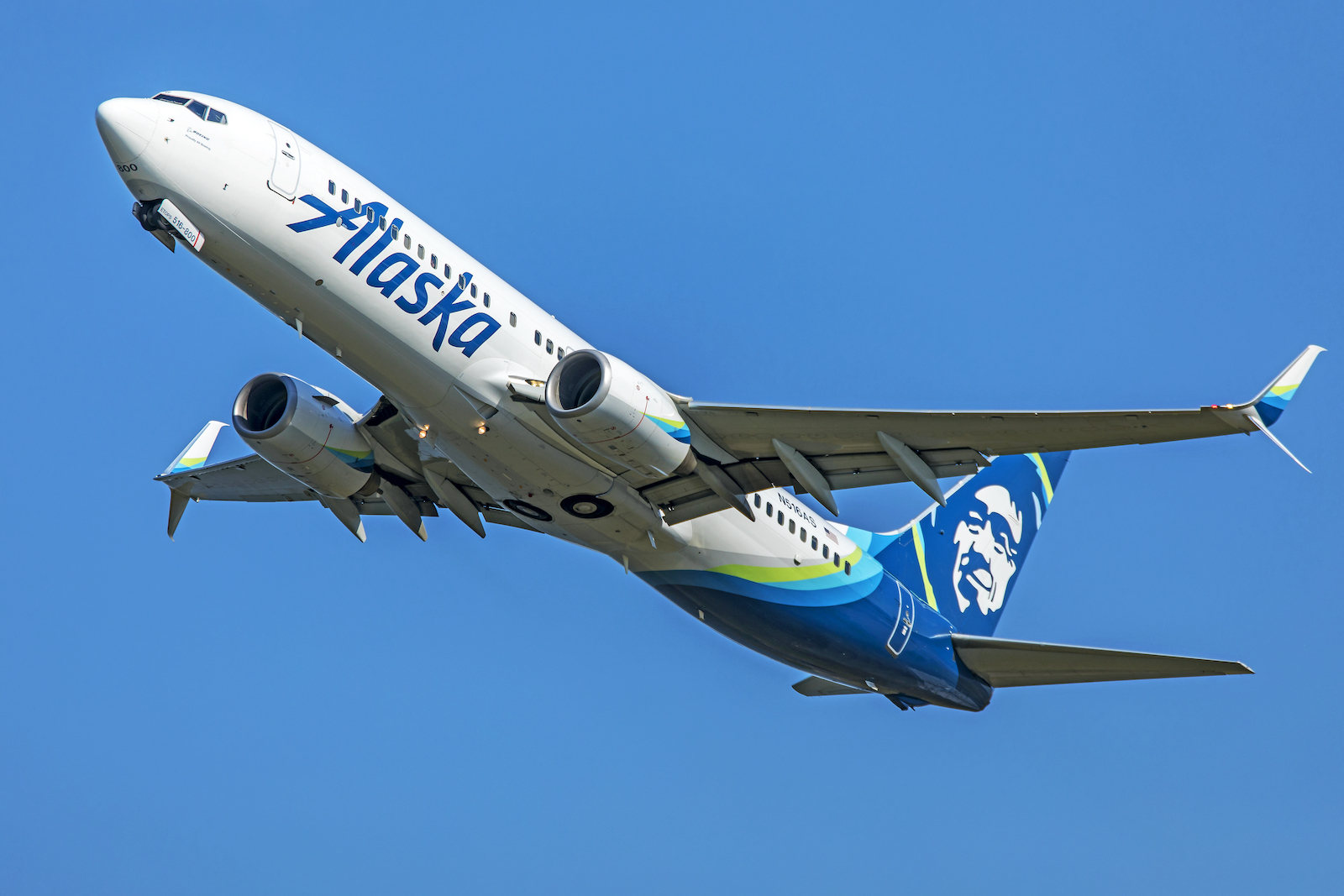
An Alaska Airlines 737-800. (Photo: AirlineGeeks | William Derrickson)
Alaska Air Group, the corporate parent of Alaska Airlines and Hawaiian Airlines, cautioned investors this week that its third quarter earnings could be slightly lower than initially projected.
In a Securities and Exchange Commission filing, the company said it now expects adjusted earnings per share to be “at the low end” of its $1 to $1.40 forecast. It cited higher than anticipated fuel costs and operational disruptions stemming from bad weather and air traffic control problems, which led to increased costs from overtime and compensation paid to customers.
Alaska also said a technology outage in July – which briefly grounded all of Alaska Airlines’ flights – will cost about 10 cents per share.
Still, revenue trends remain strong, the company said. Unit revenue is tracking near the high end of earlier guidance, and the airline group saw strong interest in its new Atmos rewards program, which is replacing Alaska’s Mileage Plan and Hawaiian’s HawaiianMiles.
All Mileage Plan members were automatically enrolled in Atmos last month, and all HawaiianMiles members will automatically transition into Atmos on Oct. 1. Starting in 2026, the program will allow customers to choose how they would like to earn points and elite-qualifying “status points” – in distance traveled, price paid, or segments flown.
Registrations for Alaska’s new premium credit card, known as the Atmos Rewards Summit Visa Infinite card, exceeded the company’s year-end target within two weeks, the filing stated, and there was notable interest beyond the group’s core West Coast and Hawaiian markets.
Alaska Air Group is in the process of integrating Hawaiian into its operations. It expects to secure a single operating certificate from the FAA for Alaska and Hawaiian at some point this fall.
Zach Vasile is a writer and editor covering news in all aspects of commercial aviation. He has reported for and contributed to the Manchester Journal Inquirer, the Hartford Business Journal, the Charlotte Observer, and the Washington Examiner, with his area of focus being the intersection of business and government policy.
Allegiant Exiting Los Angeles After 17 Years
A spokesperson told AirlineGeeks that the move is part of a broader shift to Burbank, California, where the airline recently announced new service.
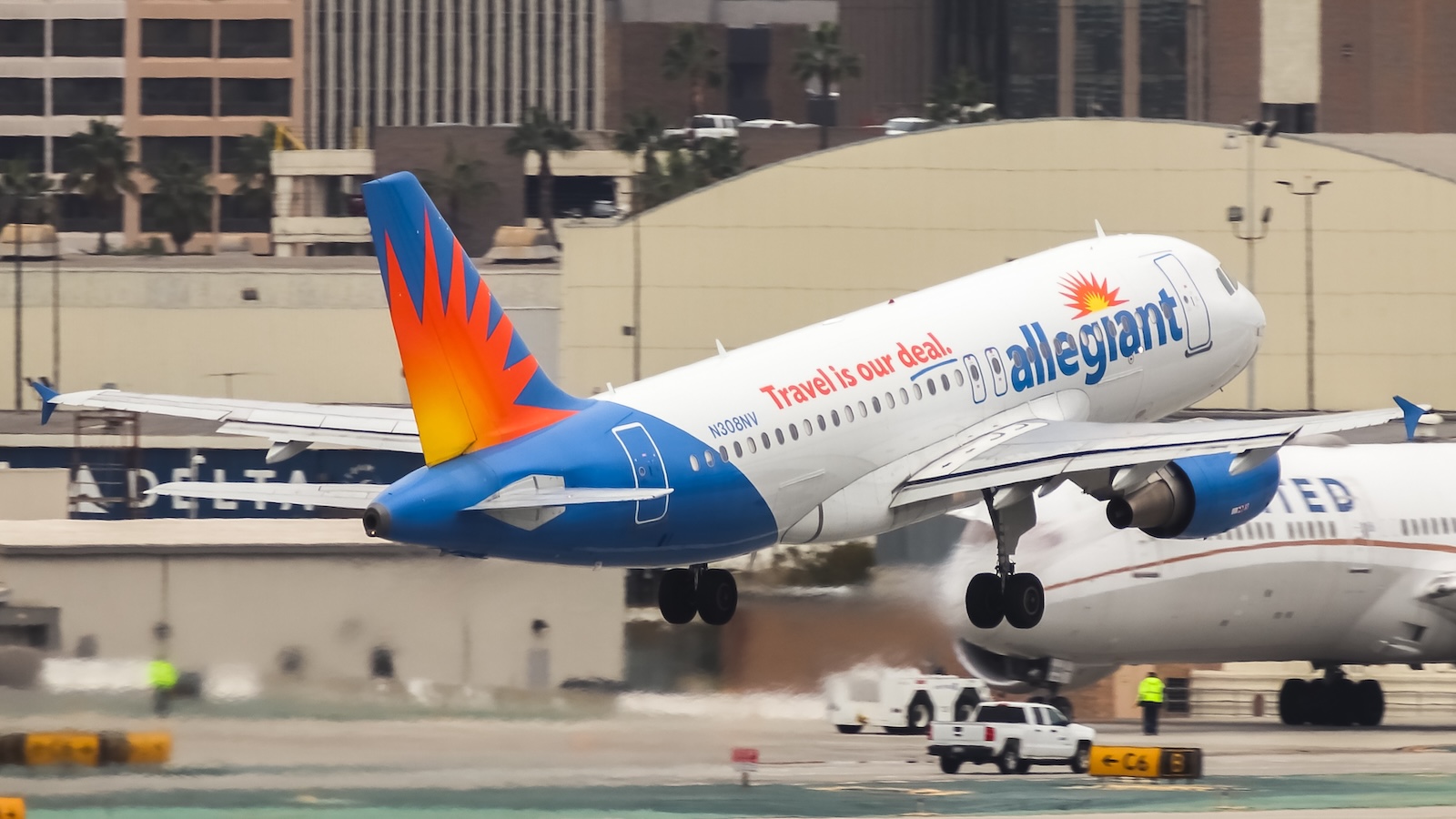
An Allegiant Airbus aircraft (Photo: Shutterstock | Bradley Caslin)
Allegiant will end all flights to Los Angeles, an airline spokesperson confirmed on Monday. The ultra-low-cost carrier began serving the California city in 2009.
Its two remaining routes from Los Angeles to Cincinnati and Bellingham, Washington, are scheduled to end in January, according to Cirium Diio schedule data. Enilria also flagged the news.
“Burbank’s lower operating costs and streamlined gate and facility usage allow us to offer more attractive fares to our customers while creating a better working environment for our team members,” the spokesperson said. “With a new terminal slated to open in late 2026, the BUR experience is only set to improve.”
“With LAX’s per-passenger costs projected to reach nearly $64 by 2031 (per Fitch Ratings), we’ve chosen to pivot toward a more sustainable and value-oriented model in the LA basin,” the spokesperson continued.
The airline’s last flights from Los Angeles are currently scheduled for Jan. 3.
Ryan founded AirlineGeeks.com in February 2013 and has spent more than a decade covering the airline business. His work has been featured by CNN, WJLA, CNET, and Business Insider. His aviation experience spans airport operations, Part 135 regulatory compliance, and airline crew workforce planning, along with time behind the yoke of a Cessna 172 and interviews with airline executives. Ryan now serves as Group President of Firecrown Media’s Aviation Group. He holds a B.S. in Air Transportation Management and an MBA from Arizona State University and teaches Airline Management at Embry-Riddle Aeronautical University.
The Trump administration has instructed Delta and Mexican flag carrier Aeroméxico to end their nearly decade-long joint venture within a matter of months.
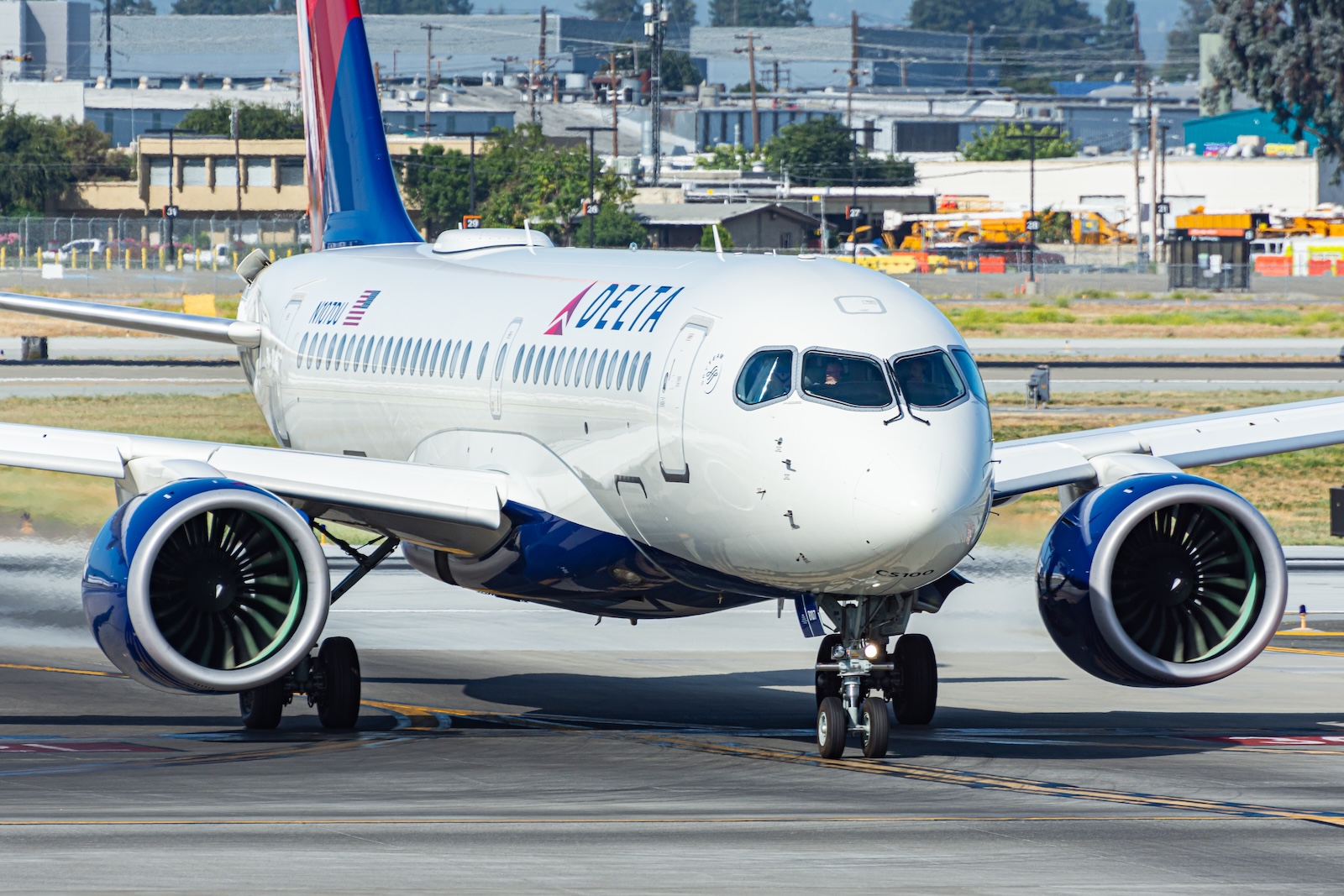
A Delta A220-100. (Photo: Shutterstock | Minh K Tran)
The Trump administration has instructed Delta and Mexican flag carrier Aeroméxico to end their nearly decade-long joint venture within a matter of months.
In a final order issued late Monday, the U.S. Department of Transportation said the alliance no longer serves the flying public’s interests and is exacerbating “market distortions” within Mexico.
The joint venture between Delta and Aeroméxico goes beyond standard interline and codeshare agreements by allowing the carriers to share information and jointly determine routes. Its unconventional structure required a special dispensation from the Transportation Department shielding the partners from federal antitrust enforcement, which was granted during the closing days of the Obama administration in late 2016.
The Trump administration said it is choosing to let that grant of immunity lapse because the Mexican government is illegally intervening to help Delta and Aeroméxico and pushing other U.S. carriers out of the important Mexico City market in the process.
“This action is necessary because of ongoing anticompetitive effects in U.S.-Mexico City markets that provide an unfair advantage to Delta and Aeroméxico as two predominant competitors and create unacceptable actual and potential harm for stakeholders, including consumers,” the Transportation Department’s order stated. “These anticompetitive effects have broader implications beyond Mexico City, affecting competition for passengers and cargo operations in additional markets between the United States and Mexico.”
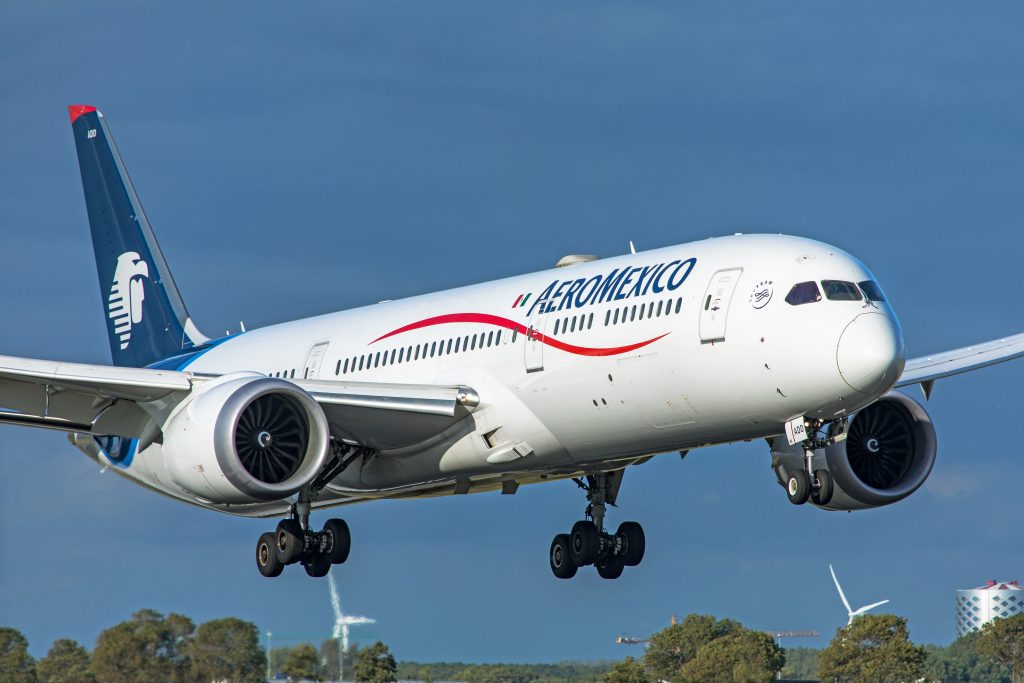
An Aeroméxico Boeing 787 Dreamliner flares for landing. (Photo: AirlineGeeks | William Derrickson)
Delta and Aeroméxico’s immunity from antitrust enforcement will expire Jan. 1, 2026, the department said, meaning the joint venture cannot operate past that date.
“We are disappointed that the Department of Transportation has chosen to terminate its approval of the strategic and pro-competitive partnership between Delta and Aeroméxico, a decision that will cause significant harm to U.S. jobs, communities, and consumers traveling between the U.S. and Mexico,” Delta said in a statement on Monday. “We are reviewing the department’s order and considering next steps.”
The carrier said no flights are expected to be canceled as a result of the government’s decision.
‘Too Much At Stake’
The Delta-Aeroméxico alliance has faced growing scrutiny over the last few years. In 2022, under the Biden administration, transportation officials raised concerns about the Mexican government’s decision to unilaterally seize slots from foreign carriers, which was making it harder for U.S. airlines like Alaska Airlines and JetBlue to access Mexico City International Airport, the busiest airport in Mexico.
The situation worsened in 2023 when the Mexican government, citing congestion problems, ordered U.S. cargo operators like FedEx and UPS to relocate from Mexico City International Airport to the recently opened Felipe Ángeles International Airport. Felipe Ángeles is considered a less desirable landing point for freight carriers, as it is further away from Mexico City and increases logistical hurdles.
By 2024, the Transportation Department had tentatively decided to let the antitrust immunity agreement expire. Both carriers urged the department to reconsider and claimed the decision violated their due process rights while failing to show that any U.S. carriers were materially harmed.
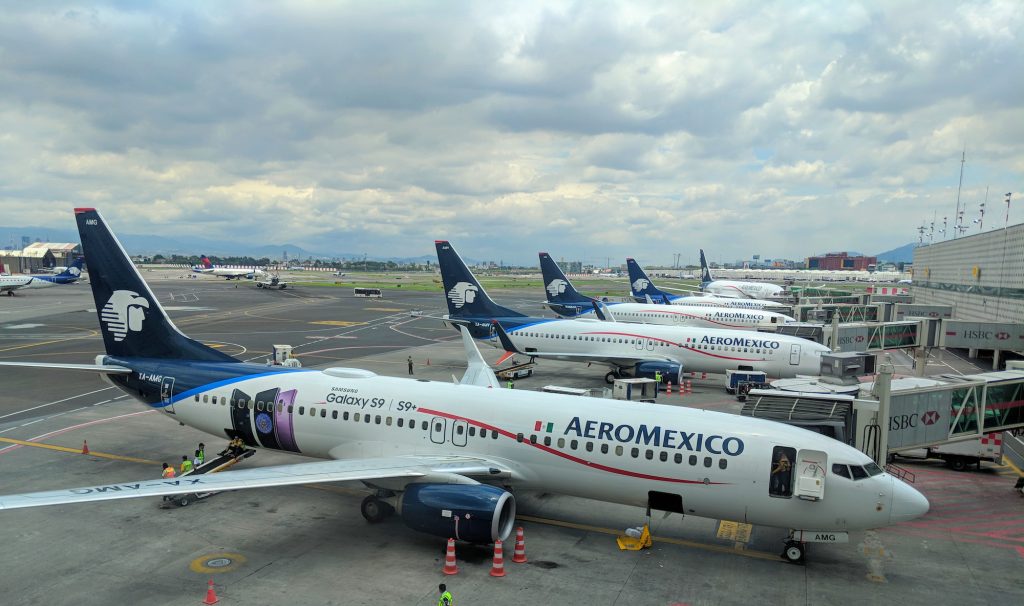
Aeroméxico’s Boeing 737s lined up at the gates of Mexico City’s Benito Juárez International Airport. (Photo: Shutterstock)
The Trump administration took up the issue in July, telling Delta and Aeroméxico that it was inclined not to renew their antitrust protection because of the Mexican government’s unfair interventionist policies, which allegedly violated air transport agreements between the U.S. and Mexico.
Delta and Aeroméxico maintain that their joint venture promotes commerce and competition, but the Transportation Department on Monday rejected that argument, saying the partners’ “unique privileges” are no longer warranted.
“The joint venture is exacerbating the competitive issues that are present and growing,” the department said. “An immunized alliance is not an entitlement. Far too much is at stake when the question is whether two airlines should comply with the U.S. antitrust laws.”
The Transportation Department clarified that it is not opposed to Delta and Aeroméxico continuing other aspects of their relationship, like codesharing. Delta’s 20% stake in Aeroméxico will also remain intact.
Zach Vasile is a writer and editor covering news in all aspects of commercial aviation. He has reported for and contributed to the Manchester Journal Inquirer, the Hartford Business Journal, the Charlotte Observer, and the Washington Examiner, with his area of focus being the intersection of business and government policy.
Jordan Sees Resumption of European Low-Cost Service
After a long hiatus due to ongoing political tensions in many Middle East nations, European low-cost carriers are finally resuming flights to Jordan.
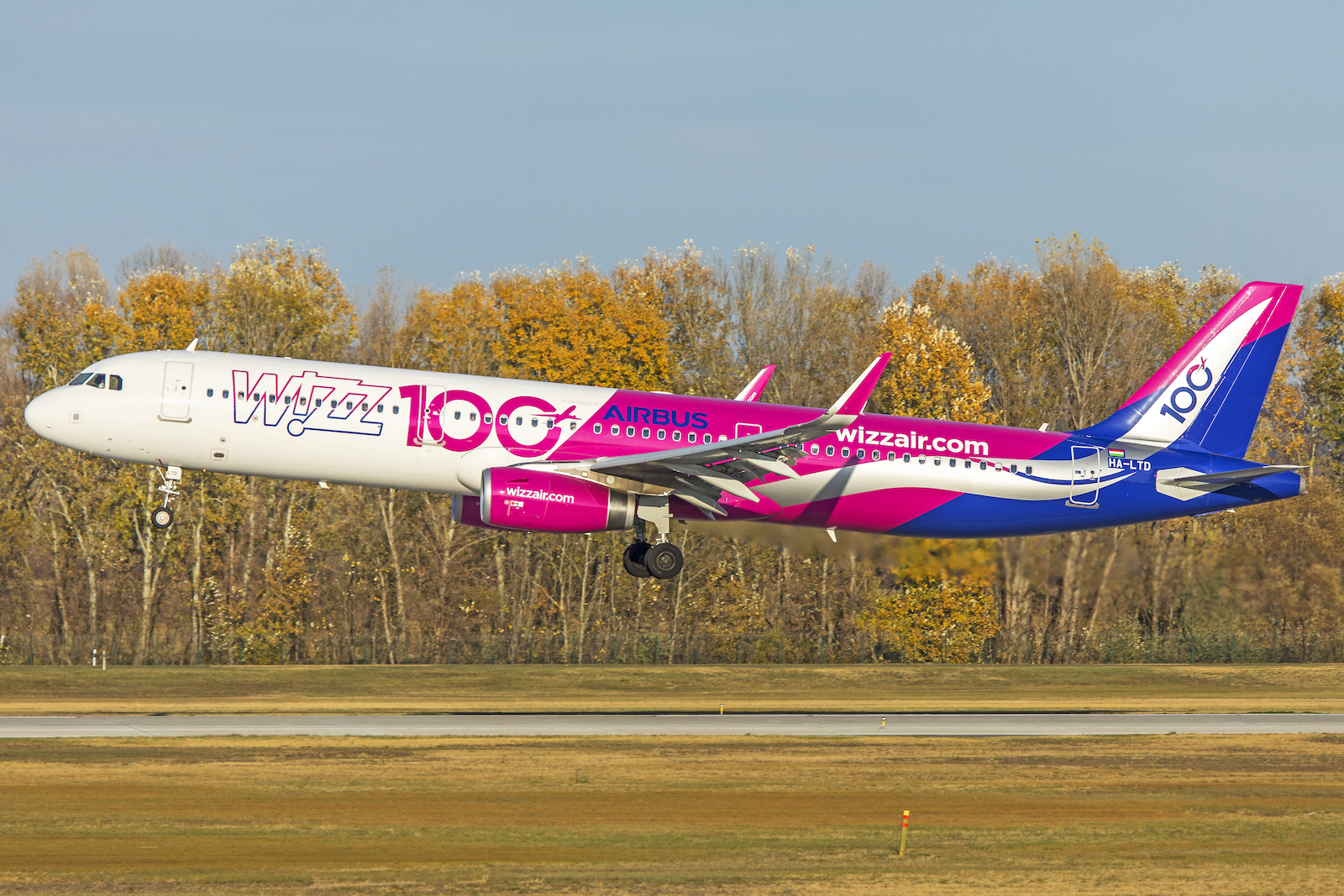
A Wizz Air Airbus A321. (Photo: AirlineGeeks | William Derrickson)
After a long hiatus due to ongoing political tensions in many Middle East nations, European low-cost carriers are finally resuming flights to Jordan.
Europe’s largest low-cost airline, Ryanair, is set to resume all flights to the Middle Eastern Monarchy in late October, and a select few in mid-September, having placed flights on pause on June 13 of this year.
Ryanair isn’t the only European ultra-low-cost carrier to make a return, as Wizz Air recommenced flights to Jordan’s capital, Amman, from the Hungarian capital, Budapest. The first of these flights took off on Aug. 26 and is set to run twice-weekly for the foreseeable future.
Wizz Air says it also plans to recommence flights to most of the rest of its network, having previously operated flights from cities such as London, Rome, and Milan. Not only is it planning to reintroduce preexisting routes, but it also plans to expand the network, introducing four new twice-weekly connections to Aqaba, Jordan’s largest city on the Red Sea. These are to Warsaw and Katowice in Poland, Sofia in Bulgaria, and the Romanian Capital, Bucharest.
These routes all contribute to what the Jordanian minister for tourism, Emad Hijazin, branded as the country’s most low-cost connections in history. This is because, according to Hijazin, the 2025/26 winter season will see 18 low-cost connections to Europe from Jordan.
When asked by TravelExtra as to whether or not the low-cost giant would return to neighboring Israel, the airline’s CEO, Michael O’Leary, stated that it wasn’t currently an option. He blamed this on security and its impact on costs.
Tel Aviv’s Ben Gurion International Airport has a low-cost terminal and a high-cost terminal. When there’s a nearby security threat, such as rocket launches in the area, all flights are forced to the high-cost terminal. This puts off O-Leary as it leads to delays and extra fees, which the airline can’t risk handling on a regular basis.
Sam Jakobi is a young aviation journalist based in London, U.K. A lifelong Airbus fan, he has adored aviation for as long as he can remember. Sam writes articles and conducts interviews with members of the aviation community.
China Eastern Set to Launch 29-Hour Route
China Eastern Airlines is set to launch the world’s longest commercial flight, an over 12,000-mile connection between Shanghai and Buenos Aires.
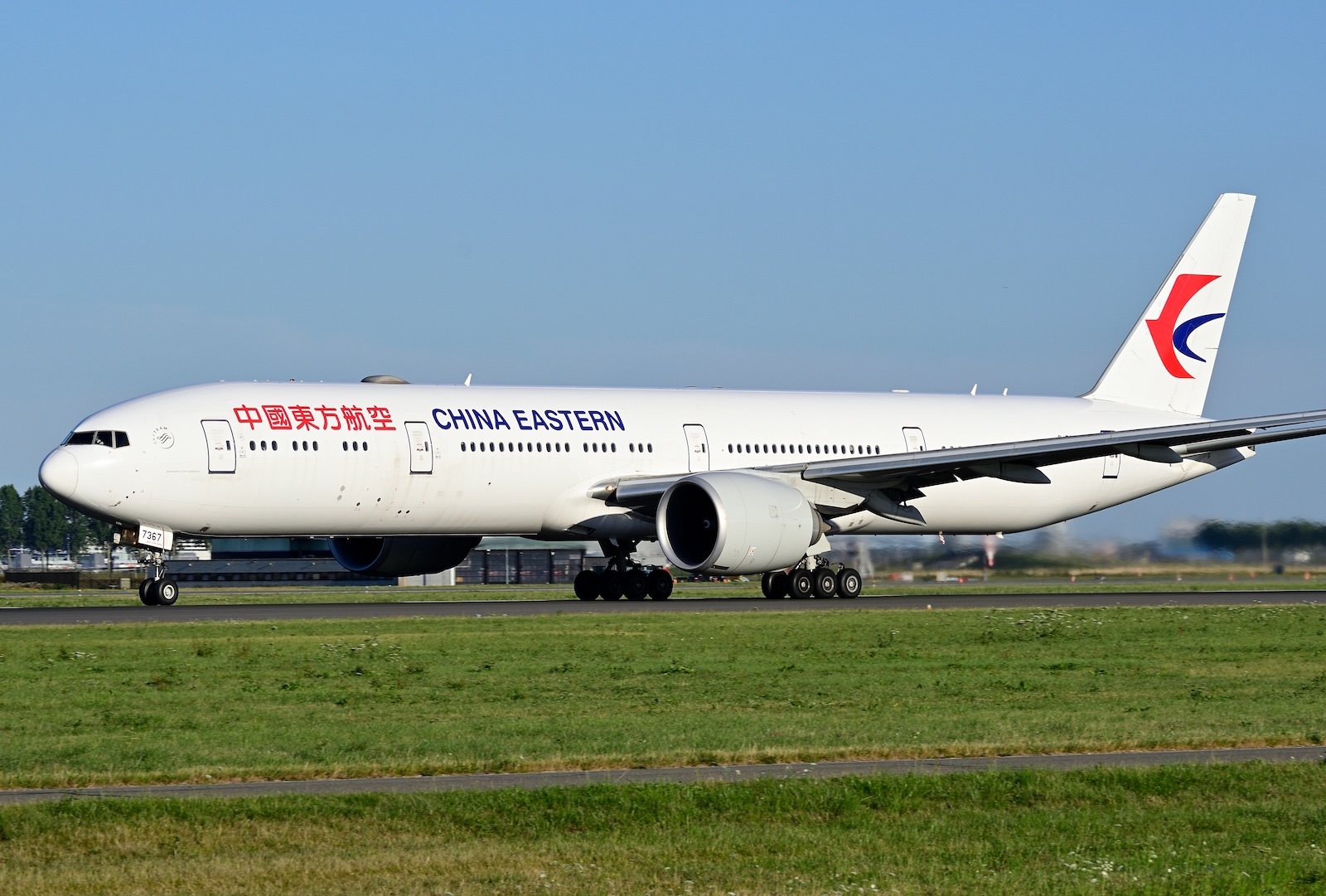
A China Eastern Boeing 777. (Photo: Shutterstock | R.D. de Boer)
A Chinese airline is set to launch the world’s longest commercial flight later this year.
Starting Dec. 4, China Eastern Airlines will fly an over 12,000-mile route between Shanghai and Buenos Aires. The flight from Buenos Aires to Shanghai is expected to take about 29 hours, making it the longest flight a passenger can book under a single flight number.
Flights from Shanghai to Buenos Aires will take less time, about 25 and a half hours, due to favorable high-altitude winds.
The Shanghai-Buenos Aires connection makes a single stop in Auckland, New Zealand, with passengers expected to remain on board. Because of this, the service constitutes the world’s longest “direct” flight in the world, but not the longest nonstop flight. That title belongs to Singapore Airlines’ 19-hour service between Singapore and New York.
Currently, the longest “direct” flight is Air China’s Beijing-to-São Paulo route, which stops in Madrid.
China Eastern will operate the Shanghai-Buenos Aires service with a Boeing 777-300ER. Flights from Shanghai to Buenos Aires will operate on Mondays and Thursdays, while return flights are scheduled for Tuesdays and Fridays.
The route was first announced in June at a meeting in Shanghai involving representatives of China Eastern and New Zealand Prime Minister Christopher Luxon. At the time, officials said the service would begin in December, but no official start date or weekly schedule was made public.
Zach Vasile is a writer and editor covering news in all aspects of commercial aviation. He has reported for and contributed to the Manchester Journal Inquirer, the Hartford Business Journal, the Charlotte Observer, and the Washington Examiner, with his area of focus being the intersection of business and government policy.
SkyWest Bets on New European Regional Jet
SkyWest announced this week that it is partnering with a European aerospace firm developing a next-generation regional jet.
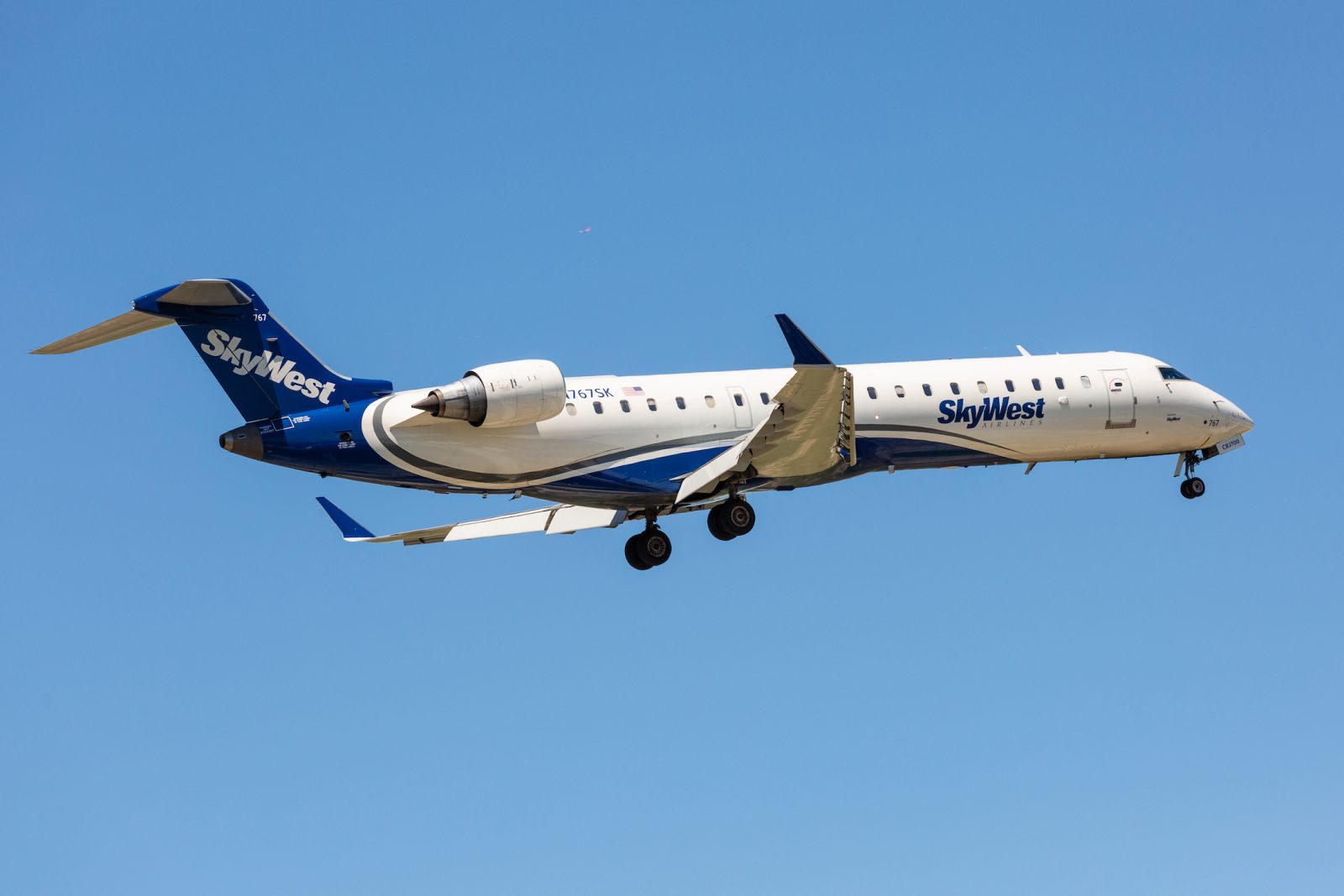
A SkyWest Airlines Bombardier CRJ-700 aircraft on final approach at O'Hare International Airport. (Photo: Shutterstock | Carlos Yudica)
SkyWest announced this week that it is partnering with a European aerospace firm developing a next-generation regional jet.
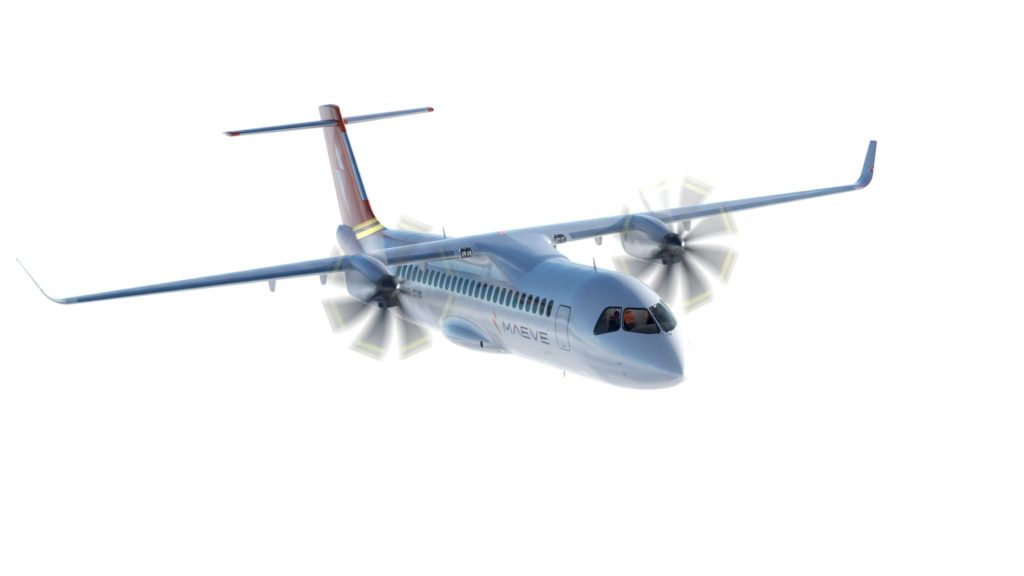
The Utah-based company, which serves as the corporate parent of SkyWest Airlines and SkyWest Leasing, said Monday that it entered into a strategic agreement as an equity investor in Maeve Aerospace. Maeve is developing a more fuel efficient, 50 to 100-seat passenger aircraft known as the Maeve zJet, or the MJ 500, and as part of the deal, SkyWest will have exclusive launch customer rights.
The company expects to “lend Maeve its extensive operations, performance, and design expertise” through the development of the Maeve Jet. Maeve has said that the aircraft could be ready for its first flight in 2029 or 2030, but no firm date has been established.
“SkyWest is committed to leading our industry forward, and we’re pleased to invest in Maeve as the leading edge of technological, sustainable advancements for regional aviation,” SkyWest President and CEO Chip Childs said in a news release.
Financial details of the agreement were not disclosed.
New ‘Milestone’
Maeve, which is co-headquartered in Germany and the Netherlands, is developing the Maeve Jet in collaboration with Montreal-based MHI RJ Aviation Group. The aircraft is expected to have a top speed of Mach 0.75 and a range of between 950 nautical miles (when carrying 90 passengers) and 1,450 nautical miles (when carrying 76 passengers).
The company has made sustainability a major focus of its operations and says the Maeve Jet’s two hybrid electric engines will reduce fuel consumption by 40% when using conventional jet fuel and by up to 95% when burning sustainable aviation fuel, also known as SAF.
A rendering of the M80. (Photo: Maeve Aerospace)
“Today marks a significant milestone in regional aviation as we collaborate with SkyWest to bring the Maeve Jet to life,” said Maeve CTO Martin Nuesseler in a statement. “This investment, made by the largest regional airline in the world, not only validates our vision but also establishes a partnership that supports the development of the Maeve Jet by providing important input from an operator to generate a real impact in the market and for more sustainable air travel.”
Maeve has also partnered with Japan Airlines and Pratt & Whitney Canada on development of the Maeve Jet.
Zach Vasile is a writer and editor covering news in all aspects of commercial aviation. He has reported for and contributed to the Manchester Journal Inquirer, the Hartford Business Journal, the Charlotte Observer, and the Washington Examiner, with his area of focus being the intersection of business and government policy.
airBaltic Makes Play for Foreign Pilots
Latvian national airline airBaltic is launching, for the first time, a commuter roster that will allow pilots to commute to its bases.
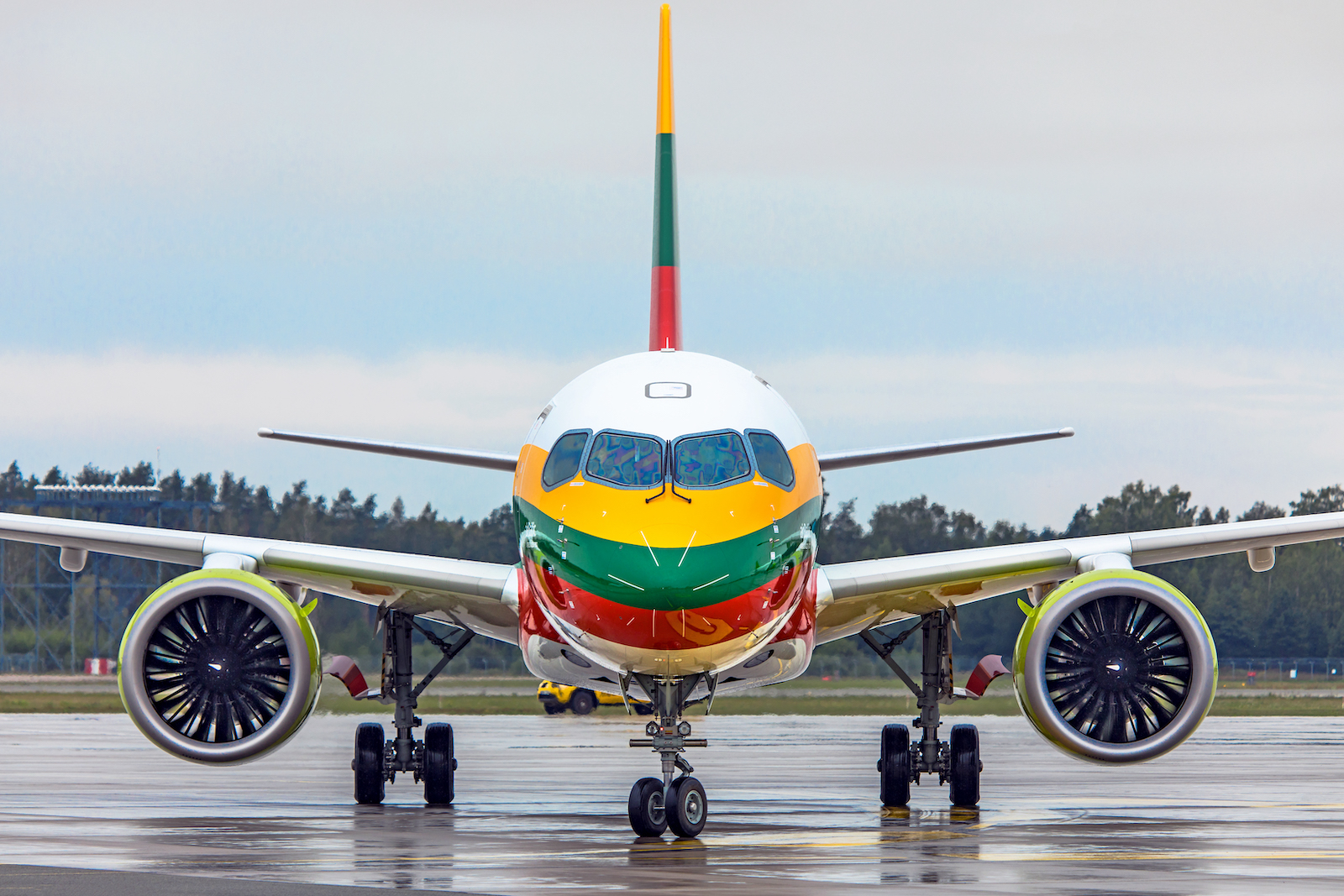
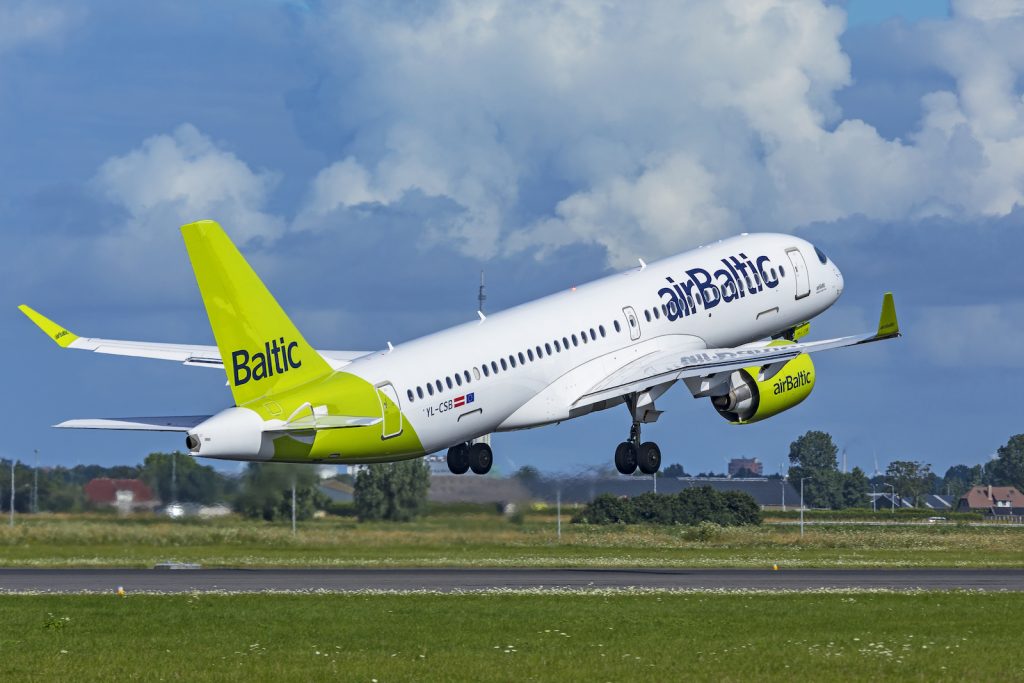
An airBaltic Airbus A220 (Photo: AirlineGeeks | William Derrickson)
Latvian national airline airBaltic has unveiled a new perk designed to attract foreign pilots.
The carrier said Monday that it is launching a commuter roster, which will allow pilots to commute to airBaltic bases instead of living near them. This will allow foreign pilots to join airBaltic without having to relocate, airline officials said.
“For the first time, we will introduce a commuting roster, giving pilots the opportunity to operate one of the youngest fleets in Europe – our Airbus A220-300 aircraft – without the need to relocate to one of airBaltic’s home bases,” said Robbert Strating, senior vice president of flight operations, in a news release.
The benefit is part of a labor contract offer to pilots that also includes more flexibility in scheduling and higher pay with “predictable increases.” For captains, the offer provides progression across 10 salary levels with guaranteed annual advancement.
An airBaltic Airbus A220 (Photo: AirlineGeeks | William Derrickson)
The changes will take effect Jan. 1, 2026.
AirBaltic is currently hiring captains and senior first officers. Its pilot academy is also accepting applications.
The airline flies only one type of aircraft, the A220-300, and has 50 in its fleet. It flies mainly within continental Europe but also has routes to the U.K., Ireland, Iceland, North Africa, and the Middle East.
Zach Vasile is a writer and editor covering news in all aspects of commercial aviation. He has reported for and contributed to the Manchester Journal Inquirer, the Hartford Business Journal, the Charlotte Observer, and the Washington Examiner, with his area of focus being the intersection of business and government policy.
Ryanair CEO Says Airline Might Not Resume Israel Flights
Ryanair Group CEO Michael O’Leary said the airline might not resume flights to Israel even after current violence in the region subsides.
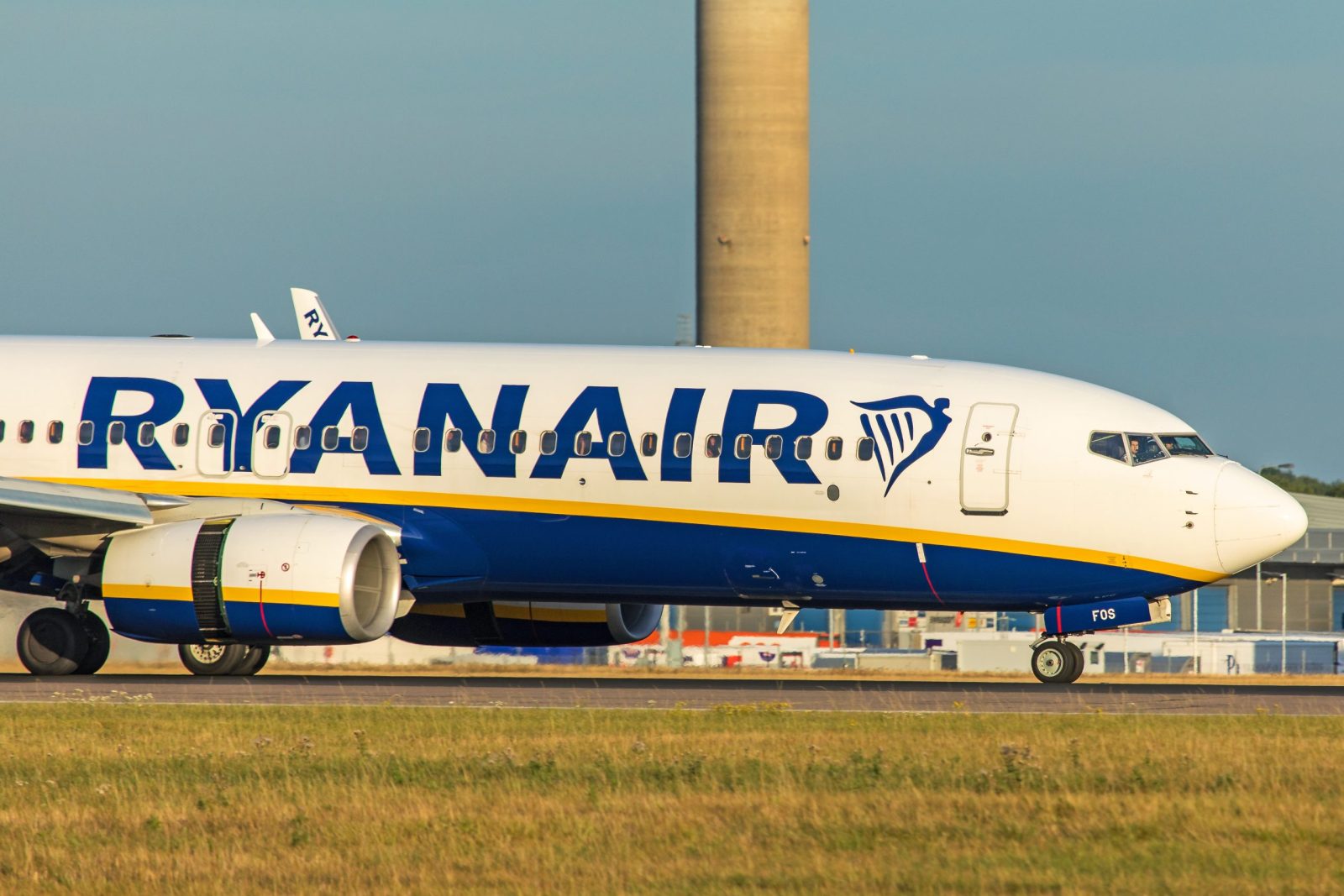
A Ryanair 737 taxiing in London. (Photo: AirlineGeeks | William Derrickson)
Ryanair Group CEO Michael O’Leary said the airline might not resume flights to Israel even after violence in the region subsides.
The Irish low-cost carrier’s flights to and from Tel Aviv have been suspended for months amid the war in Gaza, with the airline previously stating it would not return before October 25 at the earliest.
Speaking to journalists in Dublin on Thursday, O’Leary said there is a “real possibility that we won’t bother going back to Israel” due to frustration with Israeli airport authorities.
The core issue, according to O’Leary, is a dispute over terminal fees at Tel Aviv’s Ben Gurion Airport. He explained that the airport has both a low-cost terminal and a more expensive main terminal. During security threats, the low-cost terminal is closed, and airlines are forced to use the high-cost terminal while being charged its higher rates.
“We have been messed around by the Israelis,” O’Leary said, expressing that his patience is limited. “Unless the Israelis kind of get their act together and stop messing us around, frankly, we have far more growth elsewhere in Europe.”
O’Leary said he has “absolutely none” when asked about any brand or ethical qualms, adding, “As long as it is safe to fly there, we’ll be happy [to] fly to Israel.”
This is not the first time the airline has voiced frustration with the security situation at Ben Gurion. In May, when Ryanair canceled services to Tel Aviv through July 31, O’Leary was quoted as saying he was “losing patience.”
While flights to Israel remain up in the air, O’Leary confirmed that the airline plans to resume service to neighboring Jordan either this month or next.
AirlineGeeks.com was founded in February 2013 as a one-person blog in Washington D.C. Since then, we’ve grown to have 25+ active team members scattered across the globe. We are all here for the same reason: we love deep-diving into the fascinating realm of the airline industry.
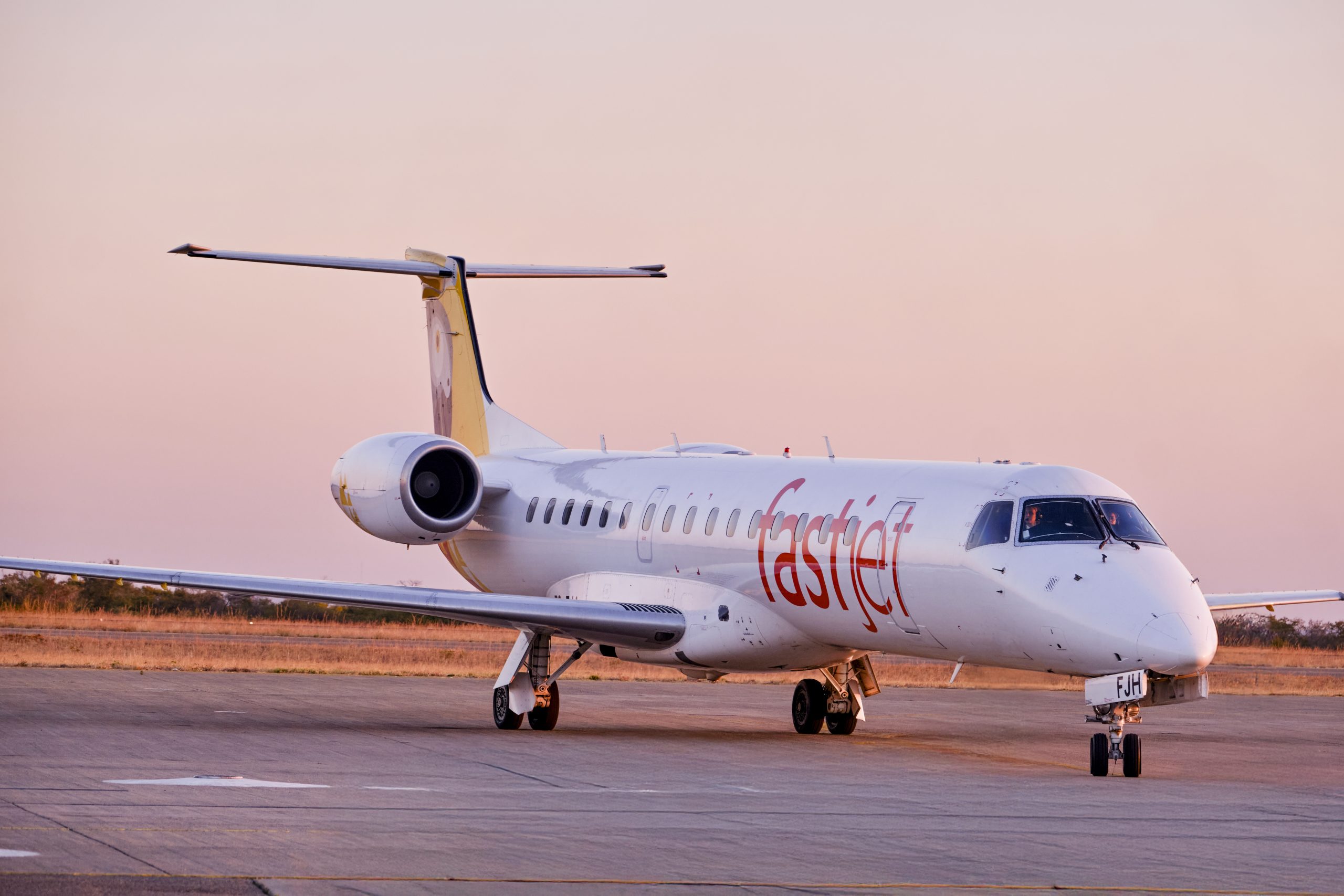
Fastjet Zimbabwe is expanding service between Johannesburg and Harare with flights aimed at business travelers.
In a statement, the carrier said it will add an early morning flight from Johannesburg to Harare, and a return flight from Harare to Johannesburg in the evening.
“We are always looking at providing our customers with flexible flight times to better suit their travel needs. In the past months, we have witnessed a growing demand from businesspeople for an early morning departure from Johannesburg to Harare. Our Fastjet flight FN8220 now allows our customers an early morning departure from Johannesburg, resulting in a full business day in Harare,” said Vivian Ruwuya, Fastjet Zimbabwe’s chief commercial officer, in a news release.
New Flights
The new flights will start Sept. 29 and will operate daily with the exception of Saturdays. The service will use Embraer ERJ145 aircraft.
Fastjet Zimbabwe in April introduced three times weekly service between Harare and Lusaka, Zambia. The privately-owned airline also launched service between Victoria Falls and Bulawayo last month, operating four times a week.
Lorne is a South Africa-based aviation journalist. He was captivated and fascinated by flying from the day he took his first airline flight. With a passion for aviation in his blood, he has flown to destinations in all corners of the globe. Lorne has traveled extensively and lived in various countries. Drawing on his travels and passion for aviation, Lorne enjoys writing about airlines, routes, networks, and new developments.
Trip Report: Flying On The Twin Otter with Harbour Air
A short flight on Harbour Air's Twin Otter offered gorgeous views of the islands and water between Victoria and Vancouver.
Walking out to my aircraft for the flight up to Vancouver. (Photo: AirlineGeeks | Joey Gerardi)
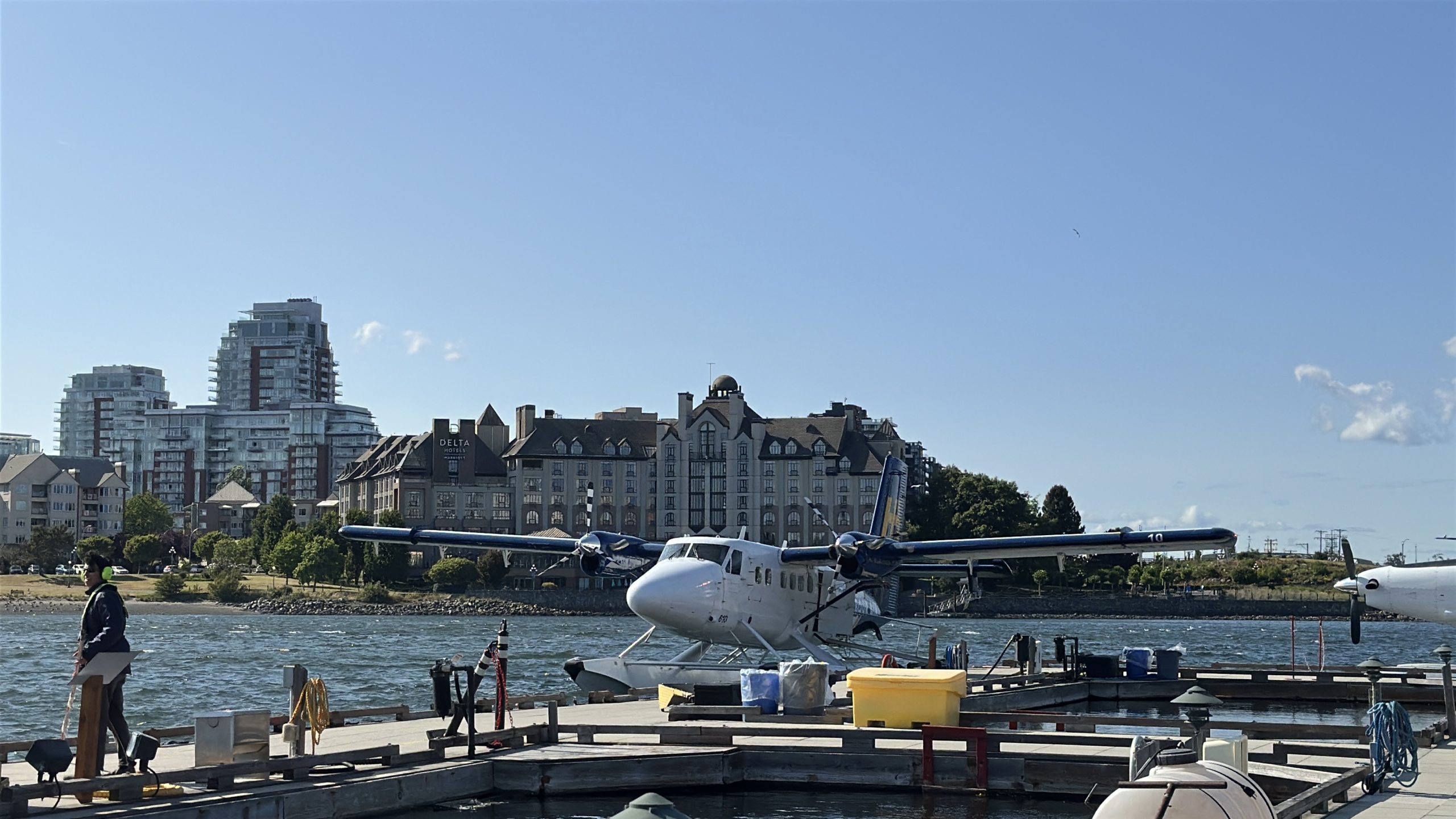
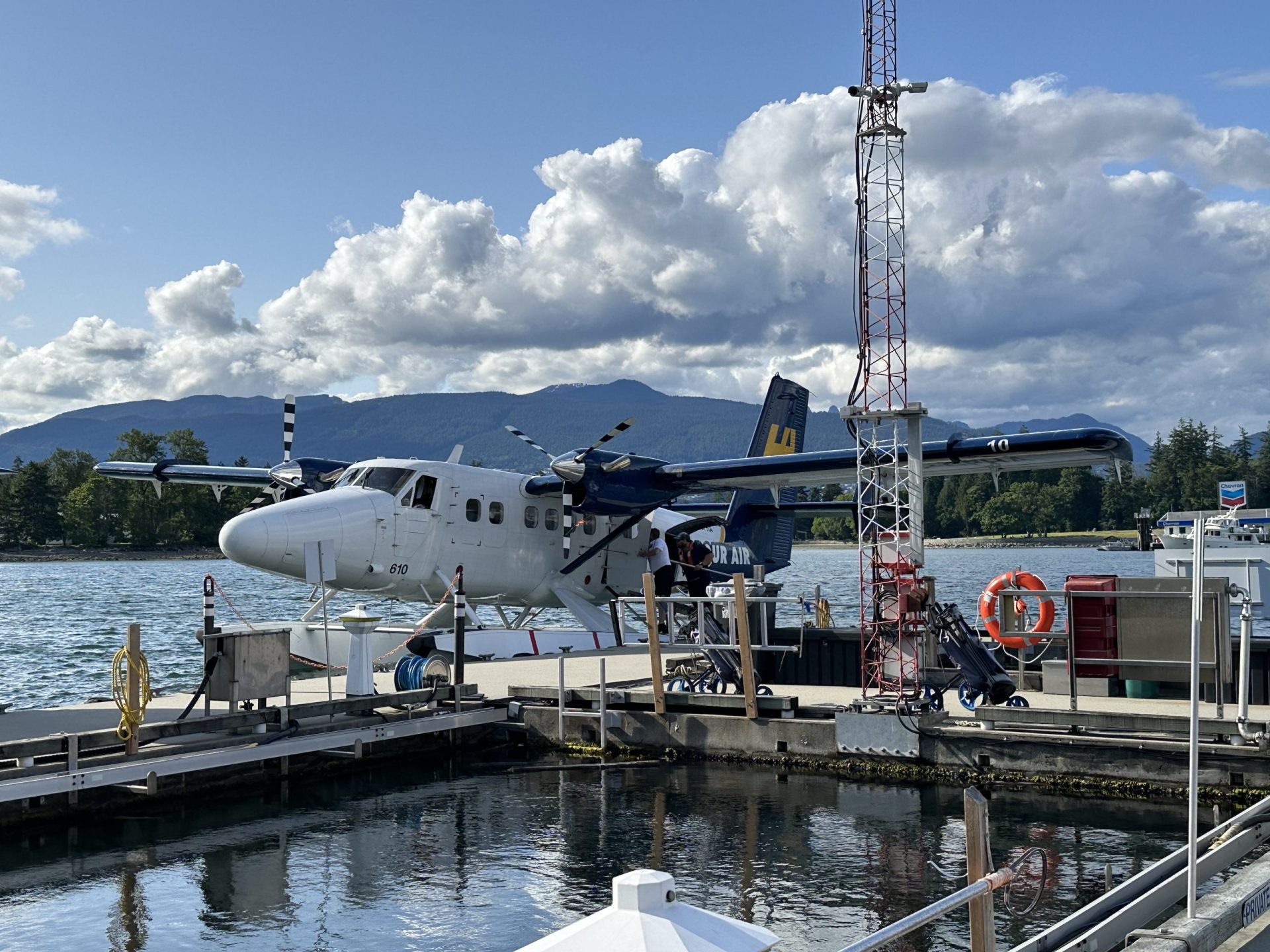
Harbour Air, North America’s largest commercial seaplane operator, has its main headquarters at the Vancouver Harbour Flight Centre located at Coal Harbour in downtown Vancouver. Commuters and AvGeeks alike can see the airline’s fleet of aircraft buzzing in and around Vancouver during the daylight hours.
A Harbour Air Twin Otter at Vancouver Harbour. (Photo: AirlineGeeks | Joey Gerardi)
Everyone loves a great seaplane ride, especially AvGeeks, since finding an operator with high-frequency flights is rare, especially within North America.
Commercial flights, seaplane or otherwise, onboard aircraft such as the DHC3 or Twin Otter are becoming few and far between in North America, with only a few operators left. The majority are in the Caribbean and Canada.
We had the opportunity to take a ride on the famous Twin Otter on Harbour Air’s busiest route in its network, which operates between Victoria Harbour and the Vancouver Harbour Flight Centre with a frequency of at least 20 times a day, and sometimes even more during peak travel times or days of the week.
Day of the Flight
Because Harbour Air operates from small terminals usually in downtown harbors, and sometimes just random docks in the remote Canadian wilderness, the check-in process can vary greatly, so make sure to check with the airline for the specific check-in requirements for your flight.
The Victoria Harbour seaplane terminal. (Photo: AirlineGeeks | Joey Gerardi)
For me, flying out of Victoria Harbour, the carrier operates out of a very nice terminal right in the heart of Victoria’s downtown. Since its largest aircraft only seats 19 passengers, there is no security checkpoint you have to go through before the flight, and the airline recommends that you get to the airport about 40 minutes before the scheduled departure time. Make sure you don’t get there too late, as the check-in cutoff is 15-20 minutes before the flight, depending on the ticket type.
As you walk in the main door, the ticket counters are to the right, along with a giant route map, which was super cool to see on such a large scale. For check-in, you weren’t given a typical-looking boarding pass, and instead got what looks like a receipt from a grocery store with a flight.
The gate/check-in area was really nice with plenty of comfortable seating options, and for those wanting to get some work done, they do offer really fast free Wi-Fi. It wasn’t long before they announced the boarding, which happened about 10 minutes before the scheduled departure time. We handed them the receipt we got during check-in, and then we headed out to the aircraft for the flight.
The star of the show was C-GFHA, a DeHavilland Twin Otter that was originally built in 1981 and flew for a handful of different airlines before coming to Harbour Air in February 2018.
There are no assigned seats on this airline, and it has an open seating policy, meaning that the earlier you get on, the more likely you are to get a window seat, especially when the flight is close to full, like mine was with 15 of the 19 passenger seats taken.
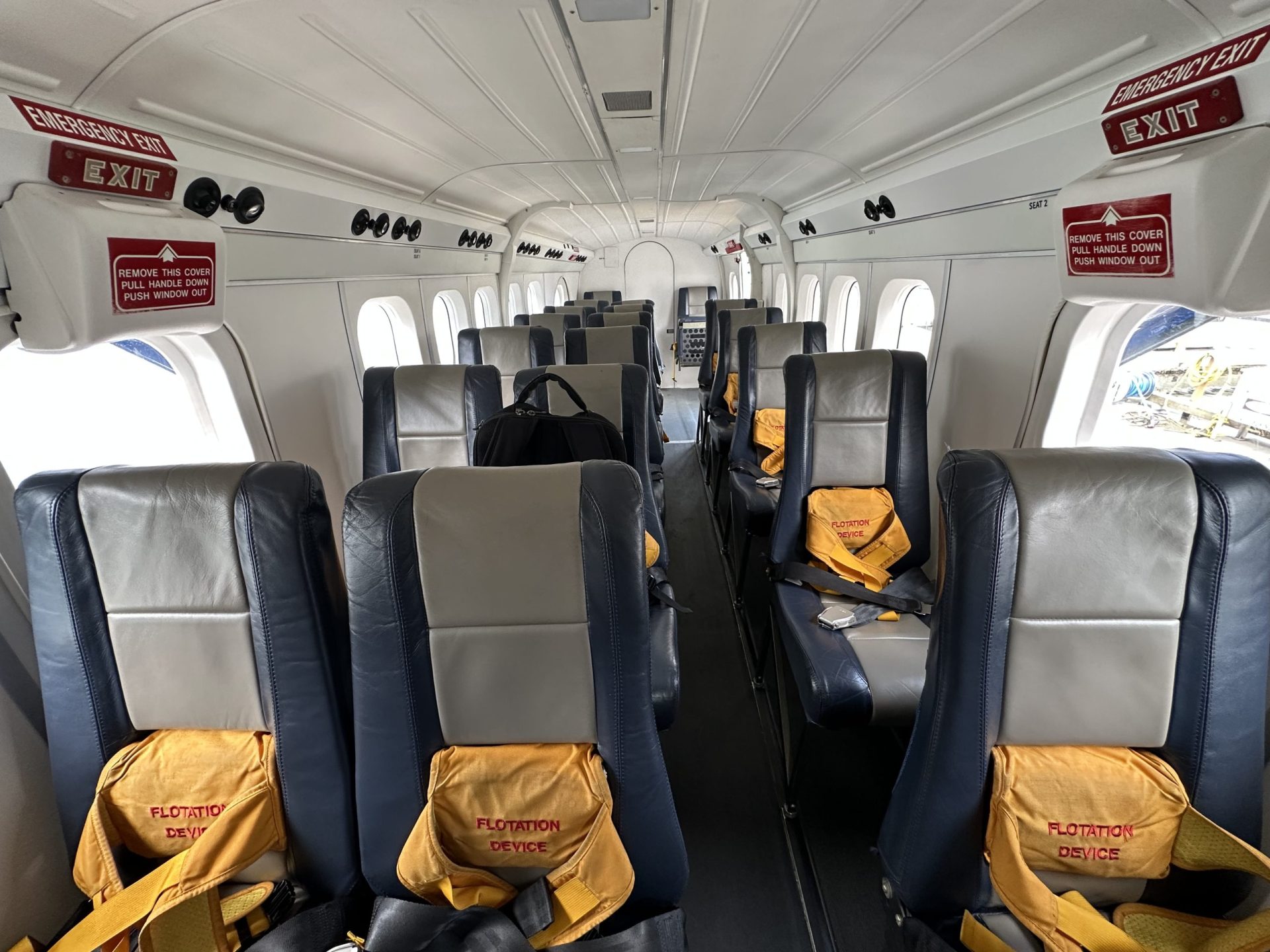
The passenger cabin of Harbour Air’s Twin Otter. (Photo: AirlineGeeks | Joey Gerardi)
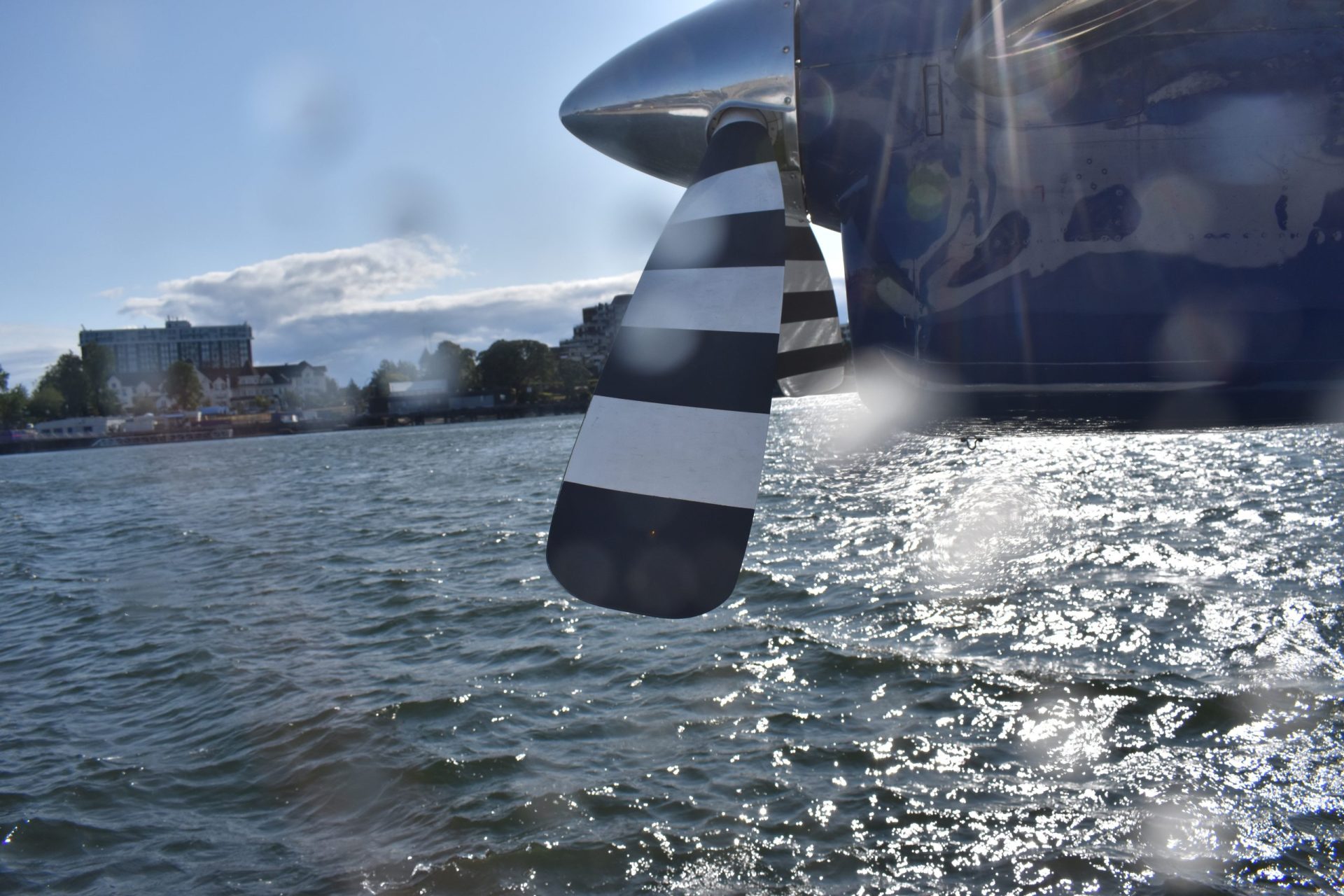
The passenger cabin is laid out in a 1-2 configuration, which means aisle seats do exist, and even though the windows are big, it is nice getting a window seat so you can sit right next to it. Also, at every seat was a flotation device/life vest, which you buckled around your waist along with your seatbelt when sitting in your seat. This is standard for all Harbour Air flights. I chose a seat in the front row on the right side of the aircraft, which offered a great view of the propeller.
The view from my seat on Harbour Air’s Twin Otter. (Photo: AirlineGeeks | Joey Gerardi)
Prior to taxiing out, the pilot put their iPad in a slot on the front wall to show us the flight safety video. After the video was finished, they started the engines and we taxied out to the water runway, which was marked by buoys in Victoria Harbour.
Takeoff didn’t take long at all, given that the aircraft is made for short takeoff and landings, and we were on our way for the short flight up to Vancouver Harbour.
Taking off from Victoria Harbour. (Photo: AirlineGeeks | Joey Gerardi)
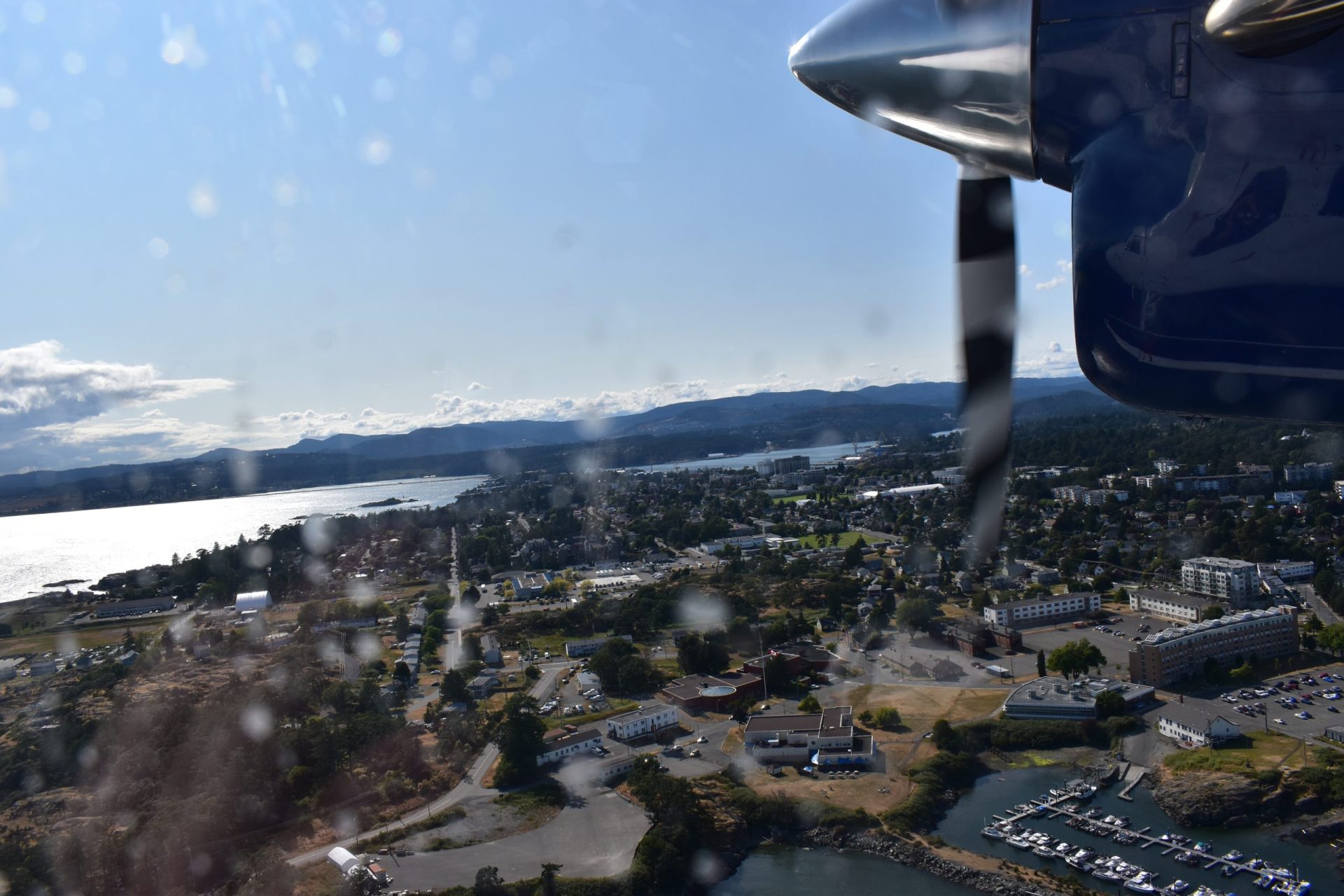
After takeoff, we banked to the left and headed directly for Vancouver. The weather was fantastic and there weren’t many clouds to speak of, meaning the views were absolutely spectacular, especially since we were cruising at an altitude of only 3,520 feet.
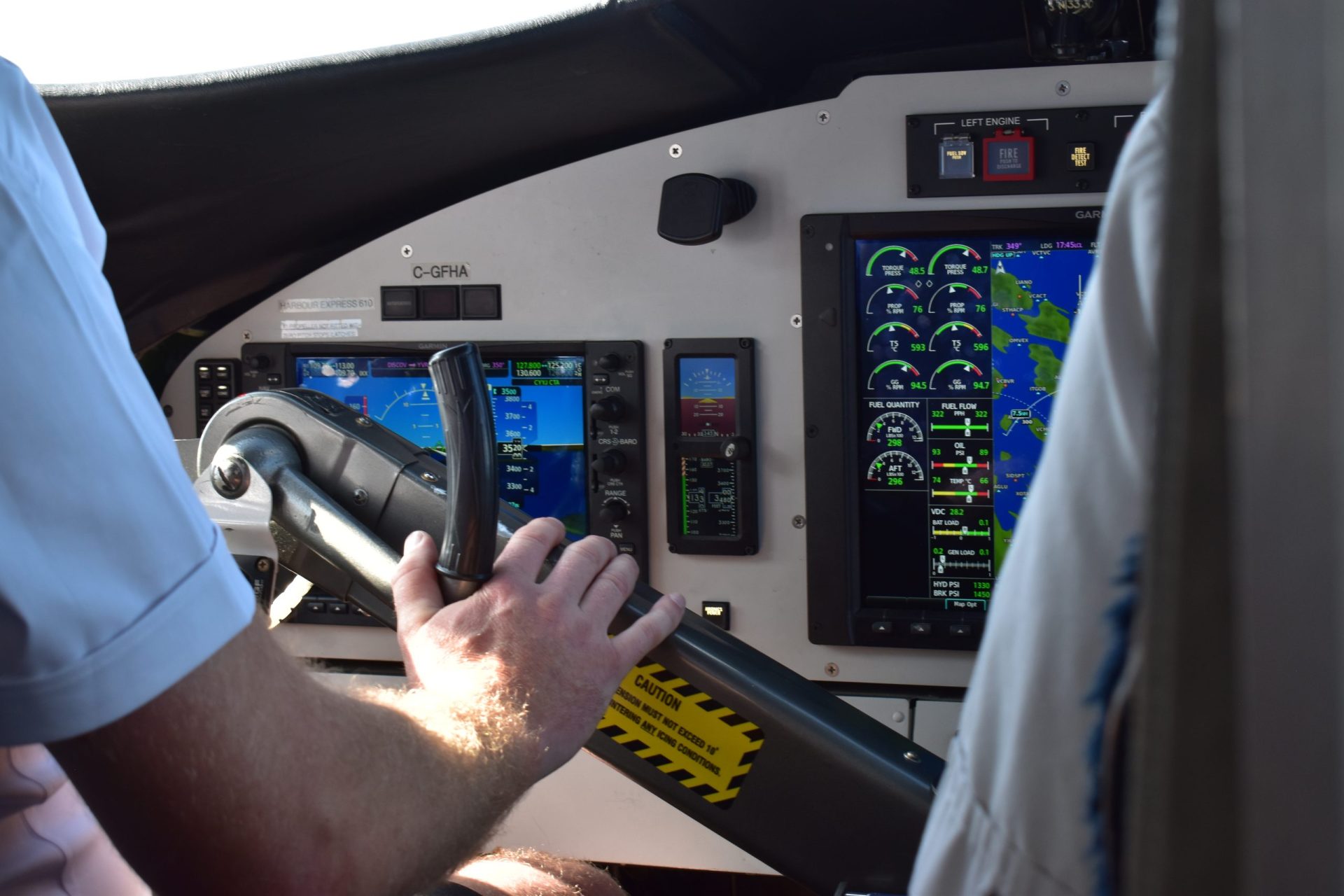
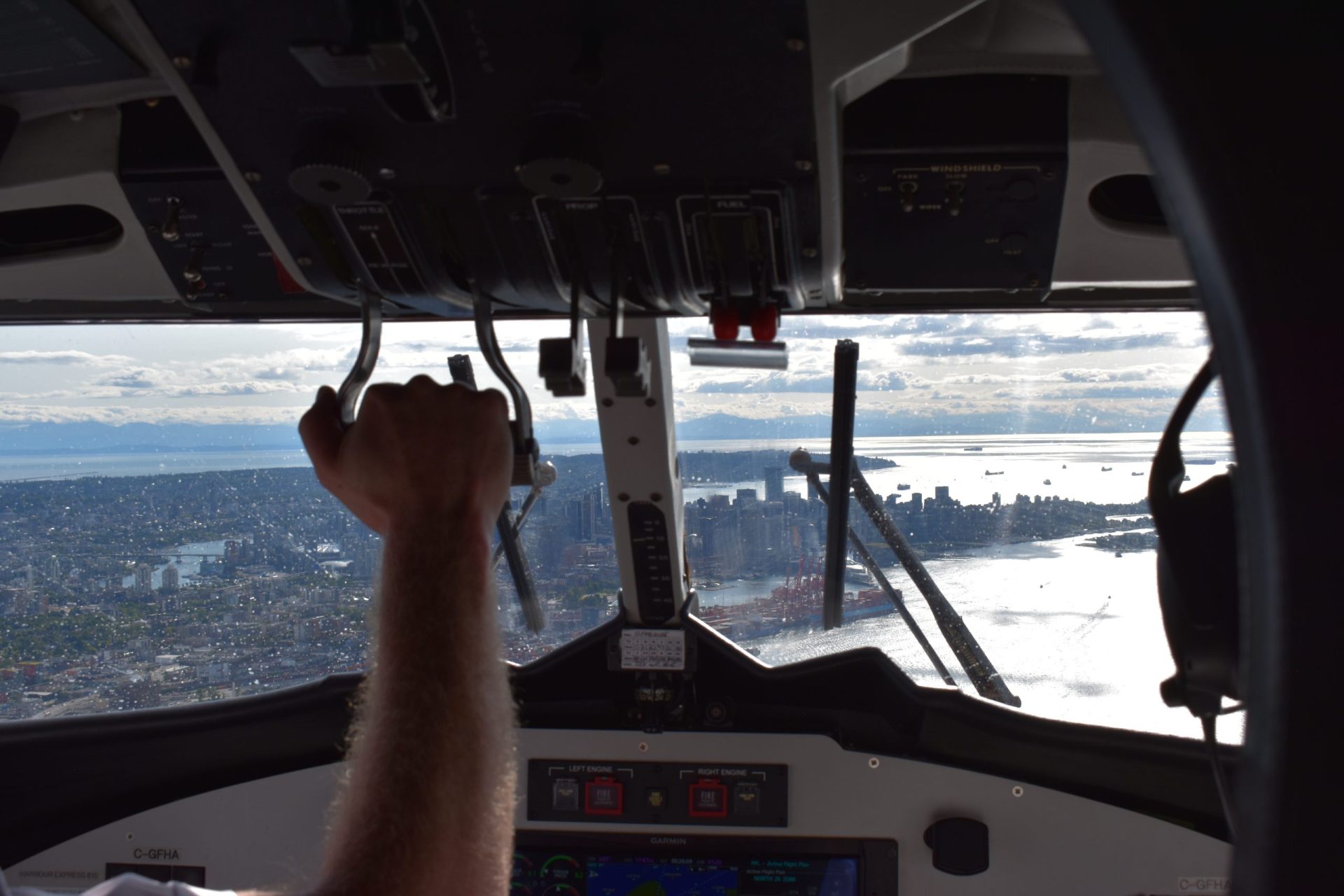
In the first row, we had the opportunity to look directly into the cockpit and see all of the instruments on the panel, which was really cool for AvGeeks like myself. Above, or next to your head, there was a reading light as well as air vents to keep you cool during the fight. In the seatback packet, there was the safety card as well as earplugs, which come in handy, especially for those who don’t like loud noises, and a sick bag, which luckily nobody had to use during this flight.
Looking into the cockpit, right from my seat. (Photo: AirlineGeeks | Joey Gerardi)
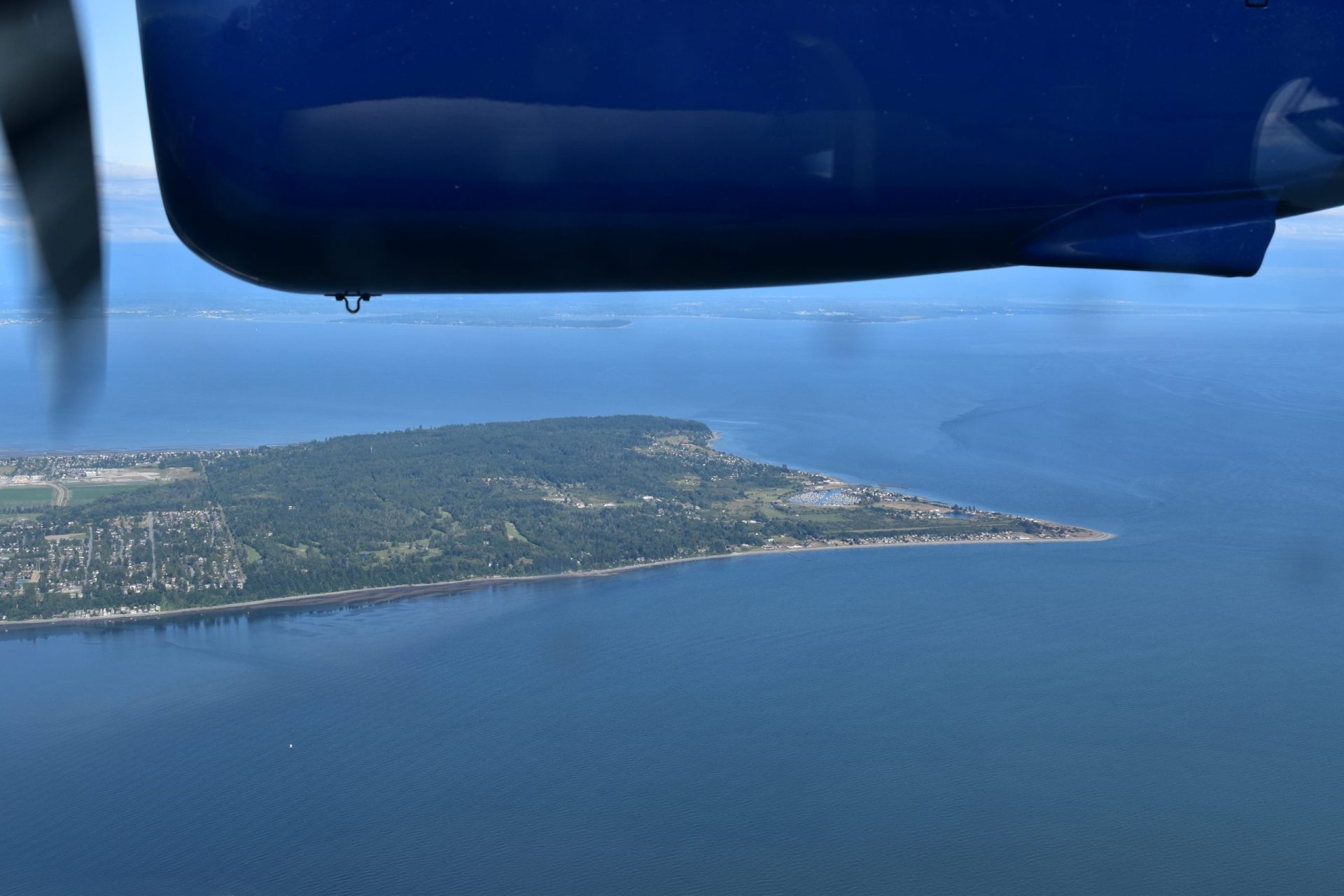
Along the way, we passed over many islands as we crisscrossed into the United States and back into Canada. This is a small seaplane, so obviously, there was no in-flight entertainment, Wi-Fi, or anything like that. But with views and weather like we had, we didn’t need other entertainment.
It’s also cool that, even without internet, you can see exactly where you are on the map if you’re in the first couple of rows, because you can see the GPS on the instrument panel in the cockpit.
I spent the entirety of the flight looking out at the views beneath me as we flew towards Vancouver.
Flying by various islands in Canada and the U.S. (Photo: AirlineGeeks | Joey Gerardi)
One interesting thing to point out is that the control tower for the Vancouver Harbour Flight Centre is the highest in the world, standing at 466 feet. Most in the aviation world do not give it the distinction of tallest tower, however, because it is simply a control tower box put on top of a building in Vancouver, not a purpose-built control tower.
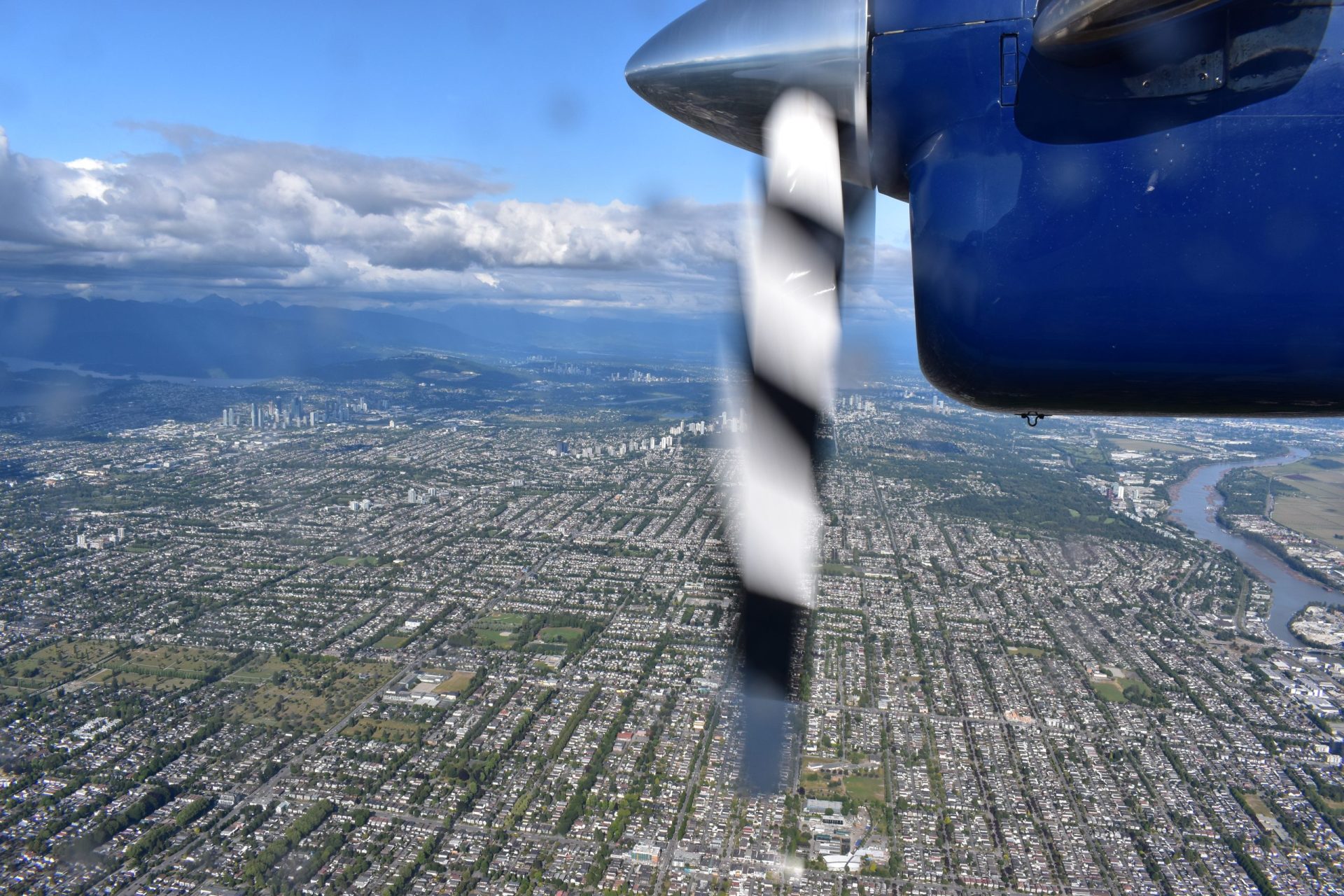
Flying over the southern suburbs of Vancouver. (Photo: AirlineGeeks | Joey Gerardi)
It was also cool that I could hear air traffic control audio from this flight as well, as it is very rare to find seaplane airports with dedicated air traffic control frequencies. The audio can be heard in the video at the end of this story.
Looking out of the front window prior to landing. (Photo: AirlineGeeks | Joey Gerardi)
We landed in downtown Vancouver Harbour at 5:46 p.m. after only 28 minutes of flight time.
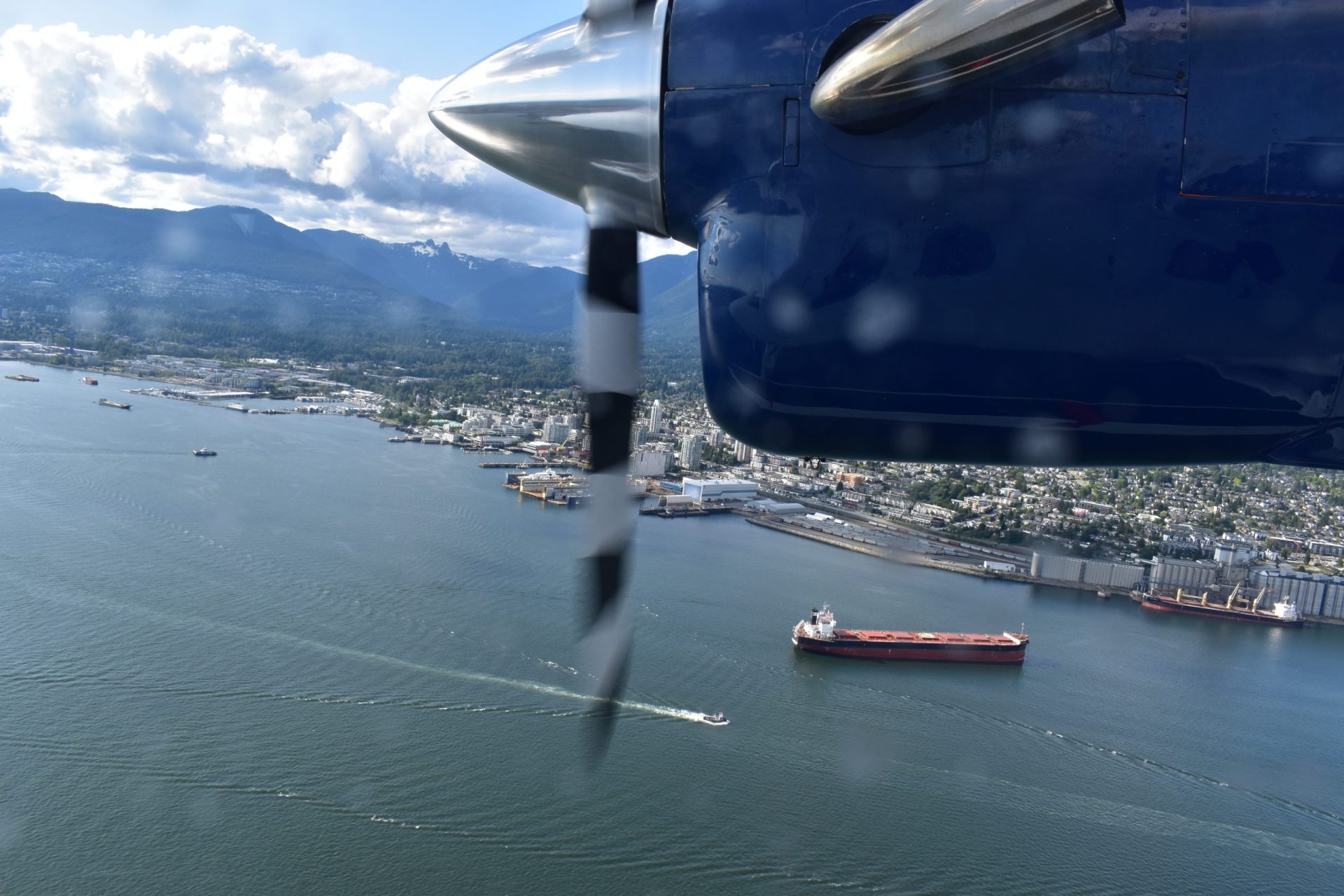
On approach to Vancouver Harbour. (Photo: AirlineGeeks | Joey Gerardi)
I had an absolutely wonderful time on Harbour Air, and I’m so glad I finally got to try out the Twin Otter. This is by far the quickest and easiest way to get between Victoria and Vancouver, especially if you’re going between the two downtown areas.
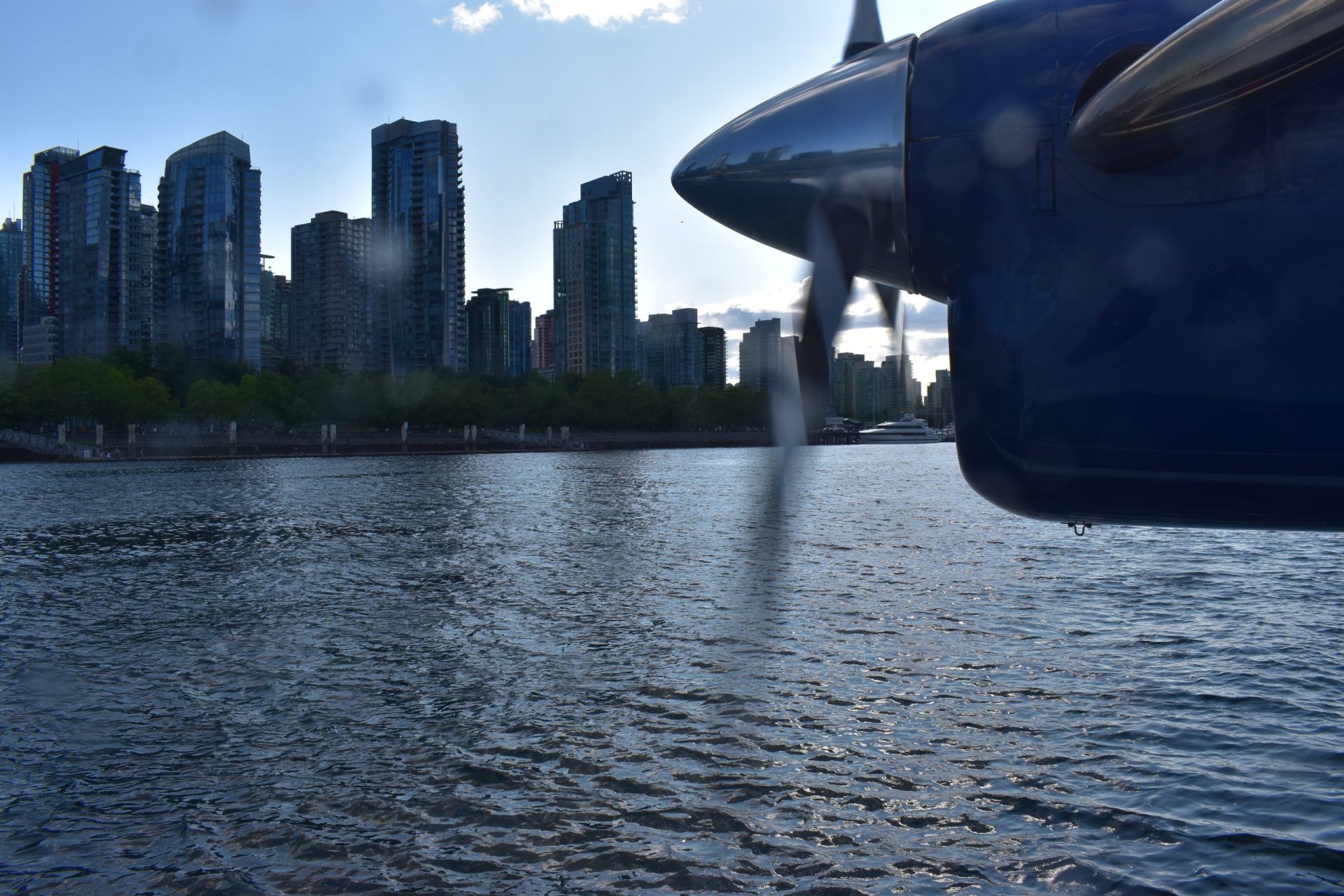
Pulling into the Vancouver Harbour Flight Centre. (Photo: AirlineGeeks | Joey Gerardi)
It is also one of the easiest ways for AvGeeks in the U.S. and Canada to fly on the Twin Otter given how frequently it operates. The flight is also operated with the DeHavilland DHC-3.
A video account of this article can be found below:
Editor’s Note: Harbour Air provided AirlineGeeks with a seat on this flight, but this trip report is an objective portrayal of events and is in no way swayed.
Joey has always been interested in planes for as long as he can remember. He grew up in Central New York during the early 2000s when US Airways Express turboprops ruled the skies. Being from a non-aviation family made it harder for him to be around planes and would only spend about three hours a month at the airport. He was so excited when he could drive by himself, the first thing he did with his driver's license was get ice cream and go plane spotting for the entire day. He graduated from Western Michigan University in 2022 with a B.S. in Aviation Management & Operations and a Minor in Business, and currently works for a major airline in his hometown.
Sign-up for newsletters & special offers!
Get the latest stories & special offers delivered directly to your inbox