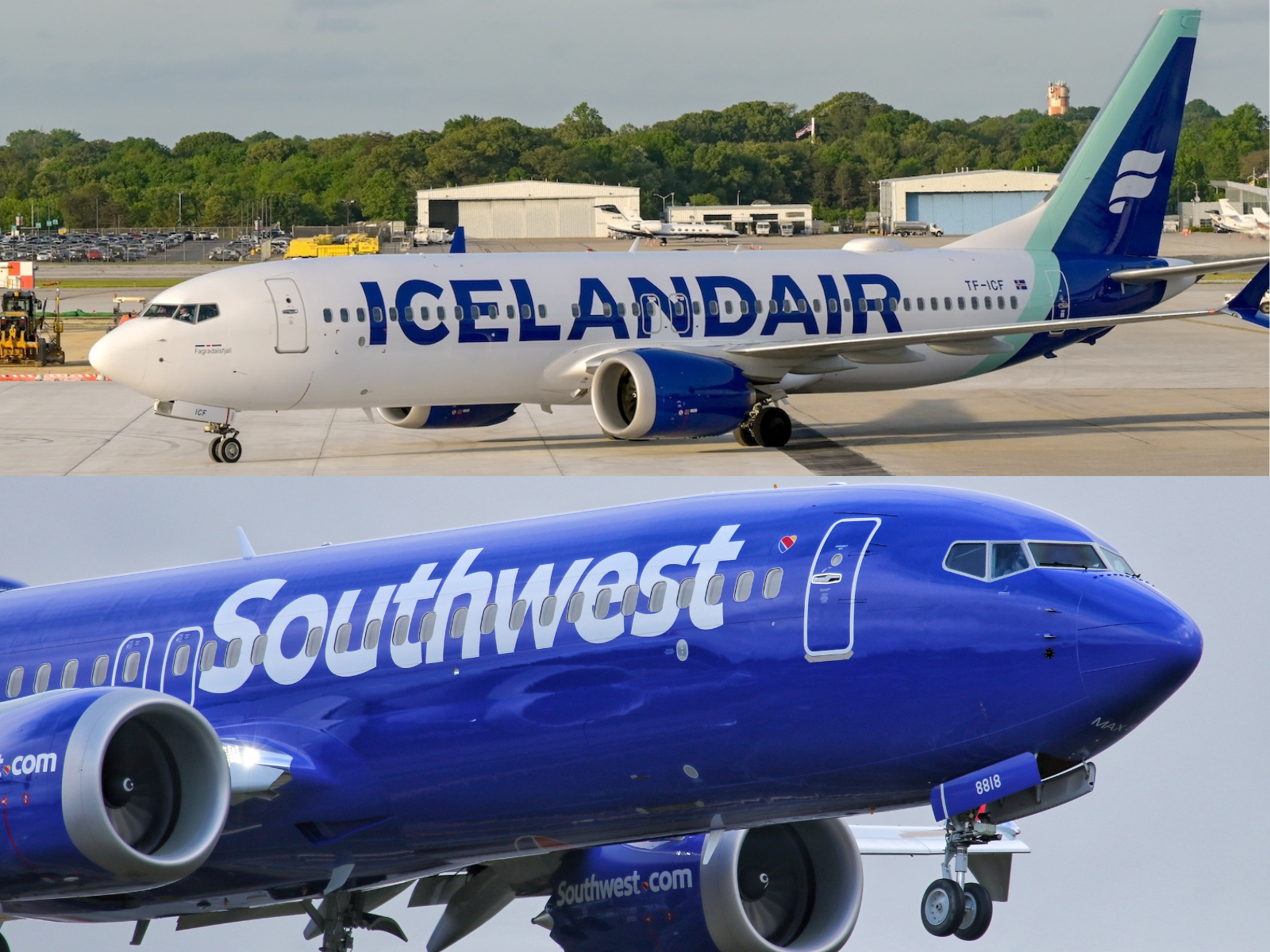
Icelandair and Southwest 737 MAX aircraft (Photo - Top: Shutterstock | Ceri Breeze Bottom - AirlineGeeks | Katie Zera)
Southwest and Icelandair are deepening their partnership, building on a collaboration that has already connected passengers across North America and Europe through a growing number of interline gateways.
The two carriers formalized their partnership in January, following an initial Memorandum of Understanding signed in September 2024. This agreement marked Southwest’s first airline partnership, enabling customers to book itineraries that combine flights from both airlines.
In addition, the partnership allows passengers to check their luggage through to their final destination.
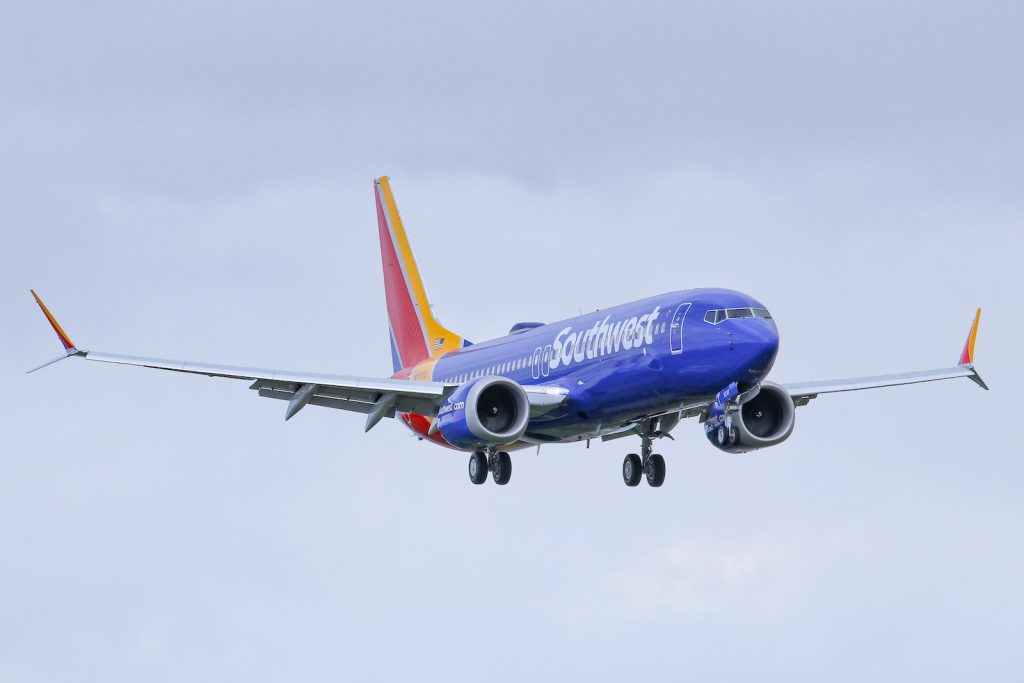
A Southwest 737 MAX 8 (Photo: AirlineGeeks | Katie Zera)
On Monday, the airlines announced the next phase of their cooperation: the addition of three new U.S. gateway cities, including Orlando, Florida; Pittsburgh, Pennsylvania; and Raleigh-Durham in North Carolina. These newly added connections are now available for booking, with flights set to begin on July 14, a Southwest spokesperson shared.
Currently, customers can book these combined itineraries through Icelandair’s website and select third-party booking platforms. Southwest plans to integrate these options into its own booking channels in 2026, coinciding with the introduction of assigned seating.
Ryan founded AirlineGeeks.com in February 2013 and has spent more than a decade covering the airline business. His work has been featured by CNN, WJLA, CNET, and Business Insider. His aviation experience spans airport operations, Part 135 regulatory compliance, and airline crew workforce planning, along with time behind the yoke of a Cessna 172 and interviews with airline executives. Ryan now serves as Group President of Firecrown Media’s Aviation Group. He holds a B.S. in Air Transportation Management and an MBA from Arizona State University and teaches Airline Management at Embry-Riddle Aeronautical University.
As first flagged by X user STL Aviation News, Southwest’s newest partner is Taiwan’s China Airlines. This new tie-up was announced via Southwest’s website on Sunday.
“As we continue our mission to bring more choices to our Customers, we’re thrilled to announce our newest interline partnership with China Airlines (CAL), a Taiwan-based carrier,” the airline states on its website.
According to Southwest, China Airlines passengers will be able to connect onto its flights from a handful of West Coast airports, including Los Angeles, Seattle, San Francisco, and Ontario, California.
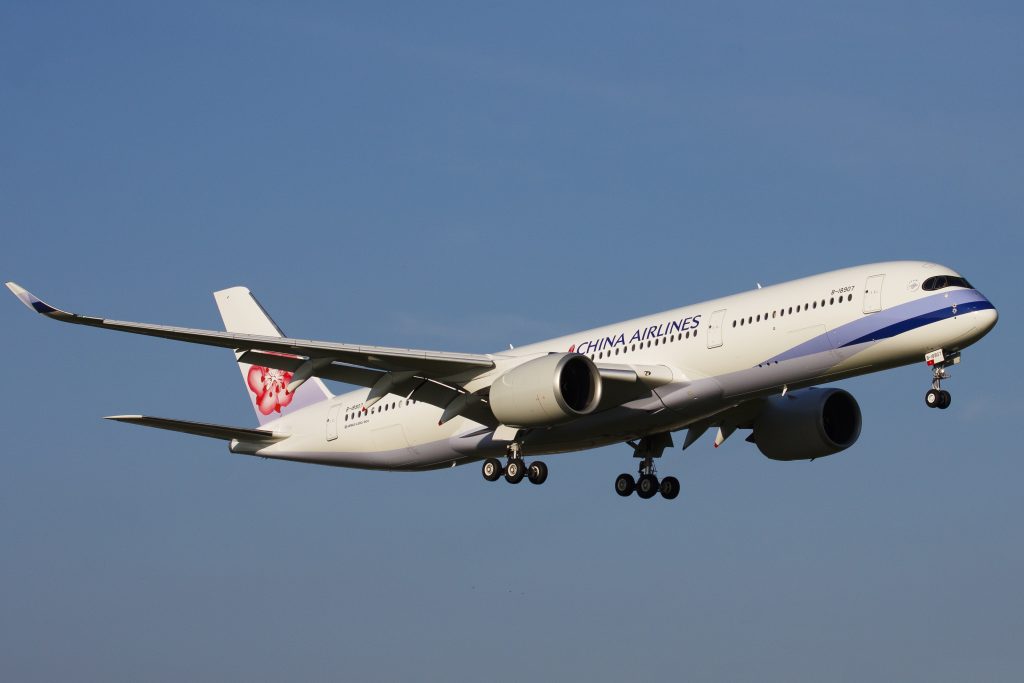
A China Airlines Airbus A350-900 (Photo: AirlineGeeks | Fabian Behr)
Connections will be made available “later in 2025,” Southwest says, with service kicking off in early 2026.
“Keep an eye out for more details as we continue to develop our trans-Pacific airline partnerships,” the carrier added.
“As we do think about adding, for example, long-haul international, that Open Skies application and joining IATA certainly helps those decisions. But we’re going to be thoughtful. We’re going to step through the strategy question carefully,” Southwest CEO Bob Jordan said during a recent investors conference.
Ryan founded AirlineGeeks.com in February 2013 and has spent more than a decade covering the airline business. His work has been featured by CNN, WJLA, CNET, and Business Insider. His aviation experience spans airport operations, Part 135 regulatory compliance, and airline crew workforce planning, along with time behind the yoke of a Cessna 172 and interviews with airline executives. Ryan now serves as Group President of Firecrown Media’s Aviation Group. He holds a B.S. in Air Transportation Management and an MBA from Arizona State University and teaches Airline Management at Embry-Riddle Aeronautical University.
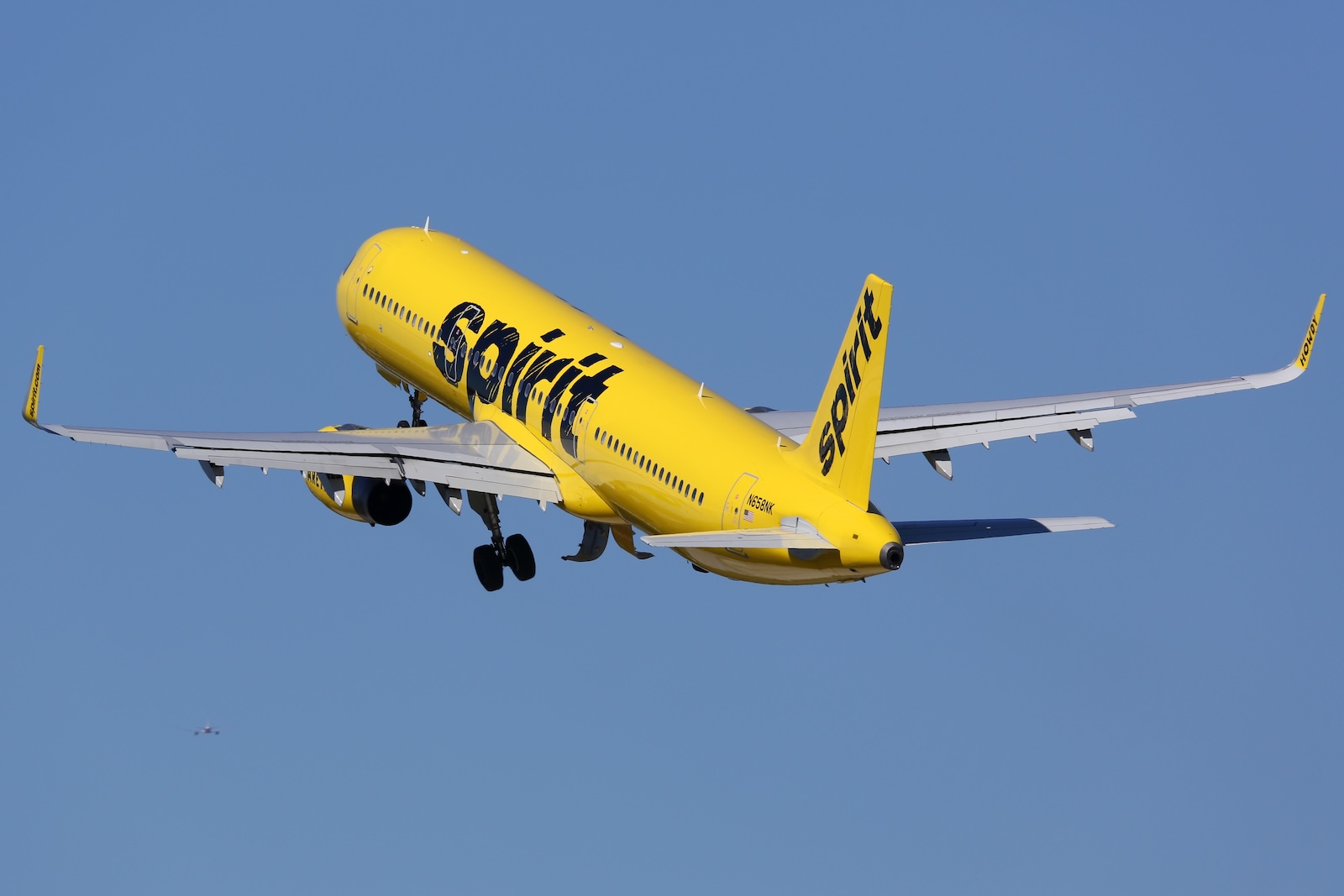
A Spirit Airbus A321 (Photo: Shutterstock | Markus Mainka)
Spirit reported a net loss of $10.9 million for the period following its emergence from Chapter 11 bankruptcy, according to the carrier’s first-quarter 2025 filing with the U.S. Securities and Exchange Commission.
The quarterly results were divided between two accounting periods due to the application of fresh start accounting: the “Predecessor” period, covering Jan. 1 through March 12, and the “Successor” period, spanning March 13 through March 31.
During the Successor period, Spirit recorded total operating revenues of $257.0 million against $259.0 million in operating expenses, resulting in an operating loss of nearly $2.0 million. After accounting for $9.1 million in additional non-operating expenses — mainly interest payments — the ultra-low-cost airline reported a net loss of around $11 million.
During the full quarter from Jan. 1 to March 31, the carrier posted a net loss of nearly $143 million. However, the airline emphasized that results from the Predecessor and Successor periods are not directly comparable due to the reset in financial reporting.
In its “Going Concern” disclosure, Spirit acknowledged ongoing financial risks despite emerging from bankruptcy. The filing noted that Spirit continues to face “a challenging pricing environment” and expects these pressures to persist through at least the remainder of 2025.
While management concluded that Spirit will “have sufficient liquidity to meet its future cash needs” through a combination of available cash, operational cash flow, and planned initiatives, the company cautioned that “no assurances” can be provided that these efforts will succeed or that additional funding, if required, will be available “on terms that are acceptable”
Spirit’s reorganization included the cancellation of prior equity, the issuance of new common stock and warrants, and the settlement of $1.6 billion in liabilities. The company also issued $840 million in Exit Secured Notes and launched a new revolving credit facility.
Ryan founded AirlineGeeks.com in February 2013 and has spent more than a decade covering the airline business. His work has been featured by CNN, WJLA, CNET, and Business Insider. His aviation experience spans airport operations, Part 135 regulatory compliance, and airline crew workforce planning, along with time behind the yoke of a Cessna 172 and interviews with airline executives. Ryan now serves as Group President of Firecrown Media’s Aviation Group. He holds a B.S. in Air Transportation Management and an MBA from Arizona State University and teaches Airline Management at Embry-Riddle Aeronautical University.
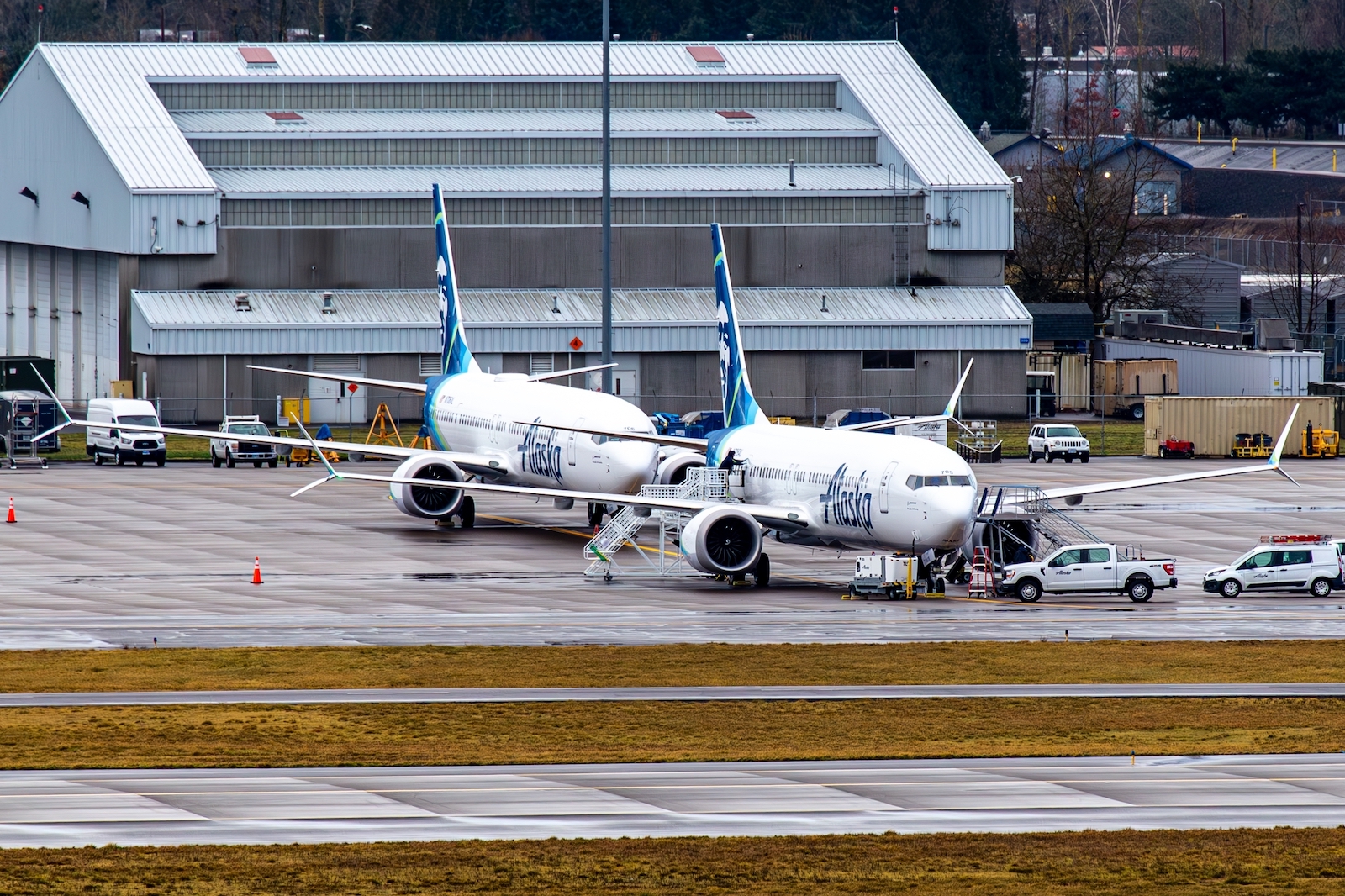
Alaska Boeing 737 MAX aircraft (Photo: Shutterstock | Wenjie Zheng)
The FAA has extended an agreement that allows Boeing to carry out certain agency functions, like safety inspections, on its behalf.
The arrangement, known as an Organization Designation Authorization, will officially renew on June 1 and continue for three years. It permits an independent ODA division within Boeing to inspect the company’s aircraft and components and issue certificates, responsibilities that would otherwise fall to federal regulators.
“Before making the decision, the FAA closely monitored specific criteria and saw improvements in most areas,” the agency said in a statement. “Criteria included implementing policies prohibiting interference with ODA unit members; assessing the ODA unit’s ability to effectively self-audit and ensure follow-through of post-audit activities; and monitoring the ODA unit’s ability to complete projects independently. The FAA will continue to closely monitor Boeing’s performance throughout its renewal period.”
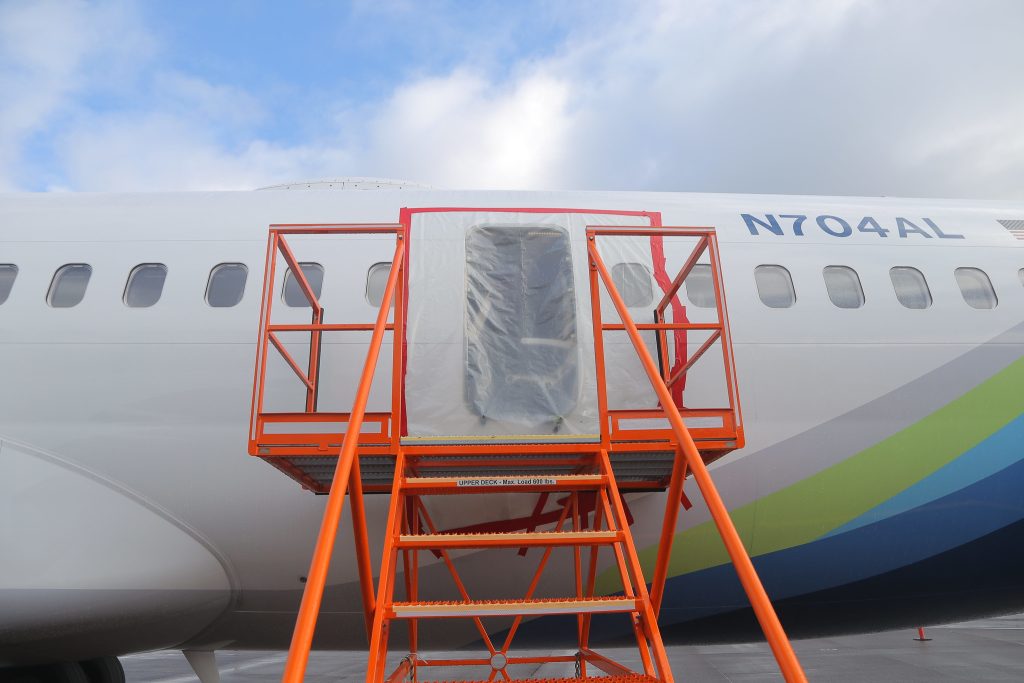
The FAA is investigating an incident in which an Alaska Airlines Boeing 737 MAX 9 lost a door plug in flight. (Photo: NTSB)
“We remain committed to working under the agency’s detailed and rigorous oversight,” a Boeing spokesperson said in a statement to The Hill. “We have taken purposeful steps to strengthen our ODA program over the past three years in alignment with FAA requirements, and we will continue those improvements.”
The FAA faced scrutiny for allowing Boeing to carry out its own inspections in the wake of two 737 MAX crashes in 2018 and 2019, which killed a combined 346 people. The company recently agreed to pay hundreds of millions of dollars in fines and compensation to victims’ families to avoid criminal prosecution by the U.S. Department of Justice for alleged fraud in connection with the accidents.
In 2021, the FAA fined Boeing $1.2 million for improperly structuring its ODA unit and exerting “undue pressure” on ODA team members to expedite aircraft airworthiness approvals. The following year, the agency agreed to extend Boeing’s ODA, but by three years, not the five the manufacturer had originally asked for.
Zach Vasile is a writer and editor covering news in all aspects of commercial aviation. He has reported for and contributed to the Manchester Journal Inquirer, the Hartford Business Journal, the Charlotte Observer, and the Washington Examiner, with his area of focus being the intersection of business and government policy.
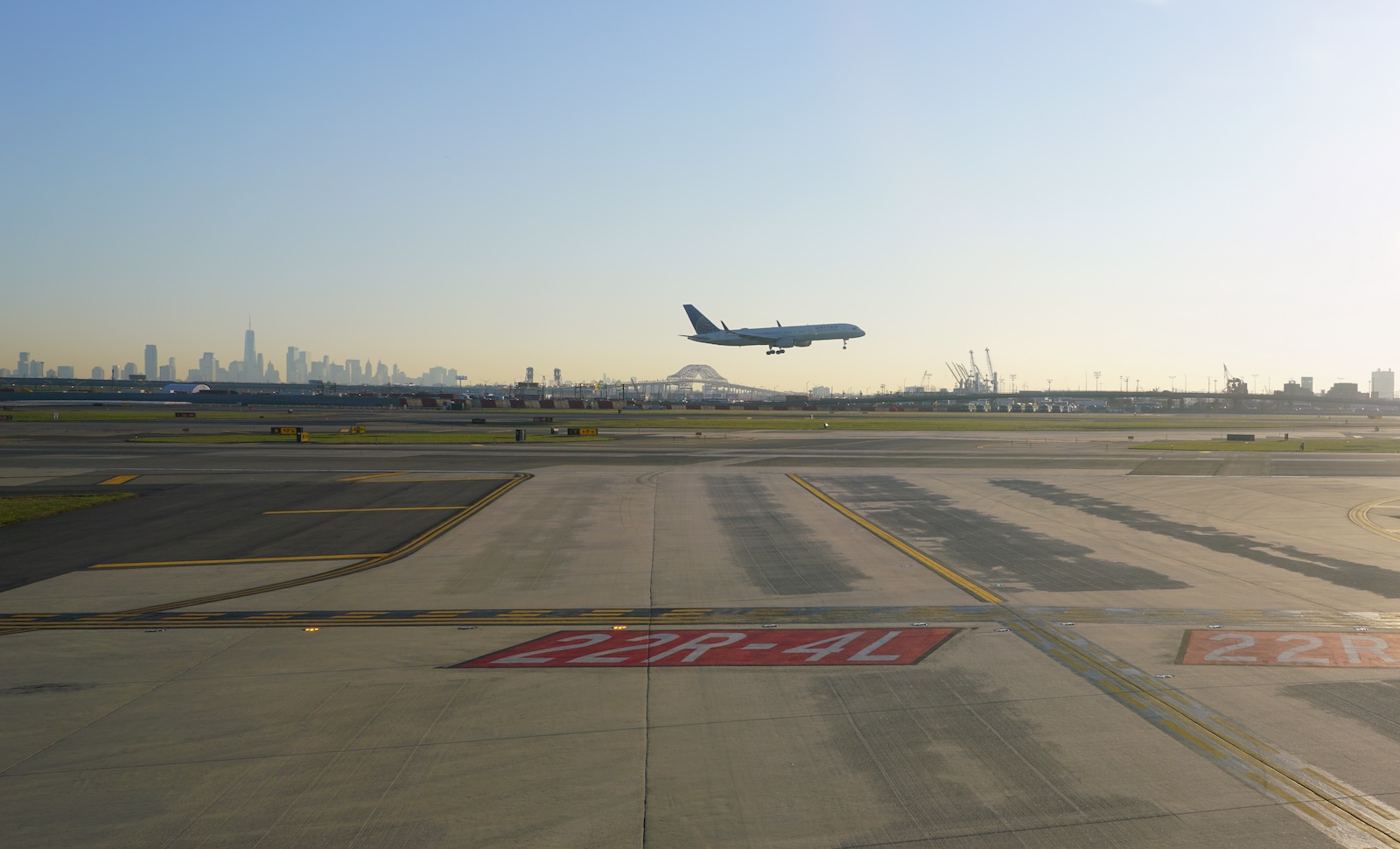
Newark’s Third Runway to Reopen Sooner Than Expected
Officials announced Friday that a runway closed for construction at Newark Liberty International Airport will reopen on Monday, June 2.
The new deadline was made public Friday by New Jersey Governor Phil Murphy and the Port Authority of New York and New Jersey, which runs the airport.
The temporary reduction in available runways from three to two for the past two months has strained operations at Newark, which is also dealing with air traffic control outages and a shortage of air traffic controllers. The facility has been running on a reduced schedule since late April, when the first outage occurred.
Port Authority officials said they have brought in additional crews and expanded shifts to keep rehabilitation work on the runway going 24 hours a day, seven days a week, so it can be reopened to air traffic as soon as possible.
“I commend the crews who have worked tirelessly to get this critical project done ahead of schedule,” Murphy said. “I’m grateful for New Jersey’s partnership with the Port Authority and the FAA as we work to return to full capacity at Newark Airport.”
Even after Monday, though, the runway project will not be finished. State officials said the runway will need to be closed on weeknights through the end of the year, and on weekends from September to December, as rehabilitation continues.
The Path Forward
Transportation Secretary Sean Duffy, who has made ATC infrastructure a major focus largely due to the situation at Newark, also praised the Port Authority and called the planned reopening a “key milestone” on the path to reducing congestion at the airport.
“With the runway completed, we’ll continue our work to harden the telecoms infrastructure and improve the staffing pipeline for the airspace,” he said.
The 11,000-foot-long runway, 4L-22R, was shut down in March for milling and paving, which is normally carried out every 10 years. Work crews have also upgraded the site’s lighting, installed new underground electrical infrastructure, and improved drainage systems.
The Port Authority originally planned to finish the project on June 15, but the wave of flight delays and cancelations brought on by the ATC failures increased pressure to speed up construction.
Duffy announced earlier this week that Verizon has installed a new fiber-optic cable between New York and Philadelphia to replace the aging line that triggered Newark’s ATC outages. It should be connected and ready to use by July, the secretary said.
Zach Vasile is a writer and editor covering news in all aspects of commercial aviation. He has reported for and contributed to the Manchester Journal Inquirer, the Hartford Business Journal, the Charlotte Observer, and the Washington Examiner, with his area of focus being the intersection of business and government policy.
Livery of the Week: China Southern
China Southern’s aircraft are distinguished by a livery that prominently features a red kapok flower on a deep blue tail fin.
A China Southern Airbus A380 on approach into Los Angeles.
(Photo: AirlineGeeks | William Derrickson)
Editor’s Note: AirlineGeeks is proud to present our ‘Livery of the Week’ series. Every Friday, a team member will share an airline livery, which can be from the past, present, or even a special scheme. Some airline liveries are works of art. The complexity associated with painting around critical flight components and the added weight requires outside-the-box thinking from designers. The average airliner can cost upwards of $200,000 to repaint, creating a separate aircraft repainting industry as a result.
Have an idea for a livery that we should highlight? Drop us a line.
China Southern’s aircraft are distinguished by a livery that prominently features a red kapok flower on a deep blue tail fin. The kapok flower is also recognized as the city flower of Guangzhou, where the airline is headquartered, adding a layer of local identity to its branding. The fuselage of the aircraft is typically a clean white, with “China Southern” titles displayed in both English and Chinese. A thin blue and red cheatline often runs horizontally along the fuselage, visually connecting the airline’s name with the tail design.
The core elements of China Southern’s livery have remained relatively consistent, emphasizing the red kapok flower and the blue and white color scheme. This design provides a readily identifiable look for the airline across its diverse fleet of aircraft. While the fundamental design is standardized, the airline has also featured special liveries on some of its aircraft to mark specific events, partnerships, or to highlight particular destinations.
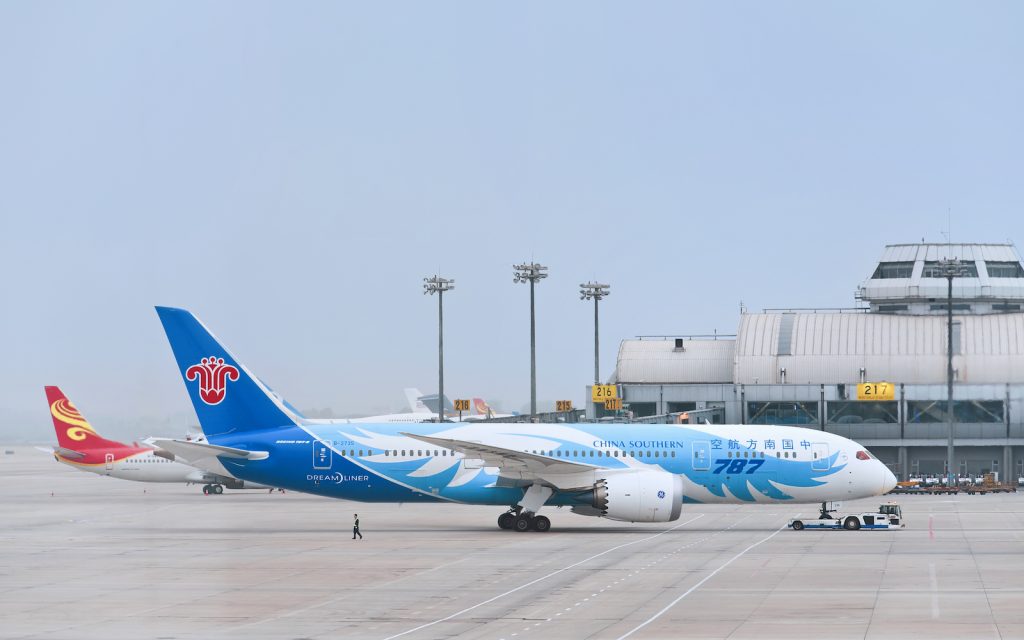
A China Southern 787 in Beijing (Photo: Shutterstock)
One notable special livery within the China Southern fleet is the “Wings of Dreams” design, which is exclusively featured on its Boeing 787 Dreamliner aircraft. This livery deviates from the standard with a more dynamic and artistic representation, incorporating flowing blue and white lines along the fuselage that evoke a sense of movement and aspiration, culminating in the traditional red kapok flower on the tail.
Looking for a new airplane model? Head over to our friends at the Midwest Model Store for a wide selection of airlines and liveries.
Ryan founded AirlineGeeks.com in February 2013 and has spent more than a decade covering the airline business. His work has been featured by CNN, WJLA, CNET, and Business Insider. His aviation experience spans airport operations, Part 135 regulatory compliance, and airline crew workforce planning, along with time behind the yoke of a Cessna 172 and interviews with airline executives. Ryan now serves as Group President of Firecrown Media’s Aviation Group. He holds a B.S. in Air Transportation Management and an MBA from Arizona State University and teaches Airline Management at Embry-Riddle Aeronautical University.
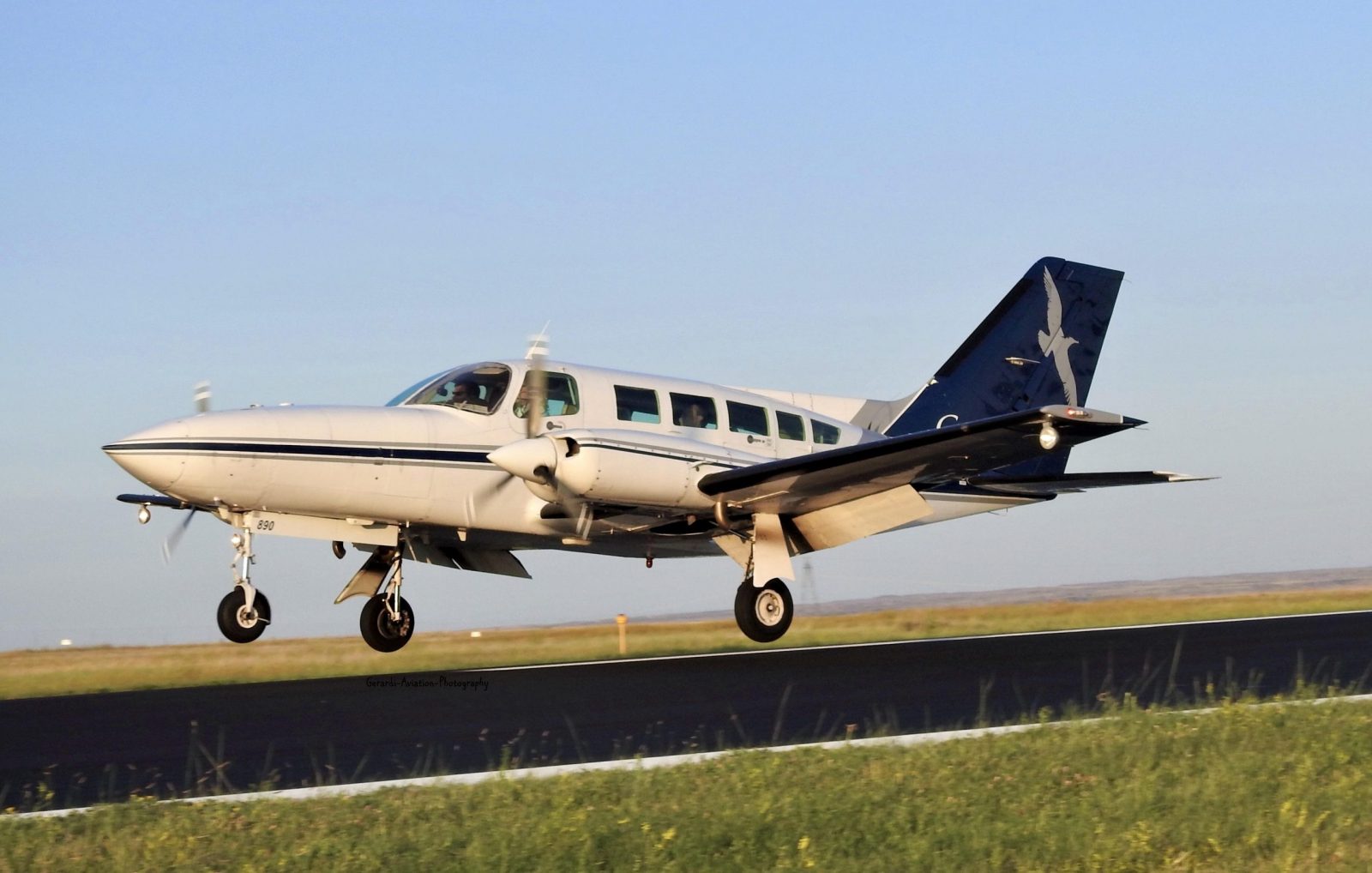
A Cape Air Cessna 402 taking off (Photo: AirlineGeeks | Joey Gerardi)
Massachusetts-based commuter airline Cape Air is adding new routes this summer and fall in a significant expansion of its network.
Most of the new flights are intended to improve connectivity across New England and New York.
“This is a significant moment for Cape Air,” said Aaron Blinka, the airline’s vice president of planning. “Each new route reflects our commitment to thoughtful, strategic growth — connecting more communities with smarter, more convenient travel options. Whether it’s streamlining access to major hubs like Boston, offering new links to the islands, or expanding our Caribbean presence, this is Cape Air building the future of regional air travel.”
The first two routes will come online July 3, when Cape Air begins flying between Islip, New York and Boston and between Norwood, Massachusetts and Martha’s Vineyard and Nantucket.
Airline officials said the Islip-Boston route, meant to better connect Long Island and New England, will operate four times a day using a Tecnam P2012 Traveller. The Norwood-Martha’s Vineyard-Nantucket service will run during the summer and early fall, ending after Columbus Day in October.
Cape Air will launch twice-daily service between New Bedford, Massachusetts and Boston on Sept. 29. The route will help residents of Massachusetts’ South Coast bypass Boston traffic, parking hassles, and TSA waits at Logan International Airport on their way to global destinations, the airline said, while opening up the South Coast to international tourism.
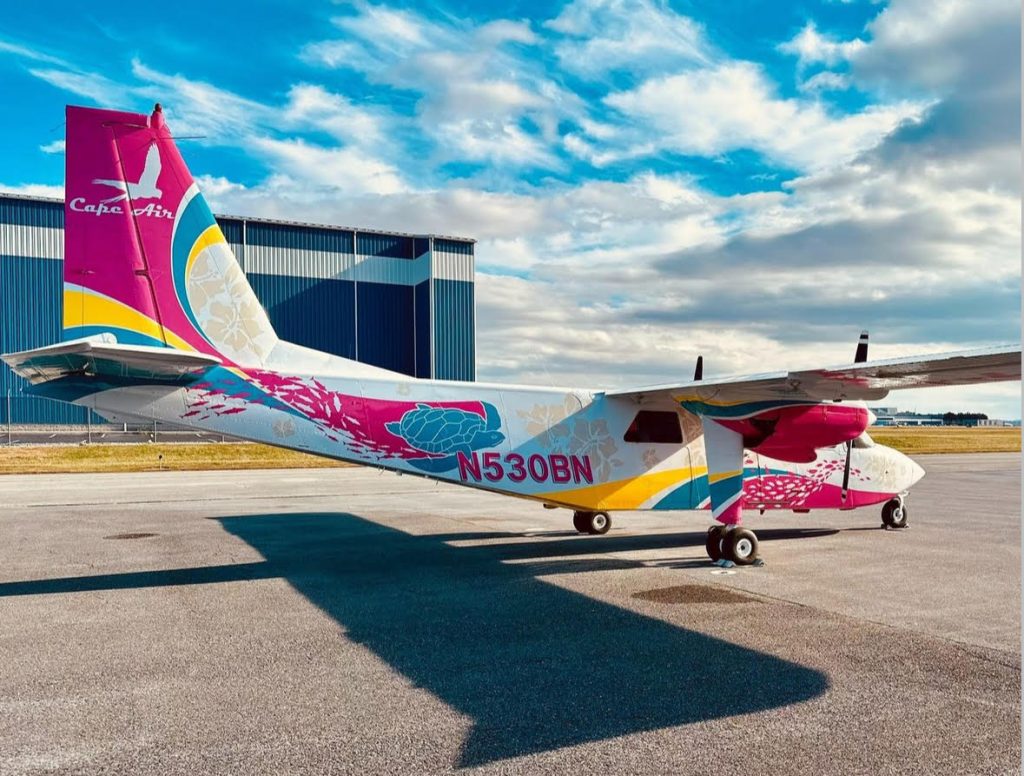
Cape Air’s newest special livery (Photo: Cape Air)
“By adding New Bedford to Boston, we’re putting global travel within 30 minutes of the South Coast,” said Cape Air CEO Linda Markham. “It’s a game changer.”
Caribbean Route
Finally, on Oct. 13, Cape Air will begin twice-daily service between St. Thomas and St. Barthélemy in the Caribbean. The airline said the route will help vacationers explore more of the region without having to book a private charter or use a ferry.
All of the new routes are now available to book.
Cape Air, which has its headquarters at Cape Cod Gateway Airport in Hyannis, flies to 34 cities in the U.S. and the Caribbean, with a fleet of 98 aircraft.
Zach Vasile is a writer and editor covering news in all aspects of commercial aviation. He has reported for and contributed to the Manchester Journal Inquirer, the Hartford Business Journal, the Charlotte Observer, and the Washington Examiner, with his area of focus being the intersection of business and government policy.
NTSB Cites Hydraulic and Electrical Failures in FedEx 757 Gear Failure
On Oct. 4, 2023, FedEx flight 1376 experienced an “abnormal runway contact” when the flight crew was unable to extend the landing gear.
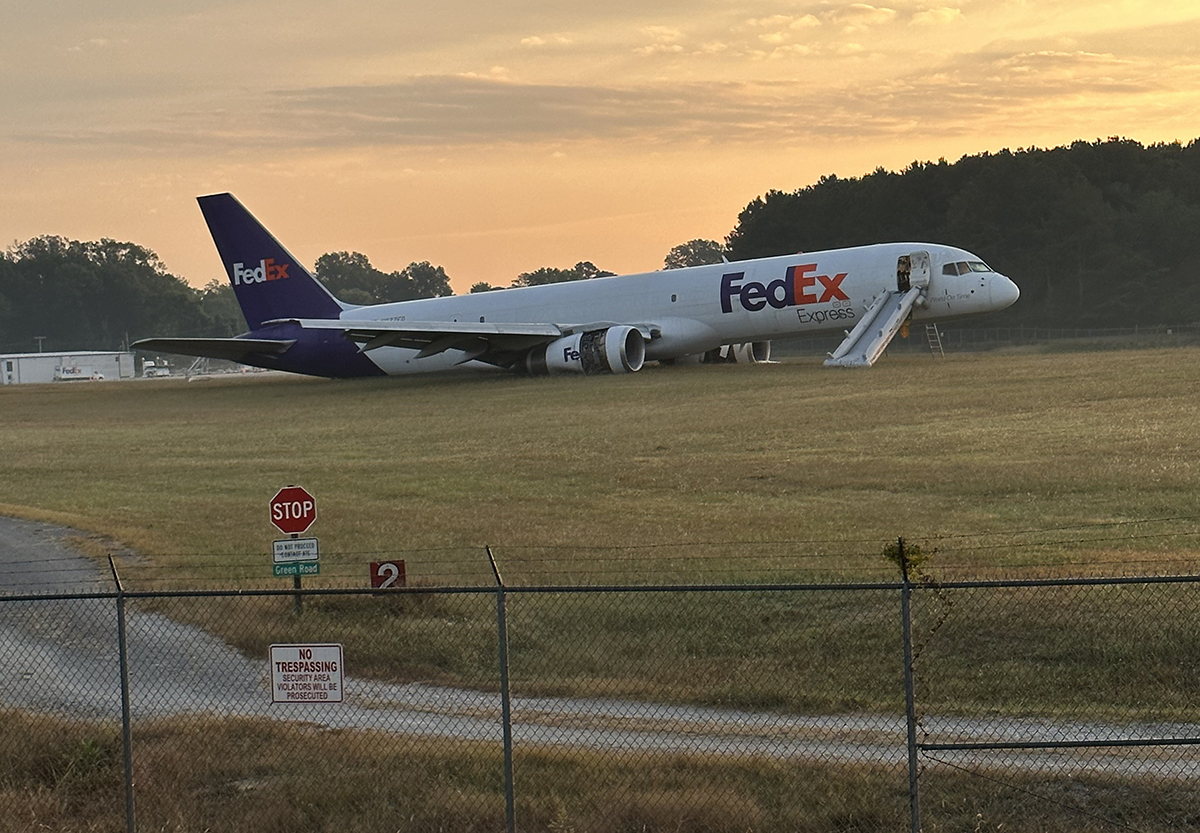
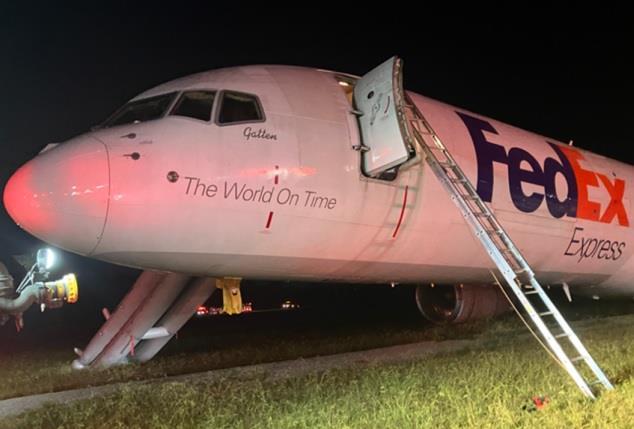
The National Transportation Safety Board has determined that a FedEx Boeing 757-200’s belly landing in Chattanooga, Tennessee, was caused by the failure of the alternate gear extension system, which prevented the landing gear from being lowered during an emergency.
On Oct. 4, 2023, FedEx flight 1376 experienced an “abnormal runway contact” when the flight crew was unable to extend the landing gear during the approach to Chattanooga’s Lovell Field.
Shortly after takeoff from Chattanooga, the captain called for gear up, and the first officer raised the landing gear control lever to retract the landing gear. Both the main landing gear and nose landing gear retracted to their up and locked position. Digital flight data recorder data showed that 22 seconds after gear retraction, the hydraulic fluid quantity and pressure in the left hydraulic system began to decrease.
After troubleshooting the hydraulic issue per procedures in the Quick Reference Handbook, the flight crew made the decision to return to Chattanooga. While preparing to land, the landing gear did not extend as expected when the landing gear control lever was positioned to its down position.
“Gear disagree. The gear is not coming down,” the first officer confirmed, according to cockpit voice recorder data documented by the NTSB.
Despite multiple attempts to deploy the landing gear using both normal and alternate extension systems, the crew was forced to perform a belly landing. The aircraft slid off the departure end of Runway 20 and impacted localizer antennas before coming to rest about 830 feet beyond the end of the runway.
Findings
Postaccident inspections of the landing gear system found that hydraulic fluid was leaking from the left landing gear door actuator retract hydraulic hose. Inspections also found that the engine indication and crew alerting system showed the left hydraulic system had only 32% fluid quantity remaining after the main landing gear door retraction shortly after takeoff, which is considered fully depleted.
Analysis of the failed hydraulic hose revealed multiple broken wire strands along its length and a rupture in its inner liner. The cause of the broken wire strands most likely originated from an overload event as evidenced by the necking down of the wire strands and a reduction in their area, investigators shared.
More critically, electrical system inspections of the alternate extension system found no electrical continuity between the alternate gear extend switch and the alternate extension power pack. A visual examination revealed a break in a wire between the circuit breaker and the alternate gear extend switch, which prevented the system from functioning as a backup.
“Analysis of the wire’s fracture surfaces showed a reduction in area and circumferential cracking of the coating, consistent with tensile loading,” the final report stated. “No obvious defects or anomalies were observed on the fracture surfaces.”
Evacuation Issues
The investigation also identified issues with the aircraft’s evacuation equipment. After the airplane came to a stop, the jumpseat occupant attempted to open the L1 door, which only rotated halfway open and would not fully deploy. The R1 door also became lodged on the slide pack before the jumpseat occupant used force to open it.
Investigators found that the R1 door’s bannis latch did not conform to the configuration required by an FAA Airworthiness Directive from 1986, which caused the slide pack to jam during evacuation.
The NTSB determined the probable cause of this accident to be “the failure of the alternate gear extension system, which prevented the landing gear from being lowered. The cause of the system failure was a broken wire, due to tensile overload, between the alternate gear extend switch and the alternate extension power pack, preventing the AEPP from energizing and supplying hydraulic fluid to the door lock release actuators for the nose landing gear and main landing gear.”
FedEx 757 gear-up landing (Photo: NTSB)
Contributing to the accident was “the loss of the left hydraulic system due to a ruptured left main gear door actuator hose from fatigue, which prevented normal landing gear operation.”
The NTSB noted that the crew of FedEx flight 1376 demonstrated good Crew Resource Management during the emergency, remaining calm and professional throughout the accident sequence. They displayed effective workload management by distributing tasks among themselves, with the captain flying and the first officer working to resolve the issue with air traffic control.
“The crew maintained clear and concise communication between all crewmembers to include a jumpseat occupant, and with ATC, actively soliciting feedback and input, and crosschecking with one another to ensure everyone was working with the same mental model,” the report stated.
As a result of this investigation, the NTSB issued four new safety recommendations to the FAA and three new recommendations to Boeing on March 27, 2025. These recommendations address the need to inspect and modify bannis latches on Boeing aircraft doors and update aircraft maintenance manuals with correct configurations.
Following the accident, FedEx implemented a 275-flight-hour check on the alternate extension system, including performing a general visual inspection while the nose landing gear and main landing gear doors are open while on the ground.
Ryan founded AirlineGeeks.com in February 2013 and has spent more than a decade covering the airline business. His work has been featured by CNN, WJLA, CNET, and Business Insider. His aviation experience spans airport operations, Part 135 regulatory compliance, and airline crew workforce planning, along with time behind the yoke of a Cessna 172 and interviews with airline executives. Ryan now serves as Group President of Firecrown Media’s Aviation Group. He holds a B.S. in Air Transportation Management and an MBA from Arizona State University and teaches Airline Management at Embry-Riddle Aeronautical University.
Workers at Edinburgh Airport and Glasgow Airport in Scotland have rejected contracts offered by their employer, Menzies Aviation, raising the prospect of a strike in the coming weeks.
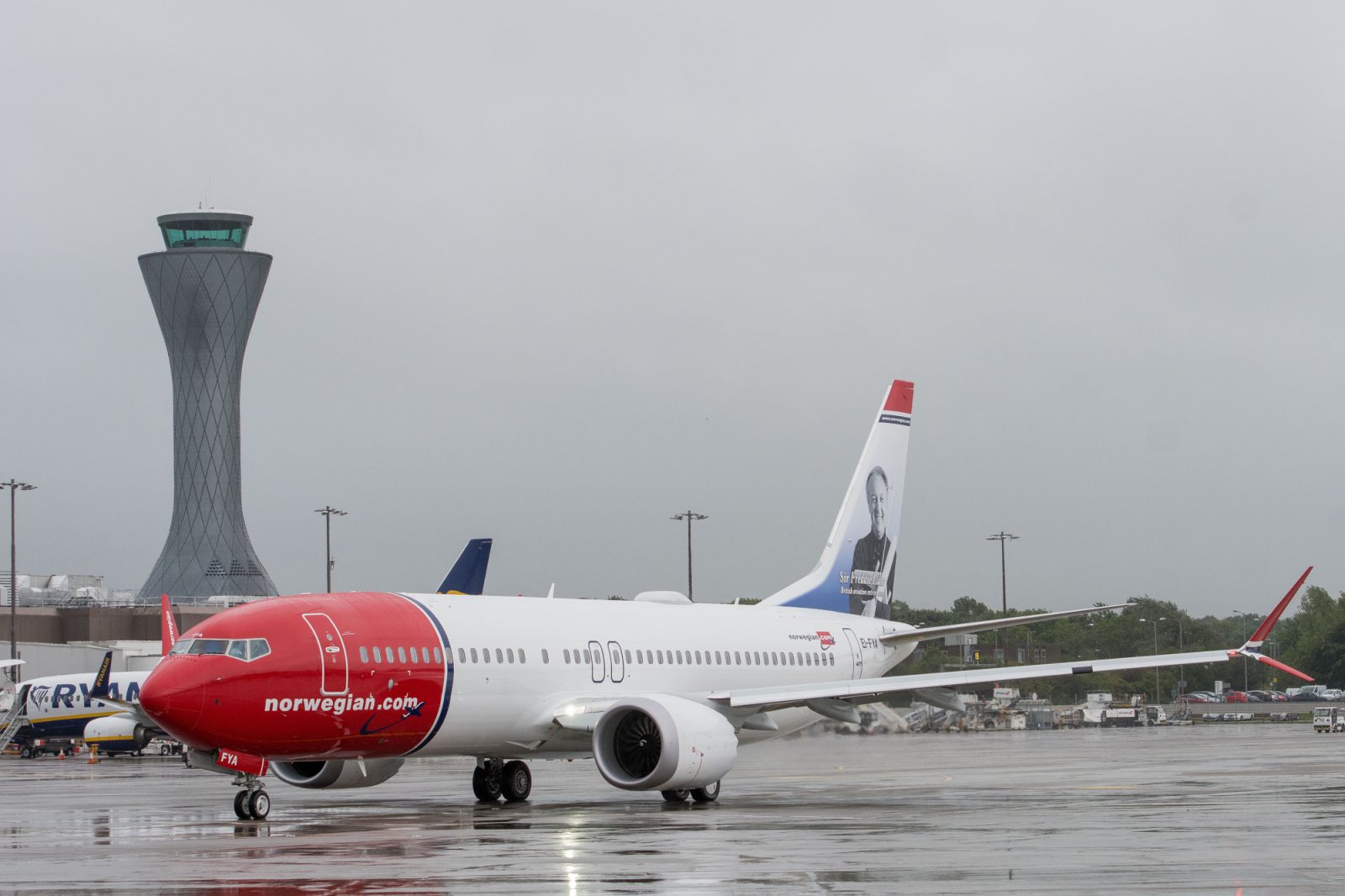
A Norwegian 737 MAX 8 at Edinburgh Airport. (Photo: Norwegian)
Scotland’s two largest airports are facing a potential strike ahead of the summer travel season.
The BBC reported this week that around 300 workers at Edinburgh Airport and a similar number at Glasgow Airport turned down labor agreements offered by their employer, Menzies Aviation, which provides aircraft and ground handling services at both facilities.
The staff includes dispatchers, allocators, and flight manifest controllers, among others.
Unite, the union representing the workers, told the BBC it could hold a vote on a strike unless Menzies put forward a better offer.
“Summer strike action looms over Edinburgh and Glasgow airports because the pay offers on the table from Menzies Aviation aren’t good enough,” said Unite industrial officer Carrie Binnie. “Menzies Aviation has the ability to improve its offers and they can easily resolve this pay dispute without any disruption to the traveling public. If the company fails to table a better offer to our members, Unite will have no option but to ballot our members for strikes over the summer holidays.”
According to the BBC, the workers at Edinburgh rejected a proposed raise of 4%, while the workers at Glasgow turned down a 4.25% raise.
Phil Lloyd, UK senior vice president at Menzies, said the company has invited Unite members back to the negotiating table and wants to work out a new deal.
Edinburgh Airport is the busiest airport in Scotland and the sixth-busiest in the U.K. It served about 15.8 million passengers in 2024. The airport has added new routes ahead of this summer, including a JetBlue service to and from Boston and an Emirates flight linking Edinburgh and Dubai.
Glasgow Airport is the second-busiest airport in Scotland. It saw about 8 million passengers last year.
Zach Vasile is a writer and editor covering news in all aspects of commercial aviation. He has reported for and contributed to the Manchester Journal Inquirer, the Hartford Business Journal, the Charlotte Observer, and the Washington Examiner, with his area of focus being the intersection of business and government policy.
DOJ Motions to Dismiss 737 MAX Lawsuit
The Department of Justice has motioned to dismiss a criminal lawsuit against Boeing over two fatal 737 MAX crashes in 2018 and 2019.
The DOJ confirmed these reports on Thursday by filing a motion to dismiss the case in the U.S. District Court for the Northern District of Texas. According to the motion, Boeing will fulfill several obligations to secure accountability and provide public benefits in exchange for the dismissal of charges.
Boeing’s Obligations Under the Agreement
Per the agreement, Boeing has agreed to the following:
Pay a criminal monetary penalty of $487.2 million, which is the statutory maximum fine.
Contribute $444.5 million to a Crash-Victim Beneficiaries fund to compensate the victims’ families.
Invest $455 million to enhance its compliance, safety, and quality programs.
Implement and maintain an improved anti-fraud compliance and ethics program, subject to reporting by an independent compliance consultant to the government.
Boeing’s Board of Directors will meet with the families of the crash victims to discuss the impact and the company’s current programs.
Maintain cooperation with any investigations conducted by the Department of Justice or other authorities.
“Many Family members want the Government to go to trial regardless of the litigation risks,” the motion stated. “But at the core of their objection to the [non prosecution agreement], and the proposed plea agreement before that, is the presumption that the Government would present a more expansive case at trial (or at sentencing post-trial) that reveals a criminal conspiracy that reached to the highest levels of the Company, and proves that Boeing is criminally responsible for the deaths of their loved ones.”
“But the reality presented by the evidence and the law is that the Government could not, consistent with Department policy and its ethical and professional obligations, put on such a case,” the motion continued. “The testimony and evidence the Government can seek to introduce against Boeing would track the Statement of Facts accompanying the Agreement and overlap to a substantial degree with the testimony and evidence the Government introduced in the trial of Boeing’s former Chief Technical Pilot.”
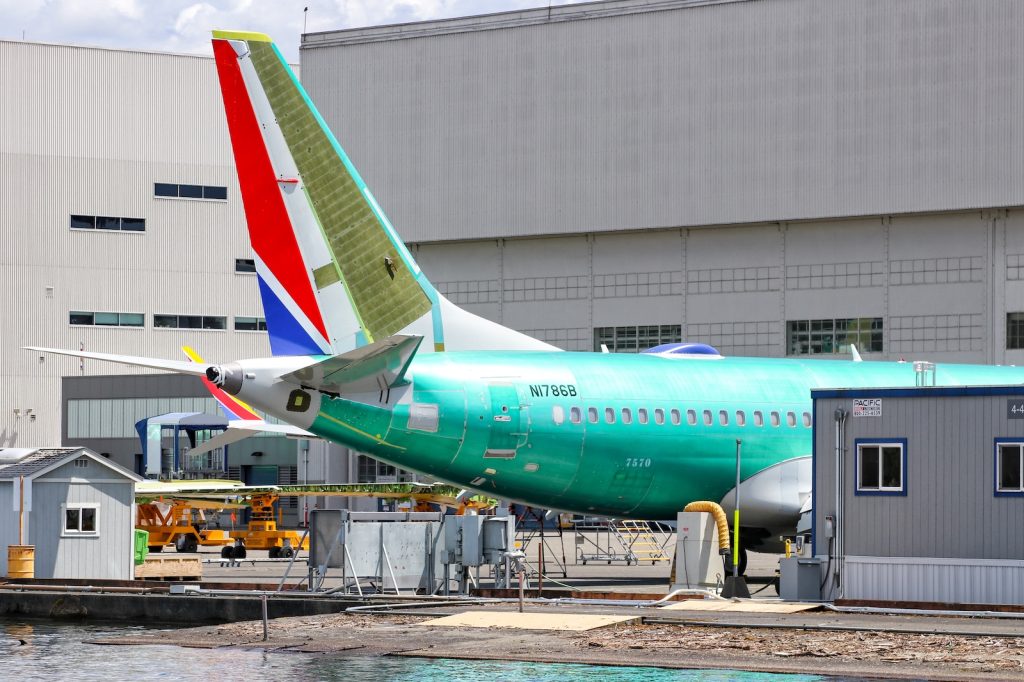
A Boeing 737 MAX tail in Renton (Photo: AirlineGeeks | Katie Zera)
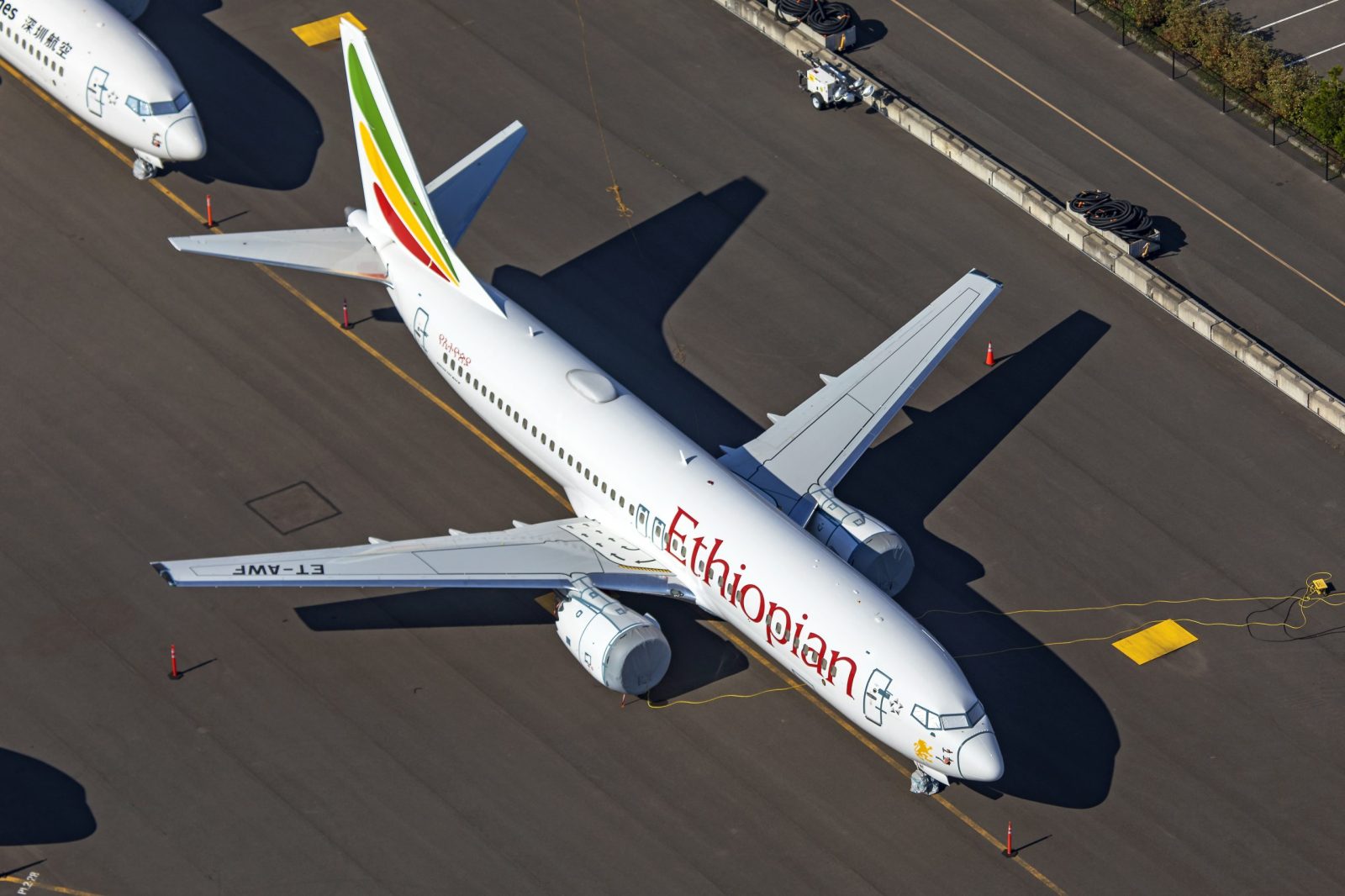
Attorney Erin Applebaum, who represents the families of victims who were aboard 2019’s Ethiopian crash, stated last week that the DOJ was “prepared to let the company walk away, again, with no more than a financial penalty.”
“This isn’t justice. It’s a backroom deal dressed up as a legal proceeding, and it sends a dangerous message: in America, the rich and powerful can buy their way out of accountability,” she told AirlineGeeks in an emailed statement last Friday.
The motion requested that the lawsuit be dismissed and Boeing’s pretrial deadlines be terminated. Judge O’Connor has yet to make a ruling on the motion.
AirlineGeeks.com was founded in February 2013 as a one-person blog in Washington D.C. Since then, we’ve grown to have 25+ active team members scattered across the globe. We are all here for the same reason: we love deep-diving into the fascinating realm of the airline industry.