Stories

Livery of the Week: New Pacific Airlines

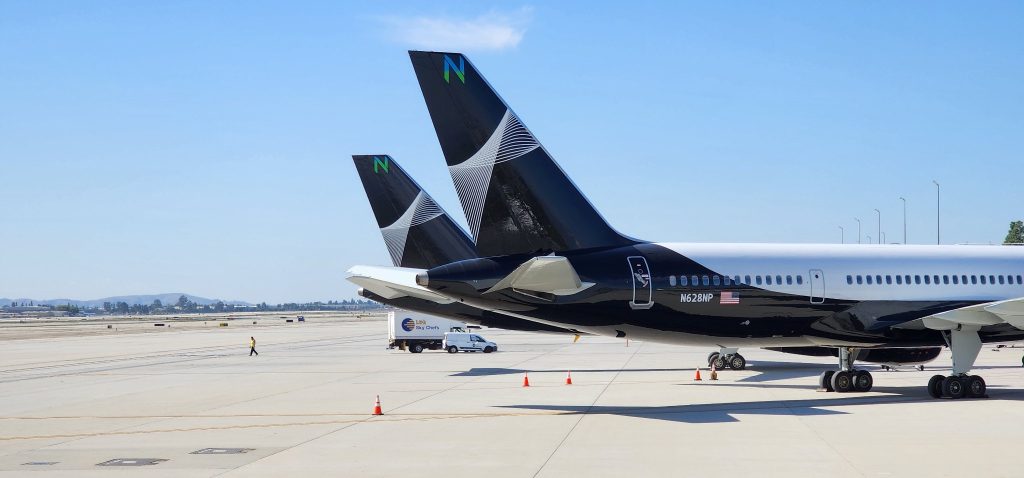
New Pacific Airlines – formerly Northern Pacific Airlines — unveiled the modern livery design for its Boeing 757 fleet in 2022.

New Pacific's first Boeing 757-200 at an unveiling event in Southern California (Photo: AirlineGeeks | Katie Zera)

Editor’s Note: AirlineGeeks is proud to present our ‘Livery of the Week’ series. Every Friday, a team member will share an airline livery, which can be from the past, present, or even a special scheme. Some airline liveries are works of art. The complexity associated with painting around critical flight components and the added weight requires outside-the-box thinking from designers. The average airliner can cost upwards of $200,000 to repaint, creating a separate aircraft repainting industry as a result. 

Have an idea for a livery that we should highlight? Drop us a line. 

New Pacific Airlines – formerly Northern Pacific — unveiled the livery design for its Boeing 757 fleet in 2022. The airline’s branding, inspired by the rugged beauty of Alaska and the Pacific Ocean, is prominently featured on the aircraft.

Two completed New Pacific Airlines airplanes at Ontario. (Photo: New Pacific Airways)

The 757s feature a clean and modern design with a predominantly white base color. The rear portion of the aircraft is stylized in a darker hue and the company’s logo sits towards the front.

Edmond Huot designed the livery, which put a modern twist on an older aircraft type.

The airline launched operations in 2023 before later ceasing scheduled services. Since then, New Pacific primarily focuses on charter operations.

Looking for a new airplane model? Head over to our friends at the Midwest Model Store for a wide selection of airlines and liveries.

Ryan Ewing

Ryan founded AirlineGeeks.com in February 2013 and has spent more than a decade covering the airline business. His work has been featured by CNN, WJLA, CNET, and Business Insider. His aviation experience spans airport operations, Part 135 regulatory compliance, and airline crew workforce planning, along with time behind the yoke of a Cessna 172 and interviews with airline executives. Ryan now serves as Group President of Firecrown Media’s Aviation Group. He holds a B.S. in Air Transportation Management and an MBA from Arizona State University and teaches Airline Management at Embry-Riddle Aeronautical University.

Pilot Swap: easyJet, Virgin Atlantic Launch New Exchange Program

Pilots from the European low-cost-carrier will be able to gain experience in the right seat of a Virgin Atlantic Airbus A350.

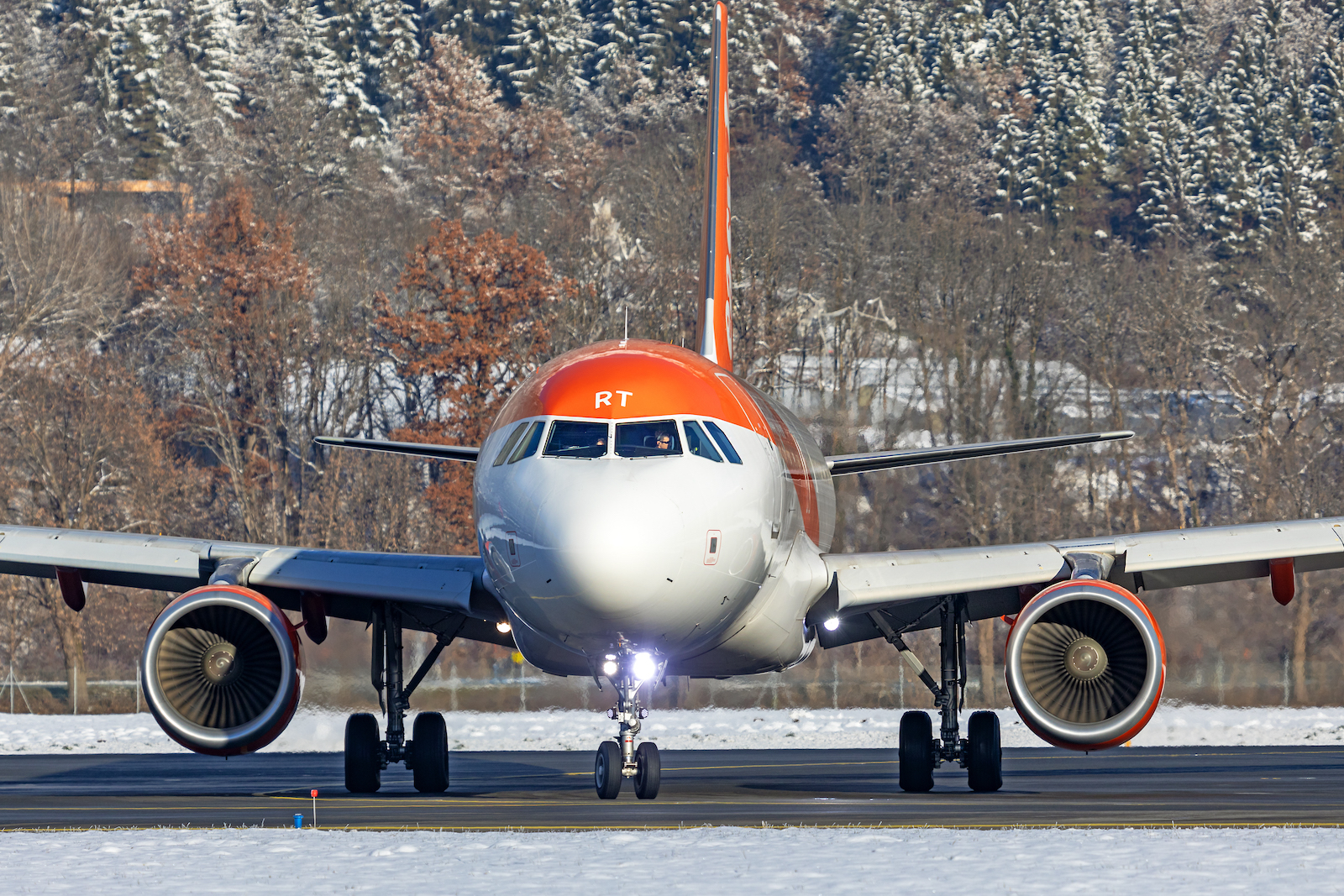
An easyJet Airbus A320 aircraft (Photo: AirlineGeeks | William Derrickson)

easyJet and Virgin Atlantic recently announced a new pilot exchange program that will allow a group of easyJet pilots to gain experience flying long-haul routes.

The program begins in November 2024 and will see 20 easyJet pilots transition from flying Airbus A320s on short-haul routes to co-piloting Virgin Atlantic’s A350 aircraft on long-haul flights. After three years, the pilots will return to their positions at easyJet.

“At easyJet we pride ourselves on the calibre of our pilots, our industry-leading training and commitment to career development and so we are delighted to have partnered with Virgin Atlantic to further enhance the opportunities flying with easyJet can offer,” said Captain Bart Prudon, Director of Flight Operations at easyJet, in a news release. “Operating a different aircraft type is a fantastic experience for any pilot and this partnership will not only offer global long-haul flying with the added security of returning to easyJet to continue a fantastic career flying modern aircraft across Europe, we know that our highly-skilled pilots will add great value to the Virgin Atlantic team.”

According to easyJet, this partnership offers benefits for both airlines. Pilots from the budget airline will gain experience flying larger aircraft on long-haul routes, while Virgin Atlantic will benefit from the expertise of experienced A320-series pilots from across Europe.

easyJet is currently in the midst of a five-year recruitment drive to add 1,000 new pilots to its ranks as part of a program that kicked off in 2022.

Ryan Ewing

Ryan founded AirlineGeeks.com in February 2013 and has spent more than a decade covering the airline business. His work has been featured by CNN, WJLA, CNET, and Business Insider. His aviation experience spans airport operations, Part 135 regulatory compliance, and airline crew workforce planning, along with time behind the yoke of a Cessna 172 and interviews with airline executives. Ryan now serves as Group President of Firecrown Media’s Aviation Group. He holds a B.S. in Air Transportation Management and an MBA from Arizona State University and teaches Airline Management at Embry-Riddle Aeronautical University.

Turkish Airlines Flight Hit by Severe Turbulence, Causes Injuries

A Turkish Airlines flight from Istanbul to Taipei encountered severe turbulence, injuring several passengers and crew members.

Turkish 787
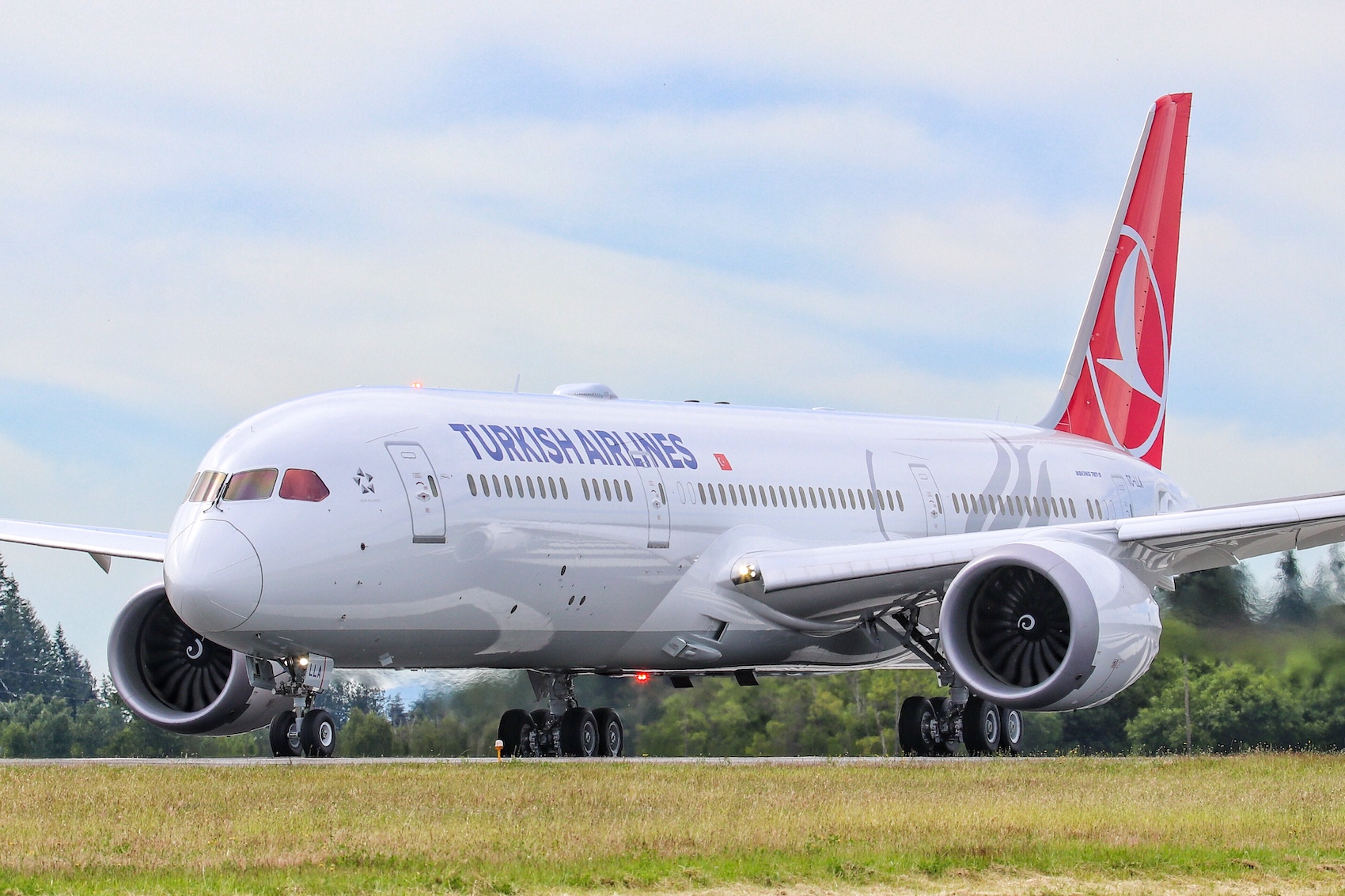
A Turkish Airlines Boeing 787-9 Dreamliner. (Photo: AirlineGeeks | Katie Zera)

A Turkish Airlines flight en route from Istanbul to Taipei reportedly encountered severe turbulence shortly before landing at Taipei Taoyuan International Airport, according to a statement released by the airline’s Press Counselor Yahya Üstün.

Flight TK24, operating from Istanbul’s Atatürk International Airport to Taipei, was approximately two hours away from its destination when it encountered a sudden and intense turbulence. The unexpected jolts and drops caused chaos within the aircraft, as passengers and crew members were thrown about their seats.

Several individuals sustained injuries, including four passengers and two cabin crew members. While the extent of the injuries varied, it is believed that most were minor. However, two injured passengers were transported to a hospital at their request following the initial medical assessment on board.

Turkish Airlines Statement

In a statement released by Üstün, the airline confirmed the incident and provided further details. “Our passengers and crew on flight TK24 from Istanbul to Taipei experienced a period of unexpected turbulence. Unfortunately, a small number of passengers and crew members sustained minor injuries. We are relieved that the aircraft landed safely and that medical assistance was provided promptly. We understand that this was a distressing experience for our passengers, and we apologize for any inconvenience caused. The safety and comfort of our passengers is our top priority.”

The carrier expressed its sorrow over the incident and stated that they are closely monitoring the health of the passengers and crew.

In the aftermath of the turbulence, the aircraft safely landed at Taipei Taoyuan International Airport, where emergency services were on standby to assist any injured individuals. Passengers who were unable to continue their journey were provided with accommodations and alternative travel arrangements.

Turkish has announced that it is working closely with the relevant authorities to investigate the cause of the turbulence and to ensure the safety of future flights. The airline has also pledged to provide full support to the injured passengers and crew members, including covering medical expenses and offering any necessary assistance.

Tolga Karadeniz

Tolga is a dedicated aviation enthusiast with years of experience in the industry. From an early age, his fascination with aviation went beyond a mere passion for travel, evolving into a deliberate exploration of the complex mechanics and engineering behind aircraft. As a writer, he aims to share insights , providing readers with a view into the complex inner workings of the aviation industry.

EASA Orders ‘Precautionary’ A350 Engine Inspections

The European aviation regulator is planning to issue an order requiring operators to inspect Airbus A350 engines following a recent engine fire incident.

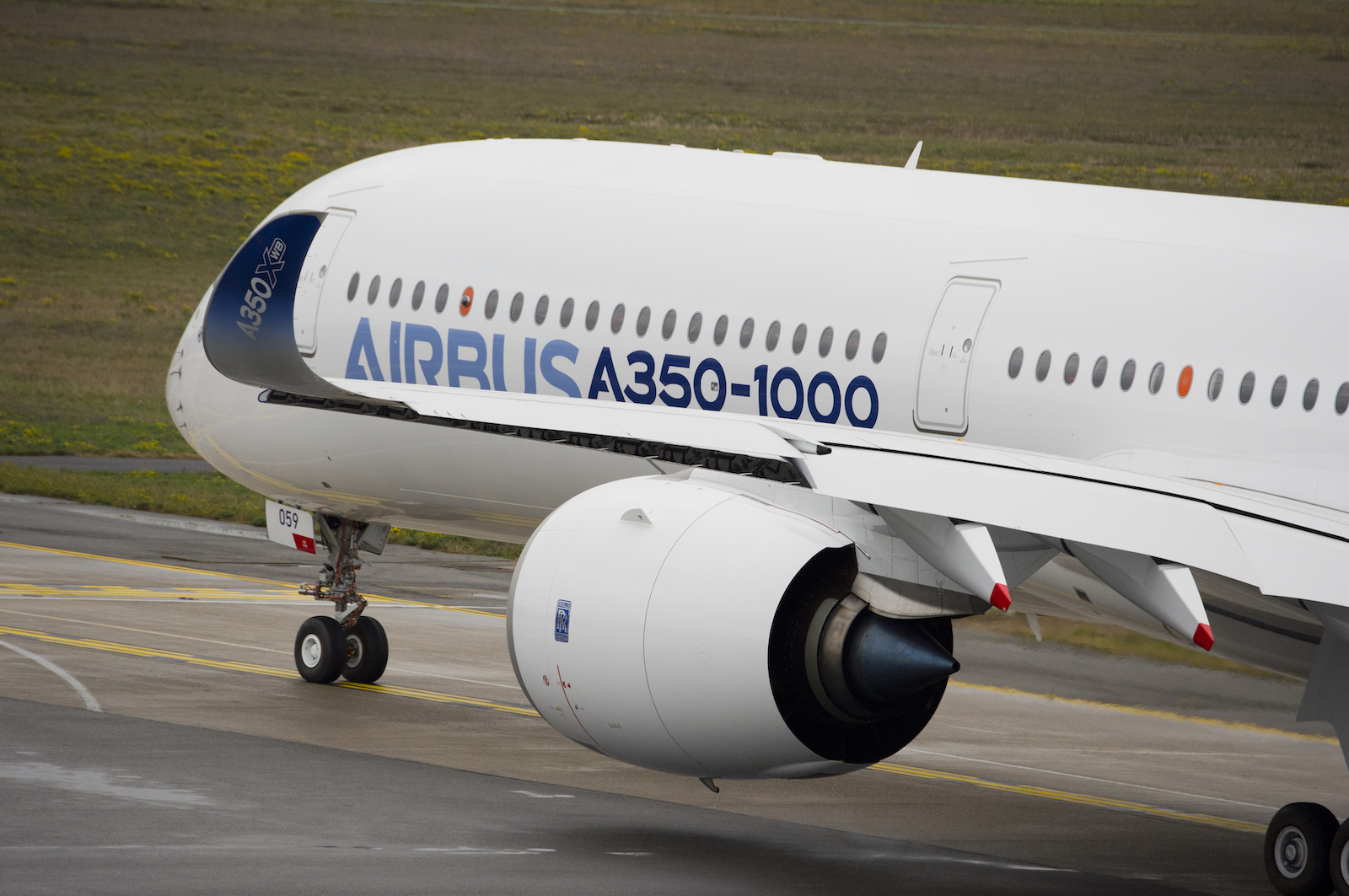
An Airbus A350-1000 aircraft (Photo: Airbus)

The European Union Aviation Safety Agency (EASA) is planning to issue an order requiring Airbus A350-1000 operators to inspect the aircraft’s engines, according to the AFP and Aviation Week. Coming just days after Cathay Pacific was forced to ground most of its A350 fleet, the regulator said the order was in response to an engine fire incident on Cathay flight 383 earlier this month.

On September 1, the flight from Hong Kong to Zurich — operated by an Airbus A350-1000 — suffered an engine fire on one of its Rolls-Royce Trent XWB-97s. The jet safely returned to Hong Kong.

Following the incident, Cathay Pacific inspected its fleet of 30 A350-900s and 18 A350-1000s, finding defective fuel hoses on 15 aircraft. The Hong Kong-based airline has been forced to cancel 90 flights so far this week as a result of the engine issues.

“EASA is taking precautionary measures to prevent any further similar occurrence,” EASA said in a statement to the AFP. “We will require a one-time fleet inspection, which may be applicable only to a portion of the A350 fleet.”

European airlines have approximately 155 A350 aircraft currently in service per Cirium Fleet Analyzer data. The emergency airworthiness directive only applies to the larger A350-1000 variant with Trent XWB-97 engines.

Ryan Ewing

Ryan founded AirlineGeeks.com in February 2013 and has spent more than a decade covering the airline business. His work has been featured by CNN, WJLA, CNET, and Business Insider. His aviation experience spans airport operations, Part 135 regulatory compliance, and airline crew workforce planning, along with time behind the yoke of a Cessna 172 and interviews with airline executives. Ryan now serves as Group President of Firecrown Media’s Aviation Group. He holds a B.S. in Air Transportation Management and an MBA from Arizona State University and teaches Airline Management at Embry-Riddle Aeronautical University.

American Adds Five Long-Haul Routes

On Thursday, the Fort Worth-based airline announced the new services, which are all slated to begin in the Summer 2025 season.

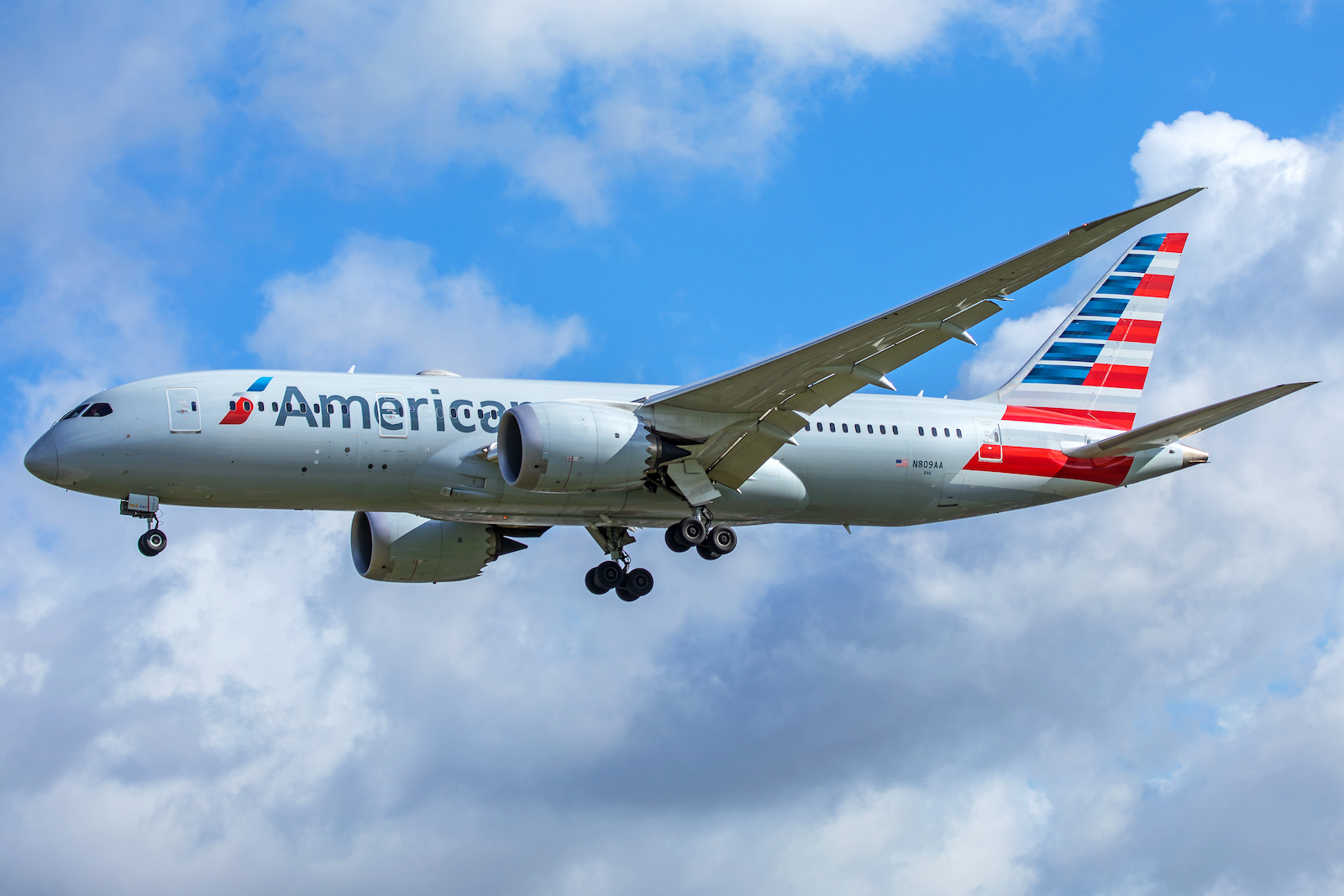
An American Boeing 787-8 Dreamliner (Photo: AirlineGeeks | William Derrickson)

American is planning to launch a handful of new long-haul routes next summer. On Thursday, the Fort Worth-based airline announced the new services, which are all slated to begin in the Summer 2025 season.

Beginning in March 2025, American will add new transatlantic routes from its hubs in Chicago, Philadelphia, Miami, and Charlotte.

Five New Routes

Starting on March 30, the airline will offer daily service between Chicago O’Hare and Madrid operated by a Boeing 787-8 Dreamliner. From Charlotte starting on June 5, American is adding daily flights to Athens on a Boeing 777-200.

For the first time since 2019, American will resume service to Edinburgh with daily Boeing 787-8 flights to Philadelphia starting on May 23. On the same day, the airline will also add service between Philadelphia and Milan with a Boeing 787-8.

From Miami, the carrier is planning a new route to Rome starting on July 5. Flights will operate once per day on a Boeing 777-200.

Seasonal Extensions

In addition to the five new routes, American is planning to extend four existing seasonal flights. Its route between Dallas/Fort Worth and Barcelona will begin on March 30 while Miami to Paris will extend into the summer season.

The airline’s flights from Philadelphia to Athens and Naples will now begin on March 30 and May 5 respectively.

“We look forward to providing customers more ways to visit their favorite destinations in Europe next summer,” said Brian Znotins, American’s Senior Vice President of Network and Schedule Planning, in a news release. “Resuming service to Edinburgh and adding new routes to other popular destinations across the continent will offer customers convenient access from American’s industry-leading domestic network to all that Europe has to offer.”

Last month, the carrier confirmed capacity cuts on some of its existing long-haul routes, including from both its Phoenix and Los Angeles hubs to London Heathrow. These service reductions are scheduled to take effect later this year.

Ryan Ewing

Ryan founded AirlineGeeks.com in February 2013 and has spent more than a decade covering the airline business. His work has been featured by CNN, WJLA, CNET, and Business Insider. His aviation experience spans airport operations, Part 135 regulatory compliance, and airline crew workforce planning, along with time behind the yoke of a Cessna 172 and interviews with airline executives. Ryan now serves as Group President of Firecrown Media’s Aviation Group. He holds a B.S. in Air Transportation Management and an MBA from Arizona State University and teaches Airline Management at Embry-Riddle Aeronautical University.

Sharkskin System Used to Reduce Drag of 777 Cargo Jets

Freighter airlines are using a new coating that mimics the structure of a shark’s skin to reduce aerodynamic drag and fuel consumption.

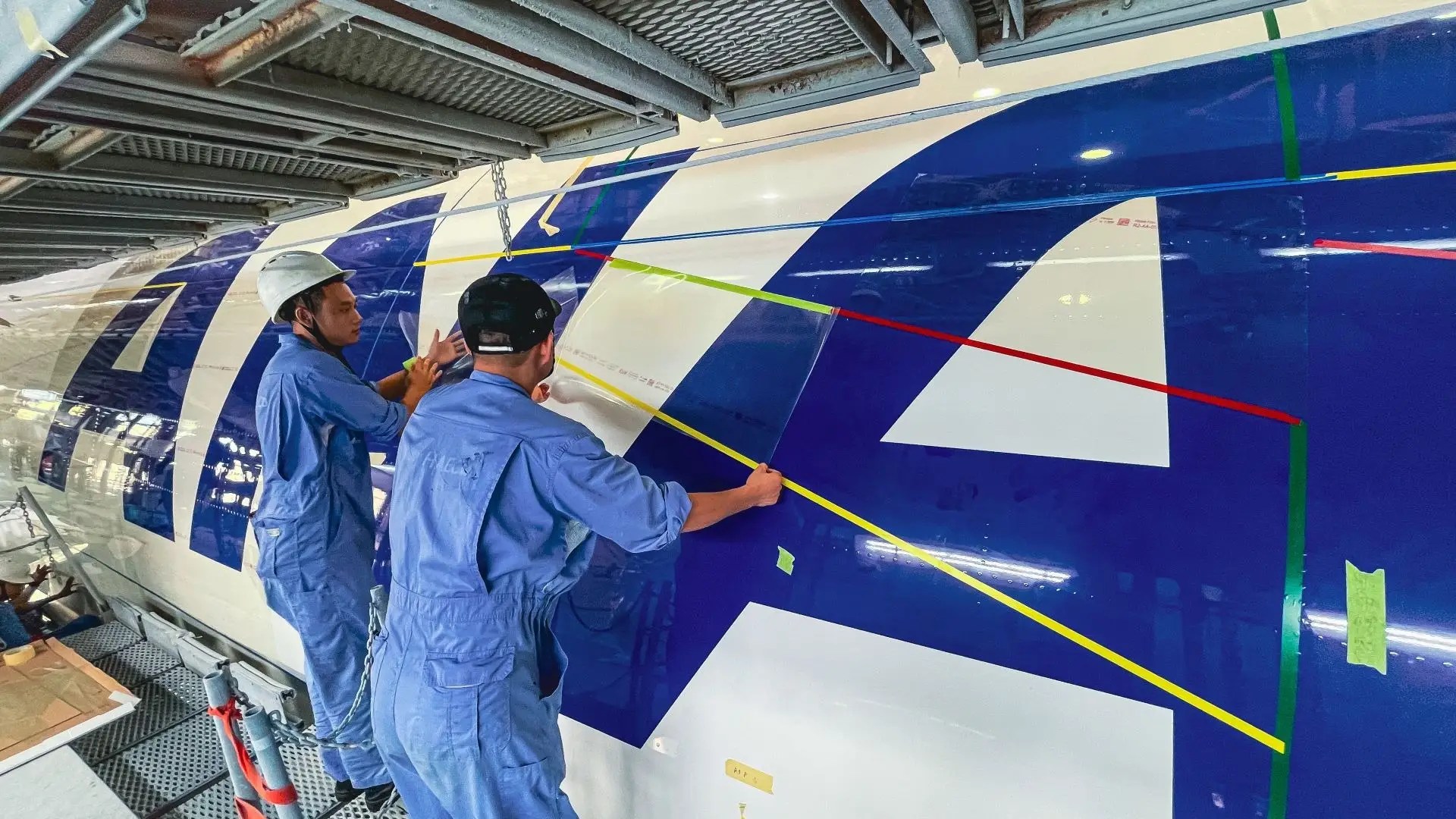
Airframe repair specialists apply the AeroShark technology to an All Nippon Airways 777 freighter. (Photo: Lufthansa Technik/ANA)

Freighter airlines are leading the way in fitting aircraft with a new high-tech coating that mimics the structure of a shark’s skin to reduce aerodynamic drag and fuel consumption.

EVA Air and All Nippon Airways recently became the first Asian carriers to equip Boeing 777 freighters with the friction-reducing AeroShark surface film, following the footsteps of Lufthansa Cargo and Swiss International Air Lines.

All Nippon Airways said it began operating its first 777 freighter with the special coating on Sunday and plans to become the first airline to operate both freighter and passenger variants of the 777 with the AeroShark technology by next spring.

Lufthansa Technik, a provider of maintenance and other technical services for commercial aircraft, developed AeroShark with German chemical and coating manufacturer BASF to address the need for more sustainable air transport. The nearly invisible coating is designed to be weather-resistant and simple to apply.

Aircraft surfaces are exposed to UV radiation as well as temperature and pressure fluctuations at high altitudes that can alter smoothness. The low-friction film consists of riblets—small protrusions measuring about 50 micrometers or 0.002 inches—that imitate the hydrodynamic properties of sharkskin and allow air to flow more smoothly over the aircraft during flight. The subsidiary of Deutsche Lufthansa AG estimates the riblet film, which is applied to most of the fuselage and engine nacelles during scheduled maintenance layovers, reduces drag by about 1 percent.

Workers apply the AeroShark surface technology to a Lufthansa Cargo B777 freighter. (Photo: Lufthansa Cargo)

The sharkskin modification’s ability to reduce friction and emissions is slightly better on cargo than on passenger aircraft because the film is applied to a greater area due to the absence of windows, according to BASF.

An All Nippon Airways maintenance contractor applied the specialty film to the 777 freighter, which the airline says will reduce fuel use by 275 tons and greenhouse gas emissions by 881 tons per year. ANA said it will evaluate the real-world effectiveness of the technology in daily operations before deciding whether to expand its use to other 777 aircraft in the fleet.

Taiwan-based EVA Air has signed up to add the low-friction film to its entire fleet of nine 777 cargo jets by 2027, Lufthansa Technik announced late last month. The first aircraft was modified by EVA Air’s affiliate, Evergreen Aviation Technologies, under close supervision and is expected to reenter commercial service early this month. EVA Air expects to save more than 2,750 tons of jet fuel and about 8,600 tons of carbon dioxide emissions per year once the entire fleet is retrofitted.

Lufthansa Cargo, which operates 18 B777 cargo jets, was the first to adopt the sharkskin technology in 2023. It has modified five 777 freighters so far and plans to gradually apply the coating to the remaining fleet by 2027, spokesman Jan Paulin said. Lufthansa Cargo has previously said that it will save more than 4,400 tons of jet fuel per year across its entire 777 fleet, which corresponds to about 53 cargo flights from its base in Frankfurt, Germany, to Shanghai.

Maintenance crews hired by EVA Air install an aerodynamic coating on a Boeing 777 freighter. (Photo: Lufthansa Technik)

Swiss International Air Lines, also part of the Lufthansa Group, in May finished equipping all 12 of its Boeing 777-300 extended-range passenger jets with AeroShark technology. It is considering applying the film to other long-haul aircraft in its fleet, according to the May edition of the airline’s magazine. Last month, Austrian Airlines, another Lufthansa subsidiary, announced it will be the first airline to outfit Boeing 777-200 extended-range passenger aircraft with the surface technology. A total of four 777-200s will receive the application, starting in December.

There are 19 total aircraft operating with the sharkskin technology in worldwide service.

Lufthansa Technik says it takes about a week to apply the transparent film to an aircraft. The company has regulatory approval to modify two types of Boeing 777 airframes with the AeroShark coating. It plans to seek change certification for additional aircraft types as well as the ability to apply the technology to even larger surface areas, such as the wings, which it claims could further reduce carbon dioxide emissions.

Editor’s Note: This article first appeared on FreightWaves.

AirlineGeeks.com Staff

AirlineGeeks.com was founded in February 2013 as a one-person blog in Washington D.C. Since then, we’ve grown to have 25+ active team members scattered across the globe. We are all here for the same reason: we love deep-diving into the fascinating realm of the airline industry.

Lufthansa Commences Munich-Johannesburg Service

Lufthansa launched its inaugural flight between Munich and Johannesburg’s OR Tambo International Airport earlier this week. 

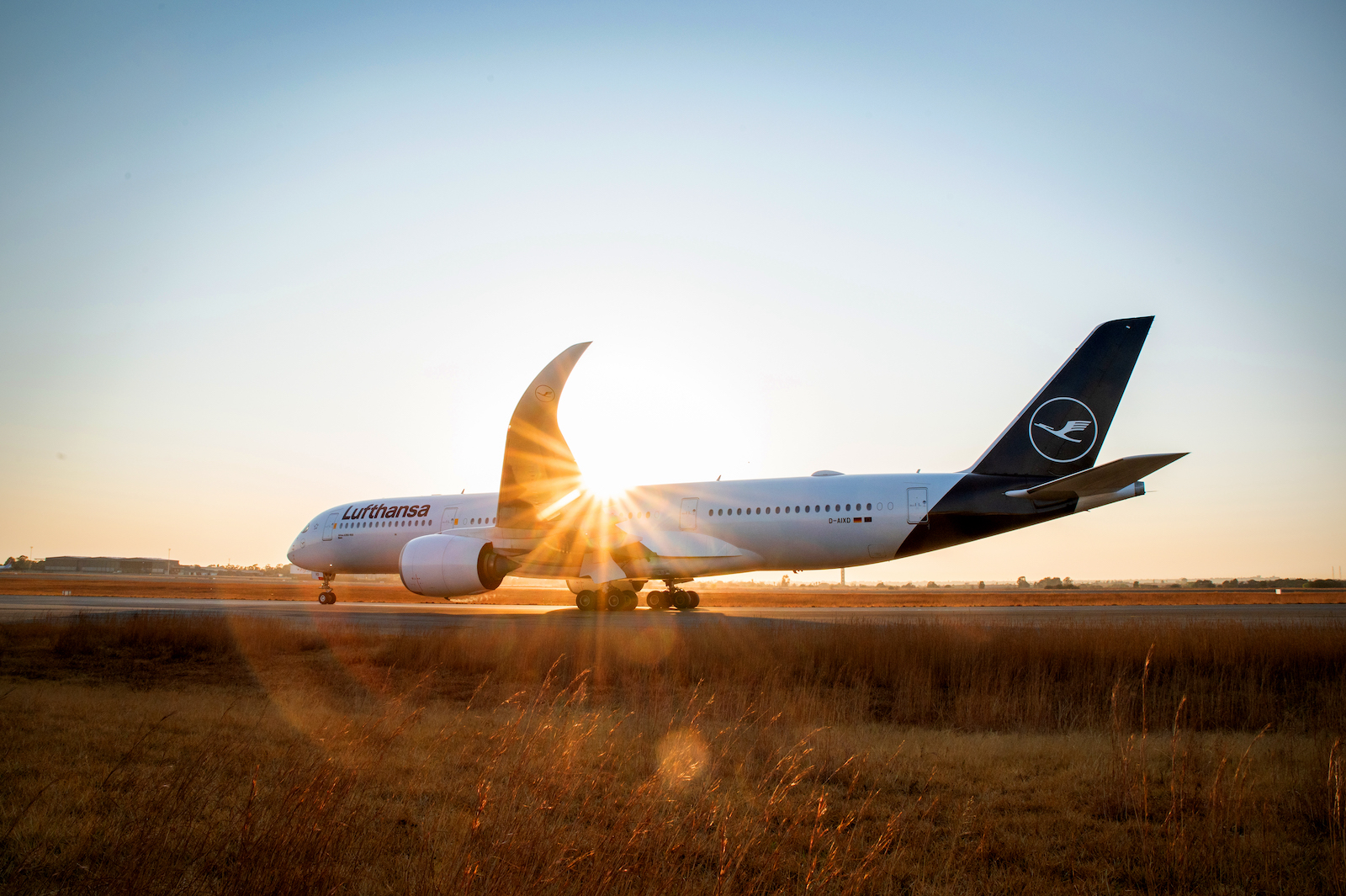
A Lufthansa Airbus A350-900 (Photo: Lufthansa)

Lufthansa launched its inaugural flight between Munich and Johannesburg’s OR Tambo International Airport earlier this week.

The inaugural flight (LH 578) arrived in Johannesburg on September 3. Germany’s national carrier will offer three services a week on this route. This is in addition to existing services between Frankfurt and Johannesburg.

The new year-round service will be operated with an Airbus A350-900 aircraft. The widebody aircraft accommodates up to 293 passengers across Business, Premium Economy, and Economy Class.

Lufthansa’s CEO, Jens Ritter, who was onboard flight LH 578 said that the airline was excited to operate the route. Ritter added in a press release, “Munich, with its award-winning airport, is a popular and beautiful city in the heart of Europe. It is also a convenient hub to take advantage of numerous onwards flights.”

Reintroduced Lufthansa Route

The airline previously offered flights between Munich and Johannesburg almost 19 years ago. However, it terminated its services in October 2005.

South African Airways then seized the opportunity to fly between Munich and Johannesburg, offering its own services. These flights were suspended in 2020 when the African airline underwent a business rescue procedure.

As a result, there have been no nonstop services between Munich and Johannesburg since 2020.

The reintroduction of this service connects Johannesburg with Bavaria. Both regions are indeed important industrial and commercial centers in each country.

Airports Company South Africa (ACSA) CEO Mpumi Mpofu said that the relaunched route was important for the growth of South Africa’s economy.

“We are delighted to welcome the reintroduction of Lufthansa’s direct route between Munich and Johannesburg, which offers significantly more seats per week to travellers between Germany and South Africa. The nonstop connection between Munich and Johannesburg will undoubtedly boost bilateral trade, create jobs and contribute to the overall economic prosperity of both respective regions,” Mpofu said.

Lorne Philipot

Lorne is a South Africa-based aviation journalist. He was captivated and fascinated by flying from the day he took his first airline flight. With a passion for aviation in his blood, he has flown to destinations in all corners of the globe. Lorne has traveled extensively and lived in various countries. Drawing on his travels and passion for aviation, Lorne enjoys writing about airlines, routes, networks, and new developments.

Gabon Launches New National Airline

On Aug. 31, 2024, Gabon's newly established national airline, Fly Gabon, launched operations with its inaugural flight from Libreville to Port-Gentil.

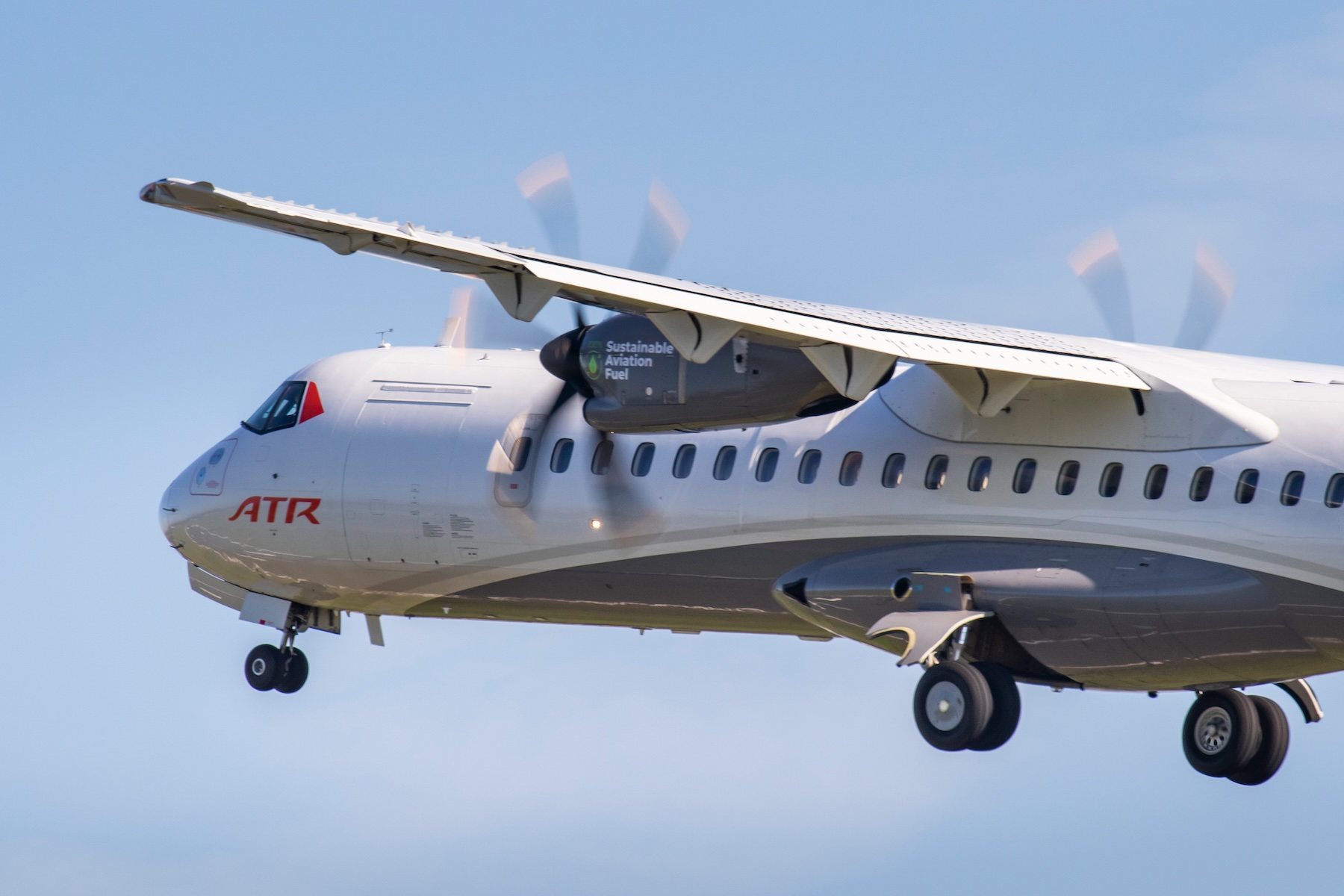
An ATR aircraft
An ATR aircraft (Photo: ATR)

On Aug. 31, 2024, Gabon’s newly established national airline, Fly Gabon, officially launched operations with its inaugural flight from Libreville to Port-Gentil. The flight was carried out using the airline’s ATR 72-600 aircraft, registered as TR-LJT, which departed from Libreville at 10:15 a.m. and touched down in Port-Gentil, Gabon’s second-largest city and a vital industrial hub, at 10:40 a.m. according to Flightradar24.

Nyl Charles Moret-Mba, Managing Director of Fly Gabon, expressed his pride in reaching this significant milestone. He stated, “It is a privilege to address you this morning. I extend my heartfelt thanks to the President and Head of State for entrusting our team with this vital project for Gabon.”

Moret-Mba emphasized the solid foundation laid by the Head of State through the establishment of a national airline. He noted that Fly Gabon, which employs 320 Gabonese staff, is a continuation of the legacy of Afrijet—a private airline that has served Central Africa for nearly two decades. The Gabonese Republic, through Fly Gabon Holding, has acquired a 56% stake in Afrijet, which will soon be rebranded as Fly Gabon.

“This transition begins today, with our first aircraft flying under the Gabonese flag. We will soon be expanding our fleet with an Airbus A320 for medium-haul routes,” Moret-Mba added.

Fly Gabon is a subsidiary of Fly Air Gabon Holding (FLAGH), a holding company established on Feb. 7, 2024, with a mandate to invest in Gabonese and international aviation companies. The airline received its second ATR 72-600 on July 12, 2024, from Toulouse, France. The aircraft, registered as TR-LJU, was previously operated by the Burkinabe start-up Liz Aviation and before that by Loganair. This aircraft joined Fly Gabon’s first ATR72-600, registered as TR-LJT, which arrived on June 16.

Fly Gabon has ambitious plans to operate 90% of Gabon’s domestic routes by the end of 2024, with a view toward international expansion. The airline intends to launch its first international route to Johannesburg, South Africa, establishing a key air corridor for trade and industry. To support this expansion, Fly Gabon is in discussions with Airbus and leasing companies to acquire an Airbus A320.

Following the overthrow of President Ali Bongo on Aug. 30, 2023, Brigadier General Brice Clotaire Oligui Nguema delivered his first address to the nation on Dec. 31, 2023. In this speech, the president of the Committee for the Transition and Restoration of Institutions (CTRI) outlined his strategy for the country’s development, with a focus on civil aviation. The establishment of a national carrier was among his top priorities.

This led to the creation of a new semi-public airline, Fly Gabon. The Gabonese government acquired a 56% stake in Afrijet, the leading private Gabonese carrier and a dynamic airline in the CEMAC region. Contrary to the initial plan of creating Fly Gabon from scratch, the new national carrier will be built on the solid foundation of Afrijet, which has been a prominent player in Gabon’s aviation industry since its inception in 2005.

In line with this vision, Fly Air Gabon Holding (FLAGH), the parent company of Fly Gabon, successfully acquired a majority stake in Afrijet on March 12, 2024, during a ceremony at the presidential palace attended by the transitional president, Brice Clotaire Oligui Nguema.

As part of its long-term strategy, Fly Gabon aims to provide air services to all provinces in Gabon as the country’s airports undergo modernization. Its partner, Afrijet, already operates regional flights to countries including Congo, the Democratic Republic of Congo, Cameroon, Equatorial Guinea, São Tomé, and Benin. Afrijet’s fleet includes three ATR 72-600s, one ATR 42-500, two ATR 72-500s, and a leased CRJ-900.

It is worth noting that Afrijet became the leading airline in the CEMAC region in 2019. Initially a charter service provider, the company expanded its network to offer regular regional air transport services starting in October 2016. Afrijet has been IOSA certified since February 2020 and employs 320 staff across Gabon, Congo, the DRC, Benin, Equatorial Guinea, and Cameroon.

The new Head of State has followed in the footsteps of his predecessor, Ali Bongo, who had previously promised to establish a national airline but did not see it through. As this project comes to fruition, Fly Gabon will fill the void left by the dissolution of Air Gabon in 2005.


Victor Shalton

Victor Shalton's love for aviation can be traced to when he was 11-years-old. As a seasoned aviation writer, he takes pride in providing the best aviation coverage around the globe and is passionate about advancing his skills in the aviation space. In addition, he loves travelling, writing, arts and while his speaking engagements have taken him around the world, he is proud to call Nairobi home.

Activist Investor Now Owns 10% of Southwest, Can Call Special Meeting

Elliott Investment Management now owns 10% of Southwest’s common stock and can call a special meeting at the carrier, according to a Reuters report on Monday.

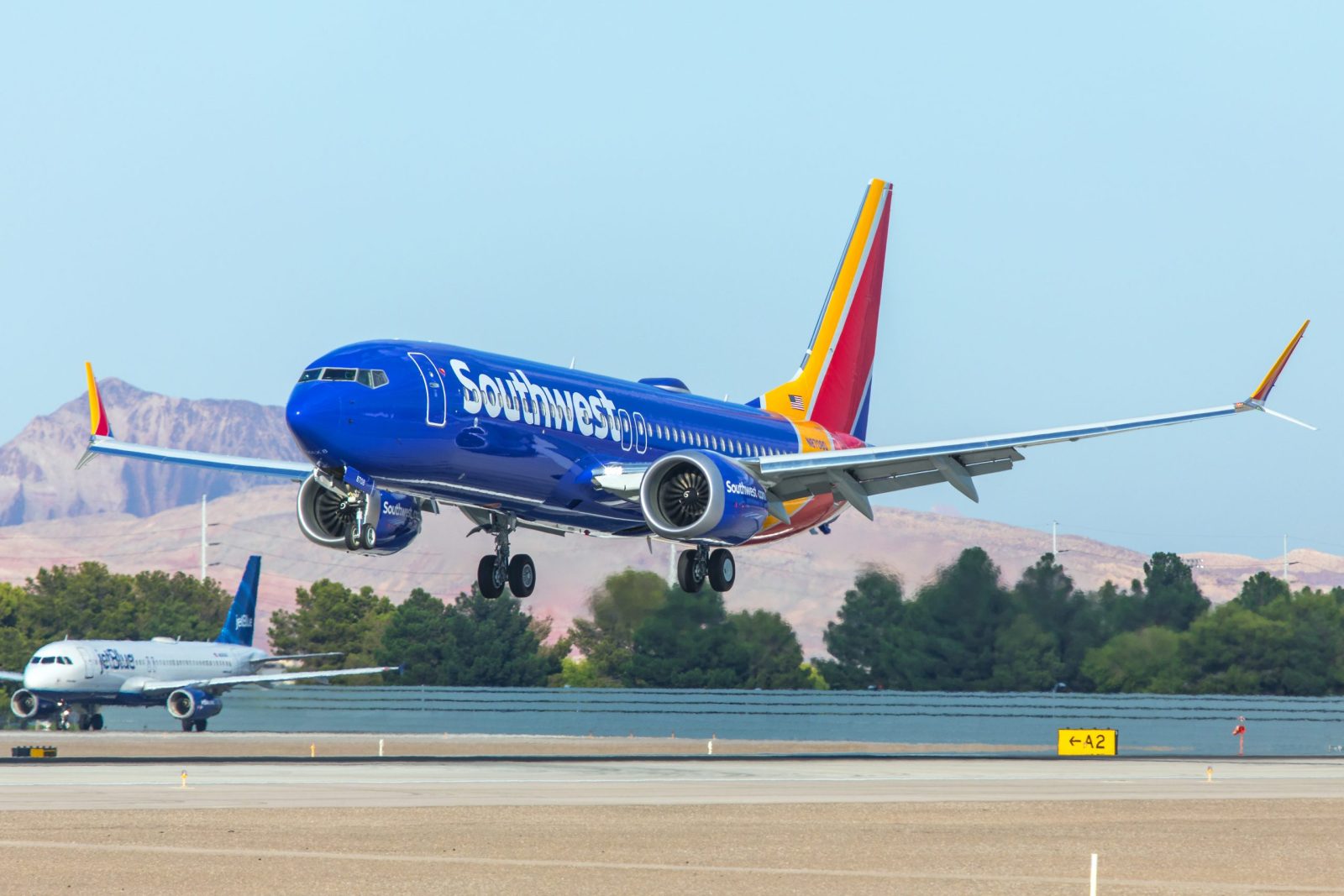
Southwest 737 MAX
A Southwest 737 MAX 8 in Las Vegas. (Photo: AirlineGeeks | William Derrickson)

Elliott Investment Management now owns 10% of Southwest’s common stock and can call a special meeting at the carrier, according to a Reuters report on Monday.

Elliott was founded in 1977 and manages approximately $70 billion in assets. The firm is scheduled to meet with the carrier on September 9 to discuss solutions for the airlines’ stock value loss over the last several years.

Southwest CEO Bob Jordan declined to resign earlier this summer after the hedge fund called for new leadership, accusing Jordan of failing to adapt to changing customer tastes. Elliott has since announced its intention to nominate 10 candidates to Southwest’s board of directors along with a list of several grievances against the airline’s current leadership on its “Stronger Southwest” website.

“When nominated, these Candidates would give shareholders a choice between the Company’s existing Board, which has delivered poor returns for shareholders and has not held management accountable for Southwest’s unacceptable performance, or a new Board that brings relevant expertise, fresh thinking and accountability,” the website states.

On August 26, Elliott sent an open letter to Southwest shareholders detailing solutions to address what the firm calls the carrier’s “inadequate leadership.”

Reuters reports that a special meeting used to solicit shareholder votes outside of the next annual gathering is rare, and if Elliott were to call one it would mean a major escalation of its fight with the carrier.

In July, Southwest attempted to address revenue woes by adding assigned seating and redeye flights for customers.

AirlineGeeks.com Staff

AirlineGeeks.com was founded in February 2013 as a one-person blog in Washington D.C. Since then, we’ve grown to have 25+ active team members scattered across the globe. We are all here for the same reason: we love deep-diving into the fascinating realm of the airline industry.

Denmark Revokes Nuuk Airport’s Security Authorization

With less than two month until Nuuk's new longer runway opens for service, Denmark has pulled the airport's security authorization.

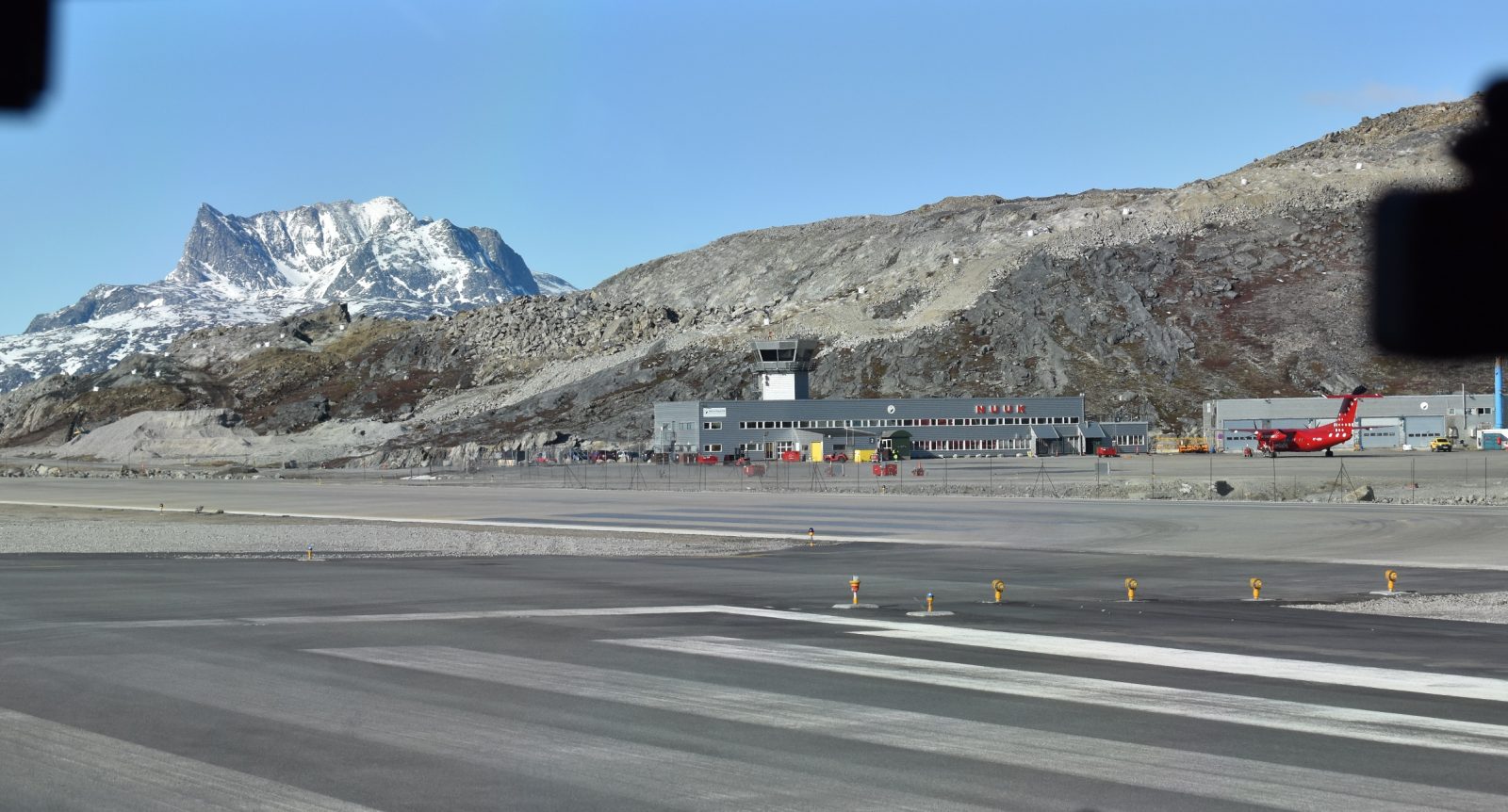
The terminal in Nuuk, which has since been demolished in the summer of 2024 (Photo: AirlineGeeks | Joey Gerardi)

Nuuk Airport, located in Greenland’s capital city, is supposed to be opening to the world in a few months with a larger terminal, longer runway, and a new instrument landing system. The airport hoped to offer its first-ever flights from the airport using anything larger than a Dash-8 aircraft at the end of November 2024. Unfortunately, the plan has hit a major snag.

According to Nunatsiaq News, a media outlet located in Canada’s northern territory of Nunavut, Denmark revoked Nuuk’s security authorization on August 14. This means, while the city can accept flights from international destinations, they cannot depart from the city.

Currently, Nuuk sees flights to two international destinations: Reykjavik in Iceland which is flown by Icelandair and Air Greenland, along with Iqaluit in Canada which just Air Greenland serves. For the first couple of days, most of the flights leaving Greenland from Nuuk were cancelled, but airlines did start adding tech stops to the flights, which significantly increased the total travel time.

For the flights to Reykjavik in Iceland, Icelandair has been routing the flights with a tech stop in Kulusuk where passengers clear security before continuing onto Iceland. Kulusuk is located on Greenland’s Eastern shore and is a destination Icelandair already serves for part of the year.

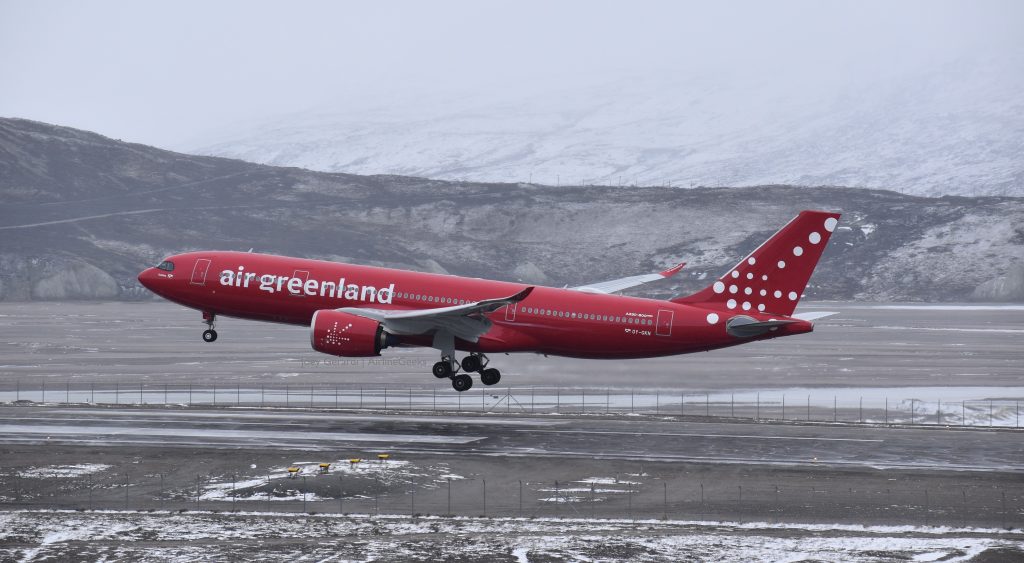
Air Greenland’s flights from Nuuk to Iceland have been routed through either Kulusuk like Icelandair’s, or the airline’s main international airport in Kangerlussuaq. The latter city already houses the airline’s main route to Copenhagen on its flagship A330-800neo.

5
Air Greenland’s sole Airbus A300-800neo seconds before touching down in Kangerlussuaq (Photo: AirlineGeeks | Joey Gerardi)

For the flights stopping in Kangerlussuaq on the way to Iceland, the aircraft flies an hour north from the capital of Nuuk, then stops for an hour so people can clear security. After that hour-long stop, it then continues onto Iceland. Going north to Kangerlussuaq and then to Iceland adds two extra hours to the journey that should last only about three hours as a nonstop flight.

Air Greenland’s flights to Iqaluit in northern Canada make a stop in Kangerlussuaq, adding two hours or so to this journey which should be a nonstop flight that lasts just under two hours.

The issues were originally supposed to be fixed on Tuesday, Aug. 20, 2024, but three weeks later, flights leaving the country are still being routed through either Kulusuk or Kangerlussuaq. Just two days ago on Sept. 1, 2024, Air Greenland’s flight to Reykjavik in Iceland stopped in Kangerlussuaq, and according to FlightRadar24, the flight to Iqaluit on Sept. 4, 2024 is also scheduled to make a stop in Kangerlussuaq.

Joey Gerardi

Joey has always been interested in planes for as long as he can remember. He grew up in Central New York during the early 2000s when US Airways Express turboprops ruled the skies. Being from a non-aviation family made it harder for him to be around planes and would only spend about three hours a month at the airport. He was so excited when he could drive by himself, the first thing he did with his driver's license was get ice cream and go plane spotting for the entire day. He graduated from Western Michigan University in 2022 with a B.S. in Aviation Management & Operations and a Minor in Business, and currently works for a major airline in his hometown.
Sign-up for newsletters & special offers!

Get the latest stories & special offers delivered directly to your inbox

SUBSCRIBE

Uh-oh! It looks like you're using an ad blocker.

Our website relies on ads to provide free content and sustain our operations. By turning off your ad blocker, you help support us and ensure we can continue offering valuable content without any cost to you.

We truly appreciate your understanding and support. Thank you for considering disabling your ad blocker for this website