









Stories

How Aeroflot Is Surviving After Russia’s Invasion of Ukraine — Part 1: Widebodies

Aeroflot's_Tails_(8134439426)
Aeroflot aircraft tails. (Photo: aeroprints.com [CC BY-SA 3.0 (https://creativecommons.org/licenses/by-sa/3.0) or CC BY-SA 3.0 (https://creativecommons.org/licenses/by-sa/3.0)], via Wikimedia Commons)

Six months have passed since Russia invaded Ukraine. Despite overwhelming support for Ukraine from the rest of the world, there is still no end in sight to the conflict between the two countries.

Nearly every global industry has seen changes to their operations, supply chains or both, but civil aviation saw some of the most direct impacts of the invasion. And largely forgotten amidst all those changes is Russian flag carrier Aeroflot, a 99-year-old airline operating a fleet of over 150 aircraft to nearly as many destinations.

Second Quarter Operating Results

Aeroflot announced its second quarter operating results on July 26. The airline had stopped posting financial results since the first three months 2022. However, since this is the first full quarter that the airline operated entirely under the influence of the invasion, it still provided fascinating insights into the country’s travel industry.

The Moscow-based airline saw the biggest drop in international traffic in April, down 78.2% from April 2021. This dip contributed to a 57.8% drop for the entire second quarter. Domestic was nowhere near as dreadful, with passenger numbers dropping only 16.7% from 2021 levels. Overall passenger numbers dropped 22.4% from the 2021 level for the carrier.

The airline saw a steady recovery despite the falling ruble and regional conflict. However, part of the strong demand may result from the pent-up demand after coming out of the pandemic.

Aeroflot Widebody Operation

Due to worldwide sanctions, the majority of the Aeroflot fleet is still limited to domestic operations. The airspace restrictions also significantly limited the carrier’s destinations. Aeroflot’s widebody fleet includes 12 Airbus A330s, seven Airbus A350 XWBs, and 22 Boeing 777s. As reported previously, the airline owns eight of the A330s and leases most of the other planes in its fleet.

Airbus A330-300

Aeroflot airplane on tarmac
An Aeroflot A330 at Moscow’s Sheremetyevo International Airport. (Photo: AirlineGeeks | Fangzhong Guo)

The Russian carrier’s Airbus A330 fleet is still the workhorse of its international operation. One aircraft remains parked while the rest of the fleet operates international routes nearly exclusively.

Since June, the airline has added back three destinations in China, including Chengdu, Beijing, and Shanghai. Since the Chinese authority mandated only clean-title airplanes can operate in its airspace, A330s serve all these routes.

All routes are once weekly due to the Covid-19 restrictions in the country. The strict Covid regulation also necessitated a technical stop at Krasnoyarsk, Russia, for the return flights from Shanghai and Guangzhou, China.

On the other side of the world, Turkey was one of the first countries to receive Aeroflot flights following the invasion. It has since added a third widebody destination, Bodrum, Turkey. The A330 is an upgrade to the route previously operated by Airbus A320 family airplanes.

South Asia also saw some changes to the airline’s operation. Aeroflot suspended the Colombo, Sri Lanka, route after the detention debacle in June. In the meantime, it extended its Male, Maldives, and Delhi schedule through the winter while adding Phuket, Thailand, starting end of October. All of which are popular winter destinations for the northern country.

Airbus A350-900

The Moscow-based airline’s Airbus A350 fleet only averages 1.7 years old. One aircraft remains grounded while the rest of the fleet operates all but one flight domestically. The outlier was a flight from Moscow to Bishkek, Kyrgyzstan, on Aug 20, 2022.

A330 and Airbus A320 family airplanes commonly serve the Moscow to Bishkek Route. It’s also the only international route operated by the two GECAS-owned A330s. The former Soviet state government may continue to allow dual-registered airplanes into its airspace. Therefore, it remains to be seen if A350 will operate this route again.

Despite the re-registration, the ADS-B data for the A350 fleet is still tied to each aircraft’s original registration number.

Boeing 777-300ER

An Aeroflot 777-300ER at JFK (Photo: AirlineGeeks | Shaquille Khan)

The state-owned carrier’s Boeing 777 family airplanes are among the most sanctioned in its fleet. Therefore, besides the two parked 777s, the vast majority of this fleet is on domestic duty. The US Commerce Department even created a blacklist that prevents anyone from servicing US-made planes under Russian control.

However, there are three exceptions to this rule. RA-73146, RA-73158, and RA-73141 have been operating flights in and out of the country. RA-73141 operated a single flight to Istanbul and could be a simple data glitch.

The other two planes have been flying from Moscow to Male and Delhi. Both airplanes, while seemingly owned by Aeroflot, are on the blocklist. It’s unclear if this U.S. Department of Commerce has sought any disciplinary actions. In the meantime, the schedule shows that 777 will continue to serve these two routes until the end of October, possibly longer. Another oddity is that Aeroflot took delivery of both planes on the same day — March 29, 2019.

A Dim Future

The widebody fleet stuck in Russia has been running short and heavy domestic routes such as Moscow to Sochi. The national airline also has limited options to expand internationally. Both factors lead to more takeoffs and low utilization, which accelerate the aging of these airframes. That is not likely to change any time soon.

Fangzhong Guo

Fangzhong grew up near an OEM airport in northeastern China, where he developed his enthusiasm for aviation. Taking upon his passion, he's now working as an aircraft interior design engineer. Besides working in the aerospace industry, Fangzhong enjoys trying out different types of airplanes and seeing how airplane interiors have evolved. So far, he's flown on over 80 types of aircraft. He also planespots in his spare time. His rarest catches included the 747 Shuttle Carrier Aircraft and AN-225.

Emirates To Upgrade Interiors of 120 Aircraft As Airline Expands Fleet

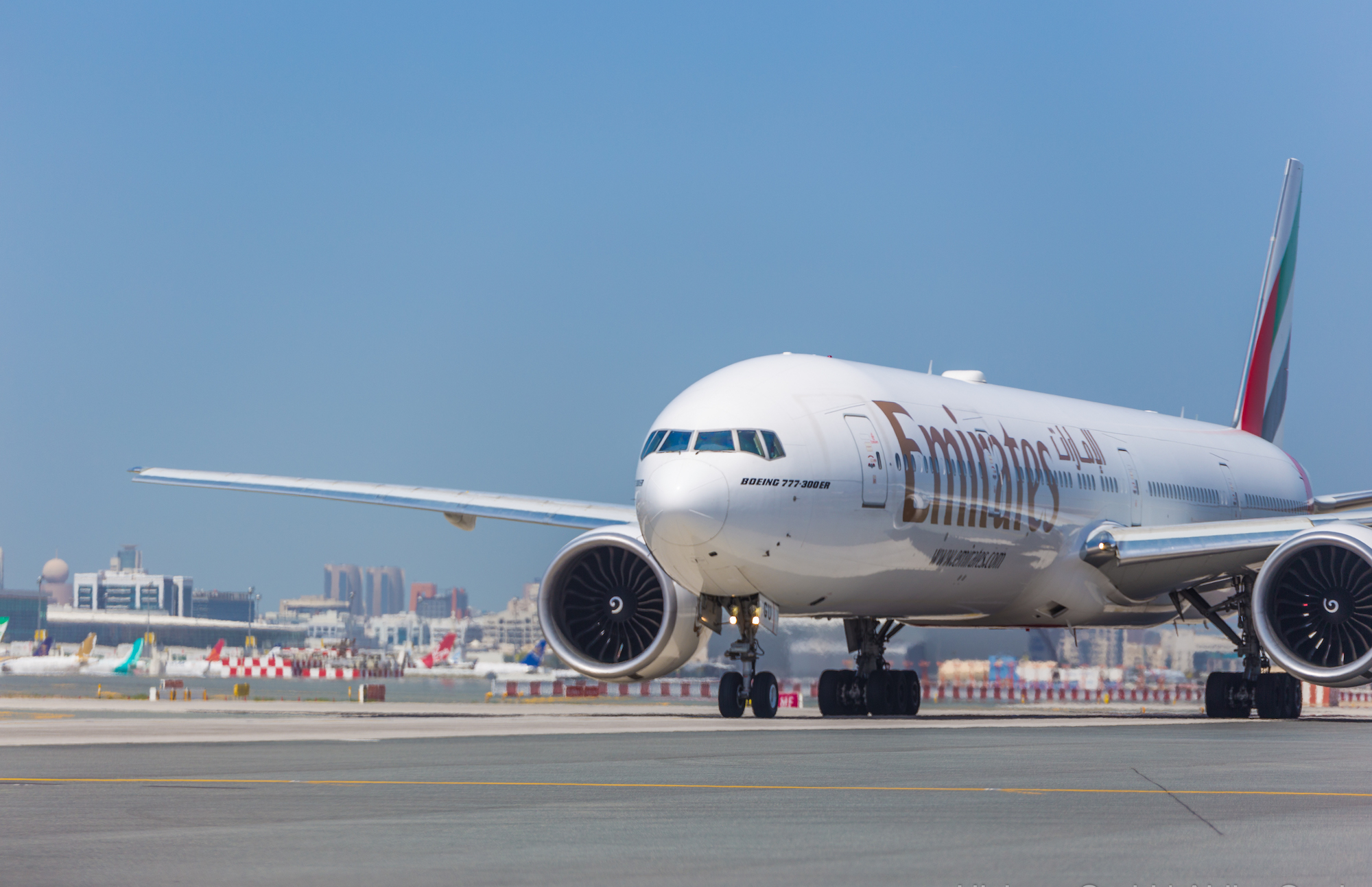
An Emirates 777-200LR on the ramp in Dubai (Photo: AirlineGeeks | Hisham Qadri)

Emirates recently announced that it is undertaking its largest fleet retrofit project ever, involving 67 Airbus A380s and 53 Boeing 777s. This project is part of a multibillion-dollar investment that Emirates is making as a part of the “Fly Better” campaign that began in November 2018.

The retrofit will officially begin in November and will be managed entirely by a specially hired team of 190 Emirates engineers who will carry out a full retrofit of four aircraft each month, continuously for more than two years. The retrofit project will be completed in April 2025, and nearly 3,000 new premium economy seats (which will be added for the first time in the 120 aircraft involved) 728 refurbished first class suites and over 5,000 business class seats upgraded to a new style and design will be installed.

Premium economy on some Emirates A380s arrived in December 2020. Since then, the last Airbus A380s to be delivered by Airbus to Emirates have been flying without selling these seats, but offering them free of charge to travelers. As of June 2022, ticket sales began. Premium economy differs from economy in giving a few more inches for the legs and a larger and more reclining seat than in economy class, despite still not having access to the bar on board the A380, which is reserved for business and first class.

A Planned Expansion

Emirates’ fleet currently consists of over 250 aircraft, 118 Airbus A380s (the world’s largest operator of this type of aircraft) and 134 Boeing 777s (including 10 Long Range and 124 Extended Range, again Emirates is the world’s largest operator of this type of aircraft). Emirates’ goal, however, is not only to modernize its fleet, but also to expand it to nearly 450 aircraft, having already ordered 50 Airbus A350-900s, 115 Boeing 777Xs, and 30 Boeing 787-9s, currently awaiting delivery. Emirates also has its own Emirates Executive fleet, which offers a private jet option to its customers, consisting of a single Airbus ACJ319, and its own Cargo fleet, but these will not be involved in this retrofit project.

The first tests to implement the retrofits began in July on an A380, where engineers disassembled the cabin piece by piece, recording each step, timing and mapping each action and then repeating it with the other aircraft in the fleet. According to Emirates, a complete retrofit of an aircraft takes 16 days and 1,000 hours of work each day for the team involved. In addition, new workshops have been specially built at Emirates Engineering to repaint, reupholster and upholster Business and Economy Class seats with new covers and cushions. The First Class suites, on the other hand, will be disassembled and sent to a specialized company to replace the leather, armrests and other materials.

The total cost of the investment for Emirates is about $2 billion, and Emirates has announced that it will take about 900 days for the project to be completed if there are no slowdowns.

Vincenzo Claudio Piscopo

Vincenzo graduated in 2019 in Mechanical Engineering with an aeronautical curriculum, focusing his thesis on Human Factors in aircraft maintenance. In 2022 he pursued his master's degree in Aerospace Engineering at the University of Palermo, Italy. He combines his journalistic activities with his work as a Reliability Engineer at Zetalab.

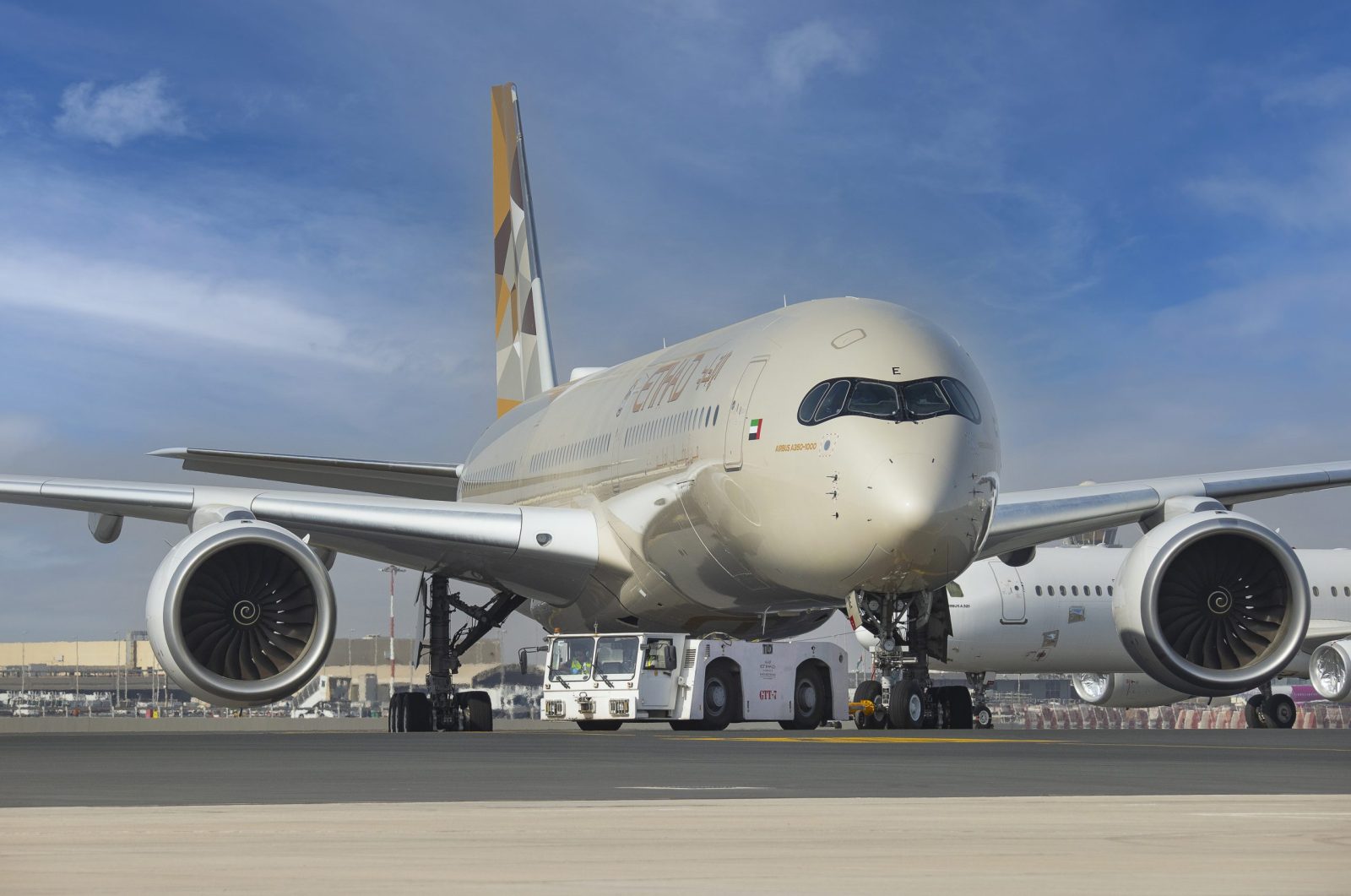
Etihad Airways Boosts Flight Operations to U.S.

Etihad Airways' new A350-1000 aircraft.
Etihad Airways' new A350-1000 aircraft. (Photo: Etihad Airways)

Etihad Airways plans to add 4 additional weekly flights between Abu Dhabi, the United Arab Emirates and New York’s John F. Kennedy International Airport, starting in November. These additional flights will be flown on the Boeing 787-9 Dreamliner.

In response to the increased demand seen on this route, the carrier will be adding these flights. Amid the recent rise in air travel, Etihad has significantly profited from this transoceanic service.

The additional flights bring the total number of weekly services operated by the airline between New York and Abu Dhabi from 7 to 11. In addition, the flights will permit more passengers to take advantage of Etihad’s massive international network.

Those traveling from New York to Abu Dhabi will be able to reach any of the airline’s 70 international destinations, most of which are destinations across the Middle East, South Asia, and Southeast Asia. For those traveling to New York, JetBlue — the airline’s codeshare partner — can offer service to over 46 destinations across the Americas.

At the moment, Etihad operates flights once a day to New York aboard its flagship Airbus A350. However, it will introduce the Boeing 787-9 Dreamliner to operate four times a week along this route. Etihad will fly this flight on Tuesdays, Thursdays, Saturdays and Sundays.

“Etihad is enhancing its schedule this winter to give even more options for our guests across key business and leisure destinations in our global network,” Vice President of Network Planning & Alliances, Alex Featherstone, stated. “Our New York service continues to perform strongly, and having already experienced record passenger demand this summer, Ethiad is excited to be investing further in this market by building on frequency levels ahead of the peak winter travel period.”

The airline also flies to Chicago’s O’Hare Airport and Washington D.C.’s Dulles Airport. The additional flights will bring the total number of weekly Etihad flights between Abu Dhabi and the US to 25. Additionally, Etihad will be offering 50 percent more premium seats this winter season to the U.S. than it did during the 2021 winter season.

Etihad faces competition from Qatar Airways and Emirates, which each offer flights twice a day to JFK Airport. Passengers traveling to the U.S. will use the airline’s unique pre-clearance procedures.

The airline offers a United States Customs and Border Protection facility where passengers will be screened before boarding the flight. This is the only US Customs facility in the Middle East.

By going through customs in Abu Dhabi, passengers can bypass the lines and long waits that are seen upon arrival in the U.S. Etihad hopes that the additional flights and premium services will meet the high travel demand and retain passengers for future flights.

Victor Shalton

Victor Shalton's love for aviation can be traced to when he was 11-years-old. As a seasoned aviation writer, he takes pride in providing the best aviation coverage around the globe and is passionate about advancing his skills in the aviation space. In addition, he loves travelling, writing, arts and while his speaking engagements have taken him around the world, he is proud to call Nairobi home.

EAS Adventure Trip Report: Waimea, Hawaii

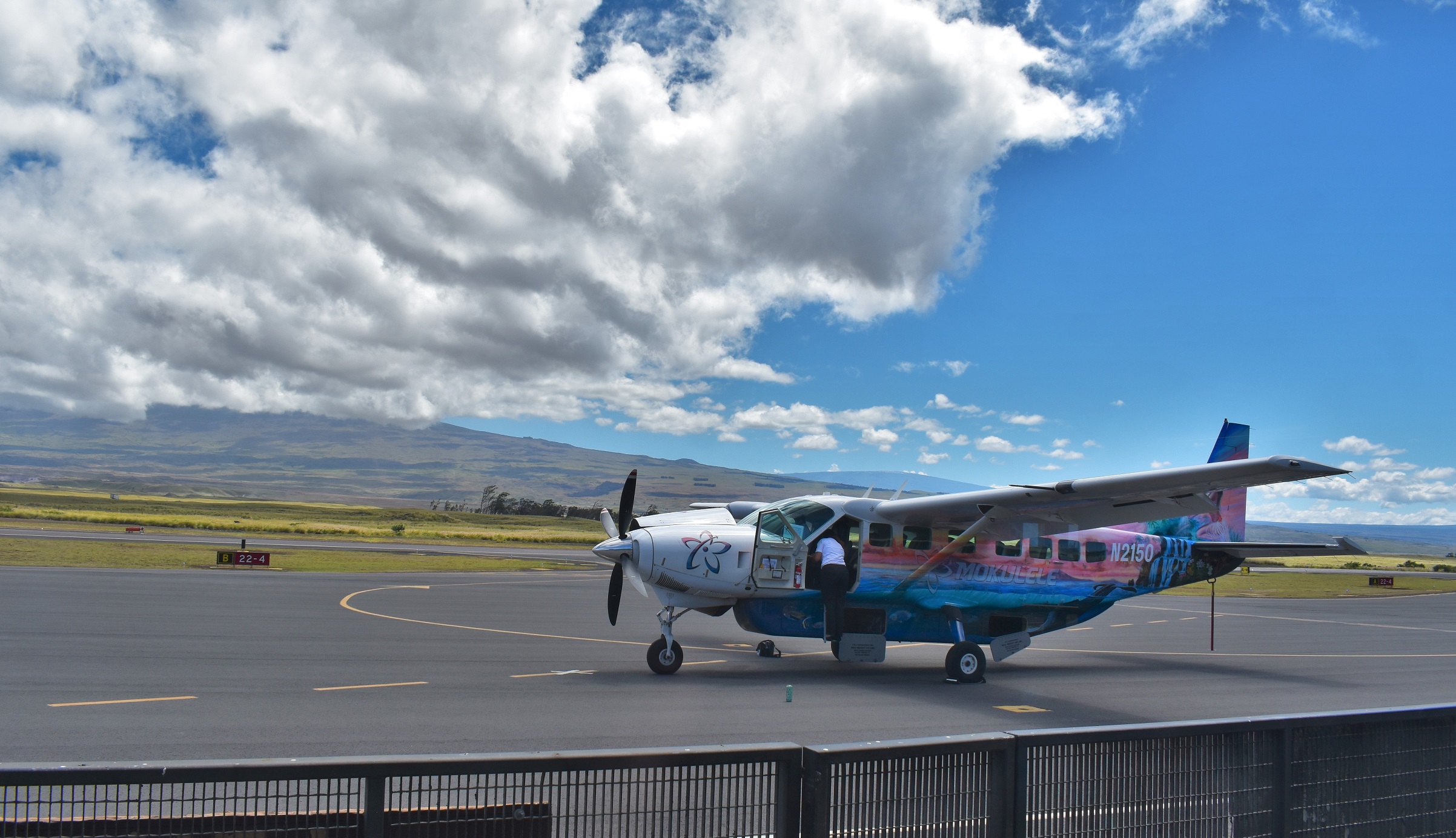
My aircraft at Waimea-Kohala (Photo: AirlineGeeks | Joey Gerardi)

If you have read my articles in the past, then you know I love out-of-the-way airports, airlines and aircraft. I would do almost anything to explore a new city or fly on a unique, rare aircraft type. So in this new series, which I will call “EAS Adventures”, I will start the trip at a larger airline hub, fly out to an Essential Air Service community and return to the same airport I started at, usually on the same aircraft that brought me there. What is the point of this you ask, if you have some time to kill at a hub during a long layover or if your flight gets delayed excessively, try venturing out to an EAS airport and seeing somewhere new during the downtime.

Overview

For this EAS Adventure, I will be starting at Hawaii’s second busiest airport, Kahului International on the island of Maui, and flying to the EAS community of Waimea located on the Big Island of Hawaii. Waimea is the smallest and lesser known of the three airports on the Big Island of Hawaii, the other two airports are Hilo, H.I. and Kona, H.I. I will be flying this adventure on Mokulele Airlines, which is now operated by Southern Airways Express, on an 8-seat Cessna 208B Grand Caravan.

I started my day in Honolulu in the early morning flying a Unique Connection Series trip report through the EAS community of Kalaupapa on the island of Moloka’i, the trip report of which can be found here. My flights out to Waimea, H.I. and back were the fourth and fifth flights of the day, out of a total of seven I had planned on this day. In addition to this being the most flights I’ve ever started and completed in a single day, it is also the most EAS Airports I have been to in a single day. Both records which, I do have plans on breaking in the near future.

Day of the Flight

As mentioned previously, these flights to Waimea were in the middle of a day of flying so I was already in mid-air when check-in time opened. I was coming into Kahului from Hoolehua, H.I.’s Airport located on the island of Moloka’i and my connection was 35-minutes. Under normal circumstances, you really shouldn’t plan on arriving later than 30-minutes prior to your flight and luckily mine landed earlier so I did have more time than that.

At Kahului, H.I.’s International Airport, Mokulele Airlines operates from the commuter terminal similar to Honolulu, which doesn’t have TSA or any security checkpoint, so the connection was a breeze. It is a really nice open-air terminal with seating just in front of the counters that double as a gate area.

The Mokulele Airlines counter at Kahului Intl. (Photo: AirlineGeeks | Joey Gerardi)

As like with any other airline that operates smaller aircraft, they asked about my body weight so they could seat me properly and safely in the correct row. Not long after I arrived, they called my flight over the P.A. system and we went to the gate, which here is simply the side of the building near the fence gate.

Much to my excitement, the aircraft for the flight to Waimea would be N2150, a special livery aircraft that used to do tours of the Big Island with Big Island Air, however, those tours stopped at the start of the Covid-19 pandemic and the plane was taken possession by Mokulele. The side of the aircraft describes Hawaiian Folklore and the two sides aren’t identical and feature their own artwork.

The ride side of N2150 (Photo: AirlineGeeks | Joey Gerardi)

Because this aircraft was an aircraft, specifically for tours, prior to Covid, it actually features an extra ninth-passenger seat in the back where the carry-on bag storage usually is. That ninth seat doesn’t need to get used on this flight as there were only four passengers headed to Waimea total, but someone did get assigned that row as the plane was a little nose heavy. On the airline’s very popular routes, that ninth seat does get used very often. I was assigned the fourth row for weight and balance, but we could choose the side, I chose the right side as that is the best going to Waimea for the best views overall.

The cabin of my flight to Waimea (Photo: AirlineGeeks | Joey Gerardi)

Now came the fun part of the journey, the views on the flight to Waimea. Due to Waimea being on a different Island and we had to go over the open ocean with a single-engine aircraft, meaning there was no cruising altitude. Instead, we spent roughly half the flight gaining altitude and the later part of the flight descending.

Taking off from Kahului Intl. (Photo: AirlineGeeks | Joey Gerardi)

The flight was very scenic with spectacular views of the Hawaiian landscape. Small plane, so obviously no service, and there was a magazine but who needed to read it when you got views like these to experience.

The north side of Maui (Photo: AirlineGeeks | Joey Gerardi)

I spent the entirety of the flight with my face, and camera, pressed against the windows of the aircraft.

The Hana Forest Reserve (Photo: AirlineGeeks | Joey Gerardi)

The max altitude we reached during the flight was roughly 9,500 feet. As we came closer to the Big Island, the Mauna Kea volcano came into view. This would be the tallest mountain on Earth if measured from the sea floor at roughly 33,500 feet, but the dry elevation of the volcano is only 13,803 feet. It does have snow on the peak of the mountain, despite being in Hawaii, but the elevation does help with the snow accumulation.

Mauna Kea Volcano sitting at 13,803-feet above sea level (Photo: AirlineGeeks | Joey Gerardi)

This next part is usually frowned upon especially on small planes, I moved seats while in flight. The pilot turned around and told me I would get better shots if I were on the left side once we got over the Big Island, so with the blessing and suggestion of the pilot in command I moved across the aisle to the seat on the left side of the plane in the same row.

My new seat on the left side of the plane (Photo: AirlineGeeks | Joey Gerardi)

Not long after moving, we passed by the Kohala Forest Reserve and the flight got really turbulent. This turbulence was due to the fact the airport is in a valley, between the forest reserve and the Mauna Kea Volcano.

The Kohala Forest Reserve (Photo: AirlineGeeks | Joey Gerardi)

The runway then came into sight, which sits in the middle of an empty grassy area next to the community of Waimea.

On approach to Waimea (Photo: AirlineGeeks | Joey Gerardi)

We touched down on the runway at the Waimea-Kohala Airport, the total flight time for this leg was just 35-minutes. The runway in Waimea is unusually long for the Cessna 208’s that it regularly receives at 5,197-feet, this is longer than the 5,097-foot runway in Key West, Fla. that sees Boeing 737s on a regular basis. The reasoning behind this longer runway in Waimea is that, according to airport employees, the airport did receive regularly scheduled DC-9~30 and Dash-7 flights up until the mid-1990s.

That previous amount of service is also what accounts for the unusually larger terminal building for an airport that now only receives two, eight-seat Cessna 208’s a day. There are also actual airport employees at this airport, rather than at the other EAS Airport in Kalaupapa the pilot was assigned that job due to the low number of passengers. This was the 38th EAS airport I have visited, and my second in the state of Hawaii.

Part of the terminal at the Waimea-Kohala Airport (Photo: AirlineGeeks | Joey Gerardi)

Unfortunately it wasn’t long before it was time to head back out to the same aircraft that brought me here, which looked fantastic with the Hawaiian backdrop and the mostly clear skies.

My aircraft at Waimea-Kohala (Photo: AirlineGeeks | Joey Gerardi)

I and the three other passengers got on the aircraft. The engine started, and we taxied out to the runway for our flight back to Kahului — with me sitting in the fourth row on the right side. Despite the amount I walked around the airport, we were only on the ground in Waimea for about 28-minutes.

Just after departure, we made a 180-degree turn, and I got a great view of the airport we had just taken off from, and we went almost directly over it giving us a near bird’s eye view of the runway.

Flying almost directly over Waimea-Kohala Airport (Photo: AirlineGeeks | Joey Gerardi)

Another great aspect of the larger windows is that you can look behind you at where you have been, in this case another fantastic view of Mauna Kea, and this time we were able to see the observatories on the top of the volcano.

Mauna Kea Observatories as we fly away from them (Photo: AirlineGeeks | Joey Gerardi)

The pilot did offer me to move to the other side again halfway through the trip but I turned it down, as I opted to look instead at the empty water. Sometimes passengers are able to see whales if they look hard enough which is what I was hoping to find, but on this flight, I didn’t end up seeing any.

Looking out over the Pacific Ocean (Photo: AirlineGeeks | Joey Gerardi)

Despite seeing only water for this leg of the trip, it was calming looking at an empty blue ocean for the roughly 30-minute flight back to Kahului. Before I knew it the aircraft began descending from our max altitude of 8,400 feet into Kahului on Maui.

We did fly downwind of the runway before landing, meaning we flew in the opposite direction of our landing direction, parallel to the runway. This gave those on the right a great overview of the airport below us before landing.

The Kahului Intl. Airport (Photo: AirlineGeeks | Joey Gerardi)

We then landed on Kahului Intl. runway 2 after the 35-minute flight back from Waimea on the Big Island. From the time we left Kahului, until the time we got back it was 1 hour and 38-minutes.

It was a fun little adventure, and despite the fact I didn’t leave the airport grounds in Waimea I still got to see some amazing sights along the way. EAS flights, and especially those in smaller unpressurized aircraft like these, offer some amazing sightseeing opportunities along the way to your destination. So next time you have extra time at the airport or if your flight gets delayed by a couple of hours at a hub, look for an EAS adventure, you may just like what you see.

A video account of my trip to Waimea-Kohala can be found below


Joey Gerardi

Joey has always been interested in planes for as long as he can remember. He grew up in Central New York during the early 2000s when US Airways Express turboprops ruled the skies. Being from a non-aviation family made it harder for him to be around planes and would only spend about three hours a month at the airport. He was so excited when he could drive by himself, the first thing he did with his driver's license was get ice cream and go plane spotting for the entire day. He graduated from Western Michigan University in 2022 with a B.S. in Aviation Management & Operations and a Minor in Business, and currently works for a major airline in his hometown.

Hainan Airlines Resumes Flights to Manchester, U.K.

A Hainan Airlines A330 in Manchester (Photo: James Field)

The U.K ‘s Manchester Airport has expanded its route map to mainland China again, after a two-year hiatus. The Chinese government has approved an agreement with the U.K. government to renew flights between Manchester, U.K. and China. As a result, Hainan Airlines will resume its Beijing to Manchester, U.K., operating a weekly service between the two cities.

According to the airline, the Manchester-bound flight will depart Beijing at 5:50 Monday morning, arriving in Manchester at 10 a.m. The return leg will depart Manchester at 3 p.m. on Monday, arriving in China at 8:20 a.m. The schedule is expected to change in October.

Hainan’s Beijing to Manchester, U.K. flight comes after the resumption of Air China’s flight from Beijing to London’s Heathrow Airport, China Eastern Airlines’ flight from Shanghai to London and China Southern Airlines’ flight from Guangzhou to London.

Manchester Airport welcomes the return of Hainan Airlines at the peak season of student travel.

“It is extremely positive to see critical routes like this return to our departure boards and we look forward to working closely with Hainan Airlines to build on the previous success of this route.” Chris Woodroofe, Managing Director of Manchester Airport, said.

Hainan Airlines will useAirbus A330s with two classes for the resumed route. The route was launched in 2016.

Before the pandemic, it recorded 100,000 passengers traveling annually. The flight has been suspended due to concerns about the variant of Covid-19. Earlier, the U.K. government announced flight resumptions between the two countries.

“This will end the ban on direct passenger services imposed by Chinese authorities during the Covid-19 pandemic. Transit for travelers will continue to be permitted in third countries.” U.K Department for Transport said on social media. The agreement could be reached under the auspices of the Civil Aviation Administration of China (CAAC).

In the early stage of resumption, only Chinese carriers can provide flight operations between two countries.

“Work is ongoing to resume routes for British airlines.” The UK government added.

The announcement hasn’t provided any time frame for the British carriers. Before the pandemic, British Airways provided flight operations to China, such as Beijing and Shanghai.

Seven-day Quarantine

However, the pandemic is far from over. As a result of the strict travel restrictions in China, the flight will fly to Dalian instead of Beijing.

“At the beginning of the resumption of the flight, it will travel via Dalian first. After completing the seven days quarantine, passengers will be able to fly to other destinations within China according to preferences.” Tao Zhu, the CEO of Hainan Airlines said.

Manchester is Hainan’s fifth European destination from Beijing in the post-pandemic era. The airline currently operates flights from Beijing to Belgrade, Serbia; Moscow, Berlin and Brussels.


Qantas’ CEO Issues Formal Apology Following Operational Difficulties

Qantas 787-9
A Qantas Boeing 787-9 departing LAX (Photo: AirlineGeeks | James Dinsdale).

This last year has definitely been a tough one for the airline industry. After the financial bloodbath caused by the COVID-19 pandemic, carriers around the world have had to deal with the rebound in demand caused by the relaxation of restrictions to travel and some of them found out they were not prepared for handling the current levels of traffic.

Airports and airlines alike have been struggling with staffing issues and operational delays, and this has caused widespread dissatisfaction among passengers.

In Australia, Qantas Airways has decided to face up to the criticism it is receiving from its customers and the entire traveling public by releasing a video to officially apologize for the below-standard service their passengers had to endure during the past few months. The video shows nothing less than Alan Joyce himself, Qantas’ Chief Executive, issuing a “formal apology” for what has been happening in the recent past.

“Over the past few months, too many of you have had flights delayed, flights canceled or bags misplaced. There are good reasons why, but when it comes to what you expect from Qantas, it’s not good enough – says the video – On behalf of the national carrier I want to apologize and assure you that we’re working hard to get back to our best.”

The airline is rolling out new technology to make the travel experience better and has hired 1,500 more people to face a 50% increase in sick leave.

The Airline’s Passenger Compensation

Qantas has also decided to thank its most loyal customers by granting a 12-month extension to the frequent flyer status of anyone above the Silver level together with a 50 Australian dollars ($34) promo code to all members based in Australia or New Zealand.

In addition to that, the initiative includes also a 50% increase in the availability of award seats on Qantas Flights as well as invitations for Qantas Lounges and free points for Platinum members.

Qantas’ move did not impress the Transport Workers Union of Australia (TWU), which called it a “stunt.”

“The thousands of passengers who’ve spent hours in call center queues following canceled flights, delays and lost luggage won’t want to waste more of their time attempting to cash in a voucher to buy themselves more of the same chaos,” the union said, as reported by Australian Aviation.

“Enough of the gimmicks. If Qantas management or indeed Joyce really cared about customers, the right thing to do would be to appoint a new CEO with the business acumen to bring back highly trained, experienced workers and treat them with respect,” the union added.

Vanni Gibertini

Vanni fell in love with commercial aviation during his undergraduate studies in Statistics at the University of Bologna, when he prepared his thesis on the effects of deregulation on the U.S. and European aviation markets. Then he pursued his passion further by obtaining a Master’s Degree in Air Transport Management at Cranfield University in the U.K. followed by holding several management positions at various start-up carriers in Europe (Jet2, SkyEurope, Silverjet). After moving to Canada, he was Business Development Manager for IATA for nine years before turning to his other passion: sports writing.

Ukrainian Airline SkyUp Takes Delivery of a New Boeing 737-800

A SkyUp Airlines 737-800 (Photo: Anna Zvereva, CC BY-SA 2.0 , via Wikimedia Commons)

Ukrainian low-cost carrier SkyUp Airlines took delivery of a new Boeing 737-800 on Tuesday, becoming the tenth aircraft of this type to join its fleet.

The airplane, with the manufacturer’s serial number (MSN) 40249, completed its first flight in July 2011. From August of that year, it operated for FlyDubai and in 2019 it joined the fleet of South African carrier Comair. Now, it is registered as UR-SQM so it can start flying for its new operator.

The aircraft is equipped with winglets, which will be replaced by split scimitar winglets during the coming autumn. The new wing devices will improve the aircraft’s aerodynamic performance and enable a further reduction in fuel consumption. Consequently, they contribute to reducing carbon dioxide emissions into the atmosphere.

With the new acquisition, SkyUp has two Boeing 737-700s and ten 737-800s in operation. The aircraft are configured in single-class cabin disposal and can carry up to 149 and 189 passengers, respectively.

To continue in spite of everything

Since the beginning of the war following Russia’s invasion of Ukraine, the company has had to adapt its model to try to survive the total suspension of scheduled commercial flights in the country.

During the first days and weeks of the conflict, SkyUp flew Ukrainian citizens to Israel and Portugal from Chisinau, Moldova, and from the Polish cities of Warsaw and Lublin. It also helped transport international humanitarian aid to airports near the Ukrainian border.

It then offered aircraft and crew leasing services to other airlines outside Ukraine on wet-lease agreements and operated for the tour operator Join UP!, a commercial partner of the airline.

With the country’s airports still closed and airspace restricted for civil operations, the provision of on-demand services with aircraft housed in other territories presents itself as one of the most viable options for generating revenue. Of course, the desire of the company’s employees and management is to return to operating on Ukrainian soil.

This story was originally published by Agustin Miguens of Aviacionline in syndication with AirlineGeeks. 

Ryan Ewing

Ryan founded AirlineGeeks.com in February 2013 and has spent more than a decade covering the airline business. His work has been featured by CNN, WJLA, CNET, and Business Insider. His aviation experience spans airport operations, Part 135 regulatory compliance, and airline crew workforce planning, along with time behind the yoke of a Cessna 172 and interviews with airline executives. Ryan now serves as Group President of Firecrown Media’s Aviation Group. He holds a B.S. in Air Transportation Management and an MBA from Arizona State University and teaches Airline Management at Embry-Riddle Aeronautical University.

Emirates and Aegean Announce Codeshare Partnership

An Emirates 777-300ER in Dubai (Photo: AirlineGeeks | Hisham Qadri)

Emirates has announced a new codeshare partnership with Aegean, allowing its customers to connect across eight Greek destinations via Athens using a single ticket.

The Dubai-based airline will place its EK flight code on services operated by Aegean, offering its customers a convenient and seamless booking experience, as well as a consistent baggage allowance, to popular destinations such as: Kerkyra, Chania, Irakleion, Mykonos, Thira, Rhodes, Thessaloniki and Alexandroupolis.

Under the codeshare agreement, the Greek carrier will also place its A3 code on Emirates-operated flights between Dubai and Athens so that its customers can enjoy seamless connections to the Emirati capital and beyond. Travel itineraries can now be booked from both companies’ websites and their regular channels.

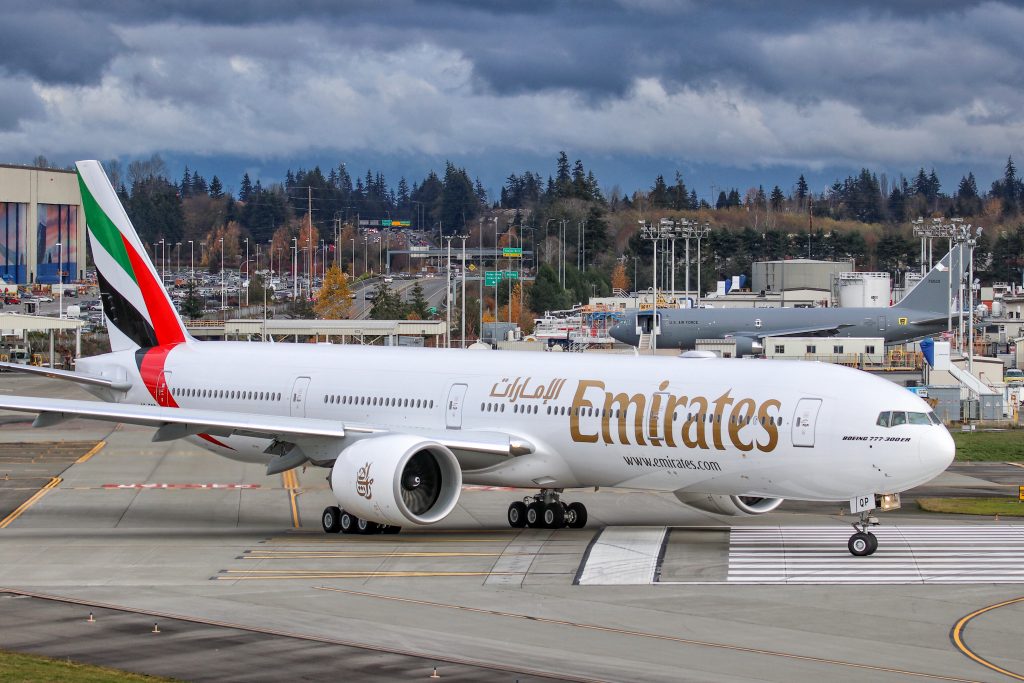
An Emirates 777-300ER lines up on the runway for a test flight at Paine Field. (Photo: AirlineGeeks | Katie Bailey)

From October 2022, Emirates and Aegean will further increase their joint codeshare network to include eight more intra-European routes via Athens, including Bucharest, Romania; Belgrade, Serbia and Naples, Italy among others, as well as westbound on Emirates’ flights to Newark, New Jersey from the Greek capital, and New York from Milan, Italy.

The Dubai-based carrier currently operates Athens with 12 weekly flights operated by a Boeing 777-300ER. These additional codeshare routes will be subject to receiving government approvals.

This article was written by Rainer Nieves Dolande for Aviacionline.

Ryan Ewing

Ryan founded AirlineGeeks.com in February 2013 and has spent more than a decade covering the airline business. His work has been featured by CNN, WJLA, CNET, and Business Insider. His aviation experience spans airport operations, Part 135 regulatory compliance, and airline crew workforce planning, along with time behind the yoke of a Cessna 172 and interviews with airline executives. Ryan now serves as Group President of Firecrown Media’s Aviation Group. He holds a B.S. in Air Transportation Management and an MBA from Arizona State University and teaches Airline Management at Embry-Riddle Aeronautical University.

Boom Supersonic Reels in Orders, Delta Remains Hesitant

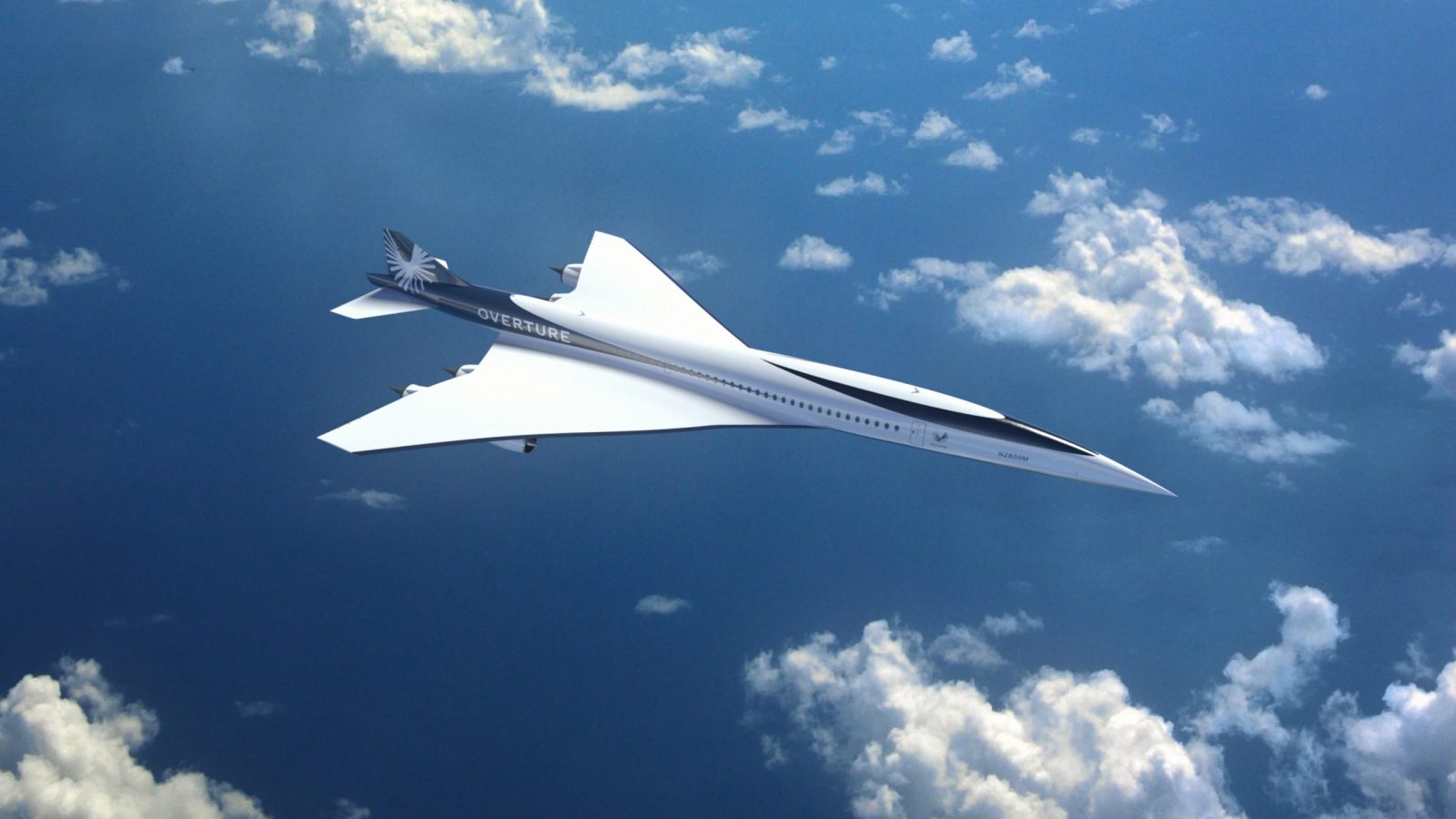
A rendering of Boom's Overture aircraft. (Photo: Boom Supersonic)

You’ve seen the marketing everywhere. For instance, the possibility of flying from New York to London in 3 and a half hours or flying from Los Angeles to Tokyo in 4 and a half hours. This thought has not seemed like a reality for quite some time, not since the Concorde last flew supersonic transatlantic flights at the speed of sound but eventually retired from service in 2003.

Boom Supersonic — the Denver-based aviation design startup — is looking to change the air travel industry, and airlines are buying. Perhaps, at least they are agreeing to buy. For an aircraft that to this date has no engine, it sure has wooed over executives from major carriers in the U.S., with the idea of transporting 60-80 passengers at Mach 1.7 — a cool 1300 miles per hour. 

United Airlines was the first of the big 3 carriers in the U.S. to commit to buying 15 of Boom’s Overture, their first prototype. Then, a few months later, American Airlines expressed interest and announced that they’d bite and committed to 20 aircraft with an option to add up to 40 more, though pundits find the timetable Boom has laid out to be ambitious, given that without an engine, there is no aircraft. 

Delta’s Skepticism

Meanwhile, Delta Air Lines has watched from the sidelines. The carrier seems to be less interested in prototypes and more interested in watching its competition go through what will no doubt be an interesting 7 or so years leading up to 2029, the year when Boom says its Overture will enter service with airlines.

Delta’s CEO Ed Bastian told FOX Business in an interview on Tuesday, “I have a lot more questions than answers” adding that “until we’re confident that we could actually generate a reliable return from the aircraft on investment, that’s not where we’re investing.” Bastian’s remarks make it pretty clear where the airline stands at the moment. 

Where Delta’s skepticism lies is unclear but it is safe to assume they are probably put off by the fact that Boom has no set plan for an engine. To make matters worse, Rolls Royce, the engine manufacturer which Boom had said they were in talks with, seemed to brush off any suggestions that progress had been made.

Rolls Royce CEO Warren East recently told the Air Current, “We’re not making anything speculative for anybody. We’re not spending our dollars on new engine development. Our new engine developments are around our business jet engines and our UltraFan. That’s it. East’s wording here is important. We’re not spending our dollars on new engine development.”

This is not to flat out say Rolls Royce is not willing to work with Boom or develop engines, it just doesn’t have interest in putting in its own funds at the moment. Additionally, this can’t give Ed Bastian or any other skeptical executives at Delta much confidence, though can it?

So, while the idea of getting to Paris from New York at the same time it would take you to get to, say, Denver, seems fantastic, obstacles are to be found in nearly every facet of Boom’s plan. Maybe Bastian becomes optimistic and Delta jumps in tomorrow, maybe Boom and Rolls Royce roll out an engine sooner than anyone expects, and maybe it all gets scrapped. A lot of maybes and “what ifs.” However, no one will complain if Boom does what it claims it can do, except for maybe a sailor not thrilled by a mid-afternoon sonic boom.

Ezra Gollan

Ezra Gollan is a student, photographer and aviation enthusiast based in New York, New York. He has spent over half a decade around New York City’s airports as a photographer.

Icelandair Extends Seasonal Services to Portland and Raleigh-Durham into 2023

Icelandair Boeing 757 wearing the "Vatnajökull" livery (Photo: AirlineGeeks | Joey Gerardi)

Icelandair has announced an extension to the seasonal routes offered from the airline’s base at Keflavik airport (KEF) to Portland International Airport (PDX) and Raleigh-Durham International Airport (RDU). Initially the Icelandic carrier was scheduled to operate the services until the end of the Northern Summer season in October. The extended season will now see the airline operating flights from Oregon and North Carolina until February.

Icelandair began operations from Raleigh-Durham in May and at the time Michael Landguth, president and chief executive of the Raleigh-Durham Airport Authority acknowledged the demand from passengers in the region. Mr. Landguth said: “Icelandair will help meet that growing demand by offering leisure and business travelers nonstop service to a new destination and global connections to major cities on both sides of the Atlantic.”

Announcing the extension of services on Thursday Mr. Landguth stated: “We’re very pleased the Iceland route has been very successful.” A post-pandemic high of just over 1.1 million passengers traveled through RDU in July though this was still 81 percent of the July 2019 figure according to the Durham Herald Sun.

The newspaper reports that RDU was offering an incentive program to increase international carriers to operate from the airport. According to one report, ‘the program waived several airline fees, up to $250,000 a year per route for two years, and provided an additional $25,000 to promote a new flight’. The Durham Herald Sun stated that Icelandair was the only international airline to take advantage of the program. As a result passengers from the region are able to travel to Iceland or transit through Keflavik airport to more than 20 European destinations.

Passengers at PDX Still Well Below 2019 Levels

Portland International Airport was forecasting that 1.4 million passengers would travel through PDX in July. This is approximately 70 percent of 2019 figures for the same month even with the World Athletic Championships being held in Oregon between 15-24 July. For the whole of the summer season PDX is forecasting 4.2 million passengers in total against a 2019 pre-pandemic summer total of 5.7 million.

In June international passengers only accounted for just over 4 percent of enplaning and deplaning passengers at PDX. To promote the continued service from PDX, Icelandair is running a campaign for passengers to win four $1,500 gift certificates, each valid for two round-trip tickets to Iceland.

Icelandair will operate four times weekly from RDU from 01 November until 07 January 2023. The airline will operate a Boeing 737 MAX 8 on the KEF-RDU route on Mondays, Wednesdays, Fridays and Saturdays. Flights from PDX will also operate four times a week on Mondays, Tuesdays, Thursdays and Saturdays also from 01 November until 07 January 2023. The carrier will utilize its Boeing 757-200 aircraft seating 184 passengers on the PDX-KEF route.

John Flett

John has always had a passion for aviation and through a career with Air New Zealand has gained a strong understanding of aviation operations and the strategic nature of the industry. During his career with the airline, John held multiple leadership roles and was involved in projects such as the introduction of both the 777-200 and -300 type aircraft and the development of the IFE for the 777-300. He was also part of a small team who created and published the internal communications magazines for Air New Zealand’s pilots, cabin crew and ground staff balancing a mix of corporate and social content. John is educated to postgraduate level achieving a masters degree with Distinction in Airline and Airport Management. John has held the positions of course director of an undergraduate commercial pilot training programme at a leading London university. In addition he is contracted as an external instructor for IATA (International Air Transport Association) and has been a member of the Heathrow Community Fund’s ‘Communities for Tomorrow’ panel.
Sign-up for newsletters & special offers!

Get the latest stories & special offers delivered directly to your inbox

SUBSCRIBE

Uh-oh! It looks like you're using an ad blocker.

Our website relies on ads to provide free content and sustain our operations. By turning off your ad blocker, you help support us and ensure we can continue offering valuable content without any cost to you.

We truly appreciate your understanding and support. Thank you for considering disabling your ad blocker for this website