Stories

Lease Rates of A320neo, 737 MAX Rise Due to Aircraft Shortage

Vueling-Airbus-A320-271N-EC-NDB-110-10-19-William-Derrickson
Facing a Vueling A320 on the taxiway. (Photo: AirlineGeeks | William Derrickson)

The shortage of aircraft of the Airbus A320neo and Boeing 737 MAX families, competing models in the short- and medium-range single-aisle market, is driving up the lease price of the airplanes. In this context, many operators are opting to extend existing contracts rather than seek new aircraft in the market.

According to aviation intelligence, information and advisory services company IBA, leasing a new Boeing 737 MAX increased by more than 20% between April 2020 and July 2022, to $316,000 per month.

Meanwhile, leasing an Airbus A320neo can currently require a payment of up to $324,000 per month, up 14% from April 2020. The largest model in the family, the A321neo, could be leased for $375,000 per month in July this year.

According to the Cirium platform, more than 51% of the world’s nearly 23,000 operational commercial passenger aircraft are owned or operated by leasing companies. While many airlines own their aircraft, they very often opt for different fleet schemes comprised of both owned and leased equipment.

A Southwest 737 MAX aircraft in Baltimore. (Photo: AirlineGeeks | Ben Suskind)

Since the beginning of the pandemic, the world’s two largest aircraft manufacturers suffered from lack of demand and slowed down their production. In recent months, however, they have begun to receive more firm orders and contracts as a result of the industry’s sustained recovery. Howeverm, supply chain problems and in-house constraints continue to hinder a full recovery in the pace of production.

In addition, sanctions imposed on Russia following its invasion of Ukraine last February led to a shortage in the supply of titanium, a crucial metal for aircraft engine manufacturing. A kind of perfect storm. In between, the beginning of the recovery, not without difficulties.

The rapid acceleration of demand for air travel, encouraged by the general lifting of sanitary restrictions, collided on more than one occasion with the reality of the aviation industry, which was overwhelmed and unable to respond adequately due to a shortage of aircraft, a lack of personnel or a combination of these and other factors.

It is precisely the shortage of available aircraft that has been the main factor behind the recent increase in lease rates. As a result, the major leasing companies, such as Air Lease Corporation, AerCap and Avolon, are making large profits.

This year, airlines are looking for new, more fuel-efficient aircraft in response to the increase in aviation fuel prices. There is a growing demand for newly manufactured aircraft, which are often obtained through leasing companies. On the other hand, rising interest rates are leading to additional increases in rates.

This article was written by Agustín Miguens for Aviacionline.

Parker Davis

Parker joined AirlineGeeks as a writer and photographer in 2016, combining his longtime love for aviation with a newfound passion for journalism. Since then, he’s worked as a Senior Writer before becoming Editor-in-Chief of the site in 2020. Originally from Dallas and an American frequent flyer, he left behind the city’s rich aviation history to attend college in North Carolina, where he’s studying economics.

How Aeroflot Is Surviving After Russia’s Invasion of Ukraine — Part 2: Narrowbodies

Aeroflot narrowboies at Moscow's Sheremetyevo International Airport. (Photo: AirlineGeeks | Fangzhong Guo)

Editors note: This is the second article in a series on Aeroflot. Read Part 1 here.

Our last report concluded that most of Aeroflot’s widebody fleet has shifted from international to domestic flights due to international air space restrictions. What is the flag carrier doing with its domestic fleet now that the market has added capacity and reduced demand? Is there any difference in dispatch for short-haul international flights?

The Russian carrier’s single-aisle fleet primarily consists of Airbus A320 family airplanes. Ninety-three out of its 114 active narrowbodies are Airbus aircraft. The rest are Boeing 737-800s and a handful of Sukhoi Superjets. Apart from two planes repossessed overseas at the start of the invasion and one that suffered ground damage in 2020, all are currently in the Russian registry.

Photo: Aeroflot

Airbus A320neo/A321neo — A short-haul workhorse

Aeroflot operates six Airbus A320neos and three Airbus A321neos, averaging only 1.6 years old. The carrier put its youngest A320neo in storage since the start of the war while using others regularly. Although this is a tiny sub-fleet, it still covered most of the airline’s A320 family routes. The A320neos were even flying to Russia-friendly territories such as Belarus and Kyrgyzstan. Both countries have quietly allowed dual-registered planes in their airspace.

Airbus A321 – Sanction specialists

The Airbus A321ceo sub-fleet is the next largest narrowbody sub-fleet with 32 airframes operating in Aeroflot colors, four of which are in storage as of August 2022. All are sanction related, except for VP-BAX, which has been stored due to damage since 2020. The state-owned company initially parked a single plane in February, then gradually added more in June and July. The change in this fleet appears most probably for spare part scavenging.

In addition to Kyrgyzstan and Belarus, the A321s are in charge of flying to Iran and Armenia. These countries are also under strict sanctions from the west, so they are less likely to assist in sanctions against Russia.

An Aeroflot and Lufthansa aircraft taxi at Munich International Airport. (Photo: AirlineGeeks | Fabian Behr)

A320 — Possible ownership transfer

The Moscow-based carrier’s fleet has 52 active A320ceos, the largest sub-fleet under its wings. The type started with one aircraft parked in February and gradually added four more.

However, according to its 2021 annual report, it has 58 of this type in its books at the year’s end. There’s a discrepancy even after subtracting the two repossessed airplanes. Since 98% percent of the carrier’s fleet is on a lease, the planes may be in its accounting book but not active. After further examination, the difference likely comes from those that went into storage for early lease returns in 2021.

This fleet is the most active in international flying. It includes the only narrowbodies flying to Turkey, Uzbekistan and Azerbaijan. While 48 A320s carry passengers in Aeroflot colors, only five have made trips to these countries.

Russia’s State Transport Leasing Company (GTLK) owns all five and only these five airplanes in the Airbus narrowbody fleet. A similar trend also appeared in the company’s 777 fleets, where GTLK-owned planes fly to international destinations such as Istanbul and Delhi.

Since Turkey previously stated it would only allow clean-title aircraft into the country, it’s possible GTLK formally transferred the plane’s ownership to Aeroflot. All aircraft on these routes started international service in the second half of July, which indicates the possibility of an organized effort to restart international service. Restarting international services using GTLK planes likely necessitated swapping one airframe out of storage.


An Aeroflot Boeing 737-800 in flight. (Photo: AirlineGeeks | Fangzhong Guo)

Boeing 737NG — Following the rules

On the other side of the aisle, the carrier has 37 Boeing 737-800s. Similar to the other types, it also started with a single frame in storage, and the number gradually increased to five.

This sub-type is one the most-sanctioned narrowbody in the state-owned carrier’s fleet. The US Commerce Department imposed sanctions on most members in this fleet in late March, which caused the airline to shift all Boeing planes to domestic and Belarus-bound flights. Similar to using only clean-title planes for most international long-haul flights, it’s also keeping these planes within its borders, away from trouble.

An Aeroflot Sukhoi Superjet 100 at Dresden Airport in Germany. (Photo: AirlineGeeks | Fangzhong Guo)

Sukhoi Superjet 100 — Quietly exiting

These Russian-made machines were already on their way out of Aeroflot’s fleet. The group has been transferring the SSJ100s from the Aeroflot brand to Rossiya.

The latest one will likely be RA-89025, which visited Ulyanovsk, Russia, recently for painting. None of the other three frames are flying passenger services, either.

Conclusion

Despite all the sanctions, the state-owned company has found ways to expand its operations. It may have a chance to rejoin world aviation if it keeps following the rules of countries with connections to the west. However, in the more likely case that it can’t, it’ll have 300 brand new Russian planes to rejuvenile its 100-year history.

Fangzhong Guo

Fangzhong grew up near an OEM airport in northeastern China, where he developed his enthusiasm for aviation. Taking upon his passion, he's now working as an aircraft interior design engineer. Besides working in the aerospace industry, Fangzhong enjoys trying out different types of airplanes and seeing how airplane interiors have evolved. So far, he's flown on over 80 types of aircraft. He also planespots in his spare time. His rarest catches included the 747 Shuttle Carrier Aircraft and AN-225.

Lufthansa Welcomes Its First Boeing 787 Aircraft

A Lufthansa 787-9. (Photo: Lufthansa)

It has been a difficult few years for the American manufacturer Boeing: the significant issues that led to the grounding of the 737 MAX and, more recently, the delivery delays of the 787, as well as the development delays for the 777-9, have left the Seattle-based company to play catch-up with its European rival Airbus, which has been enjoying the success of its latest products.

For this reason, Boeing has every reason to celebrate the delivery of the first Boeing 787 to German airline Lufthansa. On Monday the aircraft registered D-ABPA left Paine Field Airport (PAE) in the Seattle area and landed at Frankfurt Airport at around 11 a.m. local time on Tuesday.

This is the first of 32 Boeing 787Dreamliners that Lufthansa will receive between now and 2027 when it will completely replace the 17 A340-300 aircraft currently in service for the German carrier. Lufthansa’s 285-aircraft strong fleet almost entirely consists of Airbus aircraft, with the only exceptions being 8 Boeing 747-400 (flagged to be replaced by the 777-9s) and 19 Boeing 747-8i aircraft of which Lufthansa is the largest operator.

“Today’s delivery to the Lufthansa Group is a significant milestone for both companies as we resume European 787 deliveries and Lufthansa receives its first 787. I am delighted to see Lufthansa join a growing set of airlines worldwide operating the industry’s most capable twin-engine airplane,” said Stan Deal, president and CEO of Boeing Commercial Airplanes in PR Newswire. “With unmatched fuel efficiency and huge passenger appeal, the 787 will play an integral role in the Lufthansa Group’s long-haul network.”

New Business Class Product

This first Boeing 787-9 aircraft is configured with 26 Business Class seats, 21 Premium Economy seats and 247 Economy seats for a total capacity of 294 passengers. Lufthansa has decided to refurbish its business class product on this aircraft, providing aisle access to every seat that can be converted into a 2-meter-long bed. This is a preview of the new top-of-the-line product that Lufthansa will introduce next year in all four classes of service offered across its network: Economy, Premium Economy, Business and First.

“With the Boeing 787, we are introducing another modern aircraft type that is one of the most fuel-efficient long-haul aircraft in our fleet,” said Jens Ritter, the CEO of Lufthansa Airlines in a press release. “This will allow us to significantly further improve the average CO2 balance. This aircraft is sustainable and offers customers a premium flying experience.”

From October, the aircraft will be deployed on domestic routes in Germany to train and certify the crew on this new aircraft type for Lufthansa. Once this phase is completed, the aircraft will become part of the long-haul fleet and its first scheduled destination will be the Canadian city of Toronto.

Vanni Gibertini

Vanni fell in love with commercial aviation during his undergraduate studies in Statistics at the University of Bologna, when he prepared his thesis on the effects of deregulation on the U.S. and European aviation markets. Then he pursued his passion further by obtaining a Master’s Degree in Air Transport Management at Cranfield University in the U.K. followed by holding several management positions at various start-up carriers in Europe (Jet2, SkyEurope, Silverjet). After moving to Canada, he was Business Development Manager for IATA for nine years before turning to his other passion: sports writing.

Kenya Airways Cuts Half-Year Losses to $82.4 Million, Details Restructuring Plans

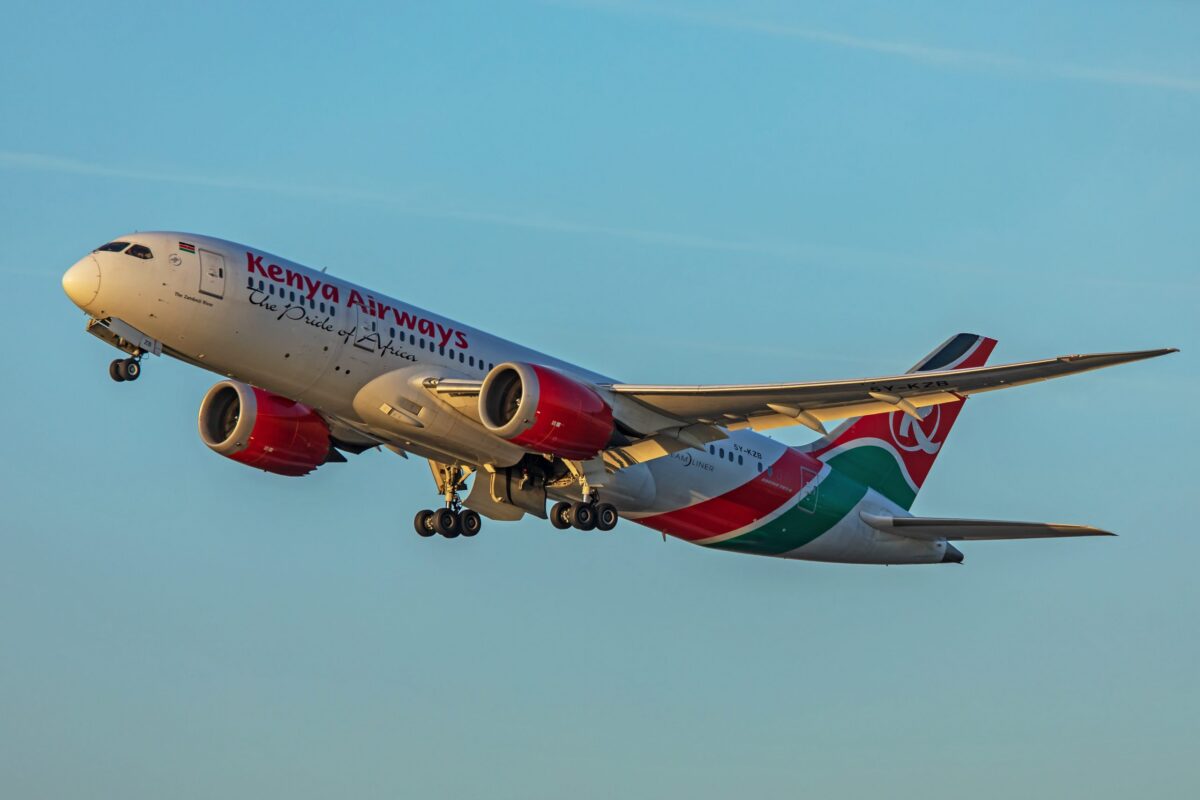
Kenya Airways 787
A Kenya Airways Boeing 787 Dreamliner (Photo: AirlineGeeks | William Derrickson)

As Kenya Airways struggles to shrug off its losing streak, the airline announced it has cut its first-half losses by almost a third as the reopening of travel markets enabled it to more than double passenger revenues.

The airline reported a loss of $82.4 million during the half-year period ending June 2022, according to disclosure in a recent investor briefing.

The improved passenger market drove an overall 76% increase in group revenues to 48.1 billion Kenyan shillings ($398 million) which was mainly driven by an 85% jump in passenger numbers to 1.61 million over the first six months of 2022. This, however, remains 33% lower than the pre-Covid levels.

Cargo revenues also saw an increase, as it came on top of the strong growth in the segment reported for the same period last year. Cargo tonnage increased by 39% compared to the same period in 2021, demonstrating continuous outstanding growth in air freight services.

Kenya Airways chairman Michael Joseph said, ”The opening of borders worldwide has led to quick rebounds in some key markets. Lingering travel restrictions in some markets have limited the recovery.”

The increase in revenues was though in part countered by the sharp rise in fuel costs. It meant the SkyTeam carrier remained in the red for the first half, though it did reduce its operating loss to 5 billion Kenyan shillings from 7.3 billion Kenyan shillings.

”If we adjusted for the fuel price spike, the operating profit for the period would have been 1.5 billion [Kenyan shillings],” Joseph narrates.

“During the first half of 2022, operations were positively impacted by pent-up demand and the removal of travel restrictions, resulting in a strong and sustained recovery in trading performance compared to a similar period in the prior year,” the airline said.

Despite the bounce-back from the pandemic-era travel slump, Kenya Airways is still struggling to recover from its losing streak.

However, the airline’s management is trying to change that. According to CEO Allan Kilavuka, a new phase of restructuring would see the airline cut the fleet and destinations. The CEO is determined that the airline will not only survive but also strengthen its position as a leading airline across the continent.

Already on its part, the airline said it has been able to negotiate a 19% reduction in rental jet costs. It now needs the Kenyan government to step in and help settle the outstanding debts owed to the lessors.

“We will need a financier and the financier at the moment is going to be government, to be able to overall improve the health of the balance sheet,” the CEO said.

He further suggested that extra funding or equity conversion are possible options that Kenya’s National Treasury can consider for settling the debts.

Victor Shalton

Victor Shalton's love for aviation can be traced to when he was 11-years-old. As a seasoned aviation writer, he takes pride in providing the best aviation coverage around the globe and is passionate about advancing his skills in the aviation space. In addition, he loves travelling, writing, arts and while his speaking engagements have taken him around the world, he is proud to call Nairobi home.

AirAsia Resumes Delivery of A321 Aircraft

AirAsia, the Malaysian low-cost carrier, has announced its plans to resume the delivery of Airbus A321neo aircraft. During the pandemic, the carrier suspended new aircraft delivery. The new aircraft are expected to meet the goal of net zero by 2050.

“We will also be taking delivery of the new Airbus A321neos from 2024, which will further reduce our emission per seat by 20% while driving our business growth.” Tony Fernandes, CEO of Capital A (formerly known as AirAsia) said.

Airbus and AirAsia inked the concrete deal for the new aircraft before the pandemic. In response to the prolonged pandemic, the pair agreed to amend the deal last year, converting the remaining undelivered 13 A320s to A321neos. The latest deal is a total order of 362 A321neo aircraft with deliveries through 2035. According to the airline, four A321neos have been delivered since 2019.

The low-cost carrier is one of Airbus’ regular customers. In 2011, the carrier signed a deal for 200 A320 aircraft at the Paris Air Show.

AirAsia is not the only Malaysian carrier to resume aircraft delivery recently. Malaysia Airlines, the flag carrier in the country, has confirmed a deal of 20 new Airbus A330neos. The new aircraft are scheduled to be delivered in 2024. According to Airbus, Malaysia is Airbus’ third-largest market in the Asia-Pacific region, following China and India.

Return To Normal

Meanwhile, the no-frills carrier posted a net operating loss of RM235 million ($52.3 million) in the second quarter of 2022 (ending June 30). However, the airline has seen a sign of rebounding after the pandemic. Since the reopening of the country’s border and less stringent travel restrictions in other Asian countries, the demand of domestic and international travel were on the rise. The revenue of the second quarter of 2022 was increased by 277% year-over-year.

In response to the higher fuel prices, AirAsia has increased its fares by 10% and implemented a fuel charge. In the second quarter alone, the carrier relaunched 159 international routes. With this end in view, 78% of its furloughed staff have returned to the office, and expect the remaining staff will be returned by the end of the year.

The carrier said that only 65 aircraft were operating by the end of June. Compared to the same time last year when only 15 aircraft were in the skies. In addition, AirAsia has further reviewed that aircraft 108 aircraft returned to the skies as of August, and is expected to increase to 160 by the end of the year. The airline has forecasted full operations by the second quarter of 2023.

SkyWest/United Express Cut Another City

SkyWest CRJ-200
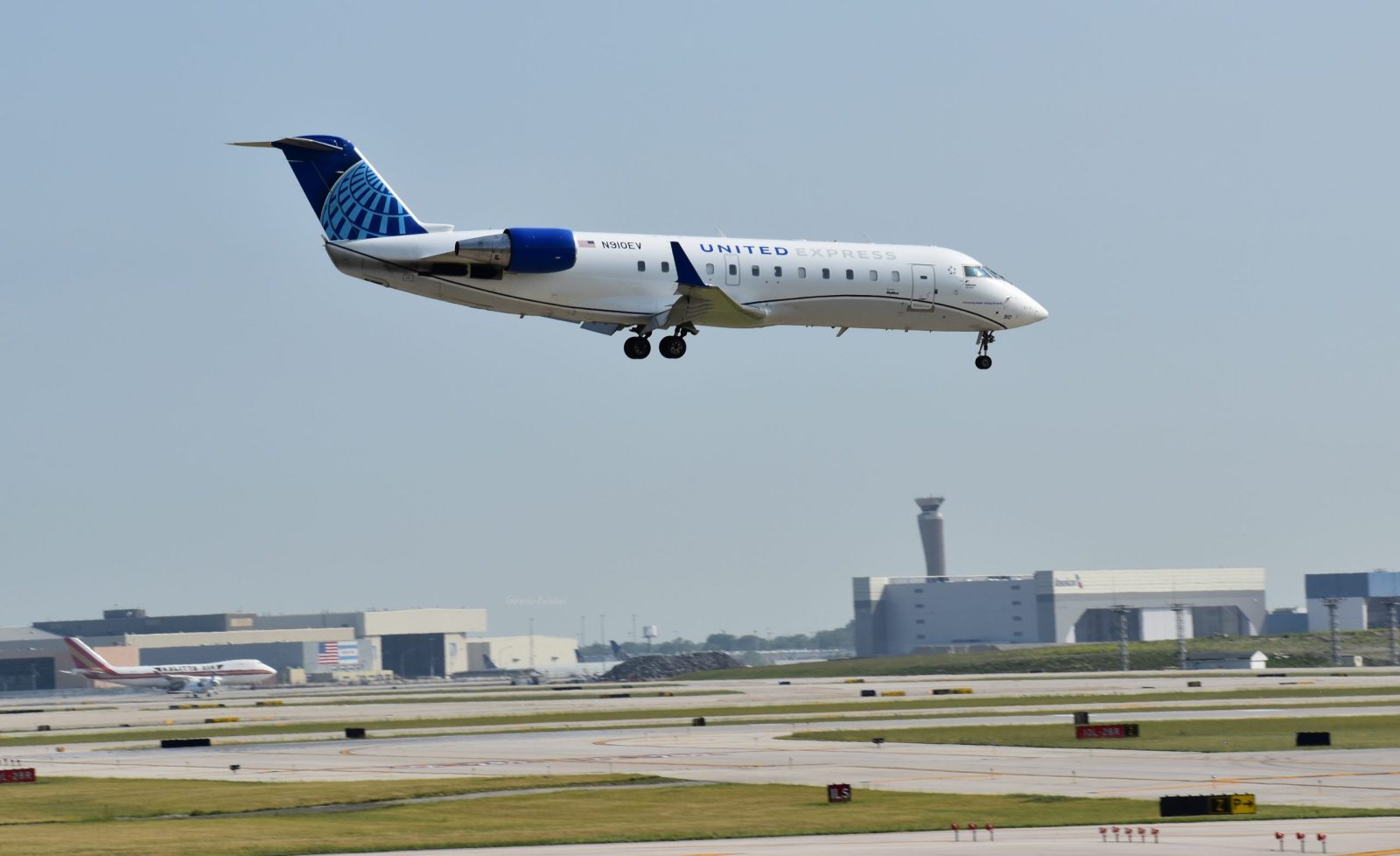
A United Express CRJ-200 arriving into Chicago O'Hare. (Photo: AirlineGeeks | Joey Gerardi)

Back in the Spring of 2022 SkyWest, under the United Express brand, requested to terminate 31 Essential Air Services (EAS) communities. In some of these communities, SkyWest has already left and new carriers have come in, like the community of Alamosa in Colorado. While some cities still have SkyWest but have had a new carrier selected like the Eau Claire, Wis. contract was selected in July 2022 but the service on the new carrier Sun Country doesn’t begin until Dec. 1, 2022.

There are some communities that SkyWest won’t actually be leaving at all, as some communities have very much disliked the airlines that have submitted proposals and would rather stick with SkyWest despite the uncertainty of the current service levels.

United Airlines CRJ200 operated by SkyWest at Muskegon-County Airport (Photo: AirlineGeeks | Joey Gerardi)

What is Changing

The community of Muskegon, Michigan (MKG) is the sixth community out of the 31 communities to have a new carrier officially selected. Palm Beach, Fla.-based Southern Airways Express is the airline that has been selected for the contract in this west Michigan community. This will bring the total number of EAS contracts held by Southern Airways Express up to 15, and will also be the first contract held by the airline in Michigan and within the Midwest.

The contract is scheduled to begin on Oct.1 2022 and will run for four years until Sept. 30, 2026. They will operate 36-weekly flights to Chicago O’Hare using a 9-seat single engine Cessna 208 Caravan. The annual subsidy will be $3,918,899 for the first year, $4,016,872 for the second year, $4,117,293 for the third year, and $4,220,226 for the fourth year.

A Southern Airways Express Cessna 208 (Photo: AirlineGeeks | Joey Gerardi)

Muskegon Airport Director Joel Burgess did have something to say regarding the service in a recent interview with 13abc news, “Our current levels of service with SkyWest would really translate to one flight a day, throughout the week. And at times that flight may not have been that well-timed to connect passengers at the Chicago O’Hare hub to where they needed to go. So, one of our requests to the Department of Transportation was to go out and look for a carrier who was able to provide a more expanded type of service into the Chicago O’Hare International Airport.”

This is evident currently as with SkyWest, the first daily departure occurs around 1P.M. and the last arrival for the day occurs around 3:30 P.M. terrible timing for those wising to make connections in or out of United’s Chicago hub. Should the worse happen, not only could a passenger miss a flight but also miss the only flight back into Muskegon, leaving them stranded in Chicago.

While the airline has yet to post its exact flight schedule on its site, Joel Burgess did mention that they would serve the community with six flights a day Monday through Friday, and three flights a day on the weekends. This will dramatically increase the number of flights and connecting opportunities in Chicago, especially since Southern Airways Express has interline baggage agreements with United, American, and Alaska Airlines. Passengers will actually be gaining more connection opportunities with three airlines they can now connect with, two of which have hubs at Chicago O’Hare.

A familiar name on this site, Keith Sisson, who is the Chief Marketing Officer of Southern Airways Express, had something to say regarding the launch of Muskegon flights. “Southern Airways is pleased to be opening yet another connecting hub in our system, this time at Chicago-O’Hare. Even more so, we are excited to bring our high-frequency, low-fare service to the people of Muskegon. With the expansion to Chicago, Southern becomes the only commuter airline with operations at all of the five busiest airports in America: Atlanta, Los Angeles, Chicago, Dallas/Ft Worth, and Denver.” 

The new flights to Muskegon are expected to go on sale shortly after Labor Day, according to the airline. Southern Airways Express in Chicago will also mark the return of passenger Cessna 208 service into Chicago, as the last airline to do that was Air Choice One, an airline that was actually merged into Southern Airways Express this year.

Joey Gerardi

Joey has always been interested in planes for as long as he can remember. He grew up in Central New York during the early 2000s when US Airways Express turboprops ruled the skies. Being from a non-aviation family made it harder for him to be around planes and would only spend about three hours a month at the airport. He was so excited when he could drive by himself, the first thing he did with his driver's license was get ice cream and go plane spotting for the entire day. He graduated from Western Michigan University in 2022 with a B.S. in Aviation Management & Operations and a Minor in Business, and currently works for a major airline in his hometown.

Aeroflot To Renew Its Fleet With 300+ Russian-made Aircraft

An Aeroflot SSJ100 (Photo: SuperJet International [CC BY-SA 2.0 (https://creativecommons.org/licenses/by-sa/2.0)])

Russian airline Aeroflot, which has most of its capital in the hands of the local government, has again talked about fleet renewal with more than three hundred planes produced in Russia. This time, the information came through a note from the Kremlin, after the meeting of the airline’s general director, Sergei Aleksandrovsky, with President Vladimir Putin, on August 26.

The meeting, mostly political in tone, merely talked more of the same. The goal, however, seems to have been to focus on the «new» variants of the domestic aircraft, which are being produced only with local components as part of an extensive import substitution program.

As reported by Aeroin, Aeroflot said it will renew its fleet in the coming years with 323 aircraft, including 210 of the MC-21 model equipped with domestic PD-14 engines, as well as 73 Sukhoi Superjet (SSJ100) in the so-called «import-substituted» version (SSJ-New) and 40 Tu-214 units.

The average list price of the MC-21 is almost $98 million and the SSJ100 is $36 million. As for the Tu-214 there are no updated figures. Based on all this, and excluding the Tu-214, the package to be ordered by Aeroflot should be at least $23 billion.

“This is a very significant volume, which will force us to attract additional resources,” Aleksandrovsky emphasized. According to the head, the air carrier plans to hire 3,500 more pilots and order eight new flight simulators. He added that Aeroflot’s strategy is already “fully synchronized with the aviation industry development program until 2030.”

In practice, Aeroflot has two ways to finance this plan: either to seek new funds from its main shareholder, the Russian government or to go to the market, the former being the best option in view of the huge uncertainty over the company’s cash flow after Western sanctions hit Russian aviation hard.

Another challenge will be to get manufacturers to ramp up their production rate, of which only a few units per year are produced at present.

(written by Pablo Diaz)

Vanni Gibertini

Vanni fell in love with commercial aviation during his undergraduate studies in Statistics at the University of Bologna, when he prepared his thesis on the effects of deregulation on the U.S. and European aviation markets. Then he pursued his passion further by obtaining a Master’s Degree in Air Transport Management at Cranfield University in the U.K. followed by holding several management positions at various start-up carriers in Europe (Jet2, SkyEurope, Silverjet). After moving to Canada, he was Business Development Manager for IATA for nine years before turning to his other passion: sports writing.

Wizz Air Expands Network to Saudi Arabia in Agreement with Government

Wizz Air utilizes the A320 on its European routes (Photo: Wizz Air)

Wizz Air, a Hungarian airline and a top-three low-cost carrier in Europe as measured by the number of passengers carried, has signed a memorandum of understanding with the Ministry of Investment of Saudi Arabia to launch 20 new routes from Central and Eastern Europe to Saudi Arabia.

The carrier has expanded rapidly since the coronavirus pandemic began but the easing of restrictions on Covid-19 and the elimination of PCR testing requirements for vaccinated travelers have made travel easier again, allowing travelers to move abroad more easily. Due to these new reopenings and strong demand for tourism, Wizz Air was able to sign the memorandum with the Saudi government. However, the initiative was initiated by the Saudi Ministry of Tourism, which aims to improve the development of the country’s tourism sector.

The new flights will operate from 11 cities in Europe to the Saudi Arabian cities of Riyadh, Jeddah and Dammam. Those cities include:

   •  Bucharest, Romania

   •  Budapest, Hungary

   •  Catania, Italy

   •  Larnaca, Cyprus

   •  Milan, Italy

   •  Naples, Italy

   •  Rome, Italy

   •  Sofia, Bulgaria

   •  Tirana, Albania

   •  Venice, Italy

   •  Vienna, Austria

The new routes will greatly strengthen Wizz Air’s presence in the country, boosting the growing Saudi tourism sector and contributing to the Vision 2030 program, which plans to triple the country’s passenger traffic by 2030. It has been estimated by Wizz Air that this expansion will bring more than 1 million additional travelers to Saudi Arabia next year.

An Ex-Europe Expansion

Wizz Air was already planning from May 2022 to start operations and open a branch in Saudi Arabia after doing so in Abu Dhabi in 2020.

Wizz Air Abu Dhabi LLC is based at Abu Dhabi International Airport in the United Arab Emirates. The company is a joint venture with the state-owned ADQ — formerly Abu Dhabi Developmental Holding Company, ADDH — which owns 51%, and Wizz Air Holdings owning the remaining 49%. Flights began in November 2020 with two Airbus A321neo aircraft, which Saudi tourism forecasts predict will grow to 50 in the next few years.

However, the Hungarian low-cost carrier’s goal is to expand in the medium term to Africa and India to offer four-to-five-hour, domestic and international, low-cost Airbus A321 flights, thus serving a potential pool of 5 billion people.

Wizz Air Abu Dhabi recently already sought approval from authorities in 2021 to launch flights to the Indian subcontinent and hopes to begin operations in 2022-23 after approval. Airfares between the UAE and the Indian subcontinent have doubled in recent months due to high demand and low capacity.

Wizz Air is therefore targeting markets not yet taken by other low-cost competitors such as Ryanair and Easyjet, which are mainly active in Europe.

Vincenzo Claudio Piscopo

Vincenzo graduated in 2019 in Mechanical Engineering with an aeronautical curriculum, focusing his thesis on Human Factors in aircraft maintenance. In 2022 he pursued his master's degree in Aerospace Engineering at the University of Palermo, Italy. He combines his journalistic activities with his work as a Reliability Engineer at Zetalab.

Air New Zealand and Qantas Look Beyond Losses to Future Competition

An Air New Zealand 787 landing at Houston IAH (Photo: AirlineGeeks | Mateen Kontoravdis)

Air New Zealand and Qantas announced their full-year financial results for 2021-22 on Thursday with both airlines reporting a third straight loss. Both Air New Zealand’s and Qantas’ fiscal years are from July 1 through June 30.

The Kiwi flag carrier posted a loss ‘before other significant items and taxation’ of 725 million New Zealand Dollars ($451 million), compared to a figure of 444 million New Zealand Dollars in the 2020-2021 financial year. The figure is in line with the projections Air New Zealand offered the share market and comes after a particularly disruptive 12-month period due to the ongoing impact of Covid-related challenges and repressive travel restrictions for most of the reporting year.

In a video, to shareholders and customers, Air New Zealand Chair Dame Therese Walsh and Chief Executive Officer Greg Foran acknowledged the challenges the airline faced and continues to face.

Foran said, “For customers, we’ve been focused on restoring services, maintaining a choice of fares and launching innovations to improve their journey with us. For our amazing staff, we have provided one-off awards to acknowledge their continued extra mahi (work), and for our communities, we’ve been obsessed with operational performance, which drives the reliable services they depend on.”

However, the airline appears firmly focused on looking forward to the upcoming launch of a non-stop service from its Auckland base to New York’s John F. Kennedy International Airport in September and the relaunch of flights to Chicago in October. The airline will have a nine-month monopoly on the former route until trans-Tasman rival Qantas begins flights between New Zealand’s and the United States’ largest cities to the same airport in June 2023.

Qantas 787-9
A Qantas Boeing 787-9 departing LAX (Photo: AirlineGeeks | James Dinsdale).

The announcement that Qantas will compete with Air New Zealand on what will become the Kiwi carrier’s flagship route — with NZ1 and NZ2 flight designators — came on the day the Aussie airline announced an “Underlying Loss Before Tax” of 1.86 billion Australian Dollars ($1.3 billion). This compares to a figure of 1.83 billion Australian Dollars for the 2020-2021 financial year.

Qantas Group Chief Executive Officer Alan Joyce, said, “This result takes the Statutory Loss Before Tax impact of COVID on the Qantas Group to nearly 7 billion ($4.88 billion) and our total revenue losses to AU$25 billion ($17.43 billion). These figures are staggering and getting through to the other side has obviously been tough.”

Mr. Joyce added, “The past year has been challenging for everyone. We had to ramp down almost all flying once Delta (the strain of coronavirus) hit and stay that way for several months before ramping back up through multiple Omicron waves as we all learned to live with COVID in the community.”

Speaking about the future, Joyce said, “We always knew travel demand would recover strongly but the speed and scale of that recovery have been exceptional. Our teams have done an amazing job through the restart and our customers have been extremely patient as the whole industry has dealt with sick leave and labor shortages in the past few months.”

John Flett

John has always had a passion for aviation and through a career with Air New Zealand has gained a strong understanding of aviation operations and the strategic nature of the industry. During his career with the airline, John held multiple leadership roles and was involved in projects such as the introduction of both the 777-200 and -300 type aircraft and the development of the IFE for the 777-300. He was also part of a small team who created and published the internal communications magazines for Air New Zealand’s pilots, cabin crew and ground staff balancing a mix of corporate and social content. John is educated to postgraduate level achieving a masters degree with Distinction in Airline and Airport Management. John has held the positions of course director of an undergraduate commercial pilot training programme at a leading London university. In addition he is contracted as an external instructor for IATA (International Air Transport Association) and has been a member of the Heathrow Community Fund’s ‘Communities for Tomorrow’ panel.

Trip Report: Hawaiian Airlines from Sydney to Honolulu

A Hawaiian Airlines Airbus A330-200 aircraft. (Photo: AirlineGeeks | William Derrickson)

To critique an airline is — in this day and age — synonymous with groaning and bleating about every negative experience of a given flight, and it is true: travel by air has apparently digressed into a mud pit of lost baggage, screaming babies and a general lack of social etiquette which once made flying so romantic. Yet, none of these or any other headaches characterized this writer’s recent series of international flights on Hawaiian Airlines — Hawaii’s flagship carrier.

This month, AirlineGeeks took advantage of the opportunity to review the US airline described by Forbes magazine as “top in reliability for the second year running.” The flights, paid for by this writer himself, offered a chance to verify the truthfulness of that statement, as well as an inside look at the commitment of its staff. The experience made clear that, despite the chaos of the post-pandemic airline industry, an airline can still operate with the golden values that first defined air travel so many years ago.

Check-In

For the Australian tourist wanting to venture to the warmer waters of Waikiki, a true definition of this writer is Hawaiian Airlines, which offers direct flights from Sydney, Australia to Honolulu. While certainly not the only option, Qantas simply no longer qualifies as a satisfactory option for the traveler who wants to arrive — along with his baggage — at his destination on time.

Sydney’s check-in experience with Hawaiian was far smoother than anticipated. Despite a continuation of delays that have plagued Sydney, Australia’s Airport since earlier this year, the Saturday evening line-up and check-in was straightforward with the biggest bother from those who attempted to push in line and voice frustration over the required contact-tracing paperwork that was to be filled out prior to baggage check-in. Of interest is an apparent absence of online check-in for Sydney departures with Hawaiian Airlines. While it can only be speculated as to why this fact did not result in any real delays throughout the process.

All in all, 30 minutes was all it took to be funneled through the line, drop off the baggage, and head off through security to the gates and, what most look forward to, duty-free shopping. For the avid shopper, many of the retailers were closed due to renovations and revamps. Think Victor Navorski, think The Terminal – this is Sydney Airport. This presented a challenge: what does one do for the two hours prior to boarding? There are several food-court-style restaurants open on a Saturday night, but that hardly makes for an entertaining wait.

Sydney Airport exhibits a scenario familiar to all post-pandemic airports; a thin line of excellent staff hold the fort, but the emphasis is clearly on the ‘thin’. 

Fortunately, this intrepid traveler — who doesn’t truly identify as ‘intrepid’— spent his exhaustive hours in the quiet ambiance of the airport’s Plaza Premium Lounge.  The House — as it is named— has a truly premium feel, affording guests reasonable views of the apron and a limited but tasty selection of food. The plates are small, and the drinks served match in size. However, in some ways, it’s rather thoughtful; you simply don’t want to spend 10 hours of flying time on 400 return trips to the toilet.

It was mostly a pleasant experience, free from the aforementioned screaming children, and it was nicely crowned with a view of the Airbus I was shortly to board after I took advantage of the toilets in The House. Garnished with L’Occitane soaps and folded hand towels, the restroom bid me farewell with possibly one of the most luxurious toilet breaks experienced by this writer for some time.

The Boarding Experience

Upon arrival at the gate, it was soon apparent that the flight was going to be late. This matter isn’t necessarily all that simple; one delay caused by short-staffed airports earlier this day could have led to a thousand delayed flights in an endless domino effect and is thus not truly reflective of Hawaiian Airlines’ reliability. Remember, too, that this is Sydney Airport.

Upon boarding ‘Iwakelii’ — one of Hawaiian’s Airbus A330-200s — in Sydney, the warm ‘aloha’ of Hawaii is instant and most welcome, especially given that to the surprise of many, Australian winters can be quite cold. This fact now explains why, for those unaware, the land of deserts and beaches also has the largest snow fields in the southern hemisphere. With warm, Hawaiian hospitality and Hawaiian shirts to match, the passenger feels their holiday has begun before he has left the ground.

The cool blue hue of the main cabin seats is inviting, and their comfort matches their clean appearance, with plenty of leg room for the nine-hour flight ahead. On seating, the senses are engaged further by more than just the lighting; a soft soundtrack of Hawaiian music (think ukulele) appeases the passenger, and videos of the musical performances are displayed on the screens in front of each seat. It’s a further slide into a state of relaxation that gives one a taste of what to expect before they’ve even left the gate.  In fact, if one listens carefully, you could almost swear a calming sea breeze tingles the skin.

Impeccably presented are also the crew, and the quality of their service follows suit. While service and presentation are always of great importance, it is in the management of passengers that the flight attendant distinguishes their patience and abilities. Much responsibility rests on their shoulders, starting with the role of master baggage handlers.

A wonder that remains for the wisest to understand: the fiasco of carry-on luggage. Although Hawaiian provides signage specifying the dimensions of what is acceptable carry-on (ie. not a piano), I stood in awe that passengers would still attempt to bring such baggage on the aircraft. While this writer, and many a passenger, surely fume at the hold-ups that oversized and overweight carry-on luggage cause, Hawaiian’s humble flight attendants showed no such frustration.

With smiling faces, they accelerated the boarding process by lifting up those ‘pianos’ and storing them safely in the overhead lockers. More importantly, they managed to keep those lockers shut when some attempted to access their bags during taxi. The friendly disposition and demeanor of the attendants do more than settle the issues; they keep the entire aircraft in order.

In-Flight Experience

Despite a late departure, the cabin’s atmosphere remained calm and relaxed. By the time the aircraft settled at cruising altitude, most passengers found themselves immersed in an extensive library of in-flight entertainment, including a broad range of “avgeek” favorites that ventured into such classics as Apollo 13. The supplied earphones provided a reasonably adequate quality of sound, but at times a small movement of the cord resulted in some crackling. The biggest issue, at least for this Airline Geek, was the failure to launch the in-flight mapping system, but this was soon forgotten when I found First Man was in the film library.

Seated in the ‘main cabin’, a less brutal name for the economy, I realized that I had been seated in equally the best and worst seats — next to the restroom. Ideal for the traveler who drinks far too much coffee like myself, it happens to be the most popular location for all other passengers. This could have been disruptive for more reasons than just crowding around this shrine; that mystical room has been known to produce odors that are less than appetizing. For Hawaiian, however, this was clearly not an acceptable option.

During all hours of the night flight, flight attendants continued to clean all aspects of the aircraft cabin – including the restrooms. While those mystical rooms shone brightly and with fragrant air, not a single passenger was left with any waste in their seating area. This hygienic – and hospitable – airline clearly isn’t relaxed in customer service.

To be in the business of people, they’ve got to feel their best interests are safe in your hands. Nothing should be more important than that. Hawaiian has accomplished this business.

A paraphrase from the legendary Montgomery, it has real application with any customer-focused business. The flight attendants on board were engaging and genuinely friendly, and this reflects the customer-first business model Hawaiian has created. Easy to laugh with, it was a matter of humor for one attendant when I explained my usual airline of choice is Emirates. When discussing that this reviewer would be, well, reviewing the flight, he joked that this would be like a budget airline. But Hawaiian isn’t, nor does it feel like one.

For the most part, sleep was on the agenda. With a sleeping mask decorated to look like aviators, sleeping is a real possibility on Hawaiian’s international flights. The seats recline to a comfortable angle, and the leg room provided in the standard economy is well and truly enough for comfort.

Arrival in Honolulu

It was only on the descent that the cabin windows were opened, and the contrast from a dark Sydney night to a dreamy blue Pacific ocean was most welcome. Of all destinations this writer has flown to, the descent into Hawaii is certainly one of the most picturesque. The dramatic mountains of green, white-capped ocean waves and a view of historical locations (primarily Pearl Harbor) make the arrival in Honolulu an exciting and memorable experience.

Despite a strong crosswind, the landing was smooth, and thus the taxi to the gates began. And then it stopped; the taxi to the gate was paused until that gate was available. The words “brief wait” caused an immediate stir among those seated around me, but to quote Chuck Yeager – and every other pilot known to mankind – any landing is a good landing.

The fact that all would soon walk calmly off this flight meant that the flight had been very good indeed. And soon enough the chaos of those who remove seatbelts before landing reared its ugly head, but again, Hawaiian’s flight crew demonstrated why their customer service is world-class. Their soft skills are something to be witnessed.

In Summary

To say that Hawaiian Airlines is reliable is, you guessed it, quite a reliable statement. Reliability is clearly a core value of this airline. Despite delays in Sydney, the flight still arrived on time. Baggage turns up where it should – at your destination. Passengers are truly cared for, and the staff proved they can be relied upon (a mid-flight medical emergency highlighted that).

While certainly not the only option for travel between Australia and Hawaii, it is the most unique. It truly isn’t a Hawaiian holiday with the flagship airline of Hawaii. From the livery to the very name of each aircraft, Hawaiian Airlines manages to encapsulate all there is to love about its home and package it into one fine airline.

Additionally, as the reader shall yet find out in the next article in this saga, the culture of safety and employee satisfaction runs deeper than the casual passenger may realize.


Mike Mangano

Mike’s love affair with flight and mechanical objects in the sky began at an early age, fascinated by space documentaries and the vintage Flight Simulator ’95. He currently works as an instructor for UAVs and is training to receive his Private Pilot Licence with the goal of working in manned flight instruction. An avid reader of all things aviation and manned space flight, Mike stays close to developments in aerospace while reminiscing and sharing the rich history of flight with others. He loves writing, engineering and science.
Sign-up for newsletters & special offers!

Get the latest stories & special offers delivered directly to your inbox

SUBSCRIBE

Uh-oh! It looks like you're using an ad blocker.

Our website relies on ads to provide free content and sustain our operations. By turning off your ad blocker, you help support us and ensure we can continue offering valuable content without any cost to you.

We truly appreciate your understanding and support. Thank you for considering disabling your ad blocker for this website